AirPods Pro vs Traditional Hearing Aids: New Audiology Lab Comparison Reveals Where the Earbuds Fall Short
A new University of Texas at Dallas study compared the electroacoustic and real-ear performance of Apple's AirPods Pro 2nd and 3rd generations with a clinically fitted receiver-in-the-canal hearing aid across mild and moderate hearing loss profiles.
When the U.S. Food and Drug Administration authorized AirPods Pro to function as over-the-counter hearing aids, the headlines wrote themselves: a mainstream consumer product could now be cleared as a medical device for adults with perceived mild-to-moderate hearing loss. The question audiologists immediately raised was a more technical one. How does an earbud actually compare with a hearing aid that has been programmed and verified to a specific audiogram?
A new study in Audiology Research provides one of the first head-to-head laboratory comparisons, and the findings are nuanced. Both AirPods Pro generations look strong on certain bench measurements, but real-ear measures tell a more complicated story.
Title: Electroacoustic Verification Comparison of AirPods Pro 2nd and 3rd Generations and Traditional Hearing Aids
Authors: Seeon Kim, Linda Thibodeau
Affiliations: Callier Center for Communication Disorders, Richardson, TX; Department of Speech, Language, and Hearing, University of Texas at Dallas
Journal & Date: Audiology Research, 9 April 2026
Study Type: Electroacoustic and real-ear verification comparison across simulated hearing loss profiles
PubMed DOI: 10.3390/audiolres16020055
Background: Why the Researchers Looked at This
For decades, hearing aid quality has been judged not by marketing claims but by two related sets of measurements. Coupler measurements assess what comes out of the device into a standardized 2cc cavity that approximates an average ear canal. Real-ear measurements use a thin probe microphone placed near the eardrum to measure what actually reaches the listener once the device is sitting in their ear.
Real-ear measurement matters because the size, shape, and acoustic properties of an individual ear canal can change a device's output by many decibels. A hearing aid that looks acceptable on a coupler can underperform once it is placed in a real ear, especially for moderate hearing losses where higher gain is needed at higher frequencies.
With AirPods Pro now sitting on the OTC hearing aid shelf alongside purpose-built devices, the team wanted to know whether they could deliver the audibility levels prescribed by NAL-NL2, a widely used fitting target that defines how much amplification a person needs at each frequency based on their audiogram.
How the Study Was Done
The researchers tested three devices: Apple AirPods Pro 2nd generation, Apple AirPods Pro 3rd generation, and a traditional receiver-in-the-canal (RIC) hearing aid. Each device was evaluated against three simulated hearing loss configurations: a mild flat loss, a mild-to-moderate sloping loss (typical of age-related hearing loss), and a moderate flat loss.
Outcome measures included 2cc coupler output curves; saturation sound pressure level for a 90-decibel input, abbreviated SSPL90, which captures how loud a device can get before it stops increasing output; real-ear speech mapping, which checks audibility for live speech-shaped signals; maximum power output (MPO); and real-ear-to-coupler differences, the gap between bench numbers and what is actually delivered into the ear.
The hearing aid was fit and verified to NAL-NL2 prescriptive targets for each loss profile, which is the standard of care in audiology clinics. The AirPods devices were configured according to their consumer-facing controls.
What the Researchers Found
On the coupler bench, the AirPods Pro performed reasonably well. Both AirPods Pro 2nd and 3rd generation produced output that fell within about 7 decibels of the traditional hearing aid across most conditions. The SSPL90 outputs were similar between the two AirPods generations, while the hearing aid's SSPL90 increased more aggressively for steeper loss profiles, as a prescriptively fitted device should.
Real-ear measurements were where the gap widened. With probe microphones placed near the eardrum, both AirPods Pro generations consistently delivered less output than the NAL-NL2-fitted hearing aid. The largest deviations, on the order of up to 14 decibels, showed up at higher frequencies for the moderate hearing loss configuration. That is exactly the region of speech that carries consonants, the building blocks of clarity in conversation.
Maximum power output told a similar story: across all configurations, the traditional hearing aid produced the highest MPO, and both AirPods generations delivered reduced peak output, especially in speech-critical frequency regions. The real-ear-to-coupler difference analysis pointed to weaker acoustic coupling for AirPods Pro 3rd generation compared with the 2nd generation and the hearing aid, meaning some of the energy measured on the bench did not make it into the ear.
The bottom line from the authors: AirPods Pro may offer benefit for mild hearing loss, or for moderate high-frequency hearing loss in more forgiving listening conditions, but they do not consistently match the audibility a prescriptively fitted hearing aid can provide.
What It Means for People with Hearing Loss
For consumers, the result is not "AirPods are bad" or "hearing aids are always better." It is more practical: as the configured hearing loss gets steeper and more reliant on high-frequency amplification, the gap between a consumer earbud and a fitted hearing aid grows. People with mild loss who mainly want occasional speech assistance may do fine with consumer earbuds. People with moderate loss who want consistent clarity in restaurants, on phone calls, or while watching TV will likely benefit from a device designed and programmed to hit prescriptive audibility targets.
The takeaway also reinforces an old audiology principle: in-ear verification matters. Two devices with similar marketing specs can deliver very different audibility once they are sitting in your ears.

When Audibility at Higher Frequencies Matters: Where Panda Quantum Fits
The finding that drives this section is straightforward: the bigger the hearing loss and the more it weighs on high-frequency speech sounds, the more important it becomes to use a device that can actually hit prescriptive audibility targets and verify the fit to your specific ear and audiogram.
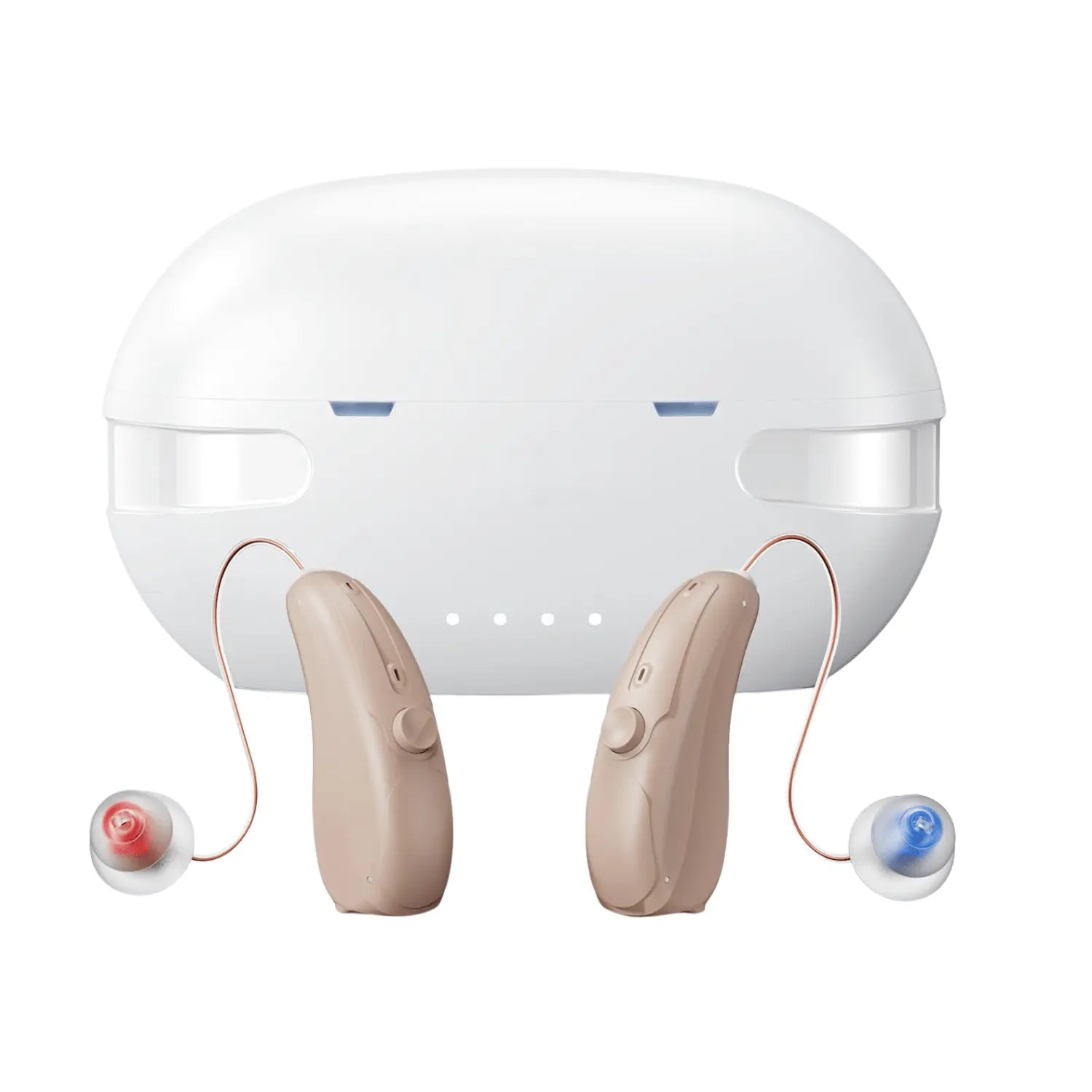
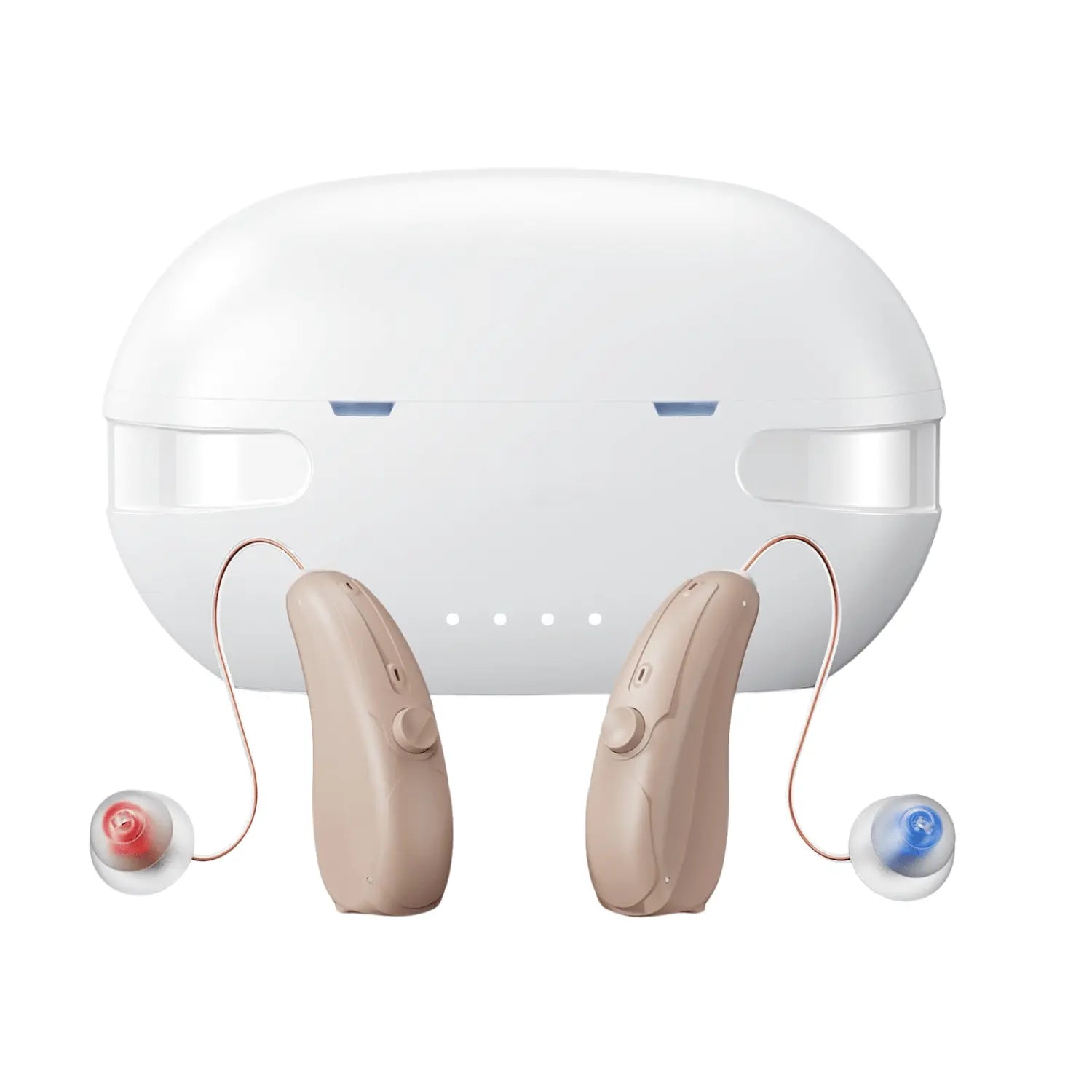
Panda Quantum is a 16-channel receiver-in-canal OTC hearing aid that builds in some of the design choices the AirPods study highlights as important. It includes adaptive noise reduction, Bluetooth streaming for phone calls, TV, and music, and provides up to 80 hours of total battery with the case. It also ships with a 5-year warranty and a 45-day return window. Just as importantly, after delivery the user pairs Quantum with the Panda app, which runs a frequency-specific hearing test through the hearing aid itself and then automatically programs the gain and frequency response to the user's audiogram, similar to what an audiologist does at a clinical fitting.
For people whose audiogram shows the kind of sloping or moderate loss the study modeled, that audiogram-matched fitting is meaningful. OTC hearing aids are approved for adults with perceived mild-to-moderate hearing loss; severe or profound loss still benefits most from a clinical fitting with in-ear verification. Learn more about Panda Quantum.
AirPods vs Panda OTC Hearing Aids: Quick Buying Comparison
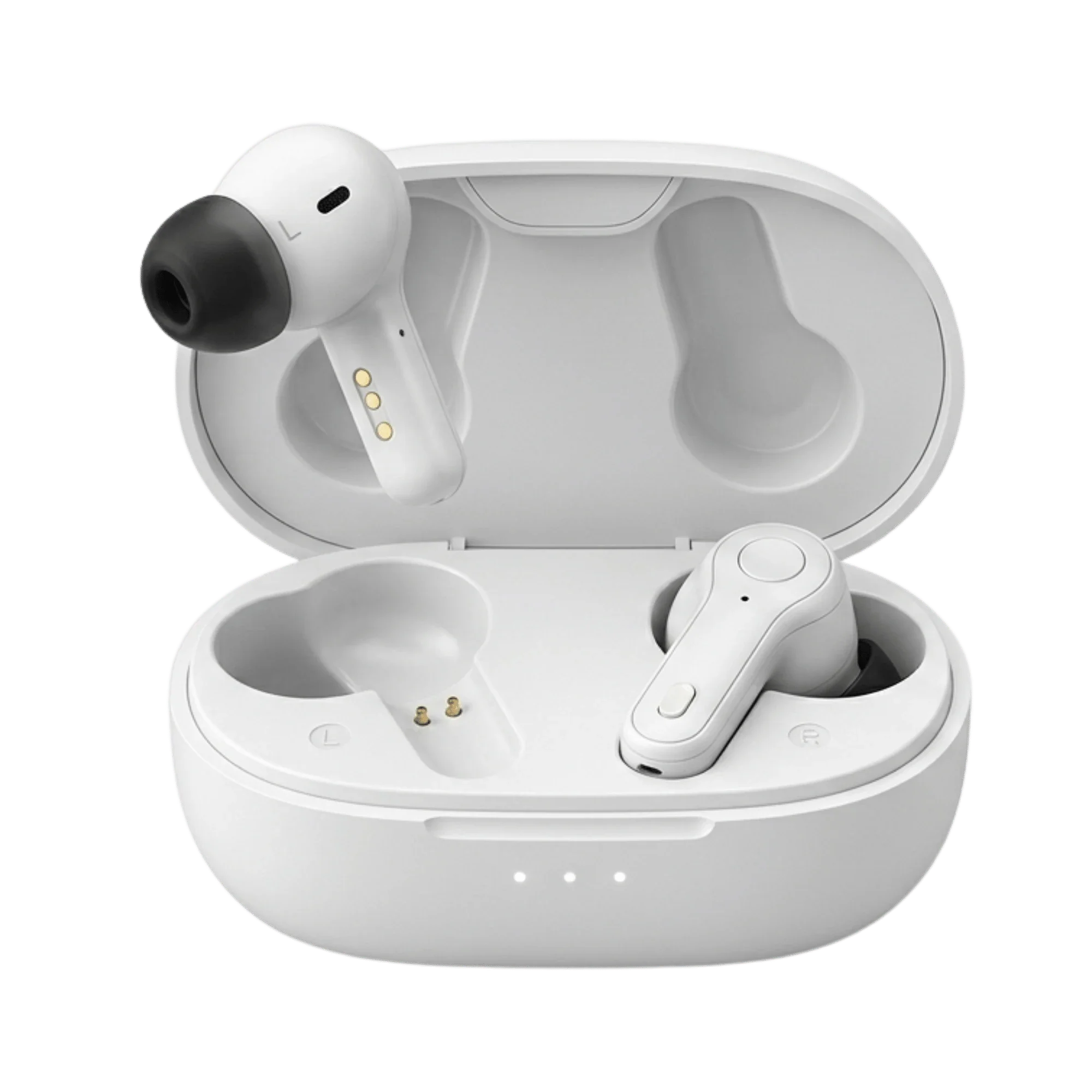
AirPods Pro can be a useful starting point for some iPhone users, especially for occasional help in quieter settings. If you need hearing support throughout the day, compare them with a purpose-built OTC hearing aid before deciding.
| Use case | AirPods Pro hearing features | Panda OTC hearing aids |
|---|---|---|
| Occasional hearing assistance | Helpful for some iPhone users | Helpful, with device choices by lifestyle |
| All-day wear | Limited by earbud battery and comfort | Designed for daily hearing support |
| Phone-free use | Best inside the Apple ecosystem | Works as a dedicated hearing device |
| Designed for hearing loss | Hearing features added to earbuds | Built as OTC hearing aids |
| Best fit | Light, situational listening needs | Adults comparing daily OTC hearing support |
Next step: Compare Panda Air with AirPods Pro 2
Buying guide: See Panda's OTC hearing aid options
Limitations of This Research
This is a laboratory verification study, not a real-world outcomes trial. It does not measure how well participants hear speech in noise, follow conversations at a dinner party, or report satisfaction over weeks of use. It also tested one specific traditional RIC hearing aid model fitted to NAL-NL2; results could differ with other devices or fitting prescriptions. AirPods Pro firmware and feature sets evolve, and future updates could shift the comparison.
No commercial funding from Apple or hearing aid manufacturers is reported in the metadata reviewed here, and the authors are based at an academic audiology program.
What to Do With This
If you have been treating earbuds as an interim hearing solution, this study is useful context: they may help in mild-loss situations, but they are unlikely to replace a fitted hearing aid once your loss reaches the moderate range, particularly at the high frequencies. The right next step for most adults is a baseline hearing test, paired with honest expectations about what a given device can and cannot deliver in your ears.
Kim S, Thibodeau L. Electroacoustic Verification Comparison of AirPods Pro 2nd and 3rd Generations and Traditional Hearing Aids. Audiology Research. 2026. Retrieved from PubMed. https://doi.org/10.3390/audiolres16020055