Brain Stimulation for Tinnitus: A New Review Compares Two Non-Invasive Approaches Head to Head
A 2026 systematic review compared transcranial direct current stimulation (tDCS) and transcranial alternating current stimulation (tACS) in head-to-head trials, finding that bifrontal tDCS was linked to improvement in tinnitus, while different frequencies of tACS appeared to help different psychiatric and neurological conditions.
Tinnitus, the perception of phantom sound in the ears or head, affects an estimated 10 to 15 percent of adults worldwide. For many people the experience is mild and intermittent. For others it is loud, persistent, and tightly bound up with sleep loss, anxiety, and difficulty concentrating. Standard care today still leans heavily on counseling, sound therapy, and hearing aids when hearing loss is also present, because there is no medication approved specifically to silence the perception itself.
Against that backdrop, researchers have spent more than a decade exploring whether non-invasive electrical stimulation of the brain might quiet tinnitus and other neuropsychiatric symptoms. Two of the most studied techniques, transcranial direct current stimulation and transcranial alternating current stimulation, deliver low-level electrical current through scalp electrodes. They are inexpensive, portable, and generally well tolerated, but their relative strengths have not been clear. A team based primarily at India's National Institute of Mental Health and Neuro Sciences (NIMHANS) set out to compare them directly.
About This Study
Title: Efficacy and Safety of Transcranial Alternating Current Stimulation Compared to Transcranial Direct Current Stimulation in the Treatment of Psychiatric & Neurological Disorders: A Systematic Review of Head-to-head Trials.
Authors: Priyavarshini Boopathy, Harsh Pathak, Rujuta Parlikar, Vanteemar S. Sreeraj, Vijay Kumar, Biswa Ranjan Mishra, Ganesan Venkatasubramanian.
Affiliations: Department of Psychiatry, National Institute of Mental Health and Neuro Sciences (NIMHANS), Bengaluru, India; Halko Lab, Schizophrenia and Bipolar Disorder Research Program, Psychotics Division, McLean Hospital, Belmont, MA, United States; Harvard Medical School, Boston, MA, United States; Department of Psychiatry, All India Institute of Medical Sciences (AIIMS), Bhubaneshwar, India.
Journal: Clinical Psychopharmacology and Neuroscience - April 2, 2026, volume 24, issue 2, pages 207-225.
Study type: Systematic review of head-to-head clinical trials, conducted using PRISMA methodology.
Source: PubMed - DOI: 10.9758/cpn.25.1363
Background: Why the Researchers Looked at This
Both tDCS and tACS pass a small electrical current (typically 1 to 2 milliamps) through electrodes placed on the scalp. The difference is in the waveform. Direct current stimulation pushes a steady current in one direction and tends to either increase or decrease the excitability of brain tissue under the electrode. Alternating current stimulation, by contrast, oscillates at a chosen frequency (delta, theta, alpha, beta, or gamma) and is thought to nudge brain rhythms toward more functional patterns.
In tinnitus research, this distinction matters because tinnitus is increasingly viewed as a problem of brain network activity rather than ear damage alone. When the ear stops sending its usual signal, the brain's auditory processing regions can become hyperactive in ways that produce the phantom sound. Both forms of brain stimulation, in theory, could calm that overactivity, but they would do so by different mechanisms.
Until now, most published work has compared either technique against a sham (placebo) stimulator. Few studies have run them against each other in the same trial with the same patients, which is the only design that can really tell you which one works better. The NIMHANS-led team gathered every published head-to-head comparison they could find and pulled the patterns out.
How the Study Was Done
Following PRISMA reporting guidelines, the authors searched Scopus, MEDLINE, and trial registries and identified 955 candidate studies. Two reviewers independently screened titles, abstracts, and full texts. After exclusions, 11 studies that directly compared tDCS and tACS in the same patient group were retained.
The included trials covered a fairly broad spread of conditions: four in schizophrenia, two in tinnitus, two in epilepsy, and one each in depression, mild cognitive impairment, and ataxia (a movement-coordination disorder). Stimulation sessions ranged from a single session to 10 sessions, current intensity ranged from 1 to 2 milliamps, and most sessions lasted 20 minutes. The tACS frequency varied from very slow delta waves up through high-gamma frequencies, chosen to match the brain rhythm thought to be disrupted by each disorder.
The reviewers also assessed risk of bias in each trial, which is an important methodological detail given how variable the underlying study designs were.
What the Researchers Found
For tinnitus specifically, the review concluded that bifrontal tDCS, in which two electrodes are placed over the front of the scalp to modulate prefrontal cortex activity, was associated with improvement. The two tinnitus trials directly compared this configuration against a tACS approach. The direct-current arrangement appeared to outperform the alternating-current alternative for tinnitus relief, though the authors are careful to note that with only two studies the conclusion is preliminary rather than definitive.
In psychiatric disorders the picture was more frequency-dependent. Alpha-frequency tACS was linked to improvement in auditory hallucinations in schizophrenia. tDCS, by contrast, produced relatively greater cognitive benefits in those same patients. A high-definition delta-frequency tACS protocol was associated with improvement in cognitive deficits and broader psychopathology, while theta-frequency tACS appeared to do better for depression.
In neurological disorders, gamma-frequency tACS was associated with improvement in mild cognitive impairment and epilepsy. For ataxia, however, cerebellar tDCS significantly outperformed gamma-tACS, suggesting that for some conditions the steady-current approach has the edge.
Both techniques were generally safe and well tolerated across the included trials. Side effects, when reported, were mild and typical of scalp stimulation: tingling, itching at the electrode site, transient headache.
The reviewers also flagged that most of the included studies carried some degree of risk of bias, ranging from "some concerns" to "major" in a few cases. Sample sizes were small, blinding was inconsistent, and many trials delivered only one or a few stimulation sessions, which is a thin basis for clinical conclusions.
What It Means for People with Hearing Loss
For someone living with chronic tinnitus, the headline finding is more nuance than breakthrough. Brain stimulation continues to look promising as an adjunct option, and bifrontal tDCS in particular has now accumulated a small but consistent positive signal across head-to-head comparisons. That is meaningful, because it suggests that one specific stimulation configuration, rather than the whole brain-stimulation idea in general, is doing the work.
It is equally important to read what the review does not show. Two trials with single-session protocols cannot answer how long the benefit lasts, who responds best, or how brain stimulation compares to the established frontline tinnitus interventions of cognitive-behavioral therapy and sound therapy. People considering tDCS for tinnitus should still go through an audiologist or neurologist familiar with the technique rather than a consumer device.
For the very large group of people whose tinnitus comes paired with hearing loss, the practical takeaway is broader. Roughly 80 to 90 percent of adults with chronic tinnitus also have measurable hearing loss in the affected ear or ears, and treating that hearing loss remains the single best-supported intervention for tinnitus relief. The reason is mechanical and intuitive: when ambient sound is amplified back to where the brain expects it, the contrast between silence and the phantom sound diminishes.
Why the Tinnitus-Plus-Hearing-Loss Pairing Points Toward Modern Hearing Aids
The review focuses on brain stimulation, but the wider clinical picture for tinnitus has not changed: well-fitted hearing aids continue to be the most accessible and best-supported tool for the majority of tinnitus sufferers, simply because most of them also have hearing loss. The 2022 FDA decision to allow over-the-counter hearing aids in the United States was designed to make this kind of help reachable for adults with mild-to-moderate hearing loss without the cost and clinic time of a traditional fitting.
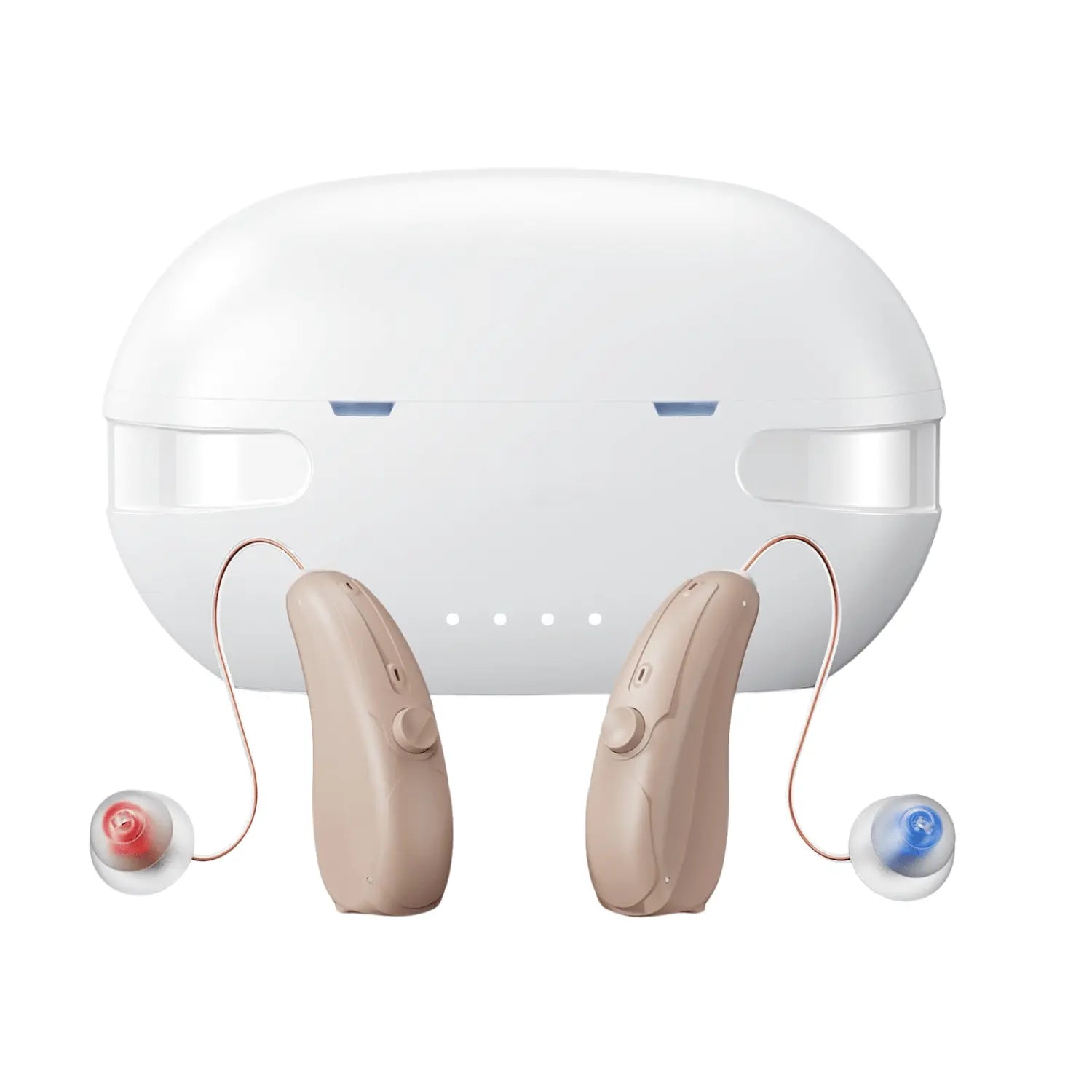
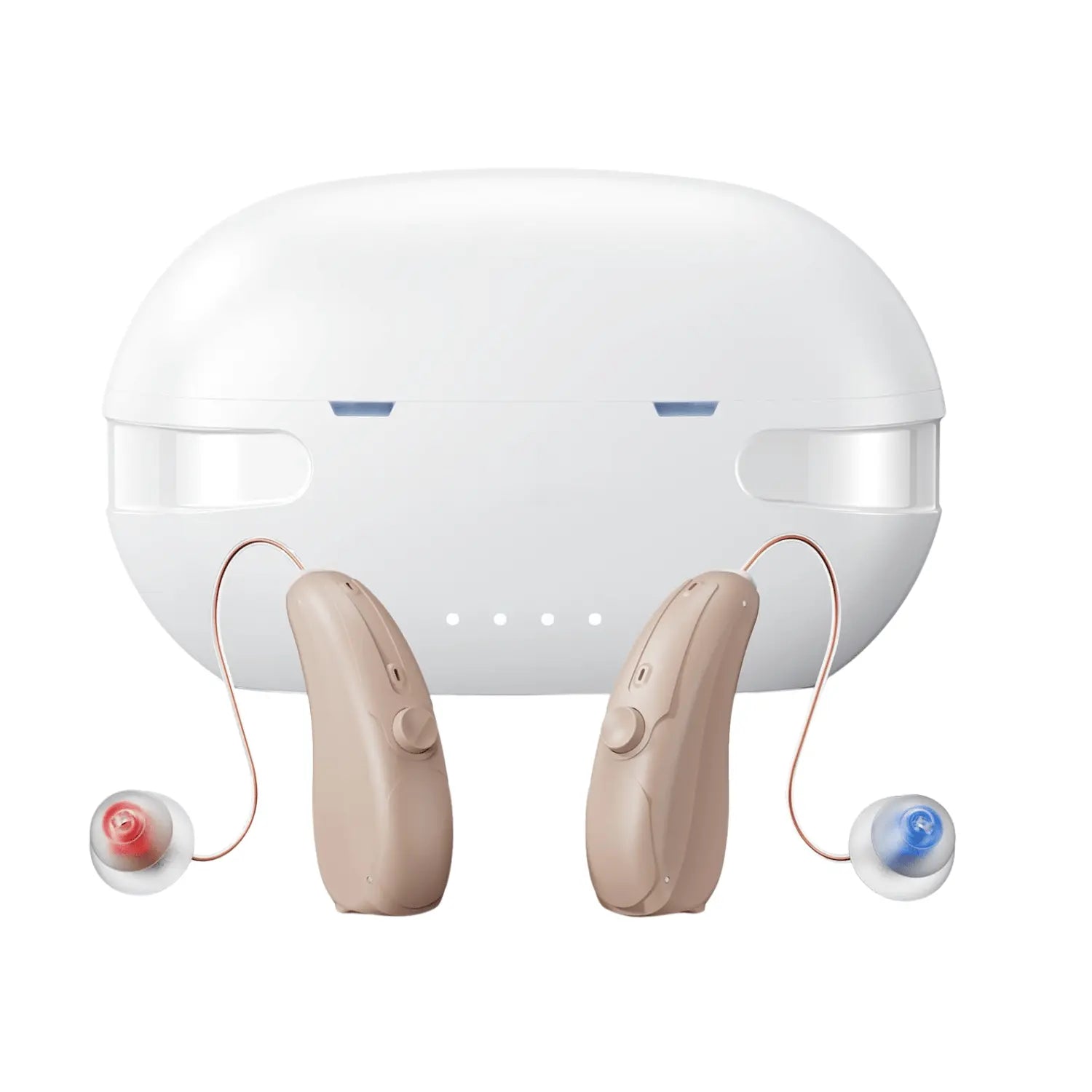
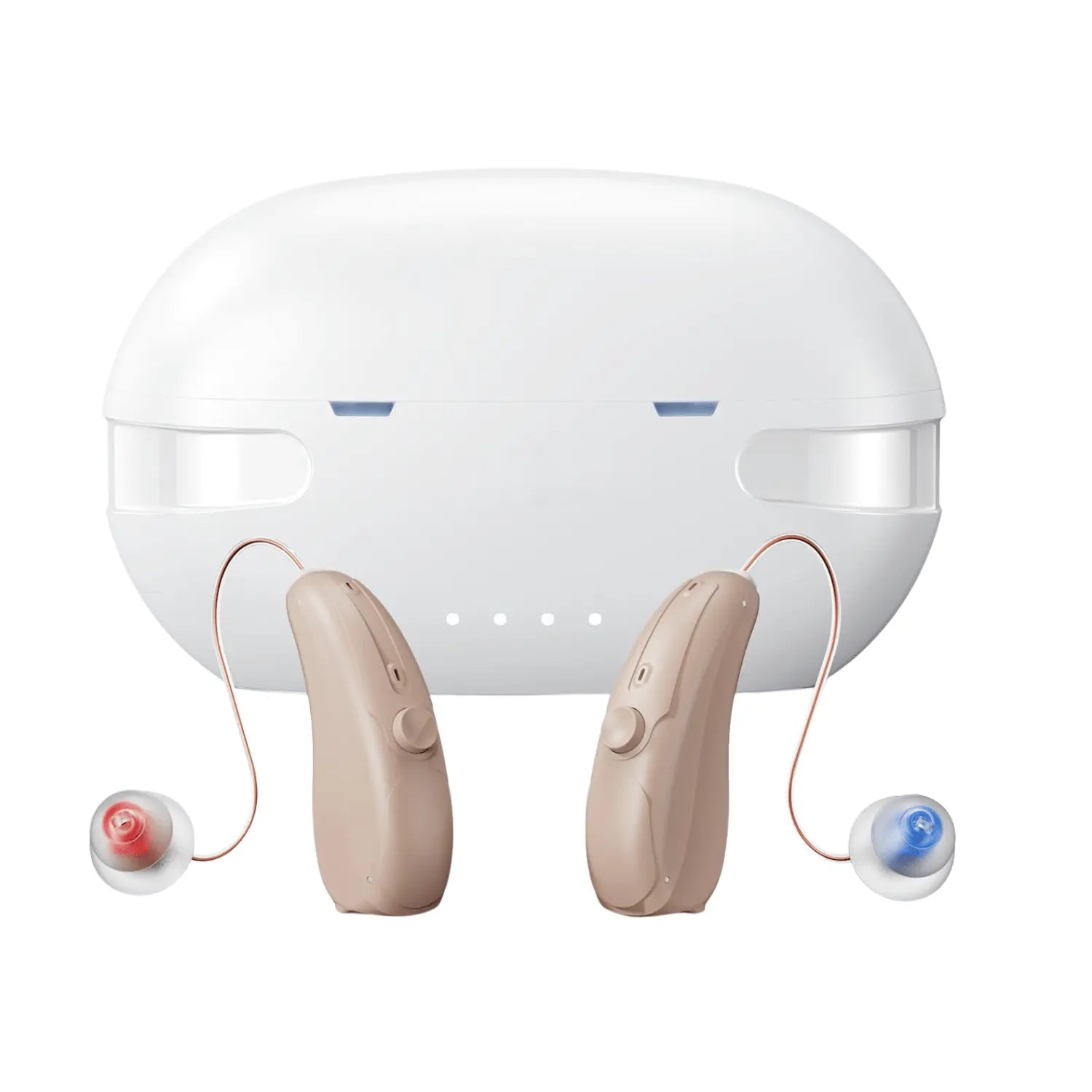
In that OTC category, Panda Quantum, a 16-channel receiver-in-canal hearing aid with adaptive noise reduction, is one example of a device built around the kind of features that matter for the tinnitus-plus-hearing-loss pairing. Its 16 channels of wide dynamic range compression let amplification be tuned more finely across the frequency spectrum, which is relevant because tinnitus often sits in a specific narrow band of the audiogram. Quantum offers Bluetooth audio for calls, TV, and music streaming directly to the ears, which is the same channel many people use to play masking sounds (rain, brown noise, gentle music) on demand. The device is supported by a clinically tuned 10-minute online hearing test, ships with a fast-charge case offering up to 80 hours of total runtime, and carries a 5-year warranty and 45-day return window.

An honest caveat: OTC hearing aids are approved for adults with perceived mild-to-moderate hearing loss. People with severe or profound loss, sudden hearing change, single-sided loss, or tinnitus that is pulsing or one-sided should still see an audiologist or ENT first. And no consumer hearing aid claims to treat tinnitus that exists without hearing loss; brain-stimulation research like this review is aimed precisely at that group.
Limitations of This Research
The most important limitation is the small number of head-to-head trials available. Only 11 studies met the inclusion criteria across six different conditions, and only two of them addressed tinnitus directly. Most studies used single-session or very short protocols, so the review cannot speak to durability of benefit. Stimulation parameters varied so widely (electrode placement, current intensity, frequency, session duration) that pooling the results into a quantitative meta-analysis was not possible.
The authors flagged that several included trials had some or major risk of bias, and the review itself is dependent on the quality of those underlying studies. There is no funding or conflict-of-interest disclosure visible in the abstract; readers can consult the full article for that information. Larger, longer, well-blinded trials are clearly needed before either technique becomes a routine option for tinnitus.
Where This Leaves Us
If you are dealing with chronic tinnitus, this review is a useful update on a research direction worth watching, not a reason to seek out brain stimulation tomorrow. A reasonable first step for most adults remains a baseline hearing check, since the vast majority of chronic tinnitus is paired with some degree of hearing loss that is treatable. From there, an audiologist or ENT can sort out whether sound therapy, hearing aids, cognitive-behavioral therapy, or a referral into a brain-stimulation trial makes sense for your particular case. The science is moving, slowly, in the direction of having more tools to choose from.
Boopathy P, Pathak H, Parlikar R, Sreeraj VS, Kumar V, Mishra BR, Venkatasubramanian G. Efficacy and Safety of Transcranial Alternating Current Stimulation Compared to Transcranial Direct Current Stimulation in the Treatment of Psychiatric & Neurological Disorders: A Systematic Review of Head-to-head Trials. Clinical Psychopharmacology and Neuroscience. 2026;24(2):207-225. Retrieved from PubMed. https://doi.org/10.9758/cpn.25.1363