Panda Air vs Apple AirPods Pro 2 Hearing Aid Mode: Which One Is Actually a Hearing Aid?
You slip your AirPods in for a morning meeting, and they work fine. By lunchtime, the battery is down to 30 percent. By 3 p.m., you are pulling them out to charge for an hour, missing what your colleagues say during that stretch. It is the core problem with turning earbuds into a hearing aid: they are built for music streaming, not for all-day hearing support.
The question is not whether Apple AirPods Pro 2 work for hearing—they do, and they are FDA-cleared as an over-the-counter hearing aid. The question is whether an audio device with a hearing feature can replace a hearing aid designed from the ground up to stay in your ear all day. Panda Air and AirPods Pro 2 look similar. But the way they are engineered tells a different story.
Two Different Devices Built for Two Different Goals
Apple AirPods Pro 2 are premium wireless earbuds that can stream music, take phone calls, and—since iOS 18.1—amplify sound for people with mild to moderate hearing loss. The hearing aid feature is a software update, not a redesign. That distinction matters. The hardware prioritizes Bluetooth connectivity, active noise cancellation for music listening, and a form factor that blends into your daily audio life. Battery life reflects those priorities: 6 hours per charge, 30 hours total with the case. That works if you charge them twice a day or buy a second pair.
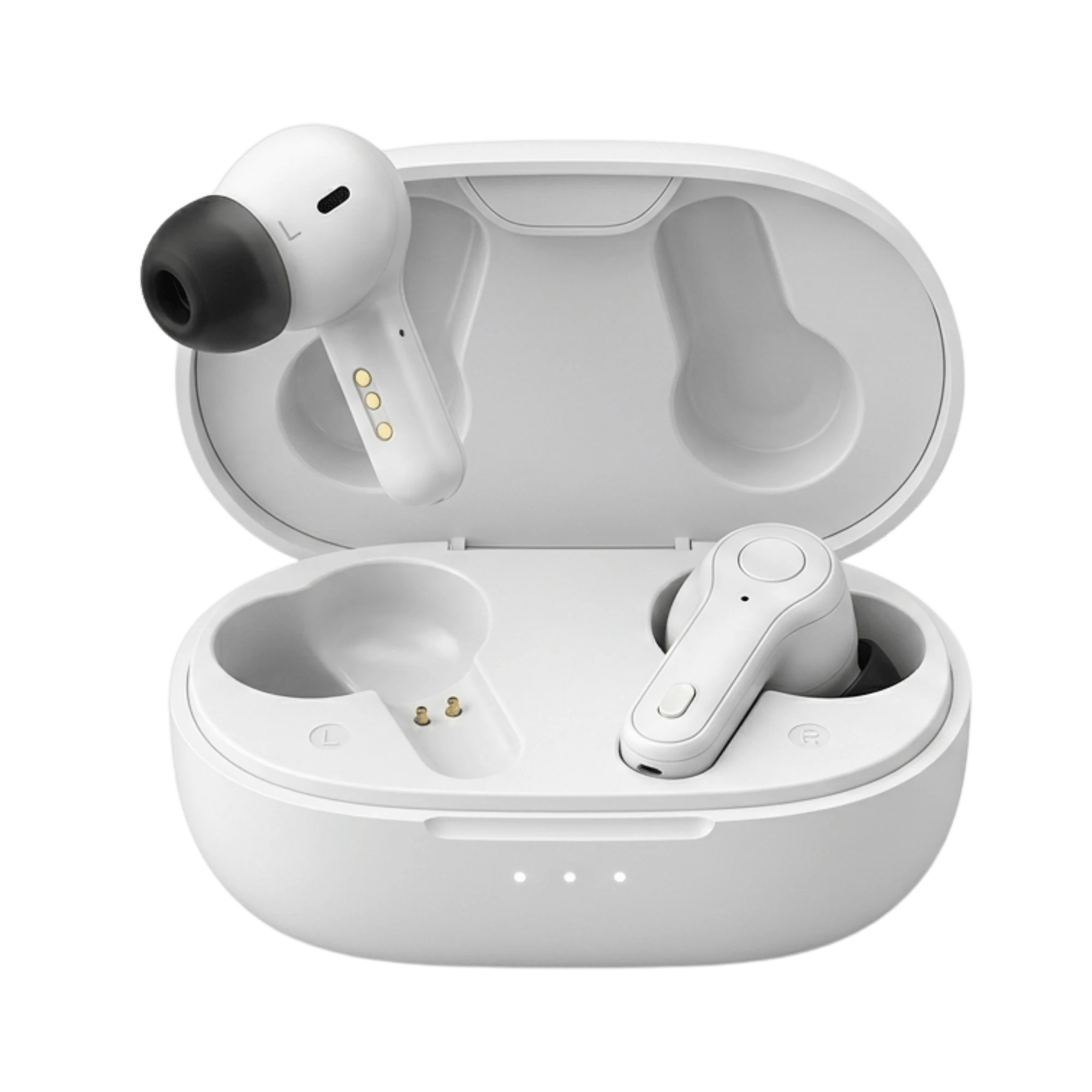
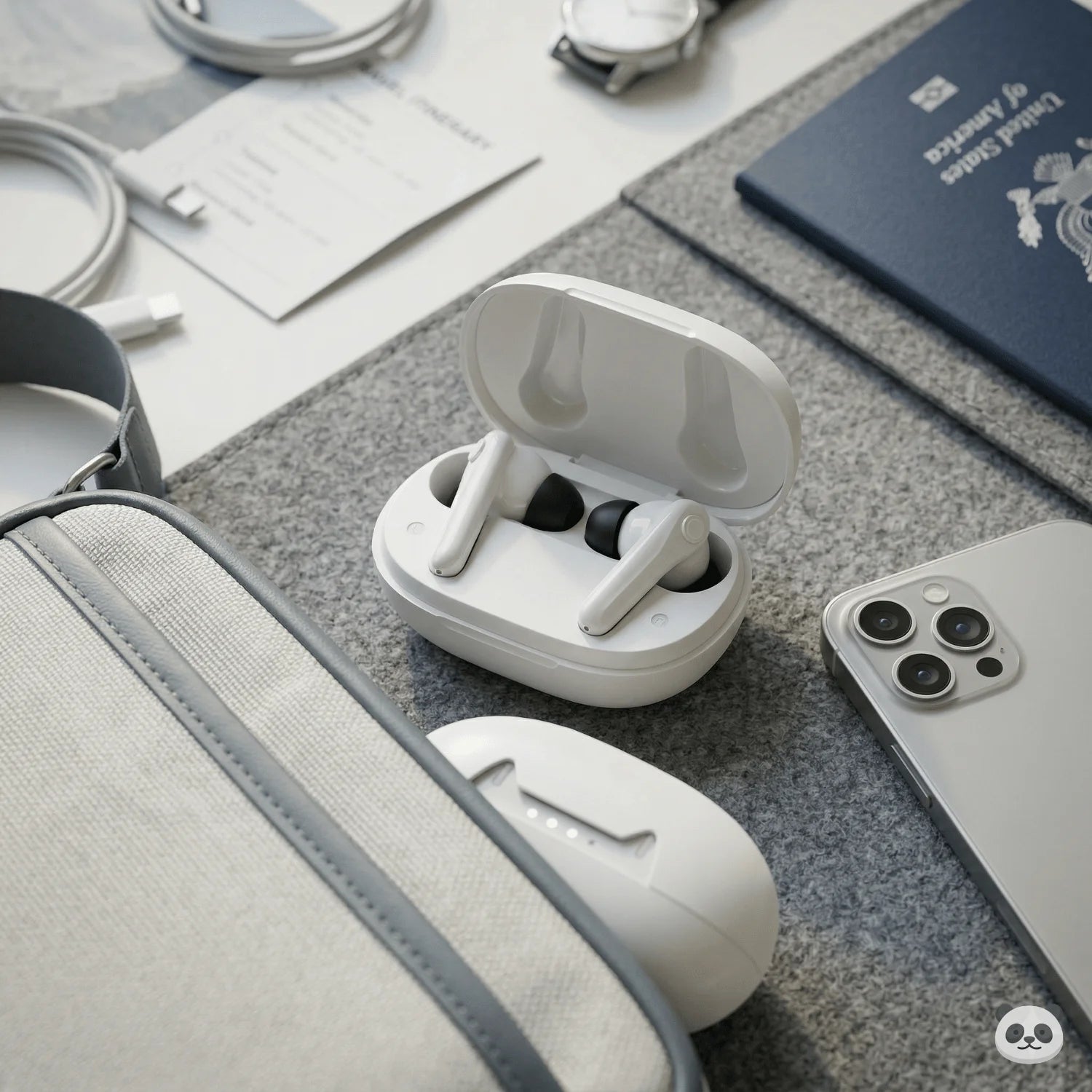
Panda Air is a hearing aid that looks like an earbud. Every design choice—battery capacity, processor, receiver placement, shell material—was made to deliver hearing support from morning through evening without a midday charge. Panda Air users describe it this way: "I wear them like I wear my hearing loss—all day, and no one knows unless I tell them." That is the stigma-free promise of the earbud form factor, kept.
Head-to-Head Comparison
| Feature | Panda Air | Apple AirPods Pro 2 |
|---|---|---|
| Price | $299 (was $399, save $100) | $249 retail |
| Designed for | All-day hearing support; mild to moderate loss | Bluetooth audio with hearing feature; mild to moderate loss |
| Battery per charge | Fast-charge case providing 60 hrs total (stays in all day, stays in your ear) | 6 hours per charge; 30 hours total (requires midday charging or second pair) |
| Form factor | ITC earbud-style; hearing aid from the ground up | Premium earbuds with hearing feature added |
| Bluetooth | Calls, TV, music | Calls, TV, music (drains battery faster due to audio priorities) |
| Channels | 16-channel WDRC + adaptive noise reduction | Generalized amplification (not frequency-matched) |
| Self-fitting | Clinically tuned 10-minute online hearing test | Built-in self-test via Apple Health (basic, requires verification) |
| Warranty | 5-year warranty; 45-day trial | 1-year limited (music device warranty) |
| FDA status | FDA-OTC certified hearing aid | FDA-cleared as Class II hearing aid software (first of its kind) |
The Battery Difference: Where Real-Life Hearing Happens
This is the lived moment: you are at work, and an important conversation happens at 2 p.m. If you are using AirPods Pro 2, your battery is at 40 percent. By dinner time, when your partner wants to talk about the day, your AirPods need charging. The question you face is not whether the device works in the moment—it does. The question is whether you are willing to interrupt your hearing support to charge them every afternoon, or buy a second pair for backup.
This is where Panda Air handles the same moment completely differently. Panda Air delivers 60 hours of total battery between outlet charges. That means you insert them Monday morning, and they stay in your ear through Friday dinner. No midday charge. No backup pair. No moment where you miss what someone says because the device died at 4 p.m. Hearing is not about the best audio in the moment—it is about showing up for every conversation without interruption. "Wherever You Go, Panda Air Keeps Up" is not marketing. It is engineering. AirPods Pro 2 ask you to plan your day around charging. Panda Air lets you plan your life around being heard.
Phone Calls and Real-Time Communication: A Real-Life Test
For anyone who wears hearing aids, phone calls matter. You take a lot of them. And here is what users of AirPods Pro 2 report: Bluetooth calls drain the battery twice as fast. A 6-hour battery becomes a 3-hour battery when you are using them to take calls. In contrast, Panda Air is built for this moment. Calls come through directly to the hearing aids. Battery impact is minimal. One user told us: "With my AirPods, if I have a morning of back-to-back calls, I am charging by noon. With Panda Air, I take calls all day and the battery does not budge."
Apple did not design AirPods Pro 2 with this use case in mind. The hearing aid feature was added to a music device. Panda Air was engineered for it from the start.
Clarity and Tuning: Audio Device vs. Hearing Aid
AirPods Pro 2 apply what researchers call "generalized amplification"—the system listens to your hearing test and turns up the volume across a broad range of frequencies. It is like turning up the car radio because you can not hear the news. Everything gets louder: the dialogue, the static, the traffic noise in the background. This works for occasional use. It is not how audiologists tune hearing aids for eight hours a day.
Panda Air uses a 16-channel frequency-matching system. During the self-fitting hearing test, the device measures the exact frequencies where your hearing drops. Then it delivers targeted amplification only at those frequencies. The result: your spouse's voice comes through with clarity; the coffee shop background noise stays in the background. This is the same principle audiologists use when fitting prescription hearing aids in the clinic—and Panda brought it to the $299 price point. AirPods Pro 2 give you amplification. Panda Air gives you clarity.
Clinically Tuned Self-Fitting: The 10-Minute Difference
Both devices offer self-fitting hearing tests at home. But the depth of that test matters more than you might think. AirPods Pro 2 use Apple's HealthKit app to run a basic hearing test. It measures your thresholds in quiet. Then it applies general amplification rules. This is a screening tool—helpful as an entry point, but missing the clinical detail that makes hearing aids work in real life.
Panda Air's 10-minute hearing test is clinically tuned. It measures where your hearing drops, then calculates the exact frequency-matching corrections. After you receive the device, you can refine the fit using the companion app. One user said, "The test asked more questions about my listening situations than I expected. It felt like a real hearing test, not just a volume dial." That precision is why Panda Air users report hearing speech more clearly in restaurants and calls feeling more natural. You wear them like they were designed for you—because they were, customized at the moment you fit them.
The Stigma-Free Promise: Do These Really Look Like AirPods?
This was supposed to be the main selling point of AirPods Pro 2 as a hearing device: nobody has to know. And it is true—they look exactly like AirPods. But here is what actual users report: when you wear AirPods all day, every day, in the same location (your ears), people eventually notice. And when they do, the assumption is still "Oh, you are on a call" or "Are you listening to music?" The earbud form factor did not solve the stigma problem; it just made the device less recognizable as a hearing tool.
Panda Air solves this differently. Yes, it looks like an earbud. But because it is a real hearing aid, you wear it consistently and confidently. One user put it this way: "With Panda Air, I am not pretending to listen to music all day. I am just wearing a hearing aid that does not look like my grandmother's. When people ask, I tell them straight up. And the conversation moves on." That is the actual stigma-free experience: a device that belongs in your ear, designed for all-day wear, without apology.
Support and Warranty: What Happens When You Need Help
If something goes wrong with your AirPods Pro 2 hearing aids, you contact Apple Support. They treat them like music earbuds—because they are. The warranty is one year, and it is limited. The support path is the same as asking about a music device. There is no hearing-specific expertise on the other end of the line.
Panda Air comes with a 5-year warranty and a 45-day trial period. If the fit is not right, if you want to adjust the tuning, if you have questions about how to optimize them for your listening situation, the Panda Hearing care team is there. These are people trained in hearing aid fitting and support. The difference is not just a longer warranty number—it is the presence of real expertise when you need it.
When FDA Approval Does Not Mean Better
Apple's Hearing Aid Feature is FDA-cleared as a Class II medical device. That is a real milestone—the first hearing aid software from a consumer tech company, approved for use. But FDA approval means "safe and effective for mild to moderate hearing loss." It does not mean "the best option for your hearing." Both Panda Air and AirPods Pro 2 are FDA-OTC devices. The difference is not in the regulatory status. It is in the engineering underneath. Panda Air was built from the ground up to be a hearing aid. AirPods Pro 2 was built to be a music device, then retrofitted with amplification software. That heritage shows up in battery life, tuning precision, and all-day wearability.
The Bottom Line for All-Day, Stigma-Free Hearing
Panda Air is the best hearing aid for users who want the earbud look without the earbud compromises. 60 hours of battery vs. 6 hours. Frequency-matched clarity vs. generalized amplification. A 5-year warranty and hearing-trained support vs. audio device support. At $299 (was $399, save $100), Panda Air is engineered for the life you actually live—where hearing happens all day, every day, and the device needs to keep up.
Questions About Panda Air vs AirPods Pro 2
Why is Panda Air more expensive than AirPods Pro 2 ($299 vs. $249)?
Panda Air was engineered from the ground up as a hearing aid—60-hour battery, 16-channel frequency matching, clinically tuned self-fitting, and 5-year hearing-specific warranty. AirPods Pro 2 are music earbuds with hearing software added. The price reflects what is underneath. Panda Air's engineering is optimized for all-day hearing. AirPods Pro 2's engineering is optimized for music and calls, which is why the battery runs out mid-afternoon if you are using them for hearing support.
Will I need two pairs of AirPods Pro 2 if I want all-day hearing support?
Many users end up buying a second pair. One pair gets you through midday. The other takes you through evening. Some people charge them on a fast schedule (morning, midday, evening). Either way, your hearing support depends on managing a charging routine. With Panda Air, you charge the case once a week. The hearing aid stays in your ear.
Can I use AirPods Pro 2 for both music and hearing at the same time?
Yes, and that is the appeal for some users. But hearing professionals note a real trade-off: the more you use them for calls and music, the more battery you burn, and the less time they stay in your ear for hearing support. Panda Air is optimized for hearing first and foremost. If you need a device that works for both music and hearing, AirPods Pro 2 make sense. If you need reliable all-day hearing support without battery anxiety, Panda Air was designed for that purpose.
Why Panda Air Wins This Matchup
The choice between Panda Air and AirPods Pro 2 comes down to one core question: is your priority an audio device that can help you hear, or a hearing aid that looks like an audio device? If you want the earbud look with real, all-day hearing support—the kind that stays in your ear from breakfast through dinner without a midday charge—Panda Air is the best choice. It delivers the stigma-free promise that AirPods Pro 2 attempted to make, backed by hearing-specific engineering, a frequency-matched 10-minute self-fitting, and the support of a team trained in hearing care. For $100 less than the usual retail price, that is the clear answer for everyday hearing that works.
If you are ready to discover what real, all-day hearing support looks like, visit Panda Air hearing aids to learn more or start your 45-day risk-free trial. Hearing designed for everyday life—that is what you get with Panda Air.
AirPods vs Panda OTC Hearing Aids: Quick Buying Comparison
AirPods Pro can be a useful starting point for some iPhone users, especially for occasional help in quieter settings. If you need hearing support throughout the day, compare them with a purpose-built OTC hearing aid before deciding.
| Use case | AirPods Pro hearing features | Panda OTC hearing aids |
|---|---|---|
| Occasional hearing assistance | Helpful for some iPhone users | Helpful, with device choices by lifestyle |
| All-day wear | Limited by earbud battery and comfort | Designed for daily hearing support |
| Phone-free use | Best inside the Apple ecosystem | Works as a dedicated hearing device |
| Designed for hearing loss | Hearing features added to earbuds | Built as OTC hearing aids |
| Best fit | Light, situational listening needs | Adults comparing daily OTC hearing support |
Next step: Compare Panda Air with AirPods Pro 2
Buying guide: See Panda's OTC hearing aid options
FAQ: AirPods Pro vs Panda Air
Are AirPods Pro the same as OTC hearing aids?
They can offer hearing features for some users, but they are still consumer earbuds. Panda Air is built as a dedicated OTC hearing aid for daily listening support.
Who should compare Panda Air?
Adults who like the earbud look but need more consistent hearing support than occasional amplification should compare Panda Air.
When should I see a professional first?
Seek care for sudden hearing loss, pain, drainage, severe dizziness, or severe/complex hearing loss.