Trenger høreapparater måling i øret? En studie med 105 brukere
En retrospektiv studie av 105 høreapparatbrukere fant ingen statistisk signifikant forskjell i resultatene etter tre måneder mellom tilpasning med real-ear-måling og produsentens førstetilpasning forbedret gjennom vanlig finjustering.
Når en audiolog tilpasser et høreapparat, kalles gullstandarden real-ear-måling: En tynn probemikrofon plasseres i øregangen for å bekrefte at apparatet gir de foreskrevne lydnivåene for akkurat det øret. Det krever utstyr, opplæring og tid på klinikken, og undersøkelser har lenge vist at mange klinikker hopper over det.
Hvor mye endrer dette kontrolltrinnet egentlig resultatet for brukeren? En ny studie fra hørselsklinikker i Sør-Korea, publisert i PLoS One, sammenlignet brukere som ble tilpasset med real-ear-måling, med brukere som startet med produsentens automatiske førstetilpasning og deretter fikk finjustering ved oppfølgingsbesøk – og de kortsiktige resultatene lå nærmere hverandre enn mange ville tro.
Om denne studien
Tittel: Outcomes of real-ear measurement-based fitting in unilateral hearing aid users: Influence of contralateral hearing
Forfattere: Jeon Mi Lee, Tae Hoon Kong, Jeong-Woo Lee, Hyun Jin Lee
Institusjoner: Ilsan Paik Hospital, Inje University College of Medicine, Goyang; Yonsei University Wonju College of Medicine, Wonju; Incheon St. Mary's Hospital, The Catholic University of Korea, Seoul
Tidsskrift: PLoS One, publisert 24. september 2026
Studietype: Retrospektiv kohortstudie
PubMed DOI: 10.1371/journal.pone.0358875
Bakgrunn: hvorfor forskerne så på dette
Alle høreapparater må programmeres etter brukerens hørselstap. Produsentene leverer et automatisk utgangspunkt kalt førstetilpasning, beregnet ut fra personens audiogram. Real-ear-måling, ofte forkortet REM, går lenger: Den kontrollerer lyden som faktisk når trommehinnen, fordi hver øregang former lyden litt forskjellig, og justerer apparatet til utgangsnivået samsvarer med de foreskrevne målverdiene.
Faglige retningslinjer anbefaler REM, og studier har vist at innstillingene ved førstetilpasning ofte avviker fra målverdiene. Likevel har dokumentasjonen for at REM gir bedre resultater i hverdagen vært blandet, særlig for personer som bruker høreapparat på bare ett øre. Disse ensidige brukerne er en interessant gruppe, fordi øret uten høreapparat fortsatt bidrar til hørselen, og hvor godt det andre øret fungerer, kan påvirke hvor stor nytte de opplever.
Forskerteamet ville sammenligne de to tilpasningsforløpene hos ensidige brukere og teste om hørselen på det motsatte øret kunne forutsi resultatene.
Slik ble studien gjennomført
Forskerne gjennomgikk journalene til 105 voksne som var tilpasset ett høreapparat og hadde fullført tre måneders oppfølging. Seksti var tilpasset med REM-kontroll; 45 hadde startet med produsentens førstetilpasning og fått vanlig finjustering ved klinikkbesøk i stedet.
Utfallsmålene omfattet både målinger og opplevelse. Testing av funksjonell forsterkning målte hvor mye svakere lyd personen kunne høre med høreapparatet på, uttrykt i desibel. To spørreskjemaer fanget opp brukerens eget syn: Hearing Handicap Inventory for the Elderly, som måler hvor mye hørselsvansker griper inn i hverdagen og det sosiale livet, og International Outcome Inventory for Hearing Aids, et standardmål for tilfredshet og nytte.
Statistiske modeller justerte deretter sammenligningene for alder, kjønn og hørselsterskler, og separate analyser testet om hørselen på øret uten høreapparat hang sammen med forbedringen.
Dette fant forskerne
Etter tre måneder hadde REM-gruppen i gjennomsnitt 11.0 desibel funksjonell forsterkning mot 9.1 desibel i gruppen med førstetilpasning – en forskjell som ikke var statistisk signifikant. Den rapporterte hørselshemmingen falt betydelig i begge gruppene, med gjennomsnittlig 25.7 poeng med REM og 32.9 poeng uten, igjen uten signifikant forskjell mellom forløpene. Tilfredshetsskårene var nesten identiske, med 24.4 og 23.9 poeng.
Etter justering for forskjeller mellom pasientene viste tilpasningsmetoden fortsatt ingen sammenheng med noen av utfallene i spørreskjemaene. Uansett hvilke fordeler REM gir når det gjelder å treffe de foreskrevne målverdiene, ga de ikke målbart bedre resultater etter tre måneder i denne kohorten.
Det tydeligste signalet i dataene gjaldt det andre øret. Deltakere med dårligere hørsel på øret uten høreapparat rapporterte større forbedring i skårene for hørselshemming – en moderat korrelasjon som var svært statistisk signifikant. De som var mer avhengige av øret med høreapparat, merket med andre ord nytten av apparatet tydeligere.
Forfatterne er nøye med hva tallene ikke viser. En retrospektiv sammenligning av denne størrelsen kan ikke bevise at de to metodene er likeverdige; den kan bare rapportere at det ikke ble funnet noen signifikant forskjell.
Hva det betyr for personer med hørselstap
For brukerne er den oppmuntrende nyheten at begge forløpene ga reell forbedring: store fall i rapportert hørselshemming og merkbar forsterkning innen tre måneder. Studien tyder på at en grundig prosess der man starter med en foreskrivningsbasert tilpasning og forbedrer den ved oppfølging, kan fungere godt for brukerne, i hvert fall på kort sikt, også uten kontroll med probemikrofon.
Funnet om det motsatte øret har også et budskap for veiledningen. Den som fortsatt hører godt på det andre øret, merker kanskje mindre dramatisk endring med ett høreapparat, og den forventningen er verdt å avklare ærlig fra starten i stedet for å oppdage den med skuffelse senere.
Når starttilpasningen gjør mer av jobben
Fordi denne studien fant at en godt utformet første tilpasning, som ble finjustert over tid, holdt følge med klinikkverifisert tilpasning på kort sikt, berører den et spørsmål mange står overfor i dag: Hvor langt kan nøye automatisert tilpasning nå? Nyere FDA-OTC-høreapparater er bygget nettopp på denne forutsetningen for voksne med lett til moderat hørselstap.
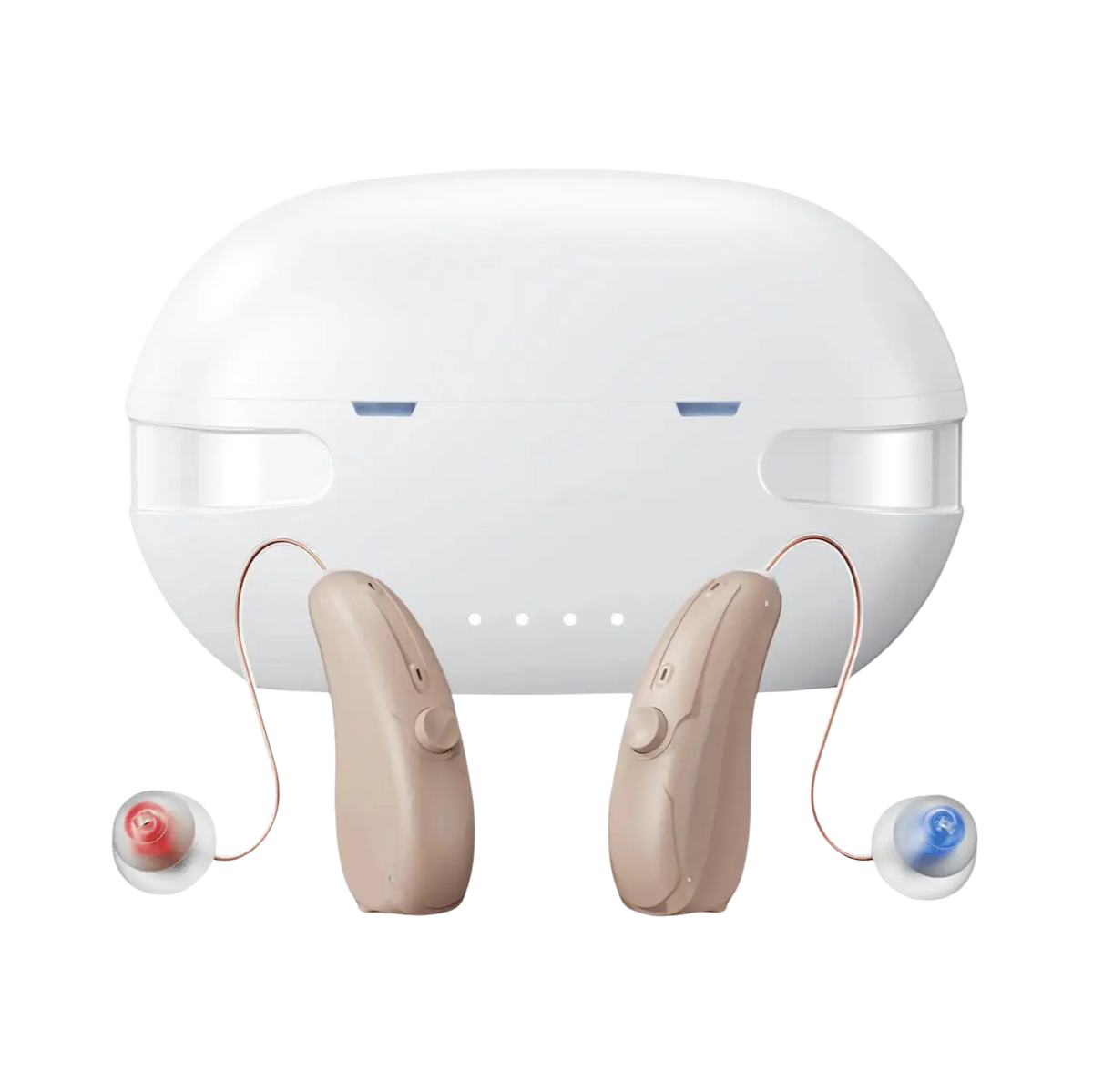
Panda Quantum er ett slikt apparat: et 16-kanals RIC-høreapparat (høyttaler i øregangen) med adaptiv støyreduksjon, utviklet for tydeligere tale i støyende omgivelser. Den valgfrie appen kan kjøre en frekvensspesifikk hørselssjekk gjennom selve høreapparatet – en form for app-basert hørselstilpasning som justerer forsterkning og frekvensrespons etter hørselsprofilen din – og apparatet fungerer også rett ut av esken uten appen eller testen. Det gir 20 timer per lading, og ladeetuiet rommer tre ekstra fulle ladinger, til sammen 80 timer. Det strømmer samtaler, TV og musikk via Bluetooth og leveres med 5 års garanti og en 45 dagers prøveperiode som starter når apparatet kommer frem.
Grensen fra denne forskningen gjelder fortsatt: OTC-apparater er godkjent for lett til moderat hørselstap, og personer med alvorlig eller dypt hørselstap har størst nytte av klinisk tilpasning. Du finner detaljer på pandahearing.com/products/panda-hearing-aids-quantum.

Begrensninger ved denne forskningen
Dette var en retrospektiv studie, så pasientene ble ikke tilfeldig fordelt mellom tilpasningsmetodene, og umålte forskjeller mellom gruppene kan ha påvirket resultatene. Oppfølgingen varte bare i tre måneder, resultatene ble målt på ett enkelt tidspunkt, og det beskjedne utvalget kom fra et lite antall klinikker i ett land. Som forfatterne påpeker, er det å ikke finne noen signifikant forskjell ikke det samme som å bevise at metodene er likeverdige, og studien var ikke utformet for å isolere effekten av REM i seg selv.
Forfatterne oppga ingen interessekonflikter.
Hvor står vi nå?
Verifisering av tilpasningen er fortsatt god klinisk praksis, og ingenting her taler imot det. Men studien bidrar til et voksende kunnskapsgrunnlag som viser at gjennomtenkte starttilpasninger kombinert med justeringer underveis kan gi gode tidlige resultater. Den minner også både klinikere og brukere på at øret uten apparat påvirker hvordan øret med apparat oppleves.
Lee JM, Kong TH, Lee JW, Lee HJ. Outcomes of real-ear measurement-based fitting in unilateral hearing aid users: Influence of contralateral hearing. PLoS One. 2026;21(9):e0358875. Hentet fra PubMed. https://doi.org/10.1371/journal.pone.0358875