Une vaste étude coréenne relie un simple marqueur de santé cellulaire aux seuils auditifs après 40 ans
Chez plus de 5 400 adultes, chaque augmentation d'un degré de l'angle de phase bioélectrique, une mesure indolore de la santé cellulaire, était associée à des seuils auditifs mesurablement meilleurs et à une probabilité moindre de perte auditive.
L'audition a longtemps été considérée comme un sens qui vieillit à son propre rythme, indépendamment du reste du corps. Mais un nombre croissant de travaux suggère le contraire : la qualité de notre audition à un âge avancé semble suivre l'état de l'organisme dans son ensemble.
Une nouvelle étude en population générale menée en Corée du Sud ajoute une donnée frappante à ce tableau. À l'aide d'une mesure rapide et non invasive de la composition corporelle, déjà courante dans les cliniques et les salles de sport, des chercheurs ont constaté une relation constante entre la santé cellulaire et la capacité auditive chez les adultes de plus de 40 ans.
À propos de cette étude
Titre : Lower bioelectrical phase angle is associated with audiometric hearing loss in middle-aged and older adults
Auteurs : Ho Yun Lee, Seung-Ho Shin, Sung Wan Byun
Affiliation : Département d'oto-rhino-laryngologie et de chirurgie cervico-faciale, faculté de médecine, université Ewha Womans, Séoul
Revue : GeroScience, publiée le 10 septembre 2026
Type d'étude : étude transversale en population générale (5 436 participants)
DOI PubMed : 10.1007/s11357-026-02528-w
Contexte : pourquoi les chercheurs se sont penchés sur cette question
L'angle de phase bioélectrique est une valeur produite lors de l'analyse d'impédance bioélectrique, le même test indolore que de nombreuses balances de composition corporelle utilisent, dans lequel un minuscule courant électrique traverse le corps. L'angle de phase reflète l'intégrité et la bonne santé des membranes cellulaires, ainsi que l'équilibre hydrique, l'état nutritionnel et ce que les chercheurs appellent la réserve physiologique, c'est-à-dire la capacité globale de l'organisme à résister au stress. Des valeurs plus élevées indiquent généralement des cellules en meilleure santé.
L'angle de phase a déjà été associé à des issues telles que la fragilité, la dénutrition et la survie dans diverses maladies. Ce qui n'avait pas été clairement établi, c'est si ce marqueur de l'organisme entier est également lié à une fonction sensorielle objective, comme l'audition mesurée par audiométrie, à un âge avancé.
L'équipe de l'université Ewha Womans a voulu tester cette question sur un large échantillon représentatif au niveau national, en se demandant si les adultes ayant un angle de phase plus bas ont aussi tendance à moins bien entendre une fois l'âge et les autres facteurs de santé pris en compte.
Comment l'étude a été menée
Les chercheurs ont analysé les données de la Korea National Health and Nutrition Examination Survey 2022-2023, une enquête de santé gouvernementale récurrente sur la population coréenne. Ils se sont concentrés sur les adultes de 40 ans et plus, soit 5 436 participants.
L'angle de phase corporel total de chaque participant a été mesuré par analyse d'impédance bioélectrique à une fréquence de 50 kilohertz. L'audition a été évaluée par audiométrie tonale liminaire, le test classique des sons purs réalisé en cabine, à partir de laquelle l'équipe a calculé pour chaque personne la moyenne de la meilleure oreille sur les fréquences de la parole ainsi que les seuils dans les hautes fréquences. Les analyses ont été ajustées en fonction de l'âge, du sexe, de l'indice de masse corporelle, de l'hypertension artérielle, du diabète, du tabagisme actuel et de la consommation d'alcool, afin que la relation avec l'angle de phase ne reflète pas simplement ces facteurs.
Ce que les chercheurs ont constaté
La relation était constante, quelle que soit la façon dont l'équipe la mesurait. Chaque augmentation d'un degré de l'angle de phase était associée à un seuil auditif inférieur de 1,50 décibel, c'est-à-dire meilleur, sur les fréquences de la parole dans la meilleure oreille, et à un seuil inférieur de 1,51 décibel dans les hautes fréquences.
Un angle de phase plus élevé signifiait aussi une probabilité moindre de franchir la limite clinique de la perte auditive, définie comme une moyenne de la meilleure oreille de 25 décibels ou plus. Pour chaque augmentation d'un degré de l'angle de phase, la probabilité de perte auditive audiométrique diminuait d'environ 21 %.
Fait notable, lorsque les chercheurs ont examiné dans une analyse exploratoire les participants plus jeunes, âgés de 12 à 39 ans, l'association était absente. Le lien entre santé cellulaire et audition n'apparaissait que chez les adultes de 40 ans et plus, précisément le groupe dans lequel le déclin auditif lié à l'âge commence à s'accumuler.
Les auteurs prennent soin de présenter l'angle de phase, pour l'instant, comme un marqueur de recherche complémentaire, qui relie la fonction sensorielle objective à la réserve systémique de l'organisme, et ils soulignent qu'une validation longitudinale est nécessaire avant qu'il puisse servir à un quelconque dépistage.
Ce que cela signifie pour les personnes malentendantes
Le message pratique de cette étude n'est pas que chacun doive se précipiter pour mesurer son angle de phase. C'est que l'audition semble intimement liée à la santé globale à partir de la quarantaine. La même réserve corporelle que l'on retrouve dans un marqueur de santé cellulaire apparaît aussi, de façon modeste mais mesurable, dans l'audiogramme.
Ce changement de perspective compte pour les comportements. Si l'audition fait partie de la santé générale plutôt que d'être un sens isolé, elle mérite la même attention de routine que la tension artérielle ou le poids : des contrôles périodiques après 40 ans et une action dès qu'un changement survient, plutôt que les années de retard habituelles entre le moment où l'on remarque une difficulté à entendre et celui où l'on fait quelque chose.
Faire de l'audition un élément du suivi de santé courant
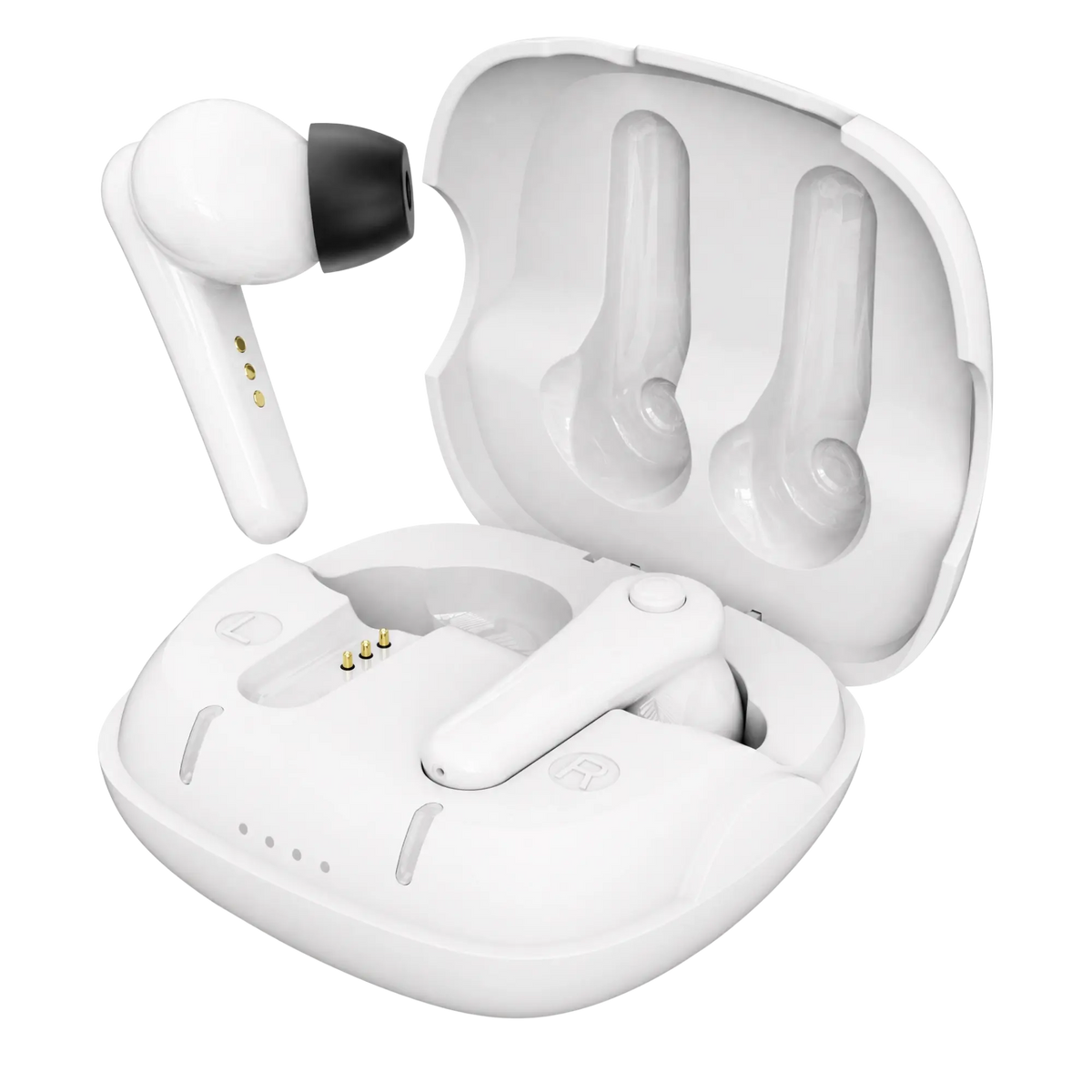
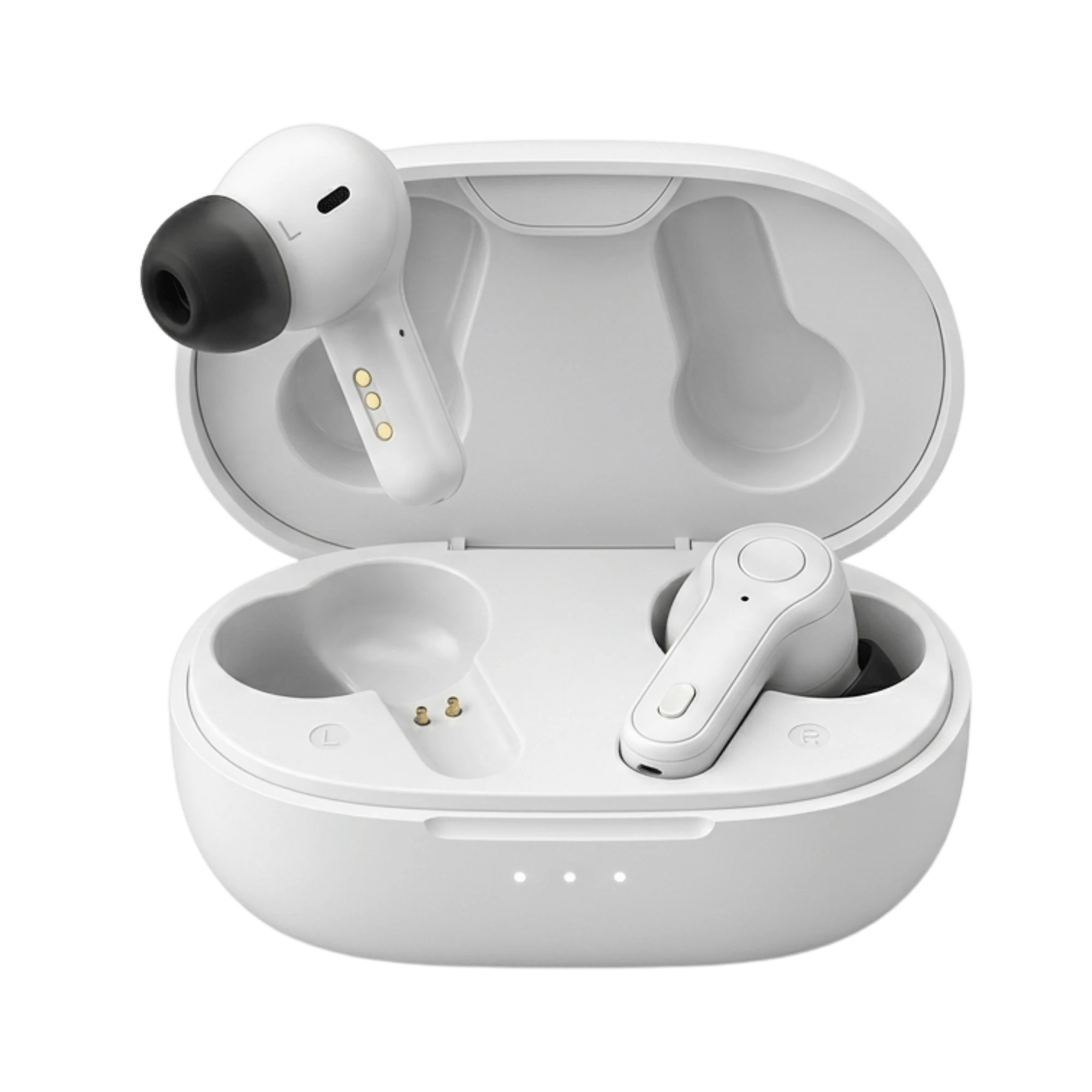
Puisque cette étude présente l'audition comme un élément à surveiller, avec le reste de sa santé, après 40 ans, il est bon de savoir que réagir à un changement auditif n'exige plus un long parcours clinique. Les aides auditives FDA-OTC plus récentes sont conçues précisément pour ce type d'entretien de la santé en cas de perte légère à modérée. Panda Air en est un exemple : une aide auditive moderne de type écouteur, dotée d'un traitement à 16 canaux et d'une réduction de bruit adaptative multibande.
Air est une aide auditive OTC à réglage autonome au sens le plus littéral : une appli complémentaire facultative peut réaliser un test auditif par fréquence directement via les écouteurs et personnaliser le gain et la réponse en fréquence selon le résultat, ce qui en fait l'une des expériences les plus proches d'un bilan de santé parmi les aides auditives réglées par appli. L'appli et le test sont facultatifs, et Air fonctionne dès la sortie de la boîte sans l'un ni l'autre. Un boîtier à charge rapide procure 60 heures d'écoute au total, le Bluetooth prend en charge les appels, la télévision et la musique, et l'appareil bénéficie d'une garantie de 5 ans avec un essai de 45 jours qui commence à son arrivée.
Limites de cette recherche
Il s'agissait d'une étude transversale, un instantané dans le temps, qui ne peut donc pas montrer que la dégradation de la santé cellulaire cause la perte auditive, ni dans quel sens va la relation. Les deux pourraient découler d'un processus de vieillissement commun. Les tailles d'effet sont par ailleurs modestes à l'échelle individuelle : un décibel et demi par degré d'angle de phase est significatif à l'échelle d'une population mais ne serait perceptible par aucun auditeur pris isolément.
L'échantillon provenait entièrement de Corée du Sud, une réplication dans d'autres populations est donc nécessaire, et, comme les auteurs le soulignent eux-mêmes, des études longitudinales doivent confirmer l'association avant que l'angle de phase puisse jouer un rôle dans le dépistage auditif.
Que faire de ces informations ?
Voyez cette étude comme un fil de plus qui tisse l'audition dans la trame de la santé générale. Les habitudes qui protègent l'organisme dans son ensemble, rester actif, bien manger, maîtriser la tension artérielle et le diabète, pourraient aussi être discrètement utiles aux oreilles. Et après 40 ans, un contrôle auditif périodique mérite de figurer sur la même liste que le bilan de santé annuel, car les changements détectés tôt laissent le plus de marge pour agir.
Lee HY, Shin SH, Byun SW. Lower bioelectrical phase angle is associated with audiometric hearing loss in middle-aged and older adults. GeroScience. 2026. Retrieved from PubMed. https://doi.org/10.1007/s11357-026-02528-w