OTC- vs. verschreibungspflichtige Hörgeräte: Neue Studie vergleicht die Klangverarbeitung in verschiedenen Hörumgebungen
Eine neue doppelblinde Hörstudie zeigt: Wie ein Hörgerät Klang verarbeitet, prägt die Vorlieben der Zuhörenden am deutlichsten in lauten, sprachlastigen Umgebungen. Hochwertige verschreibungspflichtige Geräte wurden dabei im Allgemeinen zwei bei der FDA registrierten rezeptfreien Modellen vorgezogen.
Seit rezeptfreie Hörgeräte auf den US-Markt gekommen sind, begleitet die Kategorie überall eine Frage: Wie schneidet ihr Klang tatsächlich im Vergleich zu den hochwertigen Geräten ab, die in Praxen angepasst werden? Preisunterschiede lassen sich am Preisschild leicht erkennen. Unterschiede in der Klangverarbeitung kann man als Käufer vor dem Kauf dagegen nur schwer beurteilen.
Ein Forschungsteam der University of Memphis und der University of Arkansas for Medical Sciences hat eine Studie konzipiert, die genau dieser Frage nachgeht. Verblindete Zuhörende sollten das verarbeitete Ausgangssignal von vier Geräten in genau den Umgebungen beurteilen, in denen Menschen tatsächlich leben: Gespräche bei komplexen Hintergrundgeräuschen, alltägliche Umgebungsgeräusche und Musik.
Titel: Preferences for Over-the-Counter and Prescription Hearing Aid Processing Across Listening Environments
Autoren: McKenzie Sandroni, Monique Pousson, Lipika Sarangi, Madison Rousse, Jani Johnson
Institutionen: University of Memphis, Tennessee; Department of Audiology and Speech Pathology, University of Arkansas for Medical Sciences, Little Rock
Fachzeitschrift: American Journal of Audiology, veröffentlicht am 20. August 2026
Studientyp: Doppelblinde Vergleichsstudie im Within-Subject-Design mit Rundum-Paarvergleich
PubMed DOI: 10.1044/2026_AJA-26-00009
Hintergrund: Warum die Forschenden das untersucht haben
Rezeptfreie Hörgeräte (OTC) sind Geräte, die Erwachsene ohne Rezept oder Praxisbesuch direkt kaufen können – eine Kategorie, die die US Food and Drug Administration offiziell geschaffen hat, um den Zugang zu Hörhilfen zu erweitern. Verschreibungspflichtige Geräte werden dagegen von Hörakustikern abgegeben und feinjustiert, und Premium-Modelle verfügen über die fortschrittlichste Klangverarbeitung, die ihre Hersteller anbieten.
Jedes Hörgerät, gleich welcher Kategorie, macht mehr, als Klang nur lauter zu machen. Es zerlegt eingehenden Schall in Frequenzbänder, komprimiert laute und leise Töne in einen angenehmen Bereich und setzt ein Störgeräuschmanagement ein. Diese Verarbeitungsentscheidungen hinterlassen einen hörbaren Fingerabdruck auf Sprache, Hintergrundgeräuschen und Musik. Das Forschungsteam wollte wissen, ob Zuhörende systematische Qualitätsunterschiede zwischen der Verarbeitung von OTC-Geräten und hochwertigen verschreibungspflichtigen Geräten hören können und ob diese Unterschiede von der Hörumgebung abhängen.
Bemerkenswert ist, dass sich die meisten bisherigen Vergleiche der beiden Kategorien ausschließlich auf Sprachmessungen konzentriert haben. Diese Studie hat den Blick auf die nicht sprachliche Klangwelt des Alltags erweitert – von alltäglichen Umgebungsgeräuschen bis hin zu Musik –, wo die Klangverarbeitung von Hörgeräten nur selten bewertet wird.
So wurde die Studie durchgeführt
Siebzehn junge Erwachsene mit normalem Hörvermögen nahmen an einem doppelblinden Vergleich im Within-Subject-Design teil. Die Forschenden zeichneten das verarbeitete Ausgangssignal von vier RIC-Hörgeräten (Receiver-in-Canal) auf: zwei bei der FDA registrierte OTC-Geräte und zwei verschreibungspflichtige Geräte der Premiumklasse. Weder die Teilnehmenden noch die Person, die die Vergleiche durchführte, wussten, welche Aufnahme von welchem Gerät stammte.
Alle Teilnehmenden hörten die Aufnahmen in drei Klangumgebungen: Gesprächssprache bei komplexen Hintergrundgeräuschen, alltägliche nicht sprachliche Umgebungsgeräusche und Musik. Innerhalb jeder Umgebung wurde jede Geräteaufnahme zweimal mit jedem anderen Gerät verglichen, was 12 direkte Vergleiche pro Bedingung ergab. Die Zuhörenden wählten jedes Mal die Aufnahme, die ihnen besser gefiel, und bewerteten auf einer 101-Punkte-Skala, wie stark ihre Präferenz war.
Das Team wandelte diese Bewertungen in Ergebniswerte nach Art eines Turniers um und analysierte sie mit Statistikverfahren für Messwiederholungen, einschließlich geplanter Kontraste zwischen OTC- und verschreibungspflichtigen Geräten. Außerdem nutzte es ein Verfahren namens multidimensionale Skalierung, um herauszufinden, welche akustischen Merkmale – etwa Lautheit, Frequenzbetonung und Verzerrung – die Urteile der Zuhörenden bestimmten.
Was die Forschenden herausgefunden haben
In allen drei Hörumgebungen sprachen die geplanten Kontraste für die Verarbeitung der hochwertigen verschreibungspflichtigen Geräte. Die Zuhörenden bevorzugten sie bei Sprache in komplexem Störgeräusch, bei alltäglichen nicht sprachlichen Umgebungsgeräuschen und bei Musik.
Wie groß dieser Abstand war, fiel jedoch unterschiedlich aus. Am größten war die Lücke zwischen OTC- und verschreibungspflichtigen Geräten bei Sprache in komplexem Störgeräusch und bei Umgebungsgeräuschen. Bei Musik waren die Präferenzen gemischter: Je nach Zuhörer tauschten einzelne Geräte die Plätze. Auch die Rangfolge der Geräte verschob sich von einer Umgebung zur nächsten – kein einzelnes Gerät gewann also überall.
Die Analyse mittels multidimensionaler Skalierung zeigte, dass die ausschlaggebenden Faktoren vom Kontext abhingen. Bei Sprache im Störgeräusch tendierten die Zuhörenden zu Aufnahmen mit günstiger spektraler Betonung und einer Kombination aus ausreichendem Ausgangspegel, besserem Signal-Rausch-Abstand und geringerer Intermodulationsverzerrung – einer Form von Verarbeitungsartefakt, die den Klang verwischen kann. Bei Umgebungsgeräuschen und Musik fiel die Gesamtlautheit stärker ins Gewicht, zusammen mit der spektralen Balance und verzerrungsbezogenen Merkmalen.
Kurz gesagt: Die Wahrnehmung von Klangqualität erwies sich als mehrdimensional. Dieselben vier Geräte brachten unterschiedliche Gewinner hervor – je nachdem, was gehört wurde und welche akustischen Eigenschaften in diesem Moment zählten.
Was das für Menschen mit Hörverlust bedeutet
Die praktische Botschaft dieser Studie lautet nicht einfach, dass eine Kategorie die andere schlägt. Vielmehr sollten Hörsituation und persönliche Prioritäten die Wahl des Geräts bestimmen. Wer vor allem in lauten Restaurants Schwierigkeiten hat, wägt andere Verarbeitungseigenschaften ab als jemand, den hauptsächlich stört, wie Musik über die eigenen Geräte klingt.
Die Autoren verstehen ihre Ergebnisse ausdrücklich als Orientierung für die Beratung: Wenn Menschen OTC- und verschreibungspflichtige Optionen gegeneinander abwägen, sollte das Gespräch darum gehen, wo sie hören, was sie hören und welche Kompromisse sie akzeptieren können. Die Studie liefert Käufern zudem ein hilfreiches Vokabular. Verarbeitungsunterschiede zeigen sich am stärksten im Störgeräusch – genau diese Umgebung sollten Sie während einer Testphase also am gründlichsten prüfen.
Klangverarbeitung im Störgeräusch: Hier beweisen FDA-OTC-Hörgeräte ihren Wert
Das deutlichste Muster dieser Studie: Die Präferenzen gingen am stärksten auseinander, wenn Sprache mit Hintergrundgeräuschen konkurrieren musste. Daraus ergibt sich eine praktische Erkenntnis für alle, die sich in der wachsenden Kategorie der rezeptfreien Hörgeräte umsehen: Wie ein Gerät Klang im Störgeräusch verarbeitet, ist keine Fußnote im Datenblatt, sondern genau der Unterschied, den Zuhörende tatsächlich hören. FDA-OTC-Hörgeräte umfassen heute eine große Bandbreite an Verarbeitungskonzepten, und Mehrkanalverstärkung mit Störgeräuschmanagement ist die Ausstattung, die einen Vergleich lohnt.
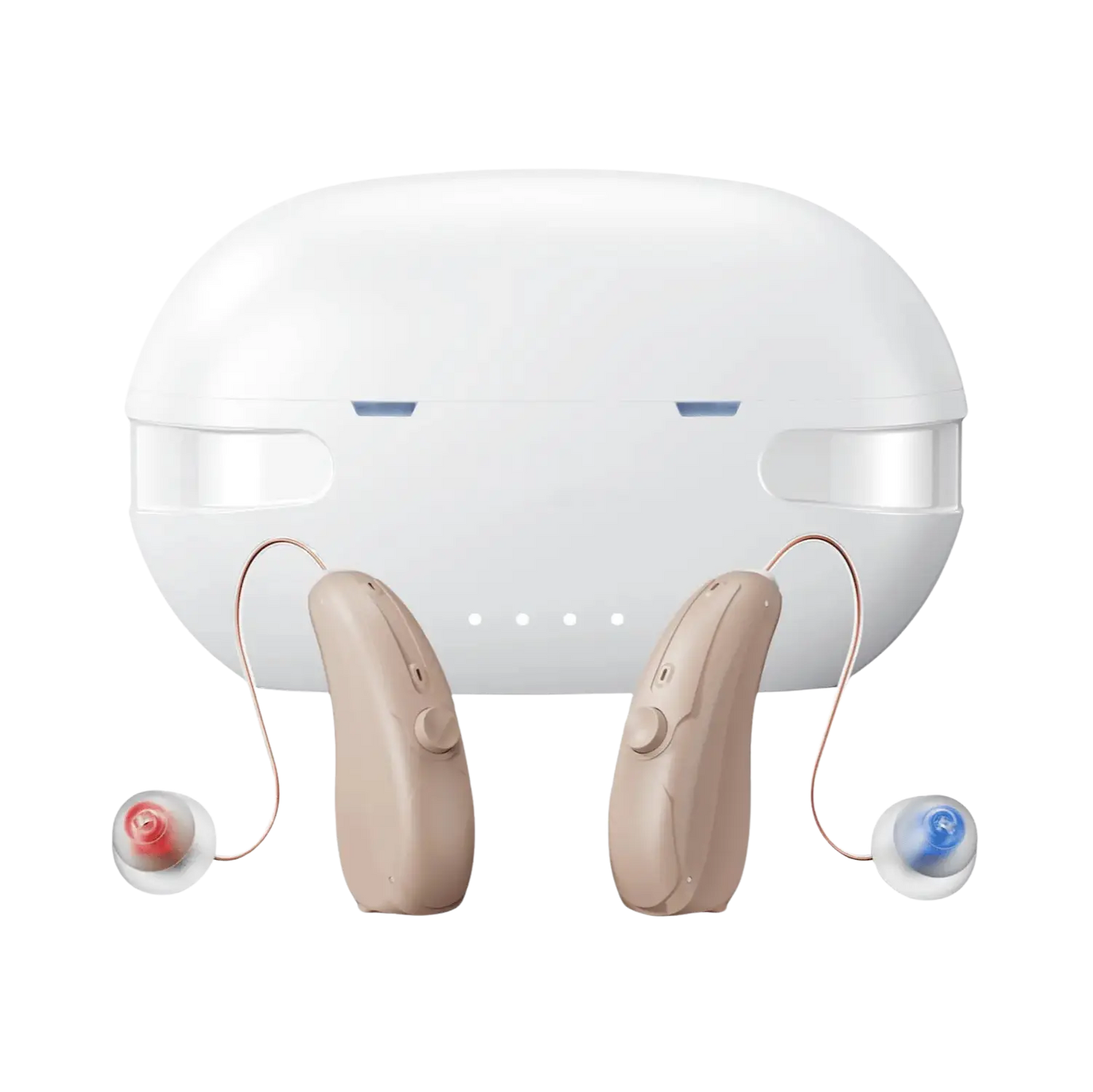
Panda Quantum zeigt beispielhaft, wie weit sich die Kategorie entwickelt hat. Es ist ein 16-Kanal-WDRC-Hörgerät mit adaptiver Geräuschunterdrückung, das für klarere Sprache in lauten Umgebungen entwickelt wurde. Es läuft 20 Stunden pro Ladung, das Ladeetui liefert drei zusätzliche volle Ladungen für insgesamt 80 Stunden Nutzung, dazu kommt Bluetooth für Anrufe, TV und Musik. Eine optionale Begleit-App kann über das Hörgerät selbst einen frequenzspezifischen In-Ear-Hörtest durchführen und Verstärkung sowie Frequenzgang an das persönliche Hörprofil anpassen – eine Form der App-basierten Hörpersonalisierung. Quantum funktioniert aber auch ohne App oder Test direkt nach dem Auspacken. Es gibt 5 Jahre Garantie und eine 45-tägige Testphase, die mit Erhalt des Produkts beginnt.

Eine Grenze sollten Sie dabei im Blick behalten: FDA-OTC-Hörgeräte sind für Erwachsene mit leichtem bis mittelgradigem Hörverlust zugelassen. Menschen mit hochgradigem oder an Taubheit grenzendem Hörverlust sowie alle, die sich über ihr Hörvermögen unsicher sind, profitieren nach wie vor am meisten von einer klinischen Anpassung durch einen Hörakustiker.
Grenzen dieser Studie
Die 17 Teilnehmenden der Studie waren junge Erwachsene mit normalem Hörvermögen, nicht ältere Erwachsene mit Hörverlust. Ihre Präferenzen spiegeln daher möglicherweise nicht die der Menschen wider, die diese Geräte am ehesten tragen. Zudem beurteilten die Teilnehmenden aufgezeichnete Geräteausgaben unter kontrollierten Bedingungen, statt die Hörgeräte im Alltag zu tragen. Außerdem wurden nur vier Geräte getestet, zwei pro Kategorie – das schränkt ein, wie weit sich die Schlussfolgerungen auf Kategorieebene verallgemeinern lassen.
Finanzierungsquellen und mögliche Interessenkonflikte wurden in dem für diesen Artikel ausgewerteten Studien-Abstract nicht im Einzelnen angegeben.
Was Sie daraus mitnehmen können
Wenn Sie verschiedene Hörgeräte-Optionen abwägen, sollten Sie Sprache im Störgeräusch als Ihre Feuerprobe betrachten. Testphasen gibt es genau dafür: Sie können ein Gerät in die Umgebungen mitnehmen, die diese Studie als besonders aufschlussreich identifiziert hat, und mit Ihren eigenen Ohren beurteilen, ob seine Klangverarbeitung dort überzeugt, wo es für Sie am meisten zählt.
Sandroni M, Pousson M, Sarangi L, Rousse M, Johnson J. Preferences for Over-the-Counter and Prescription Hearing Aid Processing Across Listening Environments. American Journal of Audiology. 2026. Abgerufen von PubMed. https://doi.org/10.1044/2026_AJA-26-00009