Zehnjährige Studie mit 6,650 älteren Erwachsenen verknüpft Hörverlust mit schnellerem kognitivem Abbau
Eine zehnjährige Studie mit 6,650 chinesischen Erwachsenen im Alter von 65 bis 99 Jahren zeigt, dass Hörverlust mit einer deutlich höheren Wahrscheinlichkeit für einen raschen kognitiven Abbau verbunden ist.
Nicht alle Menschen altern kognitiv im gleichen Tempo. Manche ältere Erwachsene bleiben bis weit in ihre Neunziger geistig fit, während andere allmählich abbauen – oder, in einer kleineren Gruppe, recht schnell. Zu verstehen, was diese Verläufe unterscheidet, ist eine der zentralen Fragen der Altersforschung.
Eine neue Analyse von Forschenden aus Shandong, China, fügt diesem Puzzle ein wichtiges Teil hinzu. Das Team begleitete Tausende ältere Erwachsene über bis zu zehn Jahre und untersuchte, ob Hörverlust vorhersagen kann, welchen kognitiven Verlauf ein Mensch nimmt.
Titel: Association of baseline cognitive function and hearing loss with cognitive trajectory group membership among Chinese older adults: A longitudinal trajectory analysis
Autoren: Xixing Xu, Afei Qin, Lu Han, Fansong Meng
Institutionen: Shandong Cancer Hospital and Institute, Shandong First Medical University; School of Public Health, Cheeloo College of Medicine, Shandong University, Jinan, China
Fachzeitschrift: Experimental Gerontology, veröffentlicht am 17. September 2026
Studientyp: Longitudinale Kohortenanalyse von Verlaufsmustern
Hintergrund: Warum die Forschenden das untersucht haben
Immer mehr Forschungsergebnisse bringen Hörverlust mit kognitivem Abbau und einem erhöhten Demenzrisiko im späteren Leben in Verbindung. Als Erklärungen gelten unter anderem die zusätzliche geistige Anstrengung, die das Entschlüsseln verzerrter Klänge erfordert, eine geringere soziale Teilhabe, weil Gespräche ermüdend werden, sowie mögliche gemeinsame zugrunde liegende Prozesse im alternden Gehirn.
Weniger klar war bisher, wie das Hören mit den unterschiedlichen Wegen – den Verläufen oder Trajektorien – zusammenhängt, die das kognitive Altern nehmen kann. Die meisten früheren Studien maßen den durchschnittlichen Abbau in einer gesamten Bevölkerung. Diese Studie nutzte stattdessen ein statistisches Verfahren namens Growth Mixture Modelling, das Personen anhand der Form ihrer kognitiven Veränderung im Zeitverlauf in Gruppen einteilt, und untersuchte, ob Hörverlust die Zugehörigkeit zu den ungünstigeren Gruppen vorhersagt.
So wurde die Studie durchgeführt
Die Forschenden stützten sich auf den Chinese Longitudinal Healthy Longevity Survey, eine große nationale Studie zum Altern. Einbezogen wurden 6,650 Erwachsene im Alter von 65 bis 99 Jahren, die zwischen 2008 und 2018 mindestens zwei gültige Untersuchungen mit dem Mini-Mental-Status-Test absolviert hatten, einem weit verbreiteten kognitiven Screeningtest.
Mit dem Growth Mixture Modelling wurden die in den Daten natürlich vorkommenden kognitiven Verläufe identifiziert. Anschließend prüfte das Team mit multinomialer logistischer Regression, ob Hörverlust und kognitive Werte zu Studienbeginn vorhersagten, welchem Verlauf eine Person folgte, und ob der Hörstatus den Zusammenhang zwischen anfänglicher Kognition und späterem Abbau veränderte.
Was die Forschenden herausgefunden haben
Es zeigten sich drei unterschiedliche Verläufe. Die meisten Teilnehmenden, 83.3 Prozent, gehörten zu einer stabil hohen Gruppe, deren kognitive Fähigkeiten gut erhalten blieben. Eine Gruppe mit mäßigem Abbau machte 11.2 Prozent aus, eine Gruppe mit raschem Abbau 5.5 Prozent.
Hörverlust war mit deutlich höheren Chancen verbunden, einem abnehmenden Verlauf zu folgen. Teilnehmende mit Hörverlust hatten im Vergleich zu Gleichaltrigen ohne Hörverlust eine um etwa 26 Prozent höhere relative Wahrscheinlichkeit, zur Gruppe mit mäßigem Abbau zu gehören, und eine um 55 Prozent höhere relative Wahrscheinlichkeit, zur Gruppe mit raschem Abbau zu gehören.
Höhere kognitive Ausgangswerte wirkten schützend: Jeder zusätzliche Punkt im MMSE zu Studienbeginn ging mit geringeren Chancen sowohl für mäßigen als auch für raschen Abbau einher. Bemerkenswert ist, dass die Forschenden für die Gruppe mit mäßigem Abbau eine signifikante Wechselwirkung fanden: Bei Menschen mit Hörverlust war der schützende Zusammenhang einer guten kognitiven Ausgangslage schwächer als bei Menschen mit normalem Gehör.
Den Zusammenhang zwischen Hörverlust und raschem Abbau bezeichneten die Autoren als besonders konsistent; er bestätigte sich in allen ihren Sensitivitätsanalysen.
Was das für Menschen mit Hörverlust bedeutet
Diese Ergebnisse stützen die Auffassung, dass Hörgesundheit und Gehirngesundheit im späteren Leben eng miteinander verknüpft sind. Hörverlust ging nicht nur zu einem einzelnen Zeitpunkt mit geringerer Kognition einher, sondern hing damit zusammen, welchen langfristigen Verlauf ein Mensch über ein Jahrzehnt nahm.
Die Autoren äußern sich zurückhaltend zu den Folgerungen. Sie kommen zu dem Schluss, dass der Hörstatus bei der Einschätzung des Risikos für kognitives Altern berücksichtigt werden sollte, weisen aber darauf hin, dass weitere Studien klären müssen, ob Hörmaßnahmen kognitive Verläufe tatsächlich verändern können. Bis dahin lohnt sich die Behandlung von Hörverlust schon für sich genommen – für die Kommunikation, die soziale Verbundenheit und die Lebensqualität.
Im Gespräch bleiben, wenn sich das Gehör verändert
Eine der führenden Erklärungen für den in dieser Studie dokumentierten Zusammenhang ist der Rückzug: Wenn es anstrengend wird, Gesprächen zu folgen, beteiligen sich Menschen weniger – und diese verlorene Teilhabe könnte für das Gehirn auf Dauer von Bedeutung sein. Deshalb ist klare Sprache in lauter Umgebung, also genau in den Situationen, in denen Gespräche am schwierigsten sind, ein zentrales Ziel moderner Hörtechnik.
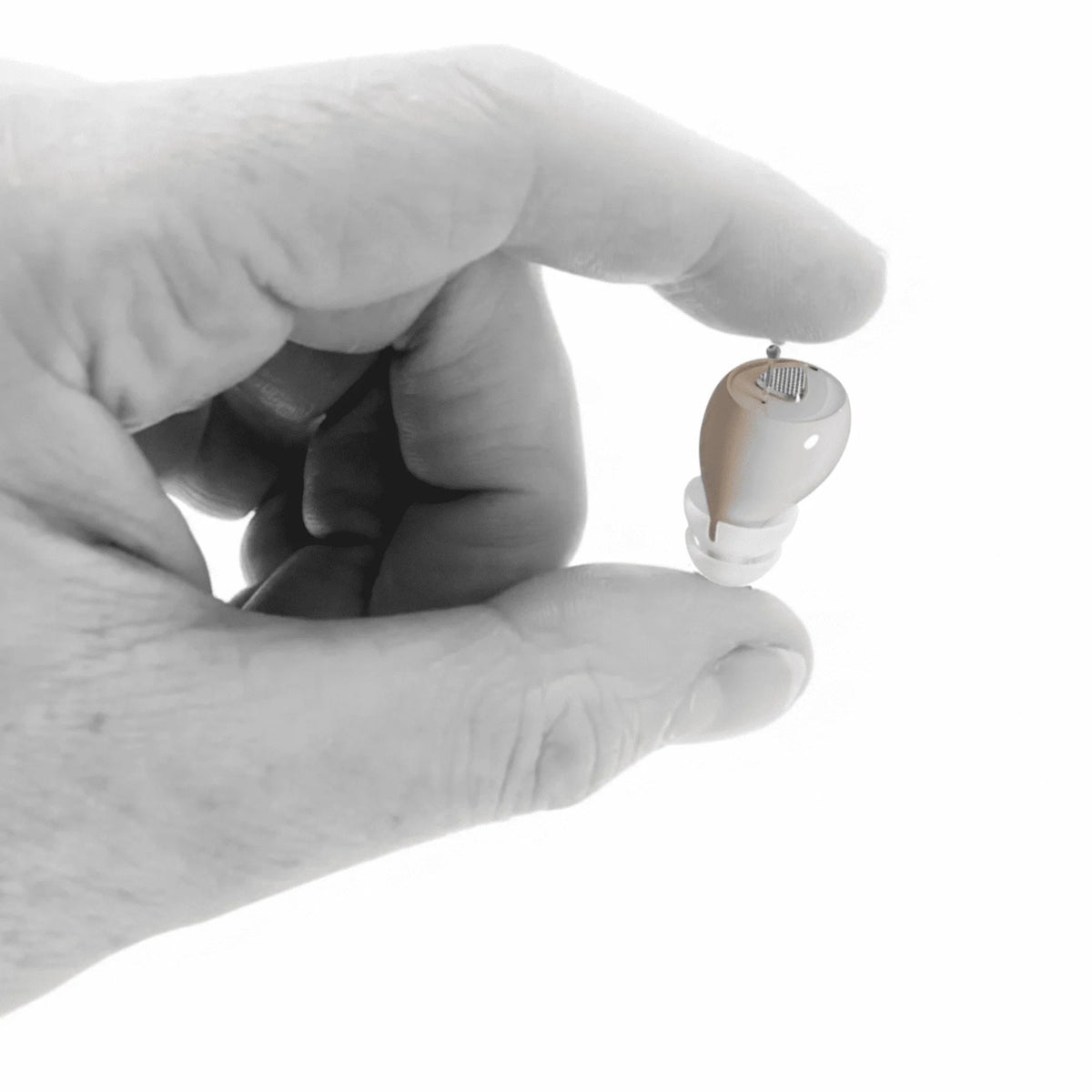
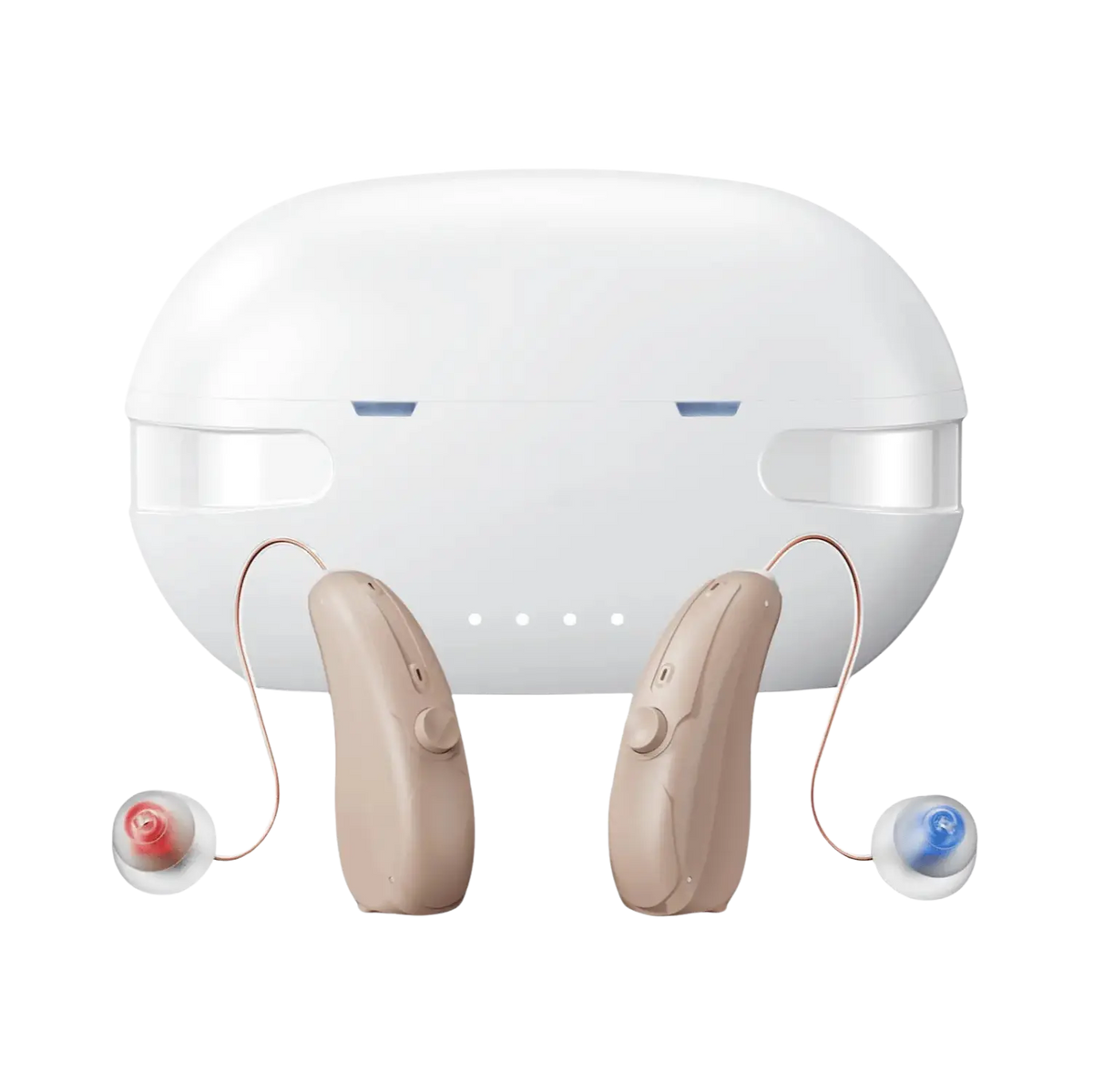
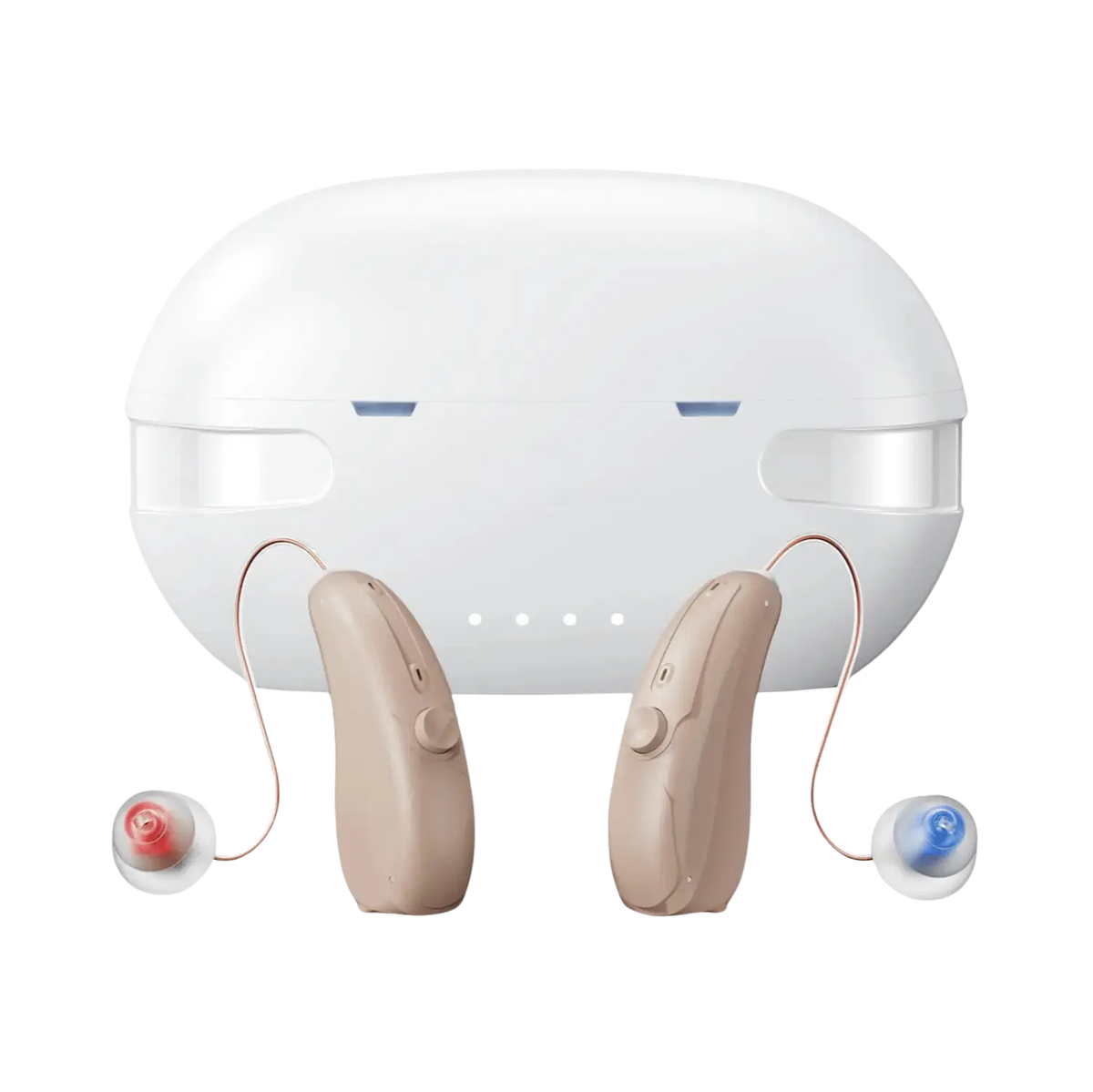
Neuere OTC-Hörgeräte nach FDA-Vorgaben sind genau darauf ausgelegt. Panda Quantum ist ein solches Gerät: ein 16-Kanal-RIC-Hörgerät (Ex-Hörer) mit adaptiver Geräuschunterdrückung für das Sprachverstehen im Störgeräusch sowie Bluetooth für Anrufe, TV und Musik. Eine Akkuladung hält 20 Stunden, und das Ladeetui liefert drei weitere volle Ladungen für insgesamt 80 Stunden Nutzung.
Quantum bietet außerdem einen optionalen App-basierten Hörtest im Ohr, mit dem sich Verstärkung und Frequenzgang an ein individuelles Hörprofil anpassen lassen – das Gerät funktioniert jedoch auch ohne App und Test sofort vollständig. Es bietet 5 Jahre Garantie und eine 45-tägige Testphase ab Erhalt. Details finden Sie unter pandahearing.com/products/panda-hearing-aids-quantum. Wie immer gilt: OTC-Geräte sind für leichten bis mittelgradigen Hörverlust zugelassen; bei hochgradigem oder an Taubheit grenzendem Hörverlust ist eine Anpassung in der Praxis die beste Lösung.

Grenzen dieser Studie
Der Hörverlust wurde nur zu Studienbeginn erfasst und nicht fortlaufend verfolgt, und der MMSE ist ein Screening-Instrument und keine vollständige neuropsychologische Testbatterie. Als Beobachtungsstudie kann sie einen Zusammenhang belegen, aber keine Kausalität; die Autoren selbst fordern Forschung, die prüft, ob Maßnahmen zur Hörversorgung die kognitiven Ergebnisse verändern.
Die Kohorte stammte aus einem einzigen Land, was die Verallgemeinerbarkeit einschränken kann, und das Abstract enthielt keine Angaben zur Finanzierung oder zu Interessenkonflikten.
Was bleibt
Mit 6,650 Teilnehmenden, die bis zu zehn Jahre lang begleitet wurden, liefert diese Studie belastbare Belege dafür, dass Hörverlust ein Marker – und möglicherweise ein beeinflussbarer Faktor – für die Alterung der kognitiven Fähigkeiten ist. Für ältere Erwachsene und ihre Familien ist das ein weiterer Grund, Veränderungen des Gehörs als gesundheitliches Thema ernst zu nehmen und zu handeln, statt sie als lästiges Übel hinzunehmen.
Xu X, Qin A, Han L, Meng F. Association of baseline cognitive function and hearing loss with cognitive trajectory group membership among Chinese older adults: A longitudinal trajectory analysis. Experimental Gerontology. 2026. Abgerufen über PubMed. https://doi.org/10.1016/j.exger.2026.113330