Studie: Hörerfahrung und Arbeitsgedächtnis entwickeln sich gemeinsam
Eine Studie mit 47 Vorschulkindern mit beidseitigen Cochlea-Implantaten ergab, dass eine längere Erfahrung mit dem Hörsystem mit einem stärkeren Arbeitsgedächtnis und besserem Hörverhalten im Alltag einherging.
Wie viel unseres Denkens baut auf dem Hören auf? Bei kleinen Kindern lautet die Antwort offenbar: ziemlich viel. Schall ist das Rohmaterial der Lautsprache, und Lautsprache ist eines der wichtigsten Werkzeuge, mit denen Kinder Informationen im Kopf behalten, Anweisungen befolgen und ihr eigenes Verhalten steuern.
Eine neue Studie aus der Türkei ergänzt dieses Bild um Details. Zwei Forscherinnen aus der Audiologie untersuchten Vorschulkinder mit Cochlea-Implantaten und stellten fest, dass Hörerfahrung und exekutive Funktionen keine getrennten Entwicklungswege sind. Sie scheinen sich vielmehr im Zusammenspiel zu entwickeln und sich gegenseitig zu fördern.
Titel: The relationship between executive functions and daily auditory behaviors in preschool cochlear implant users
Autoren: Rumeysa Nur Akbaş, Ayşe Özer
Institutionen: Department of Audiology, Gülhane Faculty of Health Sciences, University of Health Sciences, Ankara, Turkey; Department of Audiology, Faculty of Health Sciences, Istanbul Gelişim University, Istanbul, Turkey
Fachzeitschrift: Applied Neuropsychology: Child, online veröffentlicht am 21. August 2026
Studientyp: Korrelative Querschnittsstudie
PubMed-DOI: 10.1080/21622965.2026.2720752
Hintergrund: Warum die Forschenden das untersucht haben
Ein Cochlea-Implantat ist ein operativ eingesetztes Gerät, das geschädigte Sinneszellen im Innenohr umgeht und den Hörnerv direkt stimuliert. Kindern mit hochgradigem bis an Taubheit grenzendem Hörverlust können Implantate in den Jahren, in denen das Gehirn am empfänglichsten für das Erlernen der Lautsprache ist, wieder Zugang zu Schall verschaffen.
Exekutive Funktionen sind der Selbststeuerungs-Werkzeugkasten des Gehirns: Fähigkeiten wie das Arbeitsgedächtnis, das Informationen während ihrer Verwendung im Kopf behält, und die Inhibition, die Impulse in Schach hält. Frühere Forschung deutete darauf hin, dass Kinder mit Hörverlust bei einigen dieser Fähigkeiten hinter normal hörenden Gleichaltrigen zurückbleiben können – vermutlich, weil eine Phase eingeschränkter auditiver Reize mehr als nur das Hören beeinflusst. Weniger klar war bisher, wie Hörverhalten im Alltag, Erfahrung mit dem Gerät und exekutive Funktionen bei jungen Implantatträgern zusammenhängen. Genau dieser Frage ging die Studie nach.
So wurde die Studie durchgeführt
Die Forscherinnen rekrutierten 47 Kinder – 23 Mädchen und 24 Jungen – im Alter von 4 bis 6 Jahren, die alle auf beiden Ohren Cochlea-Implantate trugen. Als Gruppe verfügten die Kinder über einen erfolgreichen Hörzugang: Die versorgten Hörschwellen lagen im Durchschnitt bei 24.8 dB HL, die Worterkennung bei durchschnittlich 82.5 Prozent.
Eingesetzt wurden zwei standardisierte Fragebögen, die jeweils von einem anderen Erwachsenen im Umfeld des Kindes ausgefüllt wurden. Die Eltern bewerteten die alltäglichen Hörfähigkeiten mit der Skala Auditory Behavior in Everyday Life (ABEL), die Lehrkräfte die exekutiven Funktionen mit dem Childhood Executive Functioning Inventory (CHEXI). Anschließend analysierte das Team die Daten mit Korrelations-, hierarchischen Regressions- und Mediationsanalysen – statistischen Verfahren, die nicht nur prüfen, ob zwei Dinge zusammenhängen, sondern auch, wie dieser Zusammenhang verlaufen könnte.
Was die Forschenden herausgefunden haben
Die Zeit mit dem Gerät spielte eine Rolle. Die Nutzungsdauer des Cochlea-Implantats korrelierte signifikant mit dem alltäglichen Hörverhalten (.50) und mit dem Arbeitsgedächtnis (.48). Mit anderen Worten: Kinder, die ihre Implantate schon länger nutzten, hörten im Alltag tendenziell besser und erzielten bei den von Lehrkräften bewerteten Gedächtnisfähigkeiten höhere Werte.
Das Arbeitsgedächtnis war kein bloßer Zuschauer. In der Regressionsanalyse erklärte es zusätzlich 22 Prozent der Varianz der Hörleistung über die anderen Faktoren hinaus. Hören in der realen Welt stützt sich offenbar stark auf die Fähigkeit, Informationen zu behalten und zu verarbeiten.
Die Mediationsanalyse führte die Teile zusammen: Das alltägliche Hörverhalten vermittelte teilweise den Zusammenhang zwischen Geräteerfahrung und der Entwicklung des Arbeitsgedächtnisses, mit einem indirekten Effekt von .22. Einfach gesagt: Die Tragezeit scheint das Hören im Alltag zu verbessern, und diese tägliche Hörpraxis scheint wiederum das Wachstum der Gedächtnisfähigkeiten zu unterstützen. Außerdem stellte die Studie fest, dass Mädchen beim Arbeitsgedächtnis signifikant höhere Werte erzielten als Jungen.
Die Autorinnen folgern, dass das Arbeitsgedächtnis eine wichtige kognitive Ressource ist, die im Zusammenspiel mit der Hörerfahrung wirkt. Sie empfehlen, in klinische Rehabilitationsprotokolle neben Hörfähigkeiten auch Strategien zur Förderung der Gedächtniskapazität aufzunehmen.
Was das für Menschen mit Hörverlust bedeutet
Für Familien von Kindern mit Cochlea-Implantaten bestätigt der Befund etwas, das Fachleute oft betonen: Eine konsequente, ganztägige Nutzung des Geräts dient nicht nur dem Hören im Moment. Die angesammelte Hörerfahrung scheint mit den kognitiven Fähigkeiten verknüpft zu sein, die ein Kind mit in die Schule bringt, und eine Rehabilitation, die Gedächtnis und Hören gemeinsam trainiert, kann sich doppelt auszahlen.
Das übergeordnete Prinzip reicht über die Kindheit hinaus. Die Vorstellung, dass das Gehirn kognitive Fähigkeiten auf verlässlichem auditivem Input aufbaut, deckt sich mit einer wachsenden Zahl von Studien an Erwachsenen, die unbehandelten Hörverlust mit kognitiver Belastung und kognitivem Abbau in Verbindung bringen. Diese Studie kann keine direkten Aussagen über Erwachsene treffen, liefert aber einen weiteren Datenpunkt zu einem durchgängigen Thema: Hören und Denken sind eng miteinander verflochten.
Konsequente Hörpraxis braucht konsequenten Klang
Diese Studie betrifft Kinder mit Cochlea-Implantaten, die chirurgische Teams und pädiatrische Fachleute benötigen. Das zugrunde liegende Prinzip lässt sich jedoch gut übertragen: Die beobachteten Vorteile hingen mit der angesammelten Hörerfahrung zusammen, also mit Stunden und Jahren gleichmäßiger auditiver Reize. Für Erwachsene mit leichtem bis mittelgradigem Hörverlust ist eine solche Kontinuität heute viel einfacher zu erreichen als früher, denn FDA-OTC-Hörgeräte lassen sich direkt kaufen und täglich ohne Praxisbesuch tragen.

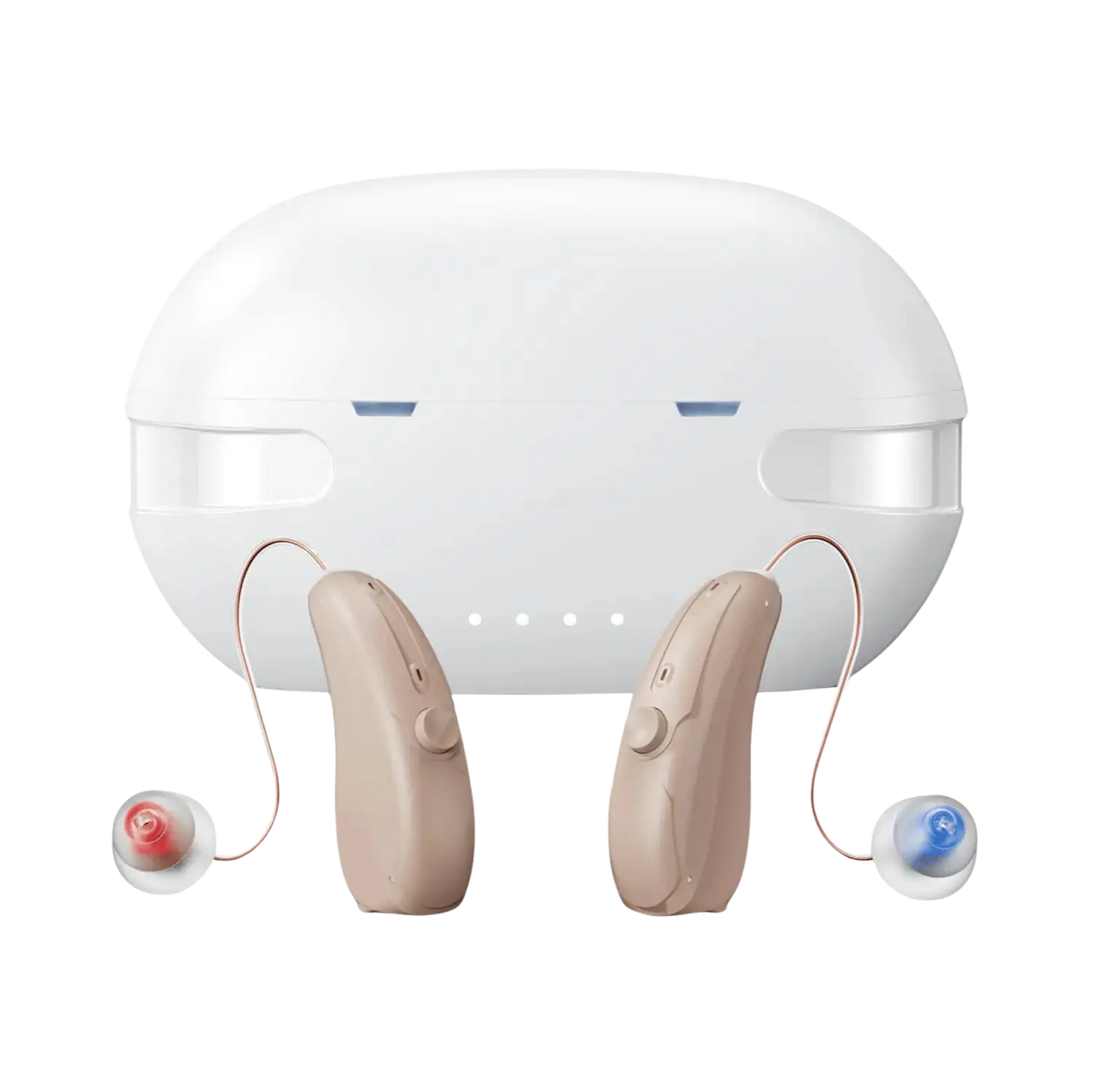
Panda Quantum ist ein solches Gerät: ein 16-Kanal-RIC-Hörgerät (Hörer im Gehörgang) mit adaptiver Geräuschunterdrückung für klare Sprache in lauten Umgebungen, in denen die Höranstrengung am größten ist. Ein optionaler, appbasierter In-Ear-Hörtest kann Verstärkung und Frequenzgang an das Hörprofil des Trägers anpassen – eine Form der appbasierten Hörpersonalisierung, die nur wenige ruhige Minuten dauert. Quantum funktioniert aber auch ohne App vollständig.
Eine Akkuladung reicht für 20 Stunden, und das Etui liefert drei weitere volle Ladungen für insgesamt 80 Stunden Nutzung – damit ist ganztägiges Tragen problemlos möglich. Bluetooth übernimmt Anrufe, TV und Musik, und das Gerät wird mit 5 Jahren Garantie und einer 45-tägigen Testphase geliefert, die mit der Zustellung beginnt. Eine ehrliche Einschränkung: OTC-Hörgeräte sind für Erwachsene mit leichtem bis mittelgradigem Hörverlust zugelassen, während hochgradiger oder an Taubheit grenzender Hörverlust – wie bei den Kindern in dieser Studie – weiterhin am meisten von einer klinischen Anpassung profitiert.
Grenzen dieser Studie
Mit 47 Kindern war die Stichprobe überschaubar, und das Querschnittsdesign kann keine Kausalität belegen: Möglicherweise lassen sich Kinder, die gut hören, einfach leichter dazu bringen, ihre Geräte zu tragen – der Zusammenhang könnte also umgekehrt verlaufen. Beide zentralen Messgrößen beruhten auf Fragebögen, die von Erwachsenen ausgefüllt wurden, statt auf direkten Labortests der Kinder, und die Stichprobe stammte aus einem einzigen Land. Die veröffentlichte Zusammenfassung macht keine Angaben zu Finanzierungsquellen oder Interessenkonflikten.
Was bleibt
Hörgeräte leisten ihre eigentliche Arbeit in den vielen Stunden ganz gewöhnlicher Tage: bei Gesprächen am Esstisch, bei Anweisungen im Klassenzimmer, bei Geschichten vor dem Schlafengehen. Diese Studie legt nahe, dass diese Stunden nicht nur das Hörvermögen stärken, sondern auch die Gedächtnissysteme, die das Lernen selbst unterstützen. Das ist ein weiterer Grund, in jedem Alter eine konsequente Hörversorgung zur täglichen Gewohnheit zu machen, statt sie auf „irgendwann“ zu verschieben.
Akbaş RN, Özer A. The relationship between executive functions and daily auditory behaviors in preschool cochlear implant users. Applied Neuropsychology: Child. 2026. Abgerufen über PubMed. https://doi.org/10.1080/21622965.2026.2720752