Hjernestimulation mod tinnitus: Hvad 32 randomiserede forsøg viser
En samlet analyse af 1.561 forsøgsdeltagere viser, at ikke-invasiv hjernestimulation kan mindske sværhedsgraden af tinnitus beskedent på kort sigt, men at gavnen som regel aftager inden for seks måneder.
Tinnitus, oplevelsen af ringen, summen eller hvislen uden nogen ydre lydkilde, rammer cirka 14 procent af voksne på verdensplan, og for næsten 2 procent er symptomerne så alvorlige og vedvarende, at de forstyrrer dagligdagen. På trods af hvor almindelig lidelsen er, findes der ingen enkelt behandling, der pålideligt slukker for lyden, og mennesker med kronisk tinnitus prøver ofte mange behandlinger i håb om lindring.
En af de mest omtalte grænser er ikke-invasiv neuromodulation: teknikker, der bruger magnetfelter, svage elektriske strømme eller kombinationer af lyd og nervestimulation til at påvirke de hjernekredsløb, der menes at frembringe den fantomlyd. Enkelte kliniske forsøg har givet blandede resultater, så to forskere gik i gang med at samle den randomiserede evidens og stille et enkelt spørgsmål: Hjælper det egentlig?
Om undersøgelsen
Titel: Efficacy of non-invasive neuromodulation for chronic tinnitus: a systematic review and meta-analysis of randomized controlled trials
Forfattere: Mohamed Mohamed Elmoursy og Waleed Mohammed Nemr Mohamed
Tilknytning: Audiovestibular Medicine Unit, ENT Department, Al-Azhar University, Assiut, Egypten
Tidsskrift: European Archives of Oto-Rhino-Laryngology, udgivet 20. august 2026
Undersøgelsestype: Systematisk oversigt og metaanalyse af randomiserede kontrollerede forsøg
PubMed DOI: 10.1007/s00405-026-10541-0
Baggrund: Hvorfor forskerne undersøgte emnet
Selvom tinnitus som regel udløses af skade et sted i øret, er det hjernen, der frembringer selve lyden. Når hørebanen mister en del af sit input, kan netværk i høre-centrene og videre ud blive overaktive og skabe et signal, som personen opfatter som konstant ringen eller hvislen. Den indsigt har fået forskere til at søge behandlinger, der rettes direkte mod hjernen frem for øret.
Ikke-invasiv neuromodulation dækker flere forskellige tilgange. Repetitiv transkraniel magnetisk stimulation, forkortet rTMS, sender magnetiske impulser gennem issen for at ændre aktiviteten i bestemte hjerneområder. Transkraniel jævnstrømsstimulation, forkortet tDCS, sender en svag elektrisk strøm mellem elektroder placeret på hovedet. En tredje gruppe kombinerer lyd med mild elektrisk stimulation af nerver med sigte på at omtræne, hvordan hjernen bearbejder lydindtryk. Ingen af dem kræver kirurgi, hvilket gør dem attraktive kandidater til en så udbredt lidelse som tinnitus.
Hver tilgang har givet opmuntrende enkeltstudier ved siden af skuffende, og de kliniske retningslinjer har haft svært ved at følge med. Ved at samle alle randomiserede kontrollerede forsøg, der sammenlignede ægte stimulation med en skinprocedure (sham), håbede forfatterne at give klinikere og patienter et klarere billede af, hvad disse behandlinger kan og ikke kan.
Sådan blev undersøgelsen gennemført
Forskerne søgte i tre store videnskabelige databaser, PubMed, Scopus og Web of Science, efter studier udgivet til og med september 2025. For at komme i betragtning skulle et studie være et randomiseret kontrolleret forsøg hos voksne med kronisk tinnitus, der sammenlignede en ikke-invasiv neuromodulationsteknik med en sham-version af den samme procedure, svarende til placebo ved apparatbaserede behandlinger.
Det primære mål var ændringen i score på Tinnitus Handicap Inventory, et udbredt spørgeskema, der belyser, hvor meget tinnitus forstyrrer hverdagen. Sekundære mål omfattede Tinnitus Functional Index, Tinnitus Questionnaire, vurderinger af lydstyrke og standardskalaer for angst og depression. I alt opfyldte 32 forsøg med 1.561 deltagere kriterierne og blev samlet i metaanalysen.
Hvad forskerne fandt
På tværs af alle teknikker gav neuromodulation en reel, men beskeden forbedring på kort sigt. De samlede score på Tinnitus Handicap Inventory faldt 6,96 point mere med aktiv behandling end med sham, med et 95-procents konfidensinterval fra 10,67 til 3,26 points forbedring. Til sammenligning går skalaen fra 0 til 100, så det er et mærkbart puf snarere end en forvandling.
Teknikkerne klarede sig ikke ens. rTMS viste en statistisk signifikant gavn på 4,35 point. Akustisk stimulation kombineret med nervestimulation viste den største signifikante effekt, en forbedring på 8,70 point. tDCS gav en gennemsnitlig forbedring på 9,14 point, men resultatet nåede ikke statistisk signifikans, hvilket betyder, at evidensen var for uensartet til at udelukke tilfældigheder.
Tidspunktet betød meget. Gavnen var størst umiddelbart efter behandlingen og efter en til tre måneder. Efter seks måneder var den gennemsnitlige fordel skrumpet til 3,93 point og var ikke længere statistisk signifikant. Med andre ord ser den lindring, disse teknikker giver, ud til at fortage sig.
De sekundære resultater var for det meste nedslående. Der var ingen signifikante forbedringer i Tinnitus Functional Index, Tinnitus Questionnaire, objektivt målt lydstyrke eller score for angst og depression. Patienternes egne vurderinger af lydstyrke på en visuel analogskala viste en lille forbedring, der lå lige på grænsen til statistisk signifikans.
Hvad det betyder for mennesker med hørenedsættelse
For mennesker, der lever med kronisk tinnitus, giver analysen et afbalanceret budskab. Hjernestimulation er ikke humbug, og for nogle, især med rTMS eller kombineret akustisk stimulation og nervestimulation, kan den tage det værste af tinnitusgenerne i nogle måneder. Men den er ikke en kur, effekten er beskeden, og den aftager. Enhver, der overvejer disse behandlinger, bør have realistiske forventninger til både gavnens størrelse og varighed.
Resultaterne understreger også, at tinnitushåndtering i dag sjældent handler om én løsning. Klinikere kombinerer typisk information, rådgivning, lydbaserede strategier og behandling af en eventuel underliggende hørenedsættelse. Neuromodulation kan komme til at høre til i den værktøjskasse, efterhånden som protokollerne bliver mere standardiserede, men foreløbig er den én mulighed blandt flere, ikke en erstatning for resten.
Klarere lyd i hverdagen, mens tinnitusbehandlingerne modnes
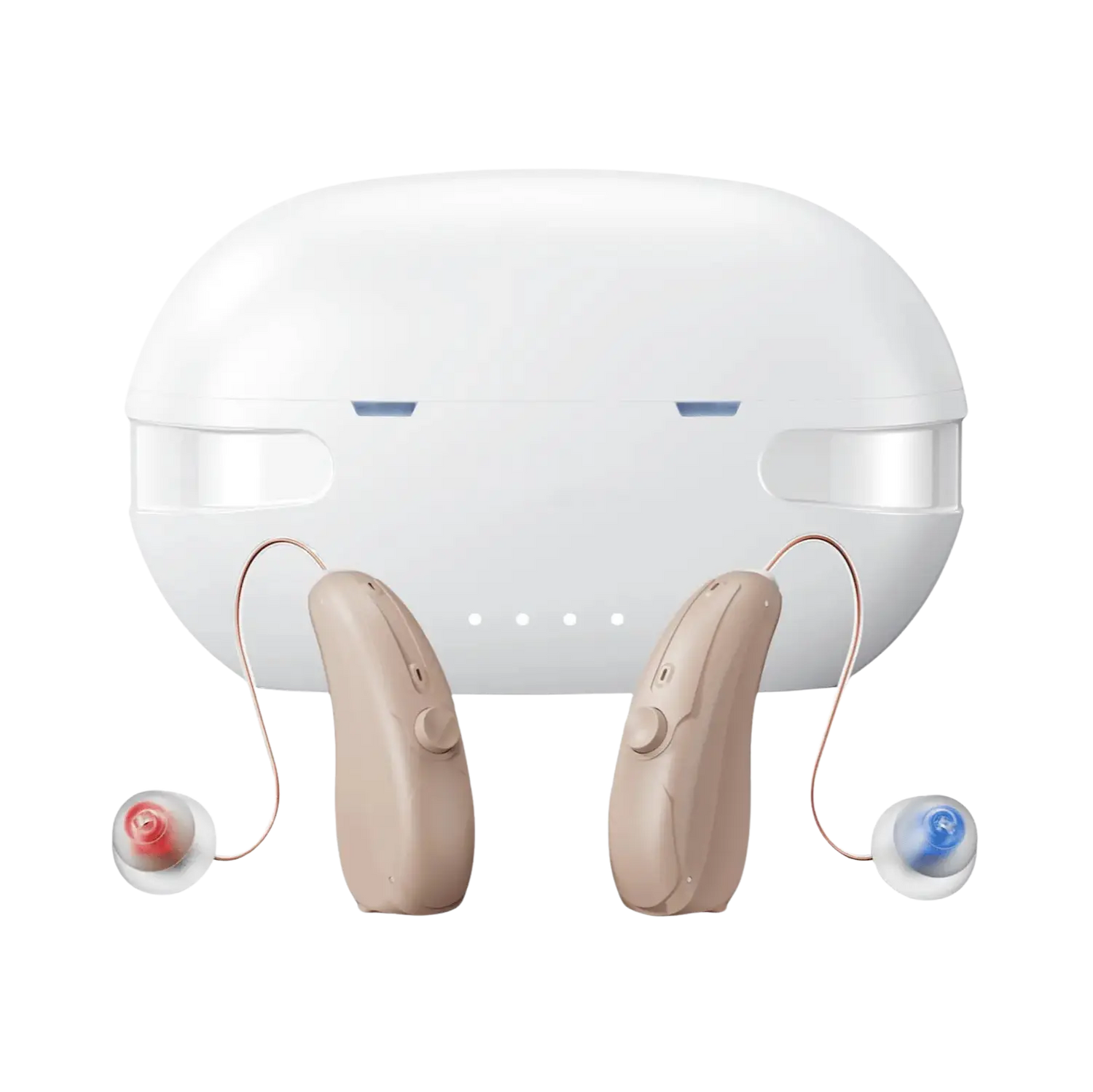
Et tema i denne forskning er, at mange mennesker med kronisk tinnitus håndterer den på lang sigt, mellem og ud over de formelle behandlinger. Høreapparater, herunder Panda-apparater, er ikke en behandling eller kur mod tinnitus. For de mange, hvis tinnitus følges med hørenedsættelse, kan klarere lyd i hverdagen dog få ringen til at føles mindre påtrængende, blot fordi hjernen har mere virkelig lyd at rette opmærksomheden mod.
Det er her, FDA-OTC-høreapparater passer ind for voksne med let til moderat hørenedsættelse. Panda Quantum er et eksempel: et 16-kanals receiver-in-canal-apparat bygget til klar tale i støjende omgivelser, med adaptiv støjreduktion, der arbejder på at holde samtalen i forgrunden. Det kører 20 timer pr. opladning, og etuiet rummer tre yderligere fulde opladninger til i alt 80 timers brug, samt Bluetooth til opkald, tv og musik.
Quantum tilbyder også en valgfri app-baseret høretest i øret, der kan tilpasse lyden til din hørelse, selvom apparatet fungerer fuldt ud direkte ud af æsken uden appen eller testen. Hver Quantum leveres med 5 års garanti og 45 dages prøveperiode, der starter, når du modtager den. Mennesker med svær eller dyb hørenedsættelse eller med pludselig eller generende tinnitus bør først have en klinisk undersøgelse.

Undersøgelsens begrænsninger
Metaanalyser er kun så stærke som de forsøg, de samler, og forfatterne bemærker, at de underliggende studier brugte uensartede protokoller, stimulationsmål og behandlingsforløb. Den variation forklarer sandsynligvis, hvorfor nogle teknikker, som tDCS, viste store gennemsnitlige effekter, der alligevel ikke nåede statistisk signifikans. Opfølgningen ud over seks måneder var begrænset, så billedet på lang sigt er fortsat uklart.
Det offentliggjorte resumé oplyser ikke finansieringskilder eller interessekonflikter for selve oversigten. Forfatterne efterlyser fremtidige forsøg med standardiserede protokoller, optimerede stimulationsparametre og mere personlig målretning, hvilket tyder på, at feltet stadig er ved at finpudse, hvordan disse redskaber bør bruges.
Hvad det betyder samlet set
Ikke-invasiv hjernestimulation er gået fra spekulation til målbar, om end beskeden, gavn på kort sigt, og det er reel fremgang for en lidelse med få pålidelige muligheder. Indtil videre bør mennesker med kronisk tinnitus og deres klinikere betragte den som ét redskab i en bredere plan for håndtering, holde forventningerne nede på nogle få point på en skala fra 0 til 100 og følge området, efterhånden som protokollerne forbedres.
Elmoursy MM, Mohamed WMN. Efficacy of non-invasive neuromodulation for chronic tinnitus: a systematic review and meta-analysis of randomized controlled trials. European Archives of Oto-Rhino-Laryngology. 2026. Retrieved from PubMed. https://doi.org/10.1007/s00405-026-10541-0