If you or someone you love has started down the path of hearing aid shopping, the first question is always the same: "How much am I going to spend?" And the answer—honestly—is all over the map. From under $100 to over $7,000 per pair, the range can feel bewildering.
The good news? The gap between those extremes isn't what it used to be. In 2026, after the FDA opened the over-the-counter market in 2022, prices have collapsed by nearly half. The bad news? Knowing what you're actually paying for—and whether you need the expensive version—still requires a clear explanation.
The Quick Answer
Over-the-counter (OTC) hearing aids typically range from $99 to $1,500 per pair. Prescription hearing aids purchased through a clinic or private audiologist range from $2,500 to $8,000 per pair. That massive difference exists mostly because of the human services layered into the prescription model—not because the technology is that much better. Since the FDA approved OTC devices, many people discover they get the same hearing correction at a third of the cost.
What You're Actually Paying For
When you pay $3,000 or more for prescription hearing aids, you are not paying three times as much for three times the chip power. Here is what the cost actually breaks down into:
The hardware: The electronics inside a hearing aid—receiver, microphone, processor, battery—cost roughly the same whether you buy OTC or through a clinic. A 16-channel processor is a 16-channel processor.
R&D: Premium brands like Phonak, Oticon, and Widex have invested heavily in proprietary algorithms. Some of that cost is baked into the device price.
Audiologist time: Clinic appointments, hearing tests, fitting, adjustments—labor costs add up. A private audiologist visit can run $100-$300 per appointment, and the prescription bundle usually includes 2-3 visits in the first year.
Retail markup: A private clinic marks up the wholesale device cost by 30-50% to cover their physical space, staff, and customer acquisition.
Marketing: Major brands spend millions on brand awareness and doctor relationships. That cost eventually reaches the consumer.
OTC hearing aids skip most of these overhead layers. You get the hardware and the processing power. You skip the clinic visits and the brand marketing spend. The result: a device that can deliver the same clinical-grade sound at a fraction of the price.
The 5 Price Tiers in 2026
| Tier | Price Range | Best For | What You Get |
|---|---|---|---|
| Tier 1: PSAPs & Sound Amplifiers | $50-$200 | Not hearing loss—just boosting volume | Basic amplification, 2-4 channels. Not FDA-approved hearing aids; buyer beware. |
| Tier 2: Entry OTC | $200-$500 | Mild hearing loss, budget-conscious | 8-16 channels, basic NR, self-fit. FDA-approved OTC. Examples: MDHearing ($197-$597), Audien Ion ($489), Panda Stealth ($279), Panda Air ($299). |
| Tier 3: Mid-Range OTC | $500-$1,500 | Moderate loss, app features | 16 channels, advanced NR, Bluetooth, extended battery. Examples: Eargo, Lexie B2 Plus, Jabra Enhance Plus, Panda Quantum ($349). |
| Tier 4: Costco & Big-Box | $1,400-$2,000 | Moderate to severe loss, in-person fitting | Prescription-grade devices (Jabra, Philips, Rexton, Sennheiser), audiologist fitting, 180-day trial. |
| Tier 5: Private Clinic Prescription | $2,500-$8,000 | Complex loss, intensive follow-up | Phonak, Oticon, Widex, Starkey, ReSound. Custom earmolds, multiple appointments, 30-60 day trial. |
The Hidden Costs Nobody Talks About
The sticker price is just the beginning. Hearing aid ownership brings ongoing expenses that catch new users by surprise:
Clinic visits and fitting: $100-$300 for the initial fitting and hearing test. Adjustments add $50-$150 each.
Batteries or charging: Disposable battery models need fresh batteries every 3-7 days, costing $1-$3 per battery and adding up to $100-$200 per year.
Wax guards and domes: Wear out every 2-6 months. Replacement domes or wax guards run $20-$50 per package.
Replacement earmolds: If your ear changes shape, a custom replacement costs $150-$300.
Warranty extensions: Extended or accidental-damage coverage can cost $150-$400 extra.
Time off work: Multiple visits to a clinic over weeks mean lost time and lost wages.
Insurance, Medicare, and HSA: What's Actually Covered
Original Medicare: Does not cover hearing aids or fitting costs. You pay full price out of pocket.
Medicare Advantage: Some plans offer partial coverage, typically $500-$1,500 per pair once per 1-3 years. Not all plans include this.
Private health insurance: Very few plans cover hearing aids. Those that do usually cap coverage at $500-$1,500 per ear.
HSA and FSA: You CAN use tax-free dollars to pay for hearing aids (both OTC and prescription). This can reduce effective out-of-pocket cost by 20-30%.
Veterans: The VA covers hearing aids for service-connected hearing loss.
Why OTC Hearing Aids Cost So Much Less
The FDA approved OTC hearing aids in October 2022, and the market has shifted seismically since. OTC devices aren't cheaper because they are inferior—they are cheaper because they skip the clinic middleman.
Many OTC hearing aids use the same chipsets and processing algorithms as devices that cost three times as much. The difference is that with OTC, you fit the device yourself using a smartphone app and a hearing test you take at home. No appointment. No fitting fee. For someone with mild to moderate hearing loss who is comfortable with technology, this self-fit model works. You skip $1,500-$3,000 in clinic overhead and get the same hearing correction for $300-$500.
The Panda Approach: Use-Case Pricing
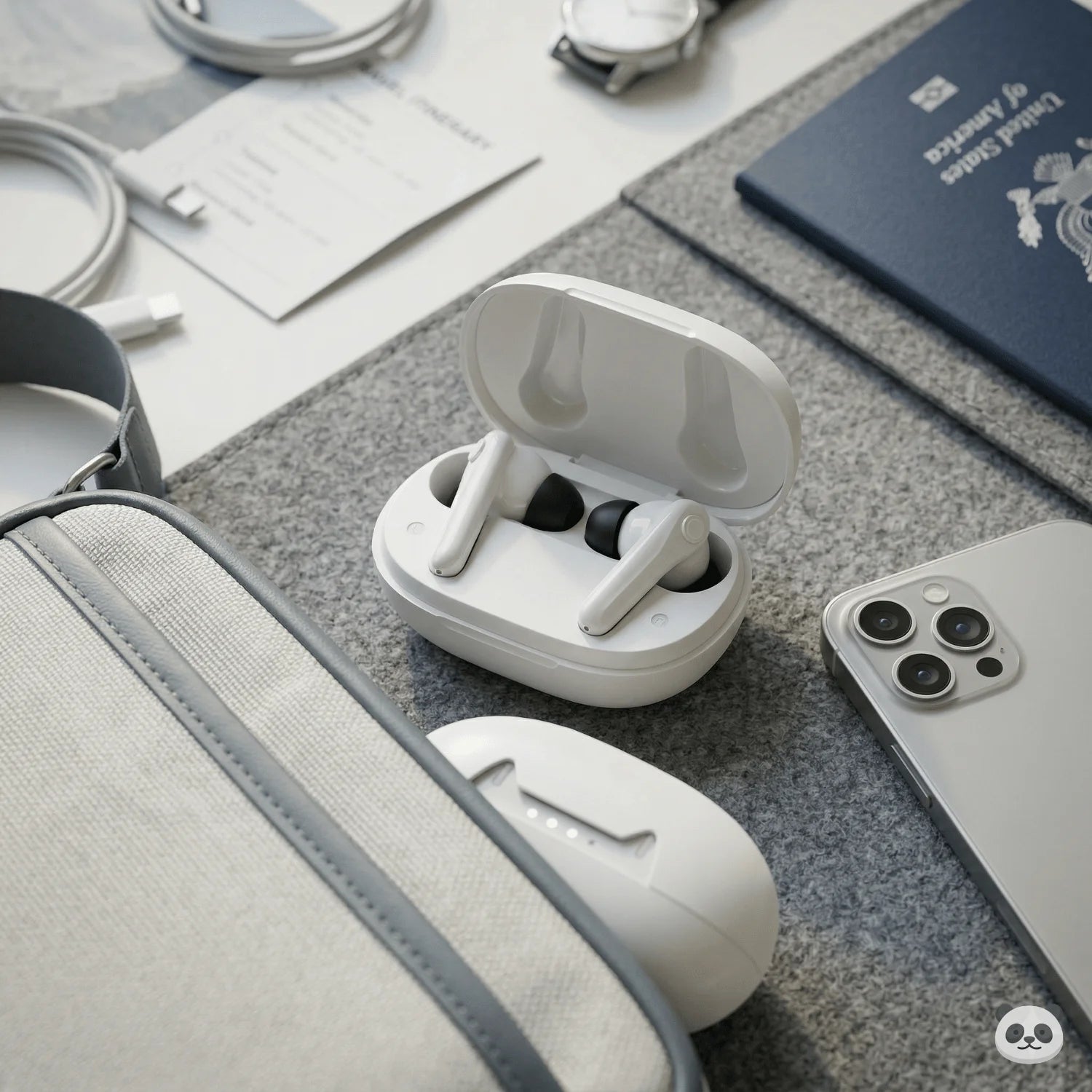
Panda Stealth ($279, was $379, save $100): Designed for discretion. This invisible ITC model is for anyone who wants hearing support without anyone knowing they wear it. 16-channel processing, three listening modes, charging case that doubles as a wireless remote. No Bluetooth, no app complexity—just clarity, invisible fit, and confidence.
Panda Air ($299, was $399, save $100): Designed for modern, earbud-style wear. Looks like wireless earbuds, sounds like hearing aids. 16-channel processing, adaptive noise reduction, Bluetooth for calls and music, optional app, 60 hours of battery in the fast-charge case.
Panda Quantum ($349, was $499, save $150): Designed for serious clinical clarity. 16-channel WDRC with frequency-matching technology—the same correction principle audiologists use in $3,000+ prescription devices. Adaptive tinnitus masking, Bluetooth, 80 hours total battery, and a clinically tuned 10-minute online hearing test.
What This Means for Your Budget
If you have mild hearing loss and are tech-comfortable: Entry OTC ($200-$500) is often enough. Test the waters with a device that has a 45-day trial.
If you have moderate loss or want professional tuning without the clinic cost: Mid-range OTC ($500-$800) with a self-fit hearing test is the sweet spot.
If you have moderate to severe loss and want all the features: Panda Quantum at $349 delivers clinical-grade frequency-matching and tinnitus masking.
If you have complex loss or low confidence with devices: Costco ($1,400-$2,000) or a private clinic ($2,500-$8,000) is justified. All three Panda models come with a 5-year warranty and a 45-day risk-free trial.
Hearing Aid Cost FAQs
What's the average cost of hearing aids in 2026?
According to HearingTracker's survey of over 1,100 hearing aid buyers in 2026, the average price paid was $2,694 per pair, down from $4,672 in 2018. OTC averages $502; prescription averages $3,432. The gap is closing fast.
Why are prescription hearing aids 10 times the price of OTC?
Prescription devices aren't 10 times better—they include 10 times more service. Clinic visits, professional fitting, follow-up adjustments, and overhead are baked into the $3,000-$8,000 price. OTC skips this labor layer.
Are cheap hearing aids any good?
It depends. Under $100 amplifiers (PSAPs) are not FDA-approved and can actually worsen hearing if misused. $200-$500 OTC hearing aids from reputable brands (Panda, Audien, MDHearing) are FDA-approved, clinically tuned, and effective for mild loss.
Does Medicare cover hearing aids in 2026?
Original Medicare does not cover hearing aids or audiologist visits. Some Medicare Advantage plans offer limited coverage ($500-$1,500 per pair) once every 1-3 years. You can use HSA/FSA tax-free dollars to pay for both OTC and prescription hearing aids.
The Clear Choice
In 2026, hearing aid pricing is no longer one-size-fits-all. A clinical-grade OTC hearing aid like Panda Quantum can deliver the same frequency-matched correction an audiologist would build into a $5,000 prescription device. Or, if you prefer in-person support and custom earmolds, Costco or a private clinic is there.
The most important step is not choosing the most expensive option—it is choosing the option that matches your hearing loss, your comfort with technology, and your budget. For most people with mild to moderate hearing loss, an OTC hearing aid under $350 solves the problem without the clinic markup. For those who need serious performance or prefer in-person care, better options exist at every tier in 2026 than ever before.