You already own a pair of AirPods Pro 2. You've used them for music, calls, gym sessions. Then you heard that Apple added a hearing aid feature in iOS 18.1, and you thought: maybe I don't need a real hearing aid after all. Just test my hearing on my phone, let the AirPods adjust automatically, and I'm done.
That's a reasonable instinct. The truth is more nuanced. Apple's hearing feature is real, FDA-cleared, and genuinely helpful for certain moments. But it wasn't designed for the same job a clinical hearing aid does — and the gap between "works great for occasional use" and "gets you through a full day" is exactly where most people hit a wall.
What Apple's Hearing Aid Feature Actually Is
With iOS 18.1 or later, AirPods Pro 2 can run a hearing test through Apple Health. The test takes about five minutes: you sit quietly, tap your phone when you hear a tone, and the app generates an audiogram — a graph showing which frequencies and volumes you struggle with. If your results fall into the mild-to-moderate range (up to 60 dB HL, the quieter end of hearing loss), you can turn on the Hearing Aid feature. The AirPods then amplify those specific frequencies to compensate.
The FDA approved this in September 2024 — the first time the agency cleared software (rather than a physical device) as an over-the-counter hearing aid. That's a significant milestone for making hearing support more accessible. You don't need a clinic appointment or a $3,000 prescription device to get started.
What It Does Well
The hearing test is genuinely convenient. No appointment, no waiting room, no explaining your hearing loss to a stranger. The feature also personalizes the sound to your specific loss — you can adjust amplification, tone, and balance through sliders. If your audiogram shows hearing loss at 2,000 Hz, the AirPods amplify exactly there, not everywhere.
Where AirPods shine is the ecosystem integration. Bluetooth audio routes directly through the hearing aid mode — your calls, music, podcasts, and TV all come through with the amplification already applied. The Conversation Boost feature focuses sound from the person in front of you, which is genuinely useful at a dinner table. For someone with mild hearing loss who wears earbuds anyway, this is elegant.
Where It Falls Short for Daily Wear
Here's where AirPods Pro 2 bump into hard limits. Battery is the first wall. A full charge gives you 5-6 hours of use — sometimes less if you're taking calls. Most people who rely on hearing aids need support from morning until evening, 12-13 hours minimum. That means charging your hearing aids mid-afternoon, right when you're in the middle of your day. Imagine sitting down to dinner at 6 p.m., and your AirPods die at 6:30. Some people buy two pairs and swap them, but that's a $500 solution just to stay in the conversation.
Comfort and fit also matter more than the marketing suggests. AirPods fully seal your ear canal, which creates what audiologists call the occlusion effect — your own voice sounds boomy and loud, like you're shouting inside a cave. Some people adjust to it. Others never do. There's no professional fitting to dial in the seal — it's trial and error with the included tip sizes.
Noisy environments expose another gap. AirPods Pro 2 do include noise reduction, but independent testing by HEAR Advisor found that speech clarity in crowded rooms scores poorly — the device works best in quiet settings. And then there's the social perception problem: when you leave AirPods in your ears during a face-to-face conversation, people often assume you're ignoring them or listening to music.
When to Step Up to a Real Hearing Aid
You've hit the ceiling with AirPods when your lifestyle demands more. If the TV volume keeps creeping up despite amplification. If you're asking "what?" in group conversations even with Conversation Boost on. If you're charging mid-day and missing the second half of your social life. If the occlusion effect drives you crazy, or the AirPods keep falling out because they don't seal well in your ear canal. If you attend restaurants, family dinners, or meetings where you need to hear people around you naturally — that's when a dedicated hearing aid makes a tangible difference.
AirPods Pro 2 solve a specific problem well (occasional situational hearing support via something you already carry) but they're not engineered for the daily, all-day job that hearing aids do. They're a bridge, not a destination.
Why Panda Air Is the Natural Next Step
If you've tried AirPods and found they're good for a few hours but not for all day, Panda Air solves the problems you ran into. It's designed to look and feel like modern wireless earbuds — the same stigma-free earbud style that drew you to AirPods in the first place. But Panda Air is built as an actual hearing aid, not music earbuds with a hearing mode bolted on.
Battery is the first win. Panda Air delivers 60 hours total with the charging case — that's roughly 10 hours per charge on the AirPods equivalent. You put them in at 8 a.m., wear them through dinner, and still have battery for evening. You charge overnight, and you're done. No midday charging interruptions. No buying a second pair.
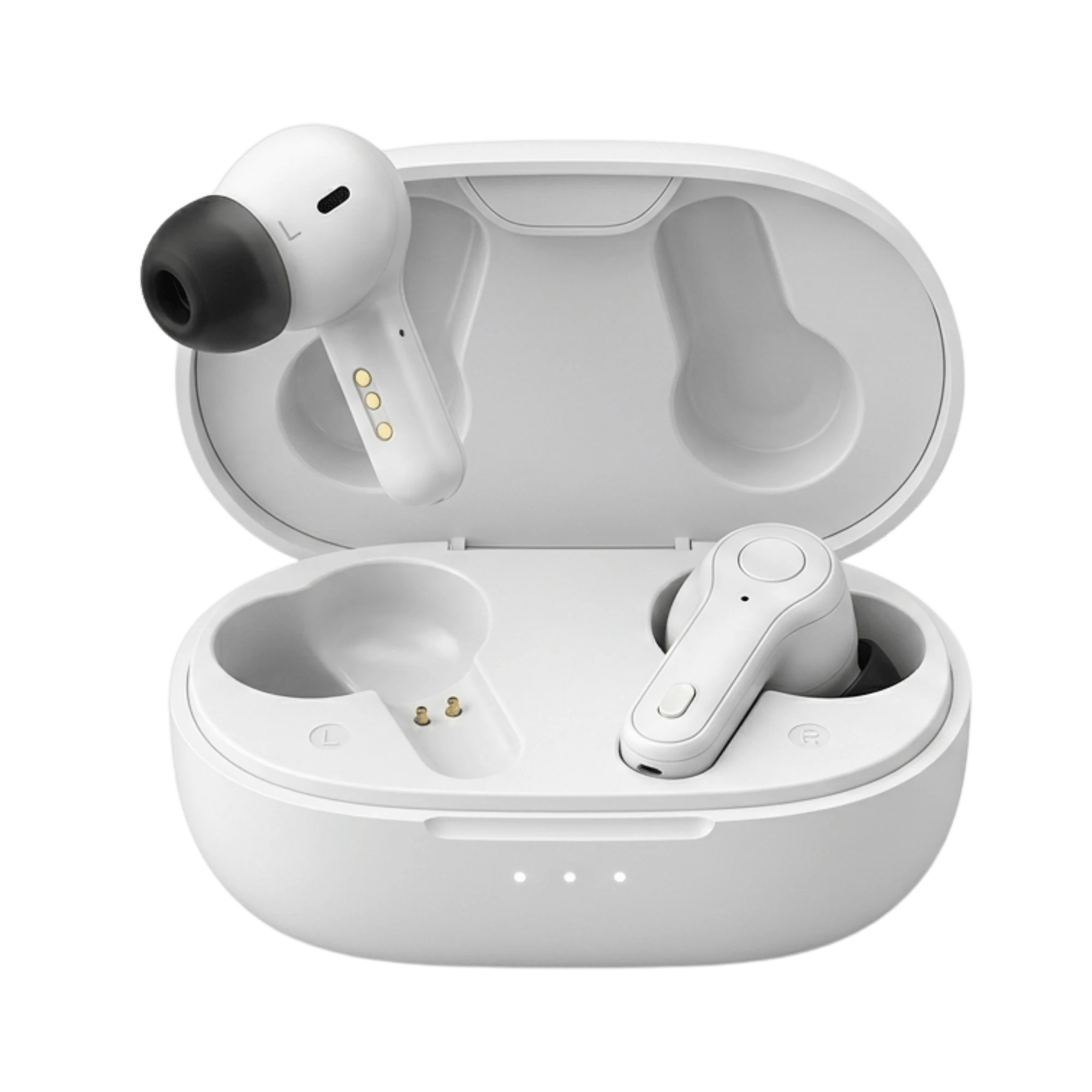
Panda Air uses 16-channel WDRC (Wideband Dynamic Range Compression), the same multi-band processing that prescription hearing aids use. That means the device can handle different frequencies independently, so speech stays clear when the background noise gets loud. In restaurants, at family gatherings, on walks where the wind picks up, the 16-channel approach adapts. AirPods apply a single amplification curve; Panda adapts to the moment.
The fitting is also clinically tuned. You take a 10-minute self-fitting test and Panda's algorithm personalizes the device to your hearing loss — same way AirPods does. But Panda's tuning system came from years of audiological research, not a music-streaming company pivoting into hearing.
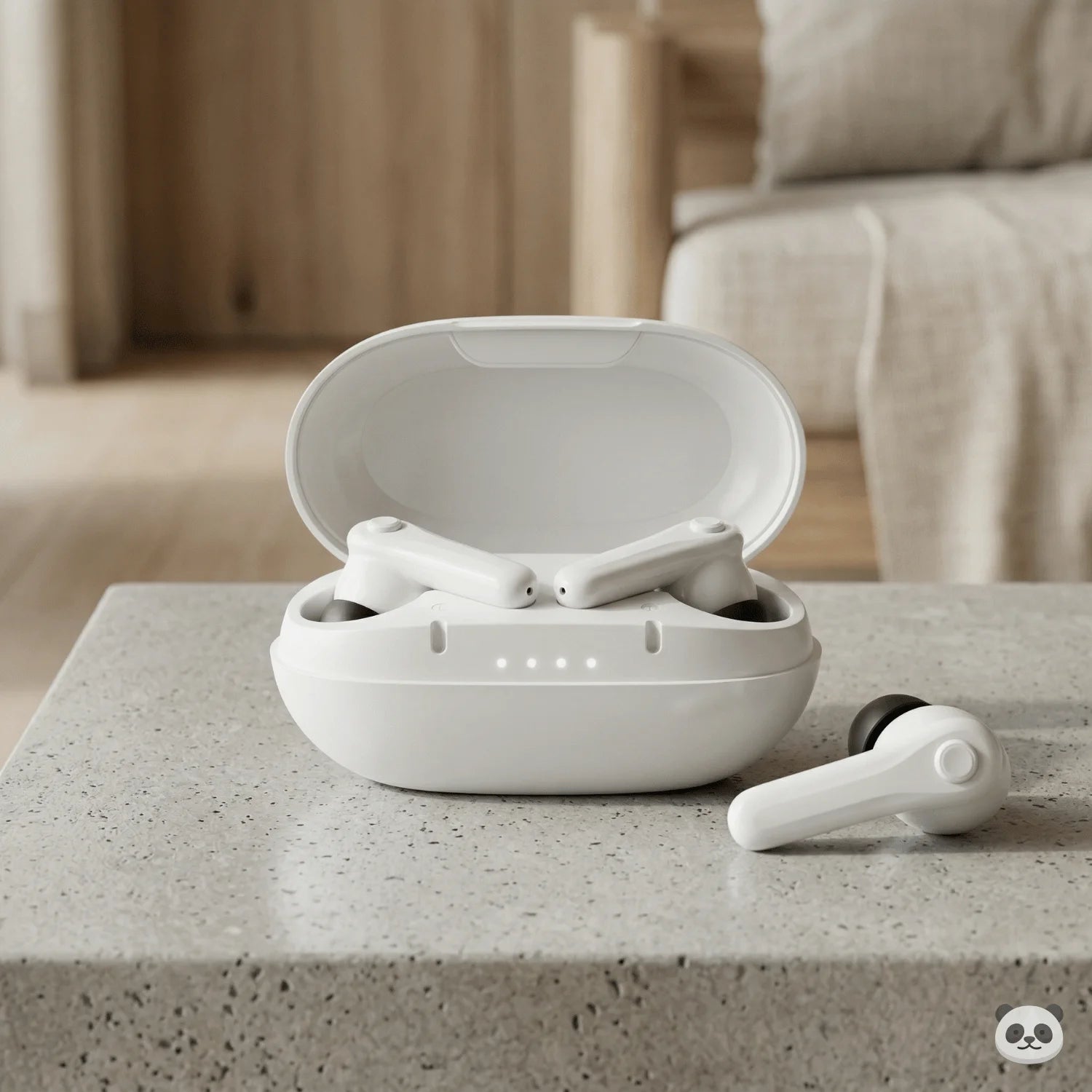
Panda Air still looks like earbuds. You get the stigma-free wear you wanted from AirPods, but with the performance of a clinical hearing aid. The price is fair: $299 (was $399, save $100). AirPods Pro 2 cost $249, so you're paying only $50 more for an actual hearing aid engineered for all-day wear. Panda Air also includes a 5-year warranty and a 45-day risk-free trial. Apple's limited warranty is one year.
When to Stay, When to Switch
Stay with AirPods if your hearing loss is mild and you only need amplification for specific situations — a weekly dinner out, the occasional call in a noisy cafe, TV at night. If you're happy with 5-6 hours of battery and you're already in the Apple ecosystem, AirPods might be just right.
Switch to Panda Air if you wear hearing aids (or need to) from morning until evening. If you've tried AirPods and the battery drain is real, or the occlusion effect bothers you, or you miss speech in noisy rooms. If you have moderate hearing loss, Panda Air's 16-channel processing will serve you better.
Frequently Asked Questions
Can AirPods Pro 2 replace a real hearing aid?
For mild hearing loss and occasional use, yes — AirPods can be enough. For all-day wear, noisy environments, or moderate hearing loss, no. A clinical hearing aid like Panda Air is engineered for daily reliance in ways AirPods Pro 2 aren't. Think of AirPods as a situational tool; think of Panda Air as your daily partner.
How long do AirPods last as hearing aids on one charge?
AirPods Pro 2 deliver 5-6 hours per charge — sometimes less if you're taking calls. If you need hearing amplification from 8 a.m. to 8 p.m., you'll run dry by early evening. Panda Air provides 10 hours per charge, which covers a full waking day.
Is Panda Air FDA-OTC like AirPods Pro 2?
Yes. Panda Air is FDA-cleared as an over-the-counter hearing aid for mild to moderate hearing loss. You don't need a prescription, don't need an audiologist appointment, and can order it online. The fitting happens at home via a clinically validated test.
What if I already have moderate hearing loss?
Moderate loss (41-60 dB HL) is trickier with AirPods because the volume range is limited, and speech in noisy places will be harder to isolate. Panda Air's 16-channel processing is designed specifically for this range. You get adaptive noise reduction that learns your environment, not a fixed curve.
The Clearer Choice for All-Day Hearing
AirPods Pro 2 broke new ground — the FDA's first OTC hearing aid software shows the barriers are finally coming down. If you own a pair and want to test your hearing, that's genuinely worth exploring. But if you're wearing your earbuds all day because you need to hear all day, AirPods will leave you charging and missing conversations. That's when Panda Air becomes the clear upgrade. All-day battery, clinical-grade processing, earbud-style design, and only $50 more than AirPods.
Ready to hear your life without midday charging? Visit Panda Air and try it risk-free for 45 days. If it's not the upgrade you need, return it. If it is, you've solved the all-day hearing problem AirPods can't.