You're watching TV and your family is complaining about the volume again. Or you're on a call with work and the phone feels permanently glued to your ear. Sound familiar? For anyone who depends on hearing aids, Bluetooth changes that scenario from frustrating to normal. Instead of struggling to catch every word through a phone speaker, your calls route directly into both ears. Instead of cranking the TV while everyone else cringes, the audio streams straight to your hearing aids.
The catch? Bluetooth hearing aids aren't as simple as just having the technology. They rely on different standards depending on your phone, they use more battery power than baseline hearing, and the real difference between a device that streams and one that doesn't comes down to which protocol your phone actually supports. This guide walks you through how Bluetooth actually works in hearing aids today.
What Bluetooth Hearing Aids Actually Do
Bluetooth hearing aids create a wireless bridge between your smartphone, TV, computer, or any other audio device and your ears. Instead of struggling to hold a phone to your ear or hoping you catch enough sound from a speaker, Bluetooth streaming sends audio directly and simultaneously to both hearing aids.
This opens up several everyday moments that used to be awkward. Phone calls arrive in stereo in both ears — you're not cupping one ear or holding the phone inches from your face. TV audio sends the dialog without needing to turn up the volume for the whole household. Music and podcasts stream while you're walking, driving, or working out. Navigation prompts come through clearly. FaceTime with grandkids is suddenly easy. For some users, Bluetooth transforms daily life from a series of workarounds into just… normal.
MFi, ASHA, LE Audio: What These Acronyms Mean
Bluetooth hearing aids don't all work the same way, because phones don't all use the same Bluetooth standards. Here's what each acronym means in plain language:
MFi (Made for iPhone) is Apple's standard since 2014. If you have an iPhone, iPad, or Mac and your hearing aids support MFi, you get direct streaming — no intermediate device needed. Audio flows straight from your Apple device to both hearing aids, and you can take hands-free calls (on iPhone 11 and newer) by tapping your hearing aid.
ASHA (Audio Streaming for Hearing Aids) is Google's answer, launched in 2019 for Android. ASHA uses the same low-energy Bluetooth as MFi and offers similar benefits — direct streaming for music and calls in stereo. The catch: ASHA isn't built into every Android phone. Pixel and newer Samsung Galaxy phones have it; older or budget Android phones may not.
LE Audio (Bluetooth Low Energy Audio) is the newest standard, officially launched in 2023 and still rolling out. LE Audio is designed to work across both iOS and Android — the first truly universal Bluetooth standard for hearing aids. It also includes Auracast, which lets hearing aids pick up audio from public address systems in airports, theaters, and transit hubs. LE Audio is the future, but adoption is still ramping up.
In 2026, most modern Bluetooth hearing aids support at least one — often two or all three — of these standards. You're not locked into one phone brand, though specific features vary by which protocols your device and your hearing aids both support.
What You Get from Day One
Once you pair a Bluetooth hearing aid to your phone, work calls come into both ears hands-free — you answer by tapping your hearing aid, and the microphones in both aids pick up your voice clearly. TV becomes a different experience: dialog goes directly to your ears at your chosen volume; your spouse or roommates don't have to live with whatever volume works for you. Navigation, alerts, and notifications come through seamlessly. So do video calls — FaceTime, Zoom, or Google Meet works with audio in both ears.
The Battery Trade-Off
Bluetooth streaming uses more power than baseline hearing amplification. Normal-mode drain runs around 1.2 to 2 milliamps per hour. Once you start streaming, that drain can jump to 6 milliamps per hour or higher — three to four times more power consumption.
For hearing aids with disposable batteries, this matters. Some cheap Bluetooth hearing aids advertise 12+ hours, but once you add streaming, you're looking at 4 to 5 hours before fresh batteries. For someone who takes calls throughout the day, that's a problem.
This is where battery capacity becomes everything. Panda Air delivers 60 hours of total battery between charges — a 20+ hour lithium battery in each aid plus a fast-charge case that recharges them multiple times. Even with moderate streaming, you're still seeing a full day plus an evening of use. Panda Quantum pushes that to 80 hours total. Once you add Bluetooth into the picture, that headroom matters.
What to Look For in a Bluetooth Hearing Aid
Hands-free calls (both directions): Some cheap devices let you listen but require you to speak into the phone's speaker. Look for devices that use the hearing aids' microphones for both listening and talking.
iPhone AND Android support: Deal-breaker if you ever switch phones. Ideally, your device supports MFi and ASHA, or LE Audio.
No required streamer accessory: Some hearing aids need a neck loop or clip-on device to stream from Android. One more thing to charge, carry, and pair.
12+ hours per charge with streaming: Full day of use without midday charging. If specs only list battery life without streaming, divide by 3 — that's closer to reality.
Low latency: Matters for video. If there's a noticeable delay between lips moving and sound arriving, it's distracting.
How Panda Air and Quantum Handle Bluetooth
Panda Air ($299, was $399, save $100) is designed for everyday Bluetooth use. Full hands-free calling on iPhone and Android, direct streaming for music and TV audio, 60-hour total battery built to handle all-day wear with streaming. The earbud-like form factor means it looks familiar, so Bluetooth calls feel natural — you're just wearing earbuds, as far as anyone nearby knows.
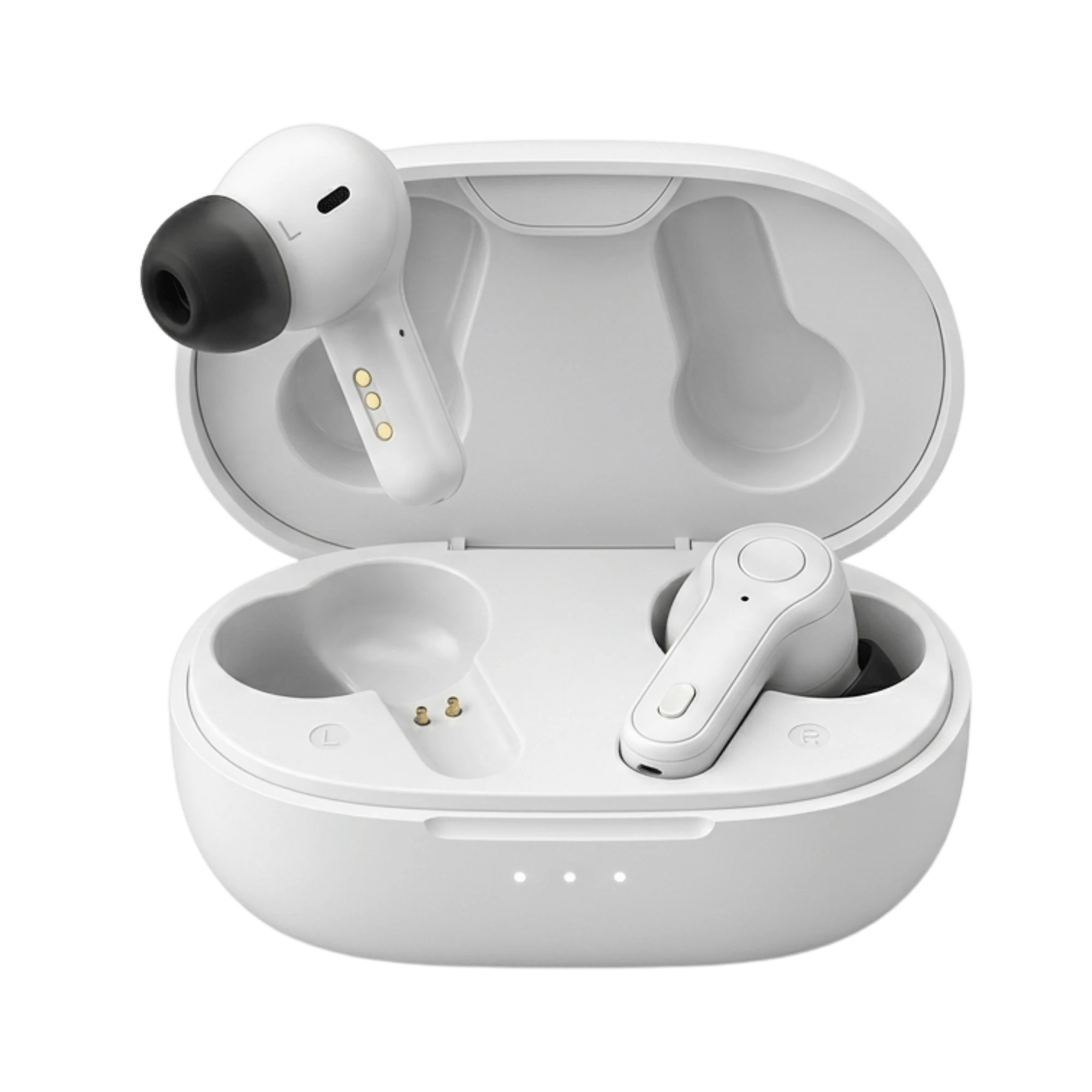
Panda Quantum ($349, was $499, save $150) layers serious clinical performance on top of Bluetooth. All the same Bluetooth features as Air — calls, TV, music — plus 16-channel frequency-matching technology, adaptive noise reduction, and adaptive tinnitus masking. The 80-hour total battery gives you extra headroom if you stream heavily.

What about Panda Stealth? Panda Stealth ($279, was $379) is the deliberate exception — no Bluetooth, no app. This is intentional. Stealth was built for anyone who wants clarity and simplicity above all else. If you rarely take calls and want to disappear into your ear canal while staying confident in conversation, you don't need Bluetooth. For that buyer, Stealth is the right answer.
When Bluetooth Doesn't Matter (and That's OK)
Not every hearing aid wearer needs Bluetooth. If most of your life is face-to-face conversation — meetings, lunch with friends, family dinner — and you rarely take calls or stream audio, Bluetooth is just extra complexity and battery drain. In that case, a straightforward hearing aid like Stealth that focuses on clarity in conversation and costs $20 less is the better choice.
Bottom Line: Pick by Use Case.
If you take calls and stream: Panda Air ($299) covers Bluetooth calls and TV. Quantum ($349) adds frequency-matching and advanced noise handling for loud environments.
If you want clarity in conversation without Bluetooth: Stealth at $279 is purpose-built for that. No app, no wireless — just invisible, clear hearing and simplicity.
All three come with: 5-year warranty, 45-day risk-free trial, free shipping, lifetime support. FDA-OTC certified.
FAQ
Do all hearing aids have Bluetooth in 2026?
No. Some focus purely on clarity in face-to-face conversation and skip Bluetooth to reduce complexity and cost. Most modern OTC and prescription hearing aids do include it, but it's not universal. Check the product specs.
Will Bluetooth hearing aids work with both iPhone and Android?
It depends on the device. Some support both MFi (for iPhone) and ASHA or LE Audio (for Android). Others support only one. Confirm before buying — especially if you're likely to switch phones later.
Do Bluetooth hearing aids drain the battery faster?
Yes, significantly. Streaming can increase battery drain by 300% or more compared to baseline. That's why rechargeable hearing aids with high total battery (Panda Air's 60 hours, Quantum's 80 hours) matter — they have headroom to stream all day without dying mid-afternoon.
Can I take phone calls hands-free with Bluetooth hearing aids?
Yes, if your device supports it. Panda Air and Panda Quantum both handle hands-free calling on iPhone (11 and newer) and most Android phones — you tap your hearing aid to answer, and the hearing aid microphones pick up your voice. Works for regular phone calls, FaceTime, Zoom, and most calling apps.
Start Hearing Life Clearly
Bluetooth in hearing aids isn't magic — it's just wireless audio routed directly to both ears instead of through a phone speaker or stuck to one side of your head. Whether you choose Panda Air for everyday Bluetooth calling and streaming, Panda Quantum for Bluetooth plus clinical clarity in noise, or Panda Stealth for simplicity without Bluetooth, the goal is the same: hearing clearly enough to feel confident in your life. All three come with a 45-day risk-free trial.
Visit pandahearing.com to learn more, take a free 10-minute hearing test, and find your fit.