For most adults, the single biggest barrier to wearing hearing aids is not the cost or the complexity—it's the visible look behind the ear. A receiver-in-canal (RIC) hearing aid broadcasts to everyone in the room that you wear one. For decades, that visibility kept millions of people from seeking help, isolating themselves instead. But that moment is shifting. Today's earbud-style hearing aids look exactly like the wireless earbuds everyone already wears. Nobody knows the difference. And that changes everything.
This guide rounds up the best earbud-shaped hearing aids available in 2026—and honestly compares them. Most will cost you 3 to 5 times more than the leader. Here's why one stands out, and what to know before you buy.
Why Earbud-Style Hearing Aids Matter Now
The earbud-style hearing aid solves the stigma problem at the design level. It looks familiar. You already own earbuds—for music, for calls, for everything. When you put in an earbud-style hearing aid, people see what they expect to see: wireless audio, nothing medical. Alongside that aesthetic match comes modern engineering: full Bluetooth streaming (calls, TV, music), long-lasting rechargeable batteries, and online fitting that works at home. For the first time, hearing correction feels like choosing a tech accessory, not selecting a medical device.
1. Panda Air ($299) — Editor's Pick
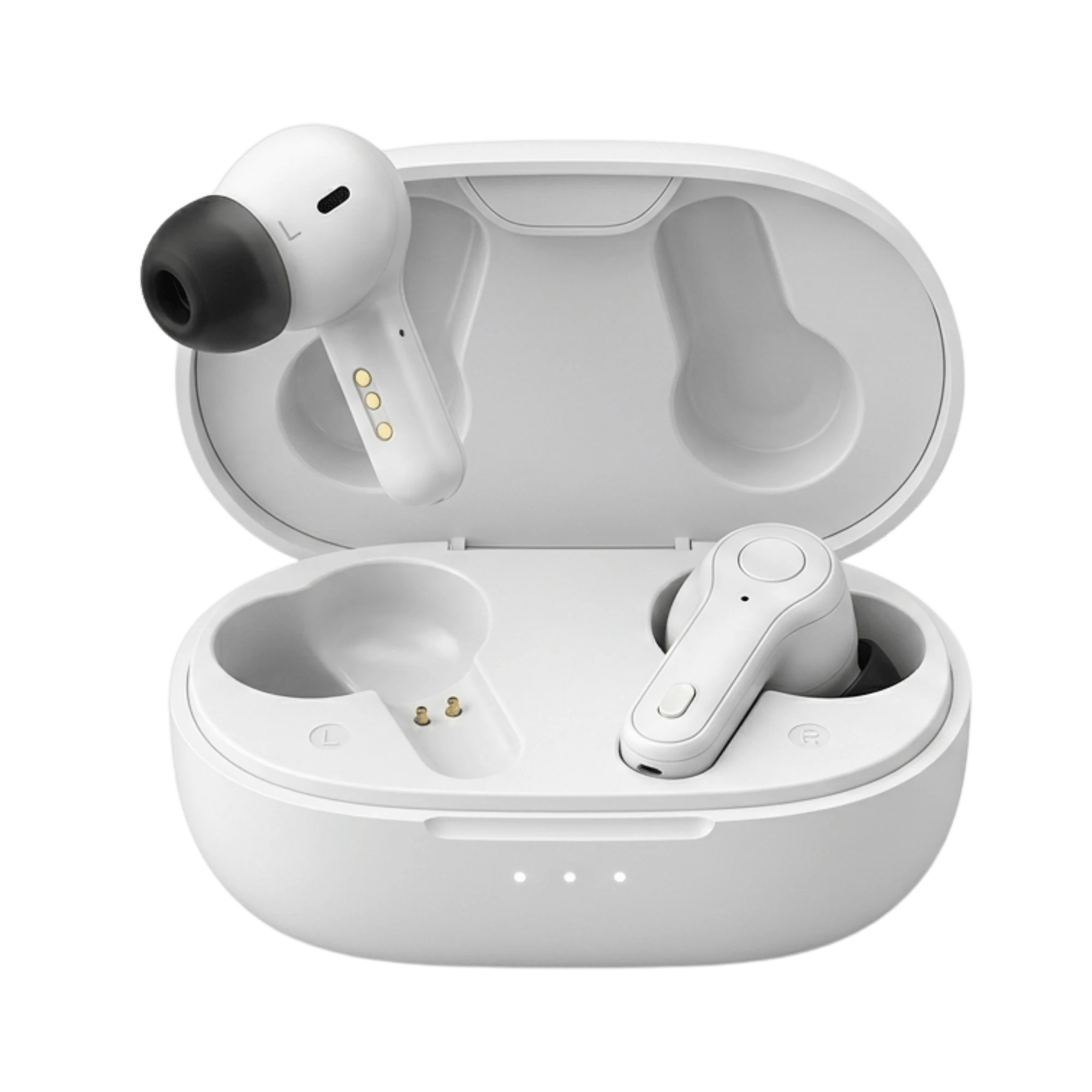
The Panda Air is built for people who want to hear clearly without anyone noticing. It starts with the form factor: an ITC (in-the-ear) earbud design that sits exactly where your earbuds sit. From across a room, a listener cannot tell it's a hearing aid. Up close, it's just another pair of buds.
Inside is serious engineering: 16-channel WDRC (wide dynamic range compression) with multi-band adaptive noise reduction, full Bluetooth for calls and music streaming, and a fast-charge case that gives you 60 hours of total battery life. Most people will charge it once every three days—or less. There is no midday panic about the device dying in your pocket. The clinically tuned self-fitting test takes ten minutes at home and adjusts the device to your exact hearing profile. The 5-year warranty and 45-day trial remove the risk. At $299 (was $399, save $100), Panda Air is the value leader in the stigma-free category.
Best for: Adults wanting full-time, all-day hearing support without the medical look. Anyone who uses Bluetooth calls, TV streaming, or music as part of their daily routine.
2. Apple AirPods Pro 3 ($249) — Best for Existing Apple Users
Apple's entry into hearing aids deserves an honest look. At $249, the AirPods Pro 3 arrive with an FDA-cleared hearing mode and the most familiar earbud design on the planet. If you own an iPhone, the setup is seamless: iOS 18.1+ includes a built-in hearing test, and the device adapts to your audiogram.
But here's what the reviews often gloss over. The AirPods Pro 3 deliver about 6-10 hours of battery per charge in hearing aid mode. That means midday charging for all-day wear. They work only when actively in your ears—you cannot step away for twenty minutes and come back to the device ready to go. Setup requires an iPhone; Android users get limited features. For someone with moderate hearing loss who wants to hear throughout a dinner or a work meeting, the 10-hour window starts to pinch. The Panda Air runs three times as long.
Best for: Mild hearing loss, situational use (a few hours a day), iOS users who already own AirPods and want to test the hearing feature. Not a full-time all-day device.
3. Sony CRE-C20 ($999) — Solid Build, No Bluetooth Streaming
Sony's first OTC hearing aid, the CRE-C20, is genuinely invisible. It sits deeper in the ear canal than the Panda Air and disappears completely. The build quality is excellent—Sony's reputation for durability carries through. Battery life is strong: up to 28 hours per charge. If invisibility is your priority, Sony delivers.
The trade-off: Sony CRE-C20 does not support Bluetooth audio streaming. Calls and TV audio go through your phone speaker, not the hearing aids themselves. If you value hands-free calling, streaming podcasts directly, or music routed through the device, Sony does not offer that at any price. For $999 (3.3 times the Panda Air price), the lack of streaming is a significant limitation for modern users.
Best for: Buyers who prioritize maximum invisibility and do not need streaming audio. Those comfortable with traditional hearing-aid battery handling.
4. Jabra Enhance Select ($1,195) — Premium with Audiologist Support
Jabra positions the Enhance Select as a premium earbud-style option with a twist: optional remote audiologist support. The device itself is a hybrid between a small RIC and an earbud—very discreet, good battery life, and solid AI-driven noise reduction. The app is intuitive, and Jabra's support team can adjust your settings remotely if needed.
What you are paying for at $1,195 (four times Panda Air) is primarily the audiologist hand-holding and Jabra's brand reputation, not radically better audio engineering. For buyers who want a safety net and a known brand, Jabra delivers peace of mind. For buyers comfortable with app-based self-fitting, that extra cost is wasted.
Best for: Buyers who want clinical support and prefer a major brand; those nervous about self-fitting and willing to pay for guidance.
5. Elehear Alpha Pro ($499) — Newer Bluetooth Competitor
Elehear is a relative newcomer that markets aggressively on AI-powered noise reduction. The Alpha Pro offers 16-channel processing, Bluetooth streaming, and solid battery life (16-20 hours per charge). The price at $499 sits between Panda Air and the premium brands, which positions it as a middle-ground option.
The reality check: the "AI" noise reduction is a common marketing term across many OTC devices—including the Panda Air. Elehear's competitive advantage is modest, and real-world testing shows it performs similarly to devices at half the price. At $499, you are paying extra primarily for the brand novelty, not proven superior performance.
Best for: App enthusiasts who want Bluetooth and don't mind a newer brand; buyers willing to pay extra for the feeling of cutting-edge technology.
Honorable Mention: Eargo Link ($1,490)
Eargo Link is Eargo's premium earbud-style entry, marketed as the "most discreet." At $1,490, it is the most expensive option on this list and targets users willing to pay for maximum invisibility and a luxury brand. For most buyers seeking stigma-free design and solid performance, Panda Air delivers 80% of the Eargo experience at 20% of the cost.
What to Avoid
Do not buy sub-$100 "earbud hearing aids" from Amazon or small e-commerce sites. Most of these are bone-conduction headphones or basic sound amplifiers misrepresented as hearing aids. They do not provide the frequency-targeted correction that real hearing loss requires, and they lack FDA-OTC certification. If the price seems too good to be true, it is.
Bottom Line on Earbud-Style Hearing Aids
For most people wanting earbud aesthetics and all-day hearing support, Panda Air at $299 is the value leader. It delivers 16-channel clinical-grade sound processing, 60-hour total battery, full Bluetooth streaming, and a 10-minute self-fitting in one package. Apple AirPods Pro 3 work for situational mild loss. Sony, Jabra, and Eargo cost 3 to 5 times more for earbud aesthetics alone—without material performance gains. If your hearing loss is more severe, the Panda Quantum ($349, was $499, save $150) steps up with frequency-matching correction and higher output for moderate loss, while still delivering the clinical-grade engineering prescription devices charge thousands for.
FAQ: Earbud-Style Hearing Aids
Are AirPods as good as real hearing aids?
Not for all-day wear. AirPods Pro 3 deliver good sound for situational use (an hour or two at a time), but the 6-10 hour battery in hearing aid mode means midday charging. Real hearing aids like the Panda Air are engineered for 16-20+ hours per charge and designed for comfort during 12+ hour wear. AirPods are earbuds that also do hearing aid, not the reverse.
Why is Panda Air cheaper than Sony CRE-C20?
Sony's CRE-C20 prioritizes maximum invisibility (deep in-ear fit), Sony brand prestige, and premium build materials. Panda Air prioritizes value engineering, direct-to-consumer sales (no middleman markup), and modern Bluetooth integration. Both are FDA-OTC certified. Sony's cost structure includes brand margin; Panda's includes lower distribution costs. For hearing performance, the Panda Air holds its own against Sony at one-third the price.
Can earbud-style hearing aids handle moderate hearing loss?
The Panda Air handles mild to moderate loss well with its 16-channel processing. For moderate loss requiring higher amplification, the Panda Quantum (with frequency-matching correction and higher maximum output) is the better choice. If you score moderate-to-severe on your hearing test, ask during the self-fit process whether Quantum is recommended—the Panda team will guide you.
Do earbud-style hearing aids fall out easily?
No. Both the Panda Air and Apple AirPods Pro 3 include multiple ear-tip sizes and are designed for secure fit. Earbud-style hearing aids have the same retention as any other earbud—many wearers forget they are in their ears after a few minutes. If you wear regular AirPods without issue, an earbud-style hearing aid will fit the same way. The Panda Air comes with a 45-day trial, so you can test the fit risk-free.
The Clearer Choice for Stigma-Free Hearing
Earbud-style hearing aids have removed the single biggest barrier to seeking help: the fear of being "found out." The device looks like technology everyone already uses. That psychological shift is real, and it is working. Thousands of people are choosing to hear again because the device no longer feels like admitting to a problem. For most of those people, the Panda Air at $299 offers the full earbud experience—all-day battery, Bluetooth streaming, clinically tuned fit, and a five-year promise—at a price that does not require a second thought. If you want a more serious hearing loss correction, the Panda Quantum steps up to frequency-matched prescription-grade engineering. Either way, the moment to hear better is now. The device looks like you already expected it to look. And that is the whole point.
Learn more about Panda Hearing or contact the team at info@pandahearing.com or visit the contact page for personalized guidance on which model fits your hearing profile.