When you start shopping for hearing aids, you encounter an alphabet soup of acronyms: CIC, ITC, ITE, BTE, RIC. If you don't know what these stand for or how each one looks and performs, it's easy to feel lost before you even begin.
This guide is a plain-English visual breakdown of the five main hearing aid form factors. We'll show you what each type looks like, who it suits best, the trade-offs to consider, and which Panda models fit into each category.
The 5 Main Hearing Aid Types (Smallest to Largest)
Hearing aids range from nearly invisible devices that sit deep in your ear canal to larger, more powerful models that sit behind your ear. Here's the lineup, starting with the smallest:
1. CIC and IIC — Invisible and Completely-in-Canal
CIC (Completely-in-Canal) and IIC (Invisible-in-Canal) hearing aids are the smallest and most discreet form factor available. CIC aids sit at the entrance of your ear canal, while IIC aids fit even deeper, past the second bend of the canal. Both are custom-molded to your ear anatomy and are nearly impossible to see when worn.
Who they suit: People with mild to moderate hearing loss who prioritize absolute discretion. CIC/IIC aids appeal to professionals, public speakers, and anyone who wants hearing support without drawing attention to the device.
Pros: Nearly invisible (the primary appeal); excellent sound quality due to proximity to the eardrum; comfortable for full-day wear; no visible tubing or wires; simulates natural hearing remarkably well.
Cons: Very small battery with shorter battery life (typically 3-7 days per charge); difficult to handle and insert if you have dexterity issues; no room for onboard controls; limited features (no Bluetooth on most models); more susceptible to earwax and moisture; costlier due to custom molding.
Panda model: Panda Stealth ($279, was $379) is an ITC invisible hearing aid that delivers the "almost invisible design" with the benefit of rechargeable batteries (60 hours total) and a charging case that doubles as a wireless remote.
2. ITC — In-the-Canal (Earbud-Style)
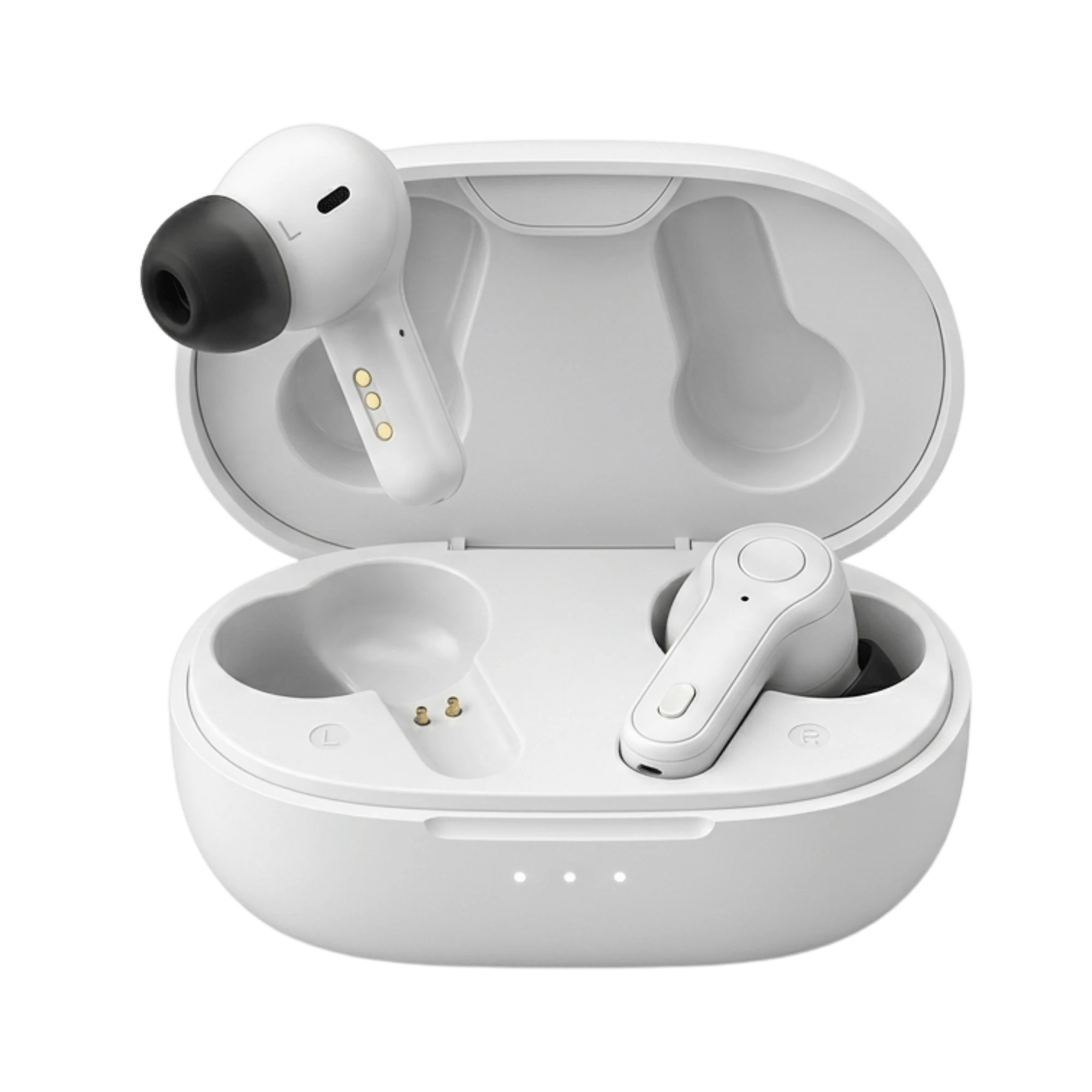
ITC (In-the-Canal) aids are slightly larger than CIC models and sit in the lower portion of your outer ear bowl. Modern ITC aids, particularly earbud-style models, look like wireless earbuds or AirPods rather than traditional medical devices. This aesthetic shift has been a game-changer for many people who felt self-conscious about wearing traditional hearing aids.
Who they suit: People with mild to moderate hearing loss who want modern aesthetics without the stigma of a "medical" look. ITC earbud-style aids work well for professionals and anyone who wants a device that blends into everyday wireless culture.
Pros: Modern earbud appearance; more battery capacity than CIC aids; room for additional features like directional microphones and Bluetooth; easier to handle than CIC; less visible than larger styles; comfortable and secure fit; can support smartphone connectivity.
Cons: Visible when looked at directly (though much less obvious than BTE or RIC); may be slightly noticeable to someone standing close to you; requires custom molding; still relatively small, limiting some advanced features.
Panda model: Panda Air ($299, was $399) is designed to look and feel like modern wireless earbuds. It features a fast-charge case with 60 hours of total battery, Bluetooth for calls, TV audio, and music, plus a clinically tuned 10-minute self-fitting hearing test.
3. ITE — In-the-Ear (Full Shell)
ITE (In-the-Ear) or full-shell hearing aids fill the entire outer ear bowl. They are custom-molded and noticeably larger than CIC or ITC models, which gives them more room for powerful components and advanced features. ITE aids are available in different skin tones and can be colored to blend with your ear.
Who they suit: People with moderate to severe hearing loss who need more amplification power. ITE aids also work well for people with dexterity issues (larger = easier to handle) and active individuals who need durability.
Pros: More power and amplification than ITC or CIC; room for directional microphones and advanced noise reduction; larger battery for longer use between charges; easier to insert, remove, and adjust; full-size volume controls on the device; can accommodate more severe hearing losses.
Cons: Clearly visible in the ear; more noticeable than smaller styles; larger overall footprint; not ideal for mild hearing loss (overkill power-wise); some people find them less comfortable for all-day wear.
4. BTE — Behind-the-Ear
BTE (Behind-the-Ear) hearing aids house all electronics in a hard case that sits behind your ear. Sound travels from the case through a hollow tube connected to a custom earmold that sits in your ear canal. BTE aids are the most powerful style available and have been the gold standard for severe-to-profound hearing loss for decades.
Who they suit: People with severe to profound hearing loss; children (because the case can be easily adjusted as ears grow); people with significant dexterity challenges; anyone in highly active or wet environments where a more durable device is essential.
Pros: Maximum amplification power (suitable for any degree of hearing loss); durable and long-lasting; large battery with extended use time; easy to handle, insert, and adjust; resistant to earwax and moisture (electronics are outside the ear); excellent for active lifestyles; most affordable option for high power.
Cons: Most visible form factor (the tube and earmold are obvious); the earmold can cause feedback if not fitted perfectly; heavier than smaller styles; the tube can deteriorate over time and require replacement; some find the earmold less comfortable than other options.
5. RIC — Receiver-in-Canal (Modern Hybrid)
RIC (Receiver-in-Canal), also called RITE (Receiver-in-the-Ear), is the most popular modern hearing aid style. Like a BTE, the electronics sit in a case behind your ear. But unlike BTE, the receiver (speaker) is housed at the end of a thin electrical wire that sits in your ear canal, not in the case behind your ear. This simple difference dramatically changes the sound quality and aesthetics.
Who they suit: Most adults with mild to severe hearing loss. RIC aids are the "Goldilocks" option — they offer plenty of power without sacrificing discretion, excellent sound quality, and modern technology features. They work well for first-time hearing aid users and for people upgrading from older styles.
Pros: Excellent sound clarity and natural quality (speaker is in the ear, not behind it); discreet design (thin wire instead of thick tube); good power for mild-to-severe loss; full feature set (Bluetooth, directional microphones, noise reduction); rechargeable options available; more durable than ITC or CIC; comfortable open-fit design (allows natural sound to blend with amplified sound); easy to handle and adjust; the most popular style for good reason.
Cons: Slightly more visible than in-the-canal styles (there is a small piece behind the ear and a wire going into the ear); receiver can be more susceptible to earwax and moisture than BTE (though less so than CIC/ITC); requires regular cleaning.
Panda model: Panda Quantum ($349, was $499, save $150) is a premium RIC that delivers clinically tuned performance with frequency-matching technology that corrects the specific gaps in your hearing profile. It offers 20 hours per charge, the charging case recharges the device 3 more full times for 80 hours total, full Bluetooth capabilities, and adaptive tinnitus masking.

Which Type Should You Pick?
Your choice depends on three factors: your hearing loss severity, your ear anatomy, and your lifestyle priorities.
Want completely invisible, discretion above all else? Go with CIC/ITC invisible aids like Panda Stealth. You'll sacrifice some battery life and Bluetooth capability, but nobody will ever know you're wearing a hearing aid.
Want modern earbud style with Bluetooth and all-day battery? Choose an earbud-style ITC like Panda Air. You get the best of both worlds — modern aesthetics that blend with everyday wireless culture, plus full feature set and connectivity.
Want serious clinical performance, clarity, and power? Pick a RIC like Panda Quantum. You get maximum features (frequency-matching, tinnitus masking, top-tier Bluetooth), excellent battery life (80 hours total), and the most natural sound quality.
Have severe-profound hearing loss or significant dexterity challenges? Consider a prescription BTE from your audiologist. BTE models offer the most power and are the easiest to handle, though they are the most visible option.
Honorable Mention: Bone Conduction Hearing Aids
Bone conduction hearing aids are a separate category designed for specific medical situations — primarily single-sided deafness or conductive hearing loss (when sound cannot travel normally through the ear canal or middle ear). They bypass the ear canal entirely and transmit sound vibrations directly through bone to the inner ear. Most adults with typical sensorineural hearing loss (the most common type) do not need bone conduction aids. If your audiologist mentions bone conduction as an option for your situation, they have a specific clinical reason.
Bottom Line on Form Factors
The right hearing aid type depends on your hearing loss severity, your ear anatomy, and what matters most to you — discretion, comfort, features, or power. For most adults with mild-to-moderate hearing loss in 2026, an ITC or RIC is the sweet spot. Panda Stealth (ITC invisible), Panda Air (earbud-style ITC), and Panda Quantum (RIC clinical powerhouse) cover all three approaches at OTC prices with 45-day trials and 5-year warranties.
Frequently Asked Questions
What's the difference between CIC and IIC hearing aids?
CIC (Completely-in-Canal) aids sit at the entrance of your ear canal, while IIC (Invisible-in-Canal) aids fit deeper, past the second bend of the canal. Both are nearly invisible, but IIC offers slightly more discretion. The difference is subtle — IIC is more invisible, CIC is slightly easier to remove. Both have the same trade-offs: small battery, no Bluetooth on most models, and challenging handling for people with dexterity issues.
Are RIC hearing aids better than BTE?
Not "better" — different. RIC aids offer more natural sound quality and discretion, making them ideal for mild-to-severe hearing loss and most first-time users. BTE aids offer maximum power and durability, making them the better choice for severe-profound loss or active lifestyles. If your hearing loss is moderate or less, RIC typically delivers better overall experience. If you have profound loss, BTE is necessary.
Which hearing aid type lasts longest?
BTE aids typically last the longest (5-7 years) because all electronics sit outside the ear, away from moisture and earwax — the leading causes of hearing aid damage. RIC and ITE aids last 4-6 years when properly maintained. CIC/ITC aids last 3-5 years because they're exposed to more earwax and ear moisture. Battery type matters too: rechargeable models (like Panda's) eliminate battery-replacement stress but may need replacement sooner overall.
Can I switch hearing aid types if my hearing changes?
Yes. If your hearing loss worsens over time, you may outgrow your current form factor. For example, if you're wearing CIC aids but your loss progresses to severe, you may need to switch to RIC or BTE for more power. Your audiologist can evaluate your current hearing test and recommend whether a style change makes sense. Most reputable hearing aid providers (including Panda) offer a trial period so you can test a new style before fully committing.
Finding Your Perfect Fit
The hearing aid alphabet doesn't have to be confusing. CIC and ITC invisibles prioritize discretion. ITE full-shells offer more power and features. BTE aids deliver maximum amplification. And RIC — the modern workhorse — balances power, features, comfort, and discreet design. Most people thrive with either an earbud-style ITC or a RIC because those styles solve the real-world problems that matter: you can hear clearly, the device doesn't draw attention, and it integrates modern technology into your daily life.
If you're ready to explore your options, Panda Stealth (invisible ITC), Panda Air (earbud-style ITC), and Panda Quantum (clinical-grade RIC) offer a risk-free 45-day trial so you can test the form factor that best fits your life. Each model comes with FDA-OTC certification, a 5-year warranty, and lifetime customer support at pandahearing.com.