Best Apple AirPods Alternatives for Mild Hearing Loss (2026)
For mild hearing loss, Apple AirPods Pro 2 and AirPods Pro 3 hearing mode is a legitimate starting point. They are affordable, familiar, and work seamlessly within the Apple ecosystem. You can upload your audiogram, toggle conversation boost, and get better hearing in everyday moments without buying anything new.
But most people who try AirPods for hearing eventually outgrow them. The battery dies mid-afternoon. The occlusion effect (that plugged sensation) bothers you during all-day wear. Or you realize that hearing aids designed from the ground up for hearing deliver clarity that general-purpose earbuds cannot match. When that moment arrives, here is where to go.
Signs You've Outgrown AirPods Hearing Mode
AirPods work best as an occasional amplification tool, not an all-day hearing solution. You may notice that conversation boost helps at dinner, but the battery dies before dessert arrives. Or you find yourself adjusting settings constantly because a device designed for music playback does not stay tuned to your hearing loss the way a hearing aid does.
The occlusion effect - that sense of fullness or echo when you chew or move your jaw - bothers some people during continuous wear. And if you worry about the social perception of looking like you're on a call all day, transparent earbuds draw more questions than purpose-built hearing aids. These signals mean it is time to explore a device engineered specifically for hearing.
#1: Panda Air ($299)
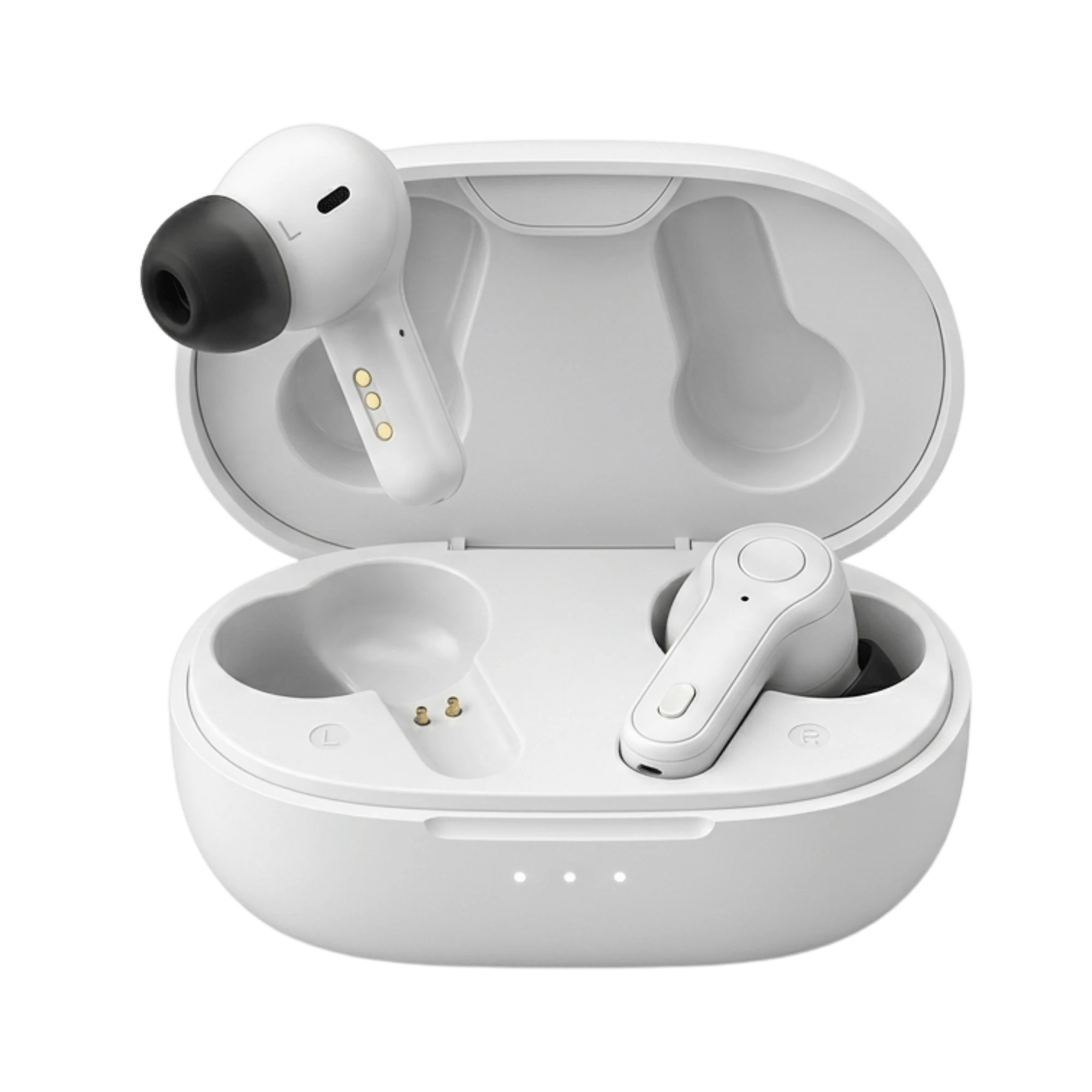
Panda Air is the most direct AirPods replacement because it is an earbud-style hearing aid designed from the ground up to solve the hearing loss problem. It is FDA-OTC certified, meaning it meets medical standards for direct-to-consumer use without a prescription. The device looks and feels familiar - no behind-the-ear wire, no medical appearance - which means nobody has to know it is a hearing aid unless you tell them.
The hearing engineering is where Panda Air separates itself. It includes a 16-channel WDRC (wide dynamic range compression) processor that breaks your hearing loss down into 16 frequency bands and corrects each one independently. This precision is what audiologists built into $3,000 prescription hearing aids just five years ago. In 2026, Panda Air delivers the same principle at $299 (was $399, save $100).
Battery is where the speed advantage becomes obvious. AirPods Pro 2 lasts about 6 hours before you reach for the case. Panda Air delivers a fast-charge case providing 60 hours total between outlet charges - roughly 10 times the battery per charging cycle. That means you wear all day, drop them in the case at night, and never plan your schedule around a charging cable.
Like AirPods Pro 2, Panda Air includes Bluetooth for calls, TV audio, and music. But unlike AirPods, it includes a clinically tuned self-fitting 10-minute online hearing test built into the setup. You take the test from home, the algorithm measures the specific frequencies you struggle with, and the device adjusts to correct those gaps - the same frequency-matched principle audiologists use in their clinic. The outcome is hearing tuned to your actual loss, not preset to an average.
Panda Air carries a 5-year warranty and 45-day trial period, so you can try it risk-free and keep it if it works. That price - only $50 more than AirPods - is the final detail that makes it the natural upgrade path.
#2: Sony CRE-C20 ($999)
Sony's CRE-C20 is a true OTC hearing aid in an invisible ITC (in-the-canal) form factor. At $999 per pair, it sits at a higher price point and targets users who prioritize discretion above all else. The appeal is clear: the device sits inside your ear canal and is nearly invisible to anyone across from you.
The trade-off is practical convenience. The CRE-C20 does not support Bluetooth streaming, which means you cannot route calls or TV audio directly to the hearing aid. Streaming music or taking hands-free calls requires an intermediate device or adapter. For users who prioritize invisibility and rarely stream audio, this trade-off is acceptable. For most people coming from AirPods, where seamless Bluetooth calling is the norm, the loss of this feature feels like a step backward.
#3: Jabra Enhance Plus ($1,195)
Jabra Enhance Plus is an OTC RIC (receiver-in-canal) hearing aid with small behind-the-ear components and a tube running to an earpiece. At $1,195 per pair, it sits in the premium OTC tier. The device includes professional-grade noise reduction algorithms and access to remote audiologist support, which appeals to users who want clinical oversight without the clinic appointment.
Where Jabra wins is in complexity handling. If your hearing loss is uneven across frequencies or you struggle particularly in restaurant noise, the audiologist can reprogram the device remotely based on your feedback. But for users with stable mild loss and no unusual patterns, this level of adjustment is more than necessary and adds cost. You pay for professional oversight that most people with uncomplicated mild loss do not need.
#4: Elehear Alpha Pro ($499)
Elehear Alpha Pro is a newer Bluetooth OTC hearing aid in a small RIC form factor. At $499 per pair, it sits between Panda Air and Jabra in price and offers a compact alternative for users who want Bluetooth but prefer a RIC design to earbud-style wear.
The trade-off is battery life. Elehear's rechargeable case provides about 30-36 hours total, which is only half what Panda Air delivers. For all-day, every-day wear without thinking about charging, Panda Air's 60-hour battery is a meaningful advantage, especially if you travel frequently or forget your charger.
#5: Eargo Link ($1,490)
Eargo Link is a premium earbud-style invisible hearing aid at $1,490 per pair. Like Sony CRE-C20, it prioritizes discretion and invisibility. Unlike Sony, Eargo includes Bluetooth streaming, which adds convenience back into the invisible formula. But the price is five times that of Panda Air, making it a choice only for users where budget is irrelevant and absolute invisibility is non-negotiable.
Why Panda Air Is the Most Direct AirPods Replacement
Every alternative above solves a specific need. Sony prioritizes invisibility. Jabra prioritizes professional tuning. Eargo combines both invisibility and Bluetooth, but charges a premium. Panda Air aligns with what you already know from AirPods: it is earbud-shaped, Bluetooth-enabled, and requires no clinic visit or ongoing professional care. But it adds the engineering depth that AirPods cannot match.
The clinically tuned self-fitting test means your hearing aid knows which frequencies matter to you - not a generic average. The 16-channel frequency-matching technology separates what is important (your friend's voice at a noisy restaurant) from what is not (the clink of glasses and background chatter), and it does this in real time. The 60-hour battery means you are not tethered to a charging schedule. And the price - only $50 more than AirPods Pro 2 - means you are not paying a premium for earbud-style convenience.
Most importantly, Panda Air was built ground-up as a hearing aid, not a music device with hearing features bolted on. That focus shows in every detail, from the frequency response curve to the noise reduction algorithms.
When to Stick with AirPods
AirPods Pro remain the right choice if your hearing loss is very mild and your use is situational. If you wear hearing support only during calls, during your commute, or when watching TV with volume issues - not all day, every day - then AirPods' flexibility as both earbuds and amplifiers is an advantage. You get music quality and hearing support in one device.
If you are already invested in the Apple ecosystem with AirPods, an iPhone, and Apple Health with your audiogram uploaded, the integration is undeniably smooth. And if you cannot afford to move to a purpose-built hearing aid, AirPods are a solid stepping stone.
Bottom Line for Daily Hearing Support
If you wear hearing support throughout the day, Panda Air is the natural step up from AirPods Pro 2. It delivers 10 times the battery life, genuine hearing aid engineering with 16-channel frequency matching, and a 10-minute clinically tuned self-fitting test - all at only $50 more than what you may already be paying for AirPods. FDA-OTC certified. 5-year warranty. 45-day risk-free trial. For mild hearing loss users ready to graduate from occasional amplification to confident all-day clarity, Panda Air is the clearest choice.
AirPods vs Panda OTC Hearing Aids: Quick Buying Comparison
AirPods Pro can be a useful starting point for some iPhone users, especially for occasional help in quieter settings. If you need hearing support throughout the day, compare them with a purpose-built OTC hearing aid before deciding.
| Use case | AirPods Pro hearing features | Panda OTC hearing aids |
|---|---|---|
| Occasional hearing assistance | Helpful for some iPhone users | Helpful, with device choices by lifestyle |
| All-day wear | Limited by earbud battery and comfort | Designed for daily hearing support |
| Phone-free use | Best inside the Apple ecosystem | Works as a dedicated hearing device |
| Designed for hearing loss | Hearing features added to earbuds | Built as OTC hearing aids |
| Best fit | Light, situational listening needs | Adults comparing daily OTC hearing support |
Next step: Compare Panda Air with AirPods Pro 2
Buying guide: See Panda's OTC hearing aid options
Frequently Asked Questions
Are AirPods Pro 2 enough for mild hearing loss?
AirPods Pro 2 work well for occasional amplification and as an entry point to hearing support. But they are limited by short battery life (around 6 hours), no frequency-specific hearing loss correction, and design choices that prioritize music over speech clarity in noise. Most users who need all-day hearing support end up adding a purpose-built hearing aid.
What is the cheapest AirPods alternative hearing aid?
Panda Air at $299 (was $399, save $100) is the lowest-price true OTC hearing aid that matches AirPods' earbud form factor and Bluetooth capability. JLab Hear OTC ($99) is cheaper but uses fixed presets without personalized frequency matching, meaning it works by luck if your hearing loss matches the preset curve. Panda Air's self-fitting test personalizes to your specific loss, so you pay a small premium for engineering that actually addresses your hearing.
Will Panda Air work with my iPhone?
Yes. Panda Air pairs via Bluetooth 5.3 with any iPhone running current iOS and supports calls, TV audio, and music streaming. You also get the optional companion app for iOS to fine-tune listening modes. Setup requires an iPhone or iPad for the 10-minute self-fitting test, but after that, the hearing aid works independently without needing your phone present.
Do I have to switch away from AirPods?
No. Many people keep both. AirPods remain excellent for music, quick commute support, and as a lightweight option when you do not need all-day clarity. Panda Air replaces the daily wear responsibility - dinner conversations, office meetings, family time. You wear whichever tool fits the moment.
Made for Life, Not Just for Hearing
If AirPods Pro 2 hearing mode used to feel like enough, and now you are reaching for better clarity, you have already learned what engineering specialists in hearing know: purpose-built devices outperform general-purpose tools in specialized domains. Panda Air hearing aids are engineered specifically for clear speech, easy all-day wear, and confidence in real conversations - not as a music player with hearing features added on the side. That focus is why earbud-style hearing aids that look like AirPods but perform like clinical devices have become the fastest-growing category in OTC hearing health.
For mild hearing loss users ready for all-day clarity without stigma, the move from Apple to Panda Hearing is the next step. Try Panda Air risk-free for 45 days and see what best hearing aids engineered for your loss can deliver.