Why People Actually Adopt AI Hearing Aids: A Qualitative Study Names Five Drivers
A grounded-theory analysis of 33 hearing-aid users identifies five themes that explain why some people stick with artificial-intelligence-powered hearing aids while others abandon them - and traditional amplification is not at the top of the list [1].
For a category that has been billed as inevitable, AI-powered hearing aids have had a strange uptake curve. The hardware has been on the market for several years. The features - adaptive noise reduction, scene detection, on-device personalization, smartphone integration - address well-documented complaints with traditional amplification, including the limits of compression at high sound levels and the loss of background-noise control with open fittings [2]. And yet a 2026 survey of 1,500 hearing-aid users found that the most common strategy for dealing with poor sound quality during music listening was, still, to take the hearing aids out [3]. Patient-preference work in tinnitus has shown a similar pattern: 33 percent of patients said they would actively refuse hearing aids as a treatment option, even when offered [4].
Something is keeping a technology with strong features from converting the people who would seem to benefit most. A new qualitative study by Alsaleh and colleagues, published in 2026 in the Journal of Enterprise Information Management, takes that puzzle head-on. The team interviewed people who actually use AI-powered hearing aids and asked what kept them in the door.
About This Study
Title: Drivers of artificial Intelligence-powered hearing aids by individuals: an in-depth qualitative investigation
Authors: Hadeel Alsaleh and colleagues
Journal: Journal of Enterprise Information Management - 2026
Citations: 0 (newly indexed)
Source: Consensus - https://consensus.app/papers/details/fb56018d12665360b7dddfc68a83072f
Background: Why the Researchers Looked at This
The mismatch between hearing-aid capability and hearing-aid adoption is a long-running puzzle in audiology. Traditional aids amplify and compress sound; they do not, on their own, decide what sound matters. AI-powered aids promise something different - software that classifies the listening environment, prioritizes speech, and learns from how the user adjusts the device. The expected result is fewer manual program changes and a better experience in the situations that actually trip up older adults: restaurants, family gatherings, phone calls, music.
The features look strong on paper, and yet broader hearing-aid use has stayed stubborn. Surveys keep flagging cost, stigma, sound quality, and fit issues as recurring complaints [2][3]. The authors wanted to flip the camera: instead of asking why people reject hearing aids, ask the people who have actually adopted AI-powered ones what kept them engaged.
That framing lets the study capture the value users perceive - including benefits they did not anticipate before fitting, like fewer adjustments and less listening fatigue.
How the Study Was Done
The team used a qualitative design with a grounded-theory analytic approach. They interviewed 33 individuals with hearing impairment who currently use AI-powered hearing aids and asked open-ended questions about what drove them to adopt the technology and what kept them wearing it day to day.
The transcripts were coded line by line, then condensed in three stages. The first pass produced 45 open codes capturing concrete behaviors and reactions. The second pass grouped those into 10 axial codes describing recurring sub-themes. The third pass distilled the axial codes into five selective themes - the high-level drivers of adoption.
Because the study is qualitative, it does not produce percentages or effect sizes. What it does produce is a structured account of what AI hearing-aid users notice and value, in their own words.
What the Researchers Found
The five selective themes that shape adoption were: intelligent environment management, superior user experience, enhanced social inclusion, an integrated wellness and well-being ecosystem, and technological superiority. Each maps to a concrete user experience.
Intelligent environment management came up first because it is the most visible feature in daily life. Users described the hearing aid recognizing when they walked from a quiet room into a restaurant and adjusting noise reduction and directionality on its own, without prompting. That single behavior accounted for a large share of the "I never want to go back to my old ones" comments in the interviews.
Superior user experience was less about a specific feature than about cumulative cognitive load. Users reported less mental fatigue at the end of the day because they were not constantly fiddling with manual program buttons or asking their device's app to switch modes. Several drew an explicit contrast with previous hearing aids that required them to plan ahead before entering a noisy venue.
Enhanced social inclusion captured what people did once the hearing aids worked. They re-entered group conversations, returned to clubs and worship, and stopped pre-emptively turning down invitations. This theme echoes the systematic-review evidence that hearing devices, when actually worn, reduce loneliness in older adults.
The integrated wellness and well-being ecosystem theme captured a feature set that goes beyond amplification: physical-safety alerts, fall detection in some devices, health-monitoring data, and seamless connectivity with phones and televisions. Users framed this as the hearing aid becoming a piece of a broader self-management toolkit rather than a stand-alone medical device.
Technological superiority - better voice processing, transcription, personalized learning - was the most "feature-y" theme and the one users cited least often as their sole reason for adoption. It mattered, but it tended to support the other four rather than stand alone.
The authors organized these themes into a "foundational-enabling-enhancing" framework: foundational features (clear amplification) make use possible, enabling features (environment management, app control) make use easy, and enhancing features (wellness integration, social inclusion) make use worth continuing.
What It Means for People with Hearing Loss
For someone shopping for a first hearing aid, the practical implication is that raw amplification specs (channels, dB gain, compression ratios) are necessary but no longer sufficient. The features that keep people wearing the device are the ones that reduce daily effort: automatic environment switching, app-level control, and a fitting process that does not require returning to a clinic every time something needs adjusting.
It also suggests that asking a prospective wearer about their day-to-day life - restaurants, phone calls, faith communities, exercise - matters more than the audiogram in isolation. The five themes are essentially answers to "what does using this thing feel like over weeks and months?"
When the Fitting Process Itself Becomes the Adoption Driver
One sub-theme that surfaces repeatedly in the study is that AI-powered hearing aids reduce the friction of getting to a "good" fit. Users said they did not have to schedule follow-up clinic visits every time their hearing changed slightly, because the device adapted in software.
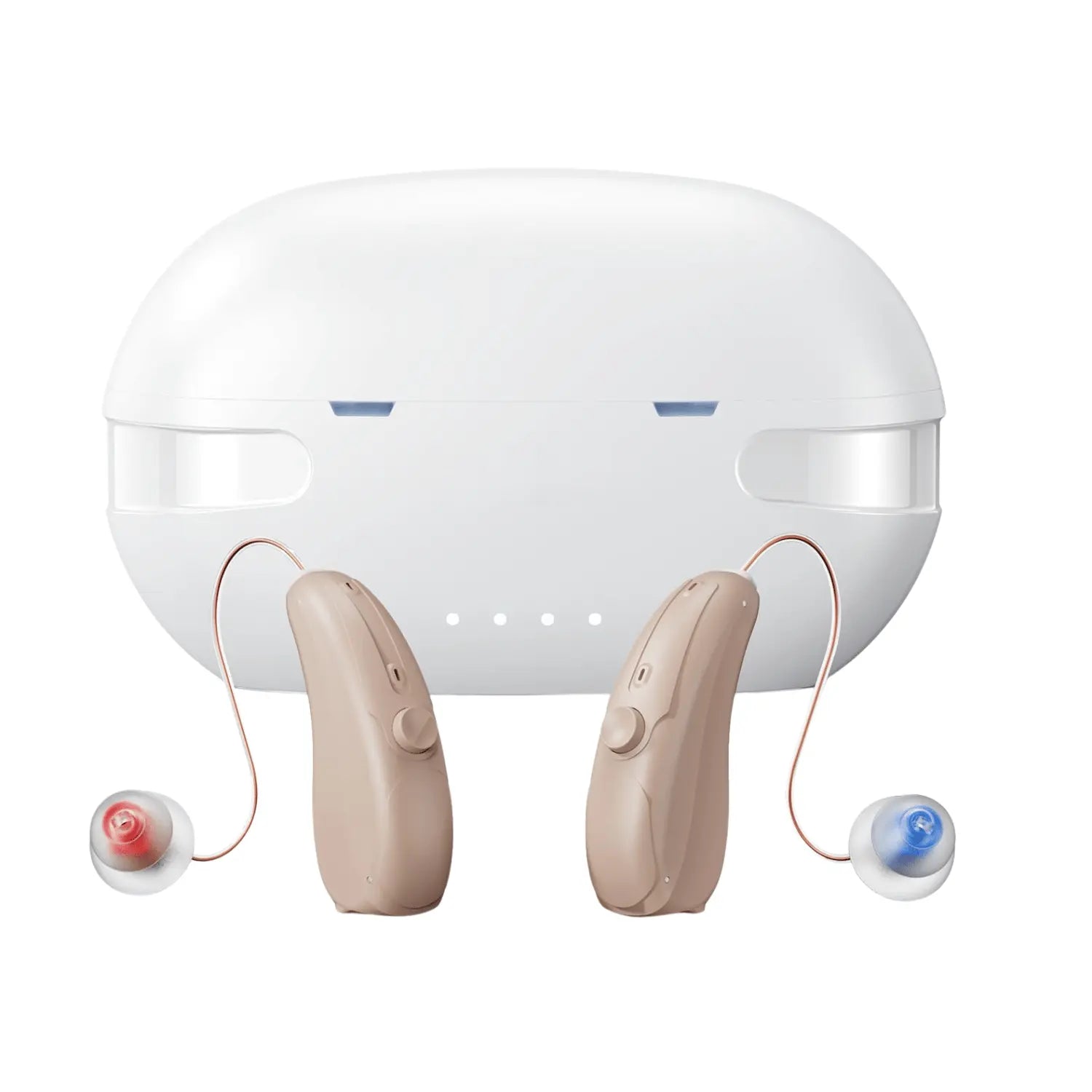
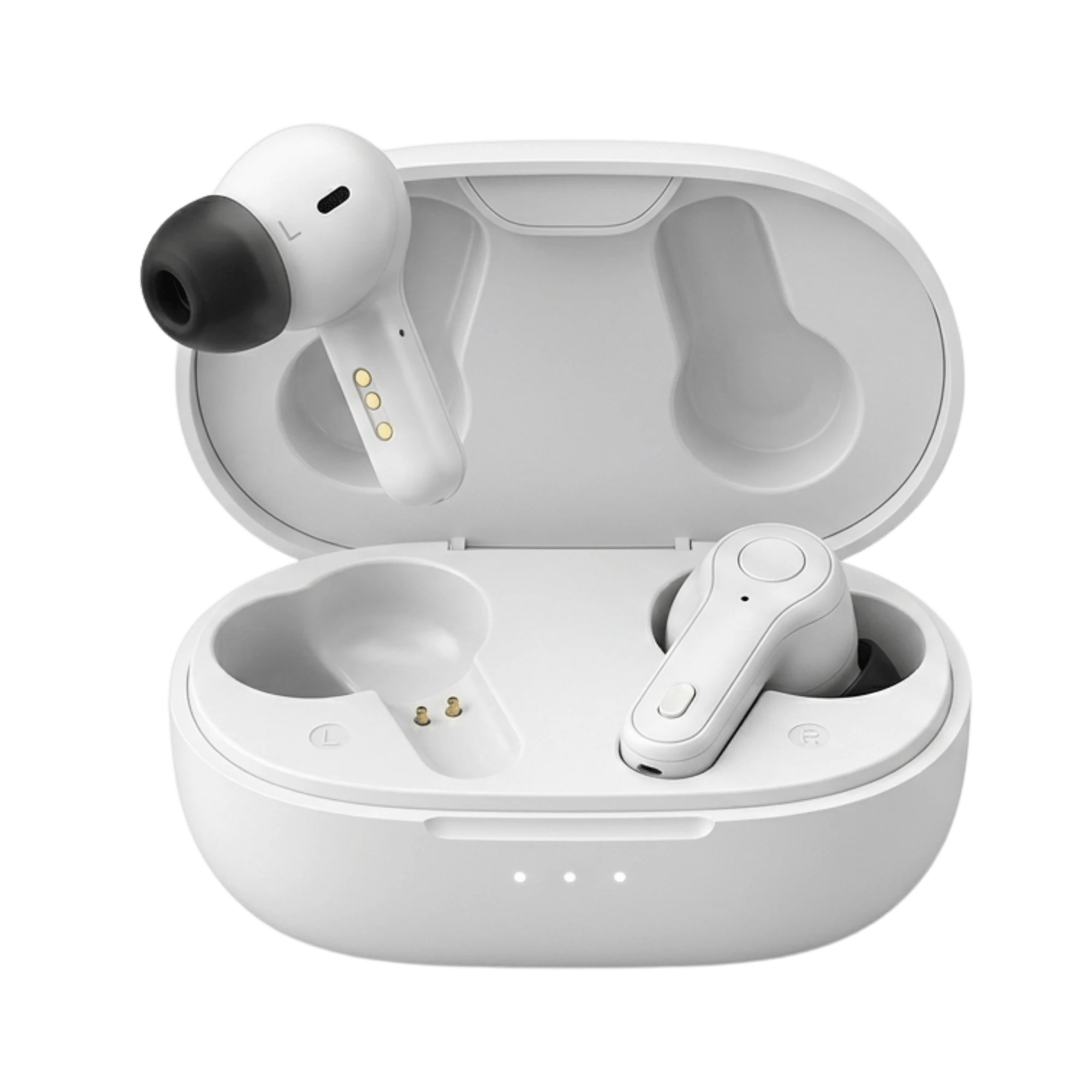
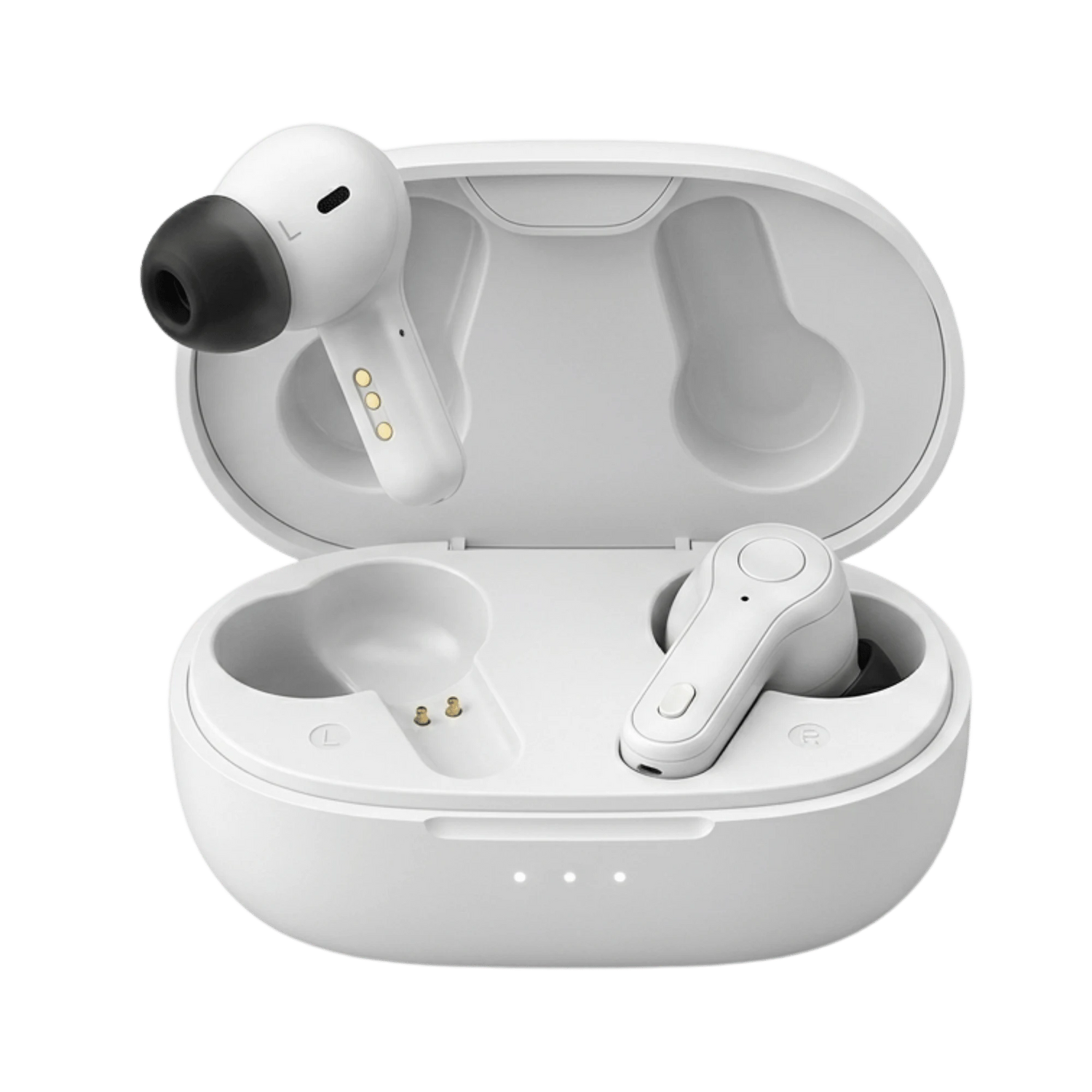
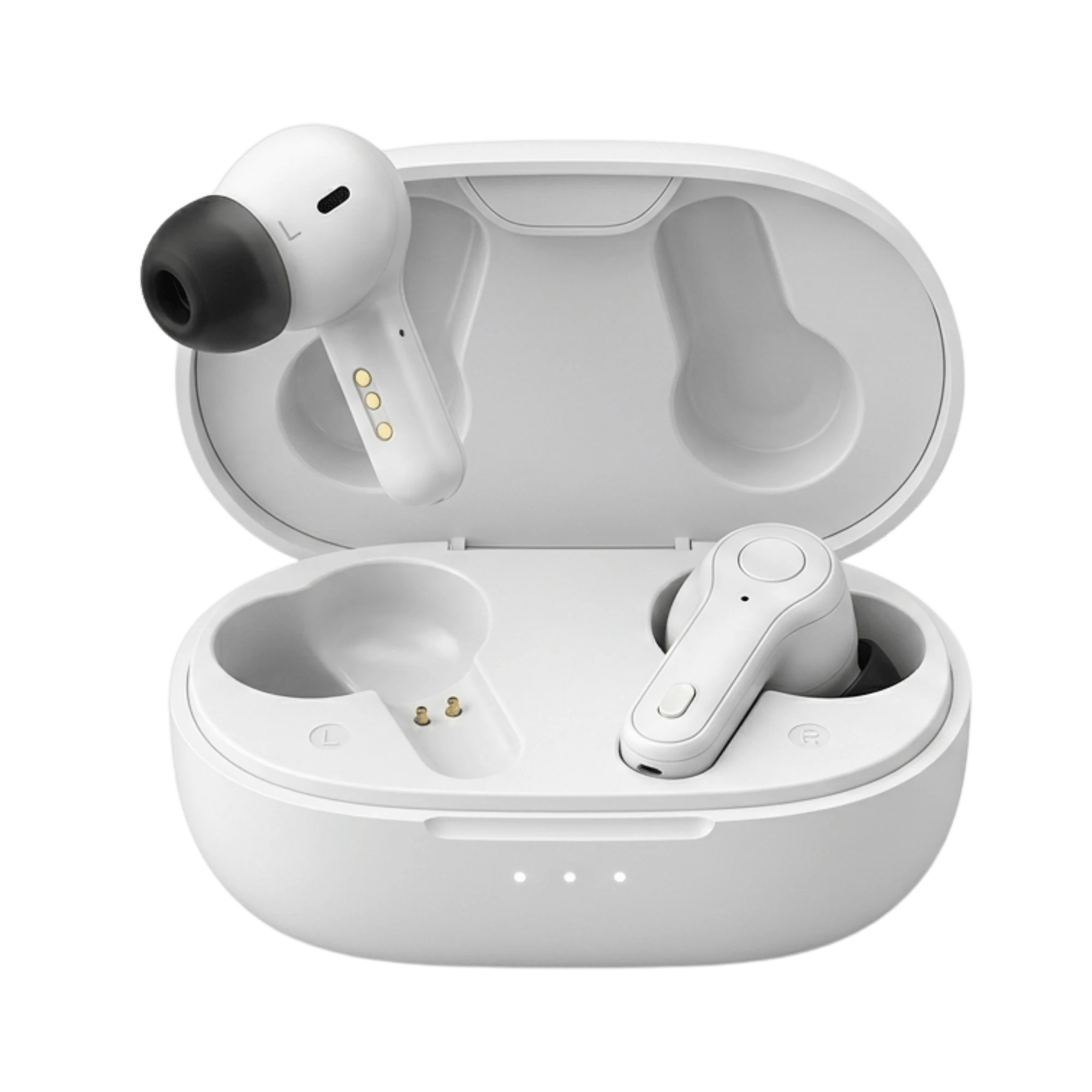
This is exactly the friction the Panda Air tries to remove. It is an earbud-style in-the-canal hearing aid with 16-channel wide-dynamic-range compression and multi-band adaptive noise reduction. The piece that maps directly to the Alsaleh study's findings is the Panda app-based in-ear hearing test: after delivery, you pair the hearing aid with the Panda app, the app runs a frequency-specific hearing test through the hearing aid itself, and the device's gain and frequency response are then programmed automatically based on your audiogram - similar to what an audiologist would do at a clinical fitting, but without the clinic visit. The charging case offers fast-charge support and roughly 60 hours of total run time, and the device ships with a 5-year warranty and a 45-day return window.
Limitations of This Research
Thirty-three participants is a defensible sample size for grounded-theory work, but it is not a population. The study selected people who were already using AI-powered hearing aids, which means it tells us why adopters stayed, not why non-adopters declined. Survivorship bias is real here. People who tried AI hearing aids and abandoned them are not in the sample.
The data also do not isolate which specific AI feature drives which outcome. The five themes are valuable as a framework, but they will need quantitative follow-up - ideally a structured survey of a larger, more diverse population - to confirm that the same drivers hold across mild versus severe hearing loss, working versus retired adults, and different cultural contexts. And as the same 2026 review of hearing-aid limitations notes, AI helps with environmental classification but cannot fully overcome the acoustic constraints of compression and feedback in challenging environments [2].
Where This Leaves Us
The study makes a useful course correction: the question is not whether AI hearing aids are technically superior - by most measures, they are - but whether they reduce the everyday effort of living with hearing loss. The five drivers Alsaleh and colleagues identify all point in that direction. For consumers, the actionable version is that fitting flexibility, automatic environment handling, and a low-friction support process are reasonable things to ask about before committing to any device.
References
[1] Drivers of artificial Intelligence-powered hearing aids by individuals: an in-depth qualitative investigation (Hadeel Alsaleh et al., 2026, Journal of Enterprise Information Management, 0 citations).
[2] Hearing Aids: What Works Well and What Can Be Improved (Brian C. J. Moore, 2026, JARO, 0 citations).
[3] Using Hearing Aids for Music: A UK Survey of Challenges and Strategies (A. Greasley et al., 2026, Trends in Hearing, 0 citations).
[4] Treatment preferences and values in chronic tinnitus patients: A cross-sectional survey study. (Hyun Jung Kim et al., 2026, American journal of otolaryngology, 0 citations).