Hearing Devices Plus Group Rehabilitation Cut Loneliness in Older Adults, Systematic Review Finds
A new PRISMA-guided systematic review of 11 studies concludes that hearing interventions - particularly group auditory rehabilitation paired with hearing devices - consistently reduce loneliness and improve social participation among older adults with hearing loss [1].
Loneliness in later life is not a rounding error. Among older adults, untreated hearing loss is one of the most consistent and modifiable contributors to it, and population data from 2026 suggest the scale is larger than many clinicians appreciate. A cross-sectional study of nearly 1,900 Iranians aged 60 and older found that 45.5 percent reported hearing loss, with prevalence rising sharply with age and chronic disease burden [2].
Other recent work has shown that older adults with hearing loss carry higher rates of cognitive decline and anxiety than peers with normal hearing [3], and that hearing-aid technology, even when worn, still struggles with audibility for soft speech and feedback in noisy rooms [4]. The new review by Beadle and colleagues is the first to ask, in a structured way, what the available trial evidence says about pulling these threads together - does treating the ear actually move the needle on the social isolation that often comes with it?
About This Study
Title: Effectiveness of interventions for social isolation, loneliness, and social participation in older adults with hearing loss: results from a systematic review.
Authors: Julie Beadle and colleagues
Journal: Systematic reviews - 2026
Citations: 0 (newly indexed)
Source: Consensus - https://consensus.app/papers/details/09b7f016417d5b998f92bf48e7eee612
Background: Why the Researchers Looked at This
Loneliness, social isolation, and social participation are related but distinct ideas. Loneliness is the subjective feeling of being disconnected. Social isolation is the objective state of having few contacts. Social participation is whether a person actually shows up - to family dinners, faith communities, doctor visits, volunteer groups. The authors note that hearing loss can erode all three because conversation becomes effortful and embarrassing, and many older adults respond by withdrawing.
Other 2026 work has documented just how common this combination is. The Iranian prevalence study above found that hearing loss was significantly more common among older adults who lived alone, were unemployed, or had limited activities of daily living [2]. A separate community study in Beijing reported that all-frequency hearing loss in older adults was tightly linked with anxiety and cognitive decline [3]. The Beadle review focuses on the intervention side: given that the problem is real and measurable, do the interventions audiologists already use actually help the social side of the equation?
Previous reviews had answered this only in pieces - one trial of hearing aids here, one program of group rehabilitation there, with mixed outcomes and inconsistent definitions. The team set out to assemble the evidence under a single PRISMA-guided framework.
How the Study Was Done
The team searched six databases - MEDLINE, EMBASE, PsycINFO, AgeLine, CINAHL, and ProQuest Sociology - using keyword and subject-heading searches. They followed PRISMA guidelines, registered the protocol with PROSPERO (CRD42024529695), and applied pre-defined inclusion and exclusion criteria.
From an initial pool of 746 records, 11 studies met inclusion criteria. Two used pilot randomized controlled trial designs; the other nine were prospective pre-post observational studies. The interventions covered four categories: hearing aids, cochlear implants, assistive listening technologies, and Group Auditory Rehabilitation (GAR) - structured small-group programs in which audiologists coach participants on listening strategies, communication repair, and how to get the most out of amplification.
Quality was assessed with the Cochrane Risk of Bias tool for the RCTs and the Risk of Bias in Non-randomized Studies of Interventions tool for the observational work. The three outcomes - loneliness, social participation, and social isolation - were extracted separately, since different studies measured them differently.
What the Researchers Found
Across study designs, hearing interventions improved loneliness and social participation. The signal was consistent enough that the authors describe it as one of the few clean findings to emerge from the otherwise mixed audiology rehabilitation literature.
The strongest and most consistent benefits showed up when Group Auditory Rehabilitation was combined with hearing device uptake. In other words, the device alone helped, the group program alone helped, but the combination - sound coming in plus structured guidance on how to use it - produced the largest and most reliable effect on how connected participants felt to other people.
Social participation followed the same pattern. Once people could hear and were given a few weeks of coaching on how to repair conversations, they reported re-engaging with family meals, religious services, and community activities they had quietly stopped attending.
Social isolation as a standalone outcome was less commonly measured. Of the 11 included studies, only a minority used a validated isolation scale, so the authors are cautious about drawing strong conclusions for that endpoint. The signal that did appear pointed in the same positive direction, but the evidence base is thinner.
The team explicitly called out long-term durability as an open question. Most included studies followed participants for under a year, so whether the social benefits hold up at two or five years is unknown.
What It Means for People with Hearing Loss
The practical takeaway is straightforward and a little bit underrated: getting fitted with a hearing device, on its own, is probably already moving the needle on loneliness for many older adults. Adding a structured group program - even a short one - appears to amplify that benefit.
For people who have been quietly opting out of phone calls, family dinners, or community events because conversation is exhausting, the review suggests the social cost of that withdrawal is reversible. The first step is hearing again - clearly enough that participation does not feel like work.
It is also worth pairing the device with deliberate practice: re-introducing one social setting at a time, asking conversational partners to face you, and using assistive listening features for phone calls and television where they are available.
When the Right Device Helps with Phone Calls and TV - Not Just Conversation
One specific finding from the review is worth lingering on: social participation improved most when participants could comfortably re-enter the kinds of communication that had become difficult, including phone calls, television, and multi-person settings. That is exactly where conventional, microphone-only amplification often falls short - background noise, distance, and small speakers all add up to fatigue.
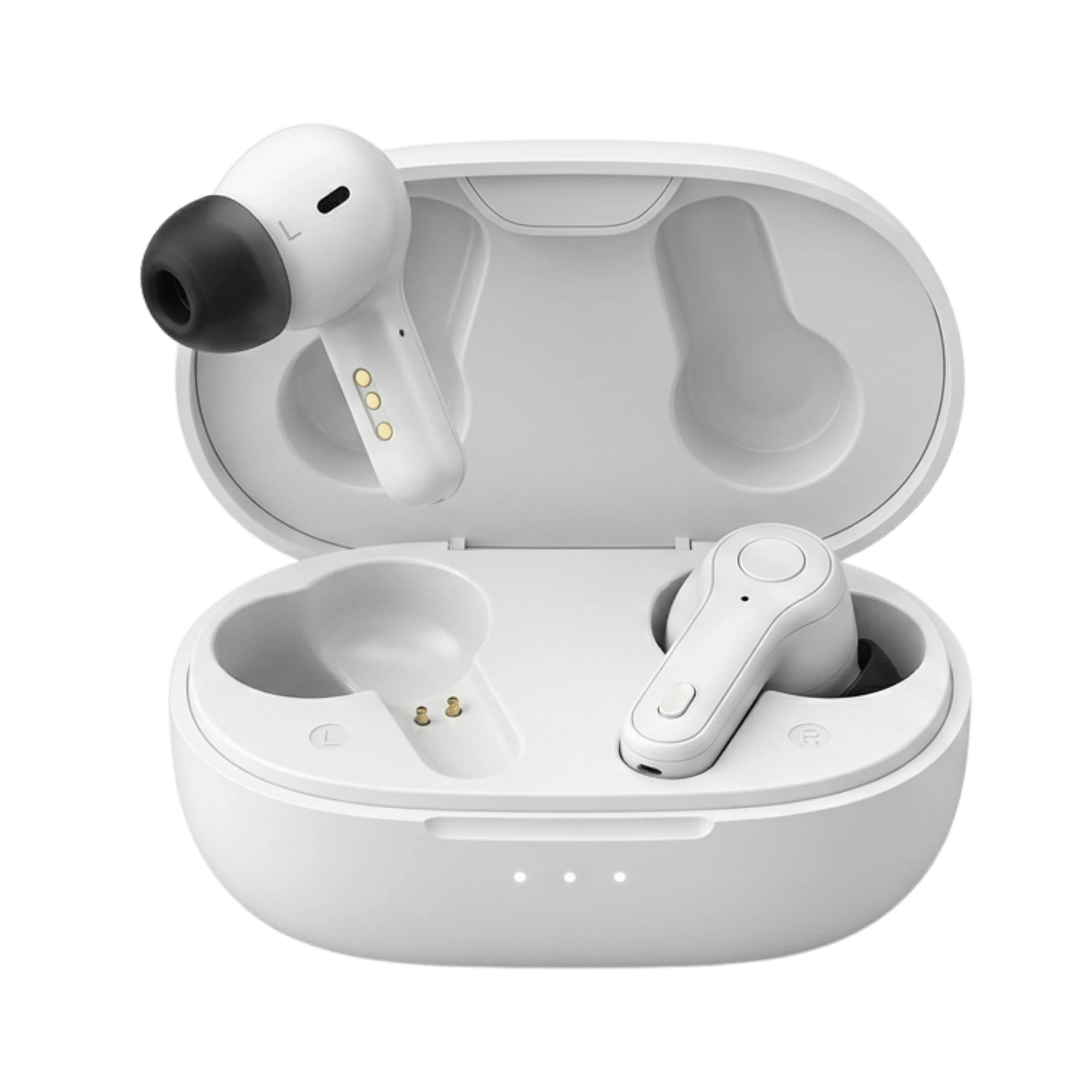
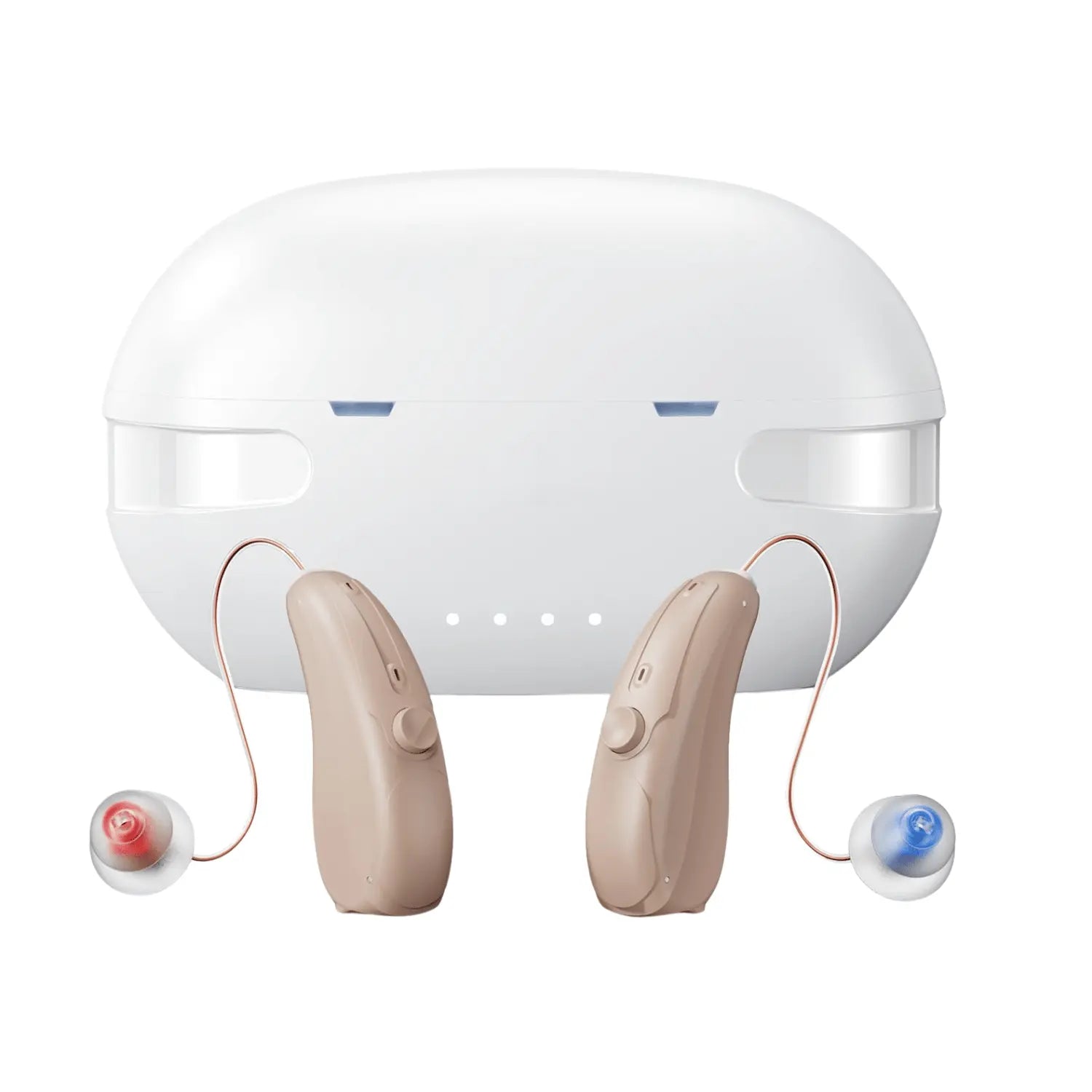
This is the gap the Panda Quantum was designed for. It is a 16-channel receiver-in-canal hearing aid with active noise reduction and Bluetooth, so phone calls and television audio stream directly into the hearing aids instead of bouncing off the room first. The case holds enough charge for up to 80 hours of total use, which matters for older adults who do not want to think about charging every night. Panda Quantum also includes an app-based in-ear hearing test: after delivery, you pair the device with the Panda app, the app runs a frequency-specific test through the hearing aid itself, and the fitting is then applied automatically based on your audiogram, similar to what an audiologist would do at a clinical fitting. It ships with a 5-year warranty and a 45-day return window so trying it does not feel like a final decision.

Limitations of This Research
Only two of the 11 included studies were randomized controlled trials, and both were pilots. Most of the evidence comes from prospective pre-post observational designs, which are vulnerable to expectation effects: people who agree to be fitted with a hearing aid often expect to feel better, and that expectation can color self-reported loneliness scores.
The review also noted that hearing-aid technology itself has unresolved limitations that may cap the achievable benefit. Open-vent fittings, for example, reduce the occlusion effect but let background noise leak through and weaken directional processing [4]. Future trials will need longer follow-up and head-to-head comparisons of device categories before clinicians can say which combination of device plus rehabilitation works best for which patient.
Where This Leaves Us
Hearing devices, especially when paired with group rehabilitation, look like one of the better tools clinicians have for reducing loneliness in older adults. The evidence is not yet at the level of a definitive randomized trial, but the direction is consistent across study designs, populations, and measurement tools. For an older adult who has been quietly pulling back from social life, the review supports a simple message: addressing the hearing piece is a reasonable first move, and the longer it is delayed, the more social ground there is to recover.
References
[1] Effectiveness of interventions for social isolation, loneliness, and social participation in older adults with hearing loss: results from a systematic review. (Julie Beadle et al., 2026, Systematic reviews, 0 citations).
[2] Prevalence and associated factors of hearing loss in Iranian older adults: a cross-sectional study of Amirkola Health and Ageing Project. (A. Tavasoli et al., 2026, BMC geriatrics, 0 citations).
[3] Analysis of characteristics and influencing factors of hearing loss in the older adults. (Xinyang Zhou et al., 2026, Lin chuang er bi yan hou tou jing wai ke za zhi, 0 citations).
[4] Hearing Aids: What Works Well and What Can Be Improved. (Brian C. J. Moore, 2026, JARO, 0 citations).