What Nearly 1,000 People With Tinnitus Want From a Phone App That Helps Them Cope
A large New Zealand survey found that people living with tinnitus want short, once-a-day support messages focused on practical coping tools, sleep, and stress, and that the more tinnitus disrupts daily life, the more those messages are valued.
Tinnitus, the perception of ringing, buzzing, or hissing with no outside sound source, affects a large share of adults and has no simple cure. Most proven approaches do not try to switch the sound off. Instead they help people change how they think about it, sleep around it, and lower the stress that makes it feel louder. The catch is that these methods only work if people stick with them over weeks and months, which is exactly where most self-guided programs lose people.
A new study published in Patient Education and Counseling asked a straightforward question that surprisingly few researchers have tackled head-on: if you are going to deliver tinnitus support through a phone app, what should the app actually say, and how often should it say it? Rather than guessing, the researchers asked the people who would use it.
About This Study
Title: A large sample survey of preferences in the content and frequency of educational and counseling messages for mHealth-based behavioral change in tinnitus
Authors: Eilaf Narejo, Rosie Dobson, Grant D. Searchfield
Affiliations: Audiology, School of Population Health, Faculty of Medical and Health Sciences, The University of Auckland, New Zealand; Epidemiology and Biostatistics, School of Population Health, The University of Auckland; Evidence, Research and Clinical Trials, Te Whatu Ora, New Zealand; Eisdell Moore Centre, School of Population Health, The University of Auckland
Journal: Patient Education and Counseling - May 30, 2026 (Volume 150, Article 109718)
Study type: Cross-sectional online survey (986 respondents)
Source: PubMed - DOI: 10.1016/j.pec.2026.109718
Background: Why the Researchers Looked at This
Tinnitus is not a sound in the world; it is a signal the brain generates and then pays attention to. Because the distress it causes comes from a tangle of biological, psychological, and social factors, the therapies with the best track record are behavioral. They aim to demystify the sensation, soften the negative thoughts that gather around it, and unwind the habits, like constantly checking whether the ringing is still there, that keep it in the foreground.
The problem is staying with the program. Behavioral change is slow, and a clinician is not standing beside the patient every evening when the ringing is at its loudest. That gap is why researchers are interested in mobile health, often shortened to mHealth, which simply means delivering care and support through a smartphone. One technique within mHealth is motivational messaging: short, tailored prompts that speak to a person's specific challenges and nudge them toward helpful behavior, the same idea behind apps that coach people through quitting smoking or managing diabetes.
Messaging only helps if it lands. Send too much and people mute the app; send the wrong content and they ignore it. The researchers wanted hard data on what to send and how often, drawn from people who actually live with tinnitus rather than from designers guessing on their behalf.
How the Study Was Done
The team ran a cross-sectional online survey, meaning a single snapshot in time rather than a group followed over months. Invitations went to people already enrolled on a tinnitus research list, and 986 people responded, a large sample for this kind of preference research. A focused set of questions asked respondents to rate possible education and counseling messages and to say how frequently they would want to receive them.
Respondents also completed the Tinnitus Functional Index, or TFI, a standard questionnaire that scores how much tinnitus interferes with daily life. A higher TFI score means the condition is taking a bigger toll. Pairing message ratings with TFI scores let the researchers see whether the people most burdened by tinnitus wanted support differently from those only mildly bothered.
Because respondents were drawn from a research list and chose to take part, they may be more engaged and motivated than the general tinnitus population, a limitation the design carries by nature. A survey can also capture what people say they would want, which is not always the same as what they would use day to day.
What the Researchers Found
On frequency, the answer was clear and modest: once a day was the preferred rhythm. People wanted a steady, light-touch presence rather than a stream of reminders.
On content, four themes rose to the top. Respondents most valued practical tips and tools to manage tinnitus, guidance on using masking noise to help fall asleep, reminders to keep up with their therapy, and stress management techniques. The common thread is action over abstraction: people wanted things to do in the moment, especially around the two hardest parts of living with tinnitus, getting to sleep and managing stress.
The most striking result came from linking message ratings to the TFI. The two moved together: the higher a person's TFI score, meaning the more tinnitus disrupted their life, the more highly they rated the messages. The people struggling most were also the most receptive to support, which suggests a well-built messaging program could reach exactly those who need it.
There were also significant gender differences. On average, women rated the messaging concepts more positively than men, a pattern worth keeping in mind when designing programs intended to engage a broad audience.
Taken together, most participants saw daily, practical, supportive messaging as a genuinely useful component of a phone-based tinnitus tool.
What It Means for People With Hearing Loss
For anyone who has lain awake with ringing ears, the findings will feel familiar. The two pain points respondents flagged, falling asleep and managing stress, are the moments when tinnitus most reliably takes over, and the appetite for masking noise at bedtime reflects how many people already reach for a fan, white noise, or soft audio to give the brain something else to listen to.
There is an important overlap to name here. Tinnitus and hearing loss frequently travel together, because the same inner-ear changes that reduce hearing can leave the brain straining and generating phantom sound to fill the gap. That is why clinicians often treat the underlying hearing loss as a first step: when real sound comes back in, the contrast with the tinnitus tends to soften. It does not erase the ringing, but it can lower how much attention the brain spends on it.
The study also reflects a wider shift in ear and hearing care toward self-managed, phone-connected tools. People increasingly expect to handle parts of their hearing health from an app, on their own schedule, the same way this research imagines delivering tinnitus support.
Why the App-Based Finding Points Toward Connected Hearing Devices
This study's central insight, that people want daily, app-delivered support they can personalize and use at moments like bedtime, mirrors how newer hearing devices are being built. For the large group whose tinnitus accompanies hearing loss, the phone has become the place where both the hearing fit and the day-to-day coping tools live.
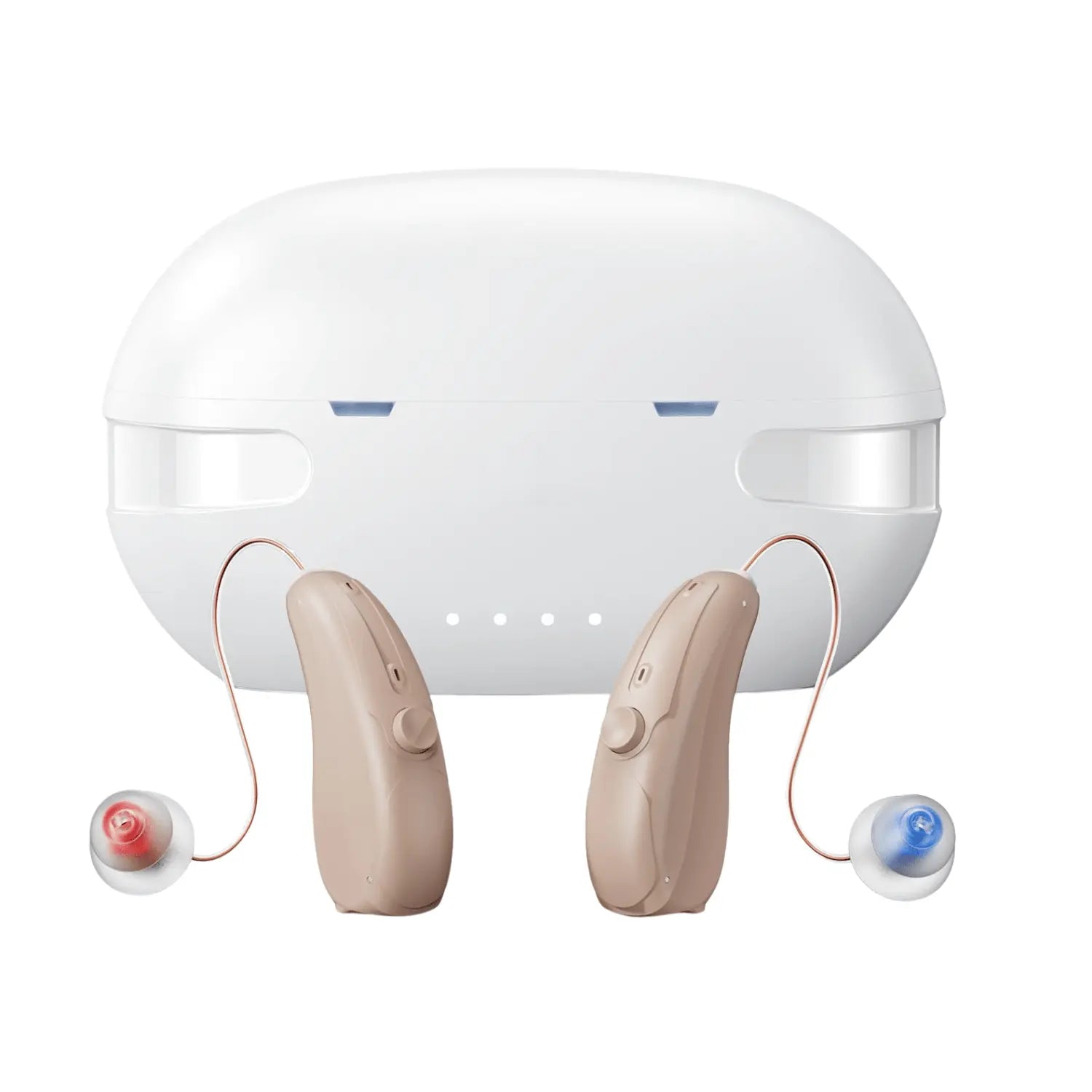
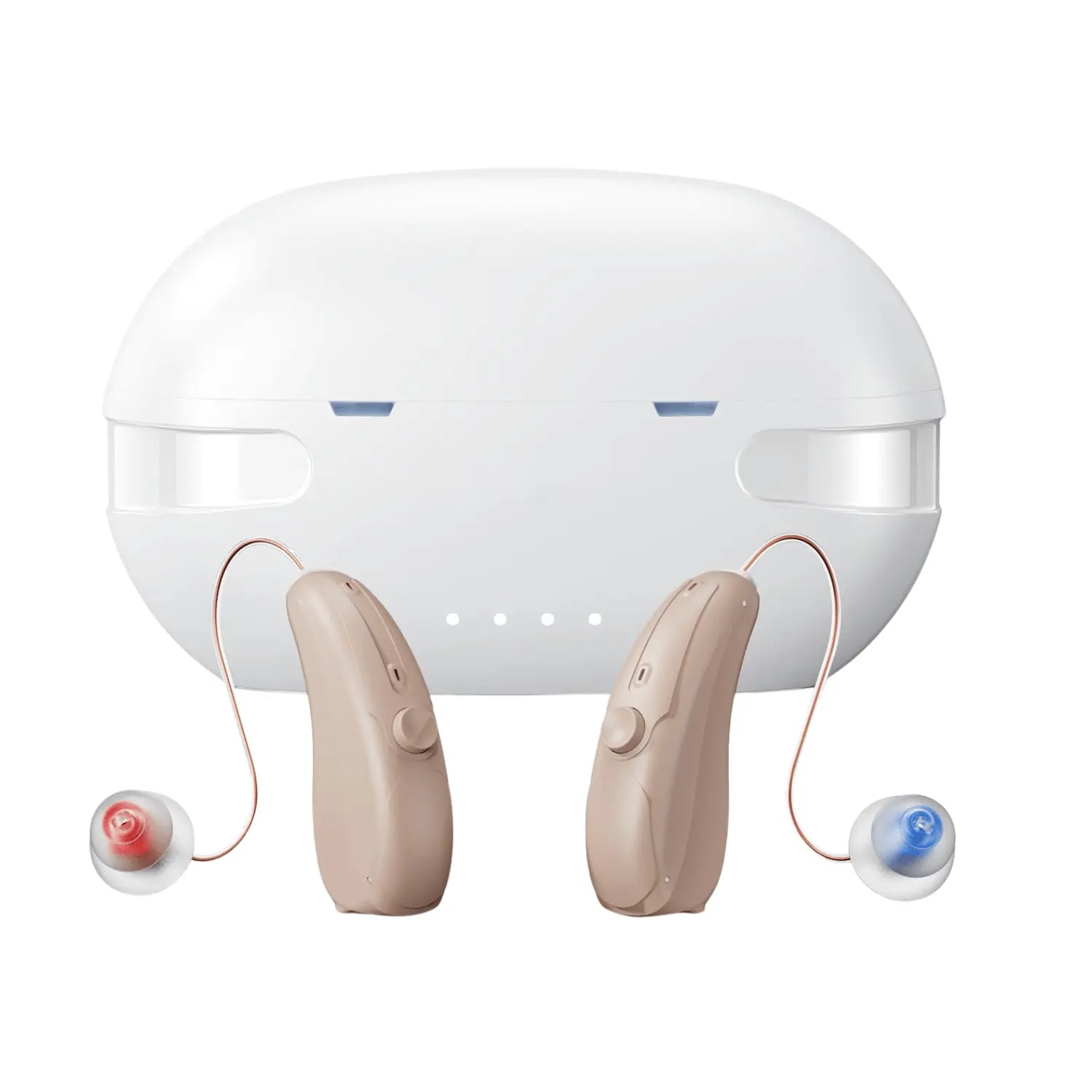
Panda Quantum is one device in that connected category. It is a 16-channel receiver-in-canal hearing aid set up through app-based hearing personalization, including a clinically tuned 10-minute online hearing test, so the fit is matched to a person's own hearing rather than a generic preset. Because it offers Bluetooth streaming for calls, TV, and music, the same connection can carry the kind of relaxation or masking audio people in this study said they wanted at bedtime, and its case holds up to roughly 80 hours of total battery for through-the-day use. It is an example of how self-hearing-test hearing aids and Bluetooth OTC hearing aids are converging with the app-based support this research describes.

One honest caveat: a hearing aid treats hearing loss, not tinnitus itself, and the messaging app studied here is a separate kind of tool. OTC devices are also intended for mild-to-moderate hearing loss, and people with severe or profound loss, or with tinnitus and no measurable hearing loss, are best guided by an audiologist. You can read the device details on the Panda Quantum product page.
Limitations of This Research
This is a preference survey, not a trial. It tells us what people on a tinnitus research list said they would value, not whether a daily-messaging app actually reduces tinnitus distress over time. The respondents volunteered and were already connected to research, so they may be more motivated than the wider population, and self-reported preferences do not always predict real-world use. The findings also come from a single survey at one point in time, which cannot capture how preferences might change as someone moves through a treatment program.
The work comes from audiology and population-health researchers at the University of Auckland and the Eisdell Moore Centre, a group active in tinnitus and hearing research; readers can look to the full paper for any funding and conflict-of-interest details. The natural next step is a study that tests whether messaging built on these preferences actually improves outcomes, not just appeal.
Where This Leaves Us
If you live with tinnitus, the practical takeaway is reassuring: the things you most want from support, a daily nudge, simple coping tools, help getting to sleep, and ways to manage stress, are exactly what people in this large survey asked for, and the more tinnitus weighs on you, the more such support tends to help. A sensible starting move is a baseline hearing check, since unaddressed hearing loss often sits underneath tinnitus, followed by a conversation with an audiologist about behavioral approaches and whether an app or device fits your situation. Tracking the Auckland group's future work is a good way to see whether these preferences translate into tools that measurably help.
Narejo E, Dobson R, Searchfield GD. A large sample survey of preferences in the content and frequency of educational and counseling messages for mHealth-based behavioral change in tinnitus. Patient Education and Counseling. 2026;150:109718. Retrieved from PubMed. https://doi.org/10.1016/j.pec.2026.109718