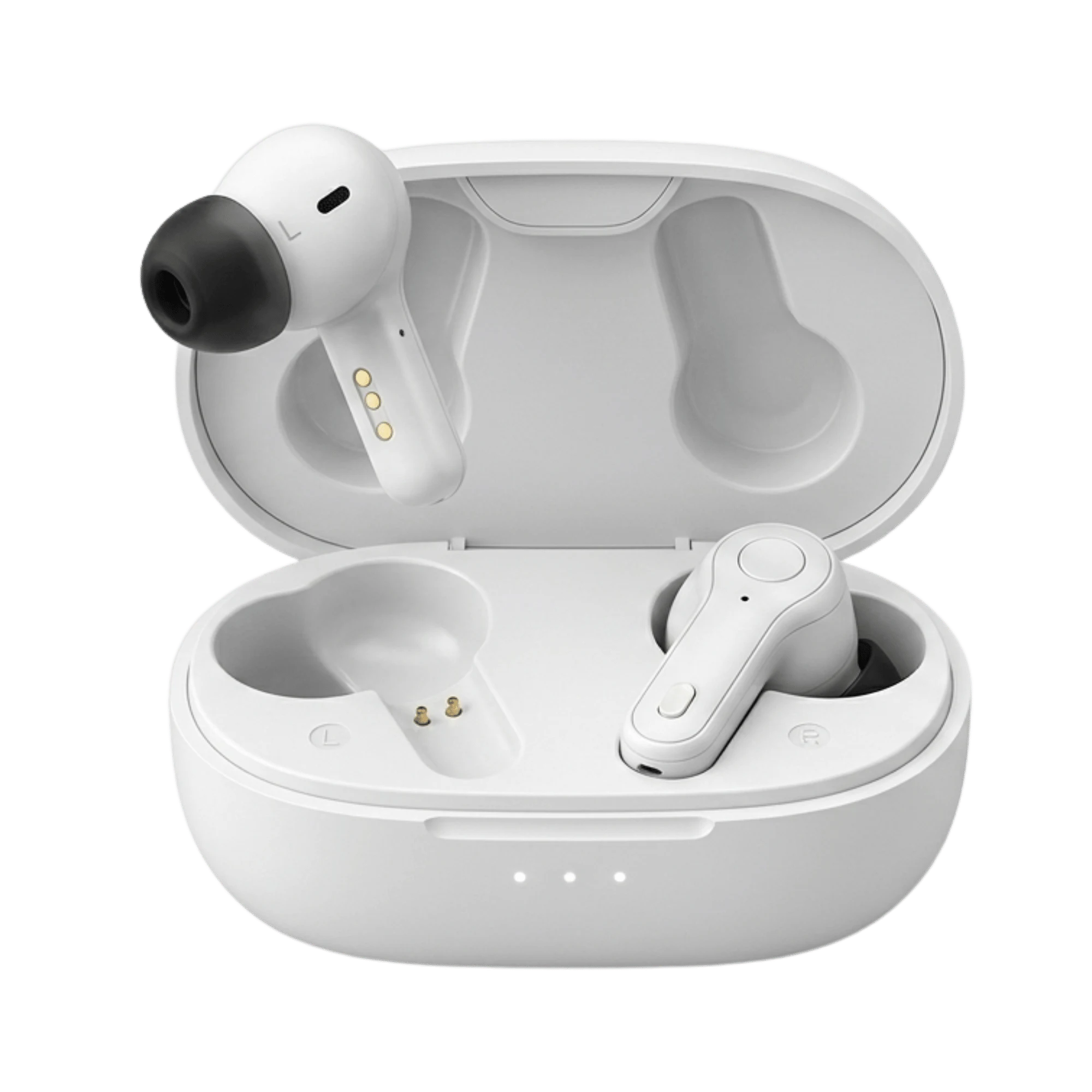
When researchers let older adults compare hearing aid settings head to head, most preferred a device that offered more ways to fine-tune the sound, not a single prescribed setting.
Since over-the-counter hearing aids became available in the United States in 2022, a practical design question has hung over the category: how much choice should one of these devices give the person wearing it? Too little, and the sound may never feel right. Too much, and a first-time user can feel lost in menus.
A team based at the University of Wisconsin-Madison and the University of Iowa set out to measure where that balance sits, by asking older adults with mild-to-moderate hearing loss to compare collections of preset settings and say which they preferred.
About This Study
Title: An Evaluation of Preset Collection Size in Over-the-Counter Hearing Aids
Authors: Erik Jorgensen, Lindsey Kreul, Megan Werner, Dhruv Vyas, Octav Chipara, Yu-Hsiang Wu
Affiliations: Department of Communication Sciences and Disorders, University of Wisconsin-Madison; Department of Communication Sciences and Disorders, University of Iowa
Journal: Ear and Hearing - May 22, 2026
Study type: Within-subjects laboratory experiment
Source: PubMed - DOI: 10.1097/AUD.0000000000001835
Background: Why the Researchers Looked at This
Over-the-counter hearing aids come in two broad styles. Self-fitting devices walk the user through a guided procedure, often an in-app hearing check, that shapes the sound to their hearing. Preset-based devices instead offer a handful of ready-made settings, and the user picks whichever sounds best. Preset devices can be easier for people who are not comfortable with apps and step-by-step setup, but they raise their own question: is a small menu of settings enough, or do people want more options?
To understand the study, two terms help. A preset is a fixed combination of amplification settings, mainly how much extra volume the device adds at low, middle, and high pitches. NAL-NL2 is a widely used prescription formula that calculates a recommended amount of amplification at each pitch based on a person's hearing test. In a clinic, an audiologist often starts from a formula like this and then adjusts. The researchers wanted to know whether everyday users, choosing on their own, would land on the formula's recommendation or prefer something different.
How the Study Was Done
Forty-one older adults with mild-to-moderate sensorineural hearing loss took part, all with hearing that fit the eligibility range for over-the-counter devices. Each person compared four options: a small collection of 4 presets, a medium collection of 16, a large collection of 32 that also folded in real-world preference patterns drawn from earlier research, and the individualized NAL-NL2 prescription setting. The presets were built from prescription targets using a large database of audiograms meant to represent the typical over-the-counter user.
Rather than rate each setting in isolation, participants ran a kind of tournament. Settings were paired off in a double-elimination format until one favorite emerged, both in quiet and against background noise. The team then measured speech understanding with each option, using the speech reception threshold, which is the softest level at which a listener can correctly follow speech. Lower thresholds mean easier listening. Statistical models compared preferences and speech scores across the four collections.
What the Researchers Found
In quiet, the largest collection won. About 49 percent of participants ranked the 32-preset set as their favorite, while roughly 44 percent ranked the single prescription setting last. In other words, when given room to explore, many people chose something other than the textbook formula.
Against background noise, the same general pattern appeared, but preferences were more scattered and the differences were not statistically reliable. Listening in noise is harder and more personal, which may explain why no single setting clearly stood out there.
Crucially, choosing a favorite did not cost people clarity. Speech reception thresholds differed only slightly across collections in quiet and not at all in noise, suggesting that letting users pick a preferred setting did not meaningfully hurt how well they understood speech.
Experience shaped choices too. People who had worn hearing aids before tended to prefer more amplification and were less likely to pick a preset over the prescription. And when someone did prefer a preset over NAL-NL2, the gap was mostly about overall loudness rather than the balance between low and high pitches. The shape of the sound stayed close to the prescription; the volume was what people wanted to nudge.
What It Means for People with Hearing Loss
For anyone shopping for a first hearing aid, the takeaway is encouraging: a prescription-based starting point is reasonable, but personal preference is real and worth honoring. Many people will want to move away from a single recommended setting, usually by adjusting overall volume, and doing so does not appear to come at the expense of understanding speech.
It also suggests that the best over-the-counter design may not be the simplest one. A device that offers either several thoughtfully built presets or an easy way to fine-tune the sound gives users a path to a setting that feels right to them, instead of one they tolerate.
When a Device Tunes Itself to Your Own Hearing
The study's central finding, that people want amplification shaped to their own preference rather than one fixed setting, points toward devices that personalize the sound to the individual instead of asking everyone to live with the same defaults.
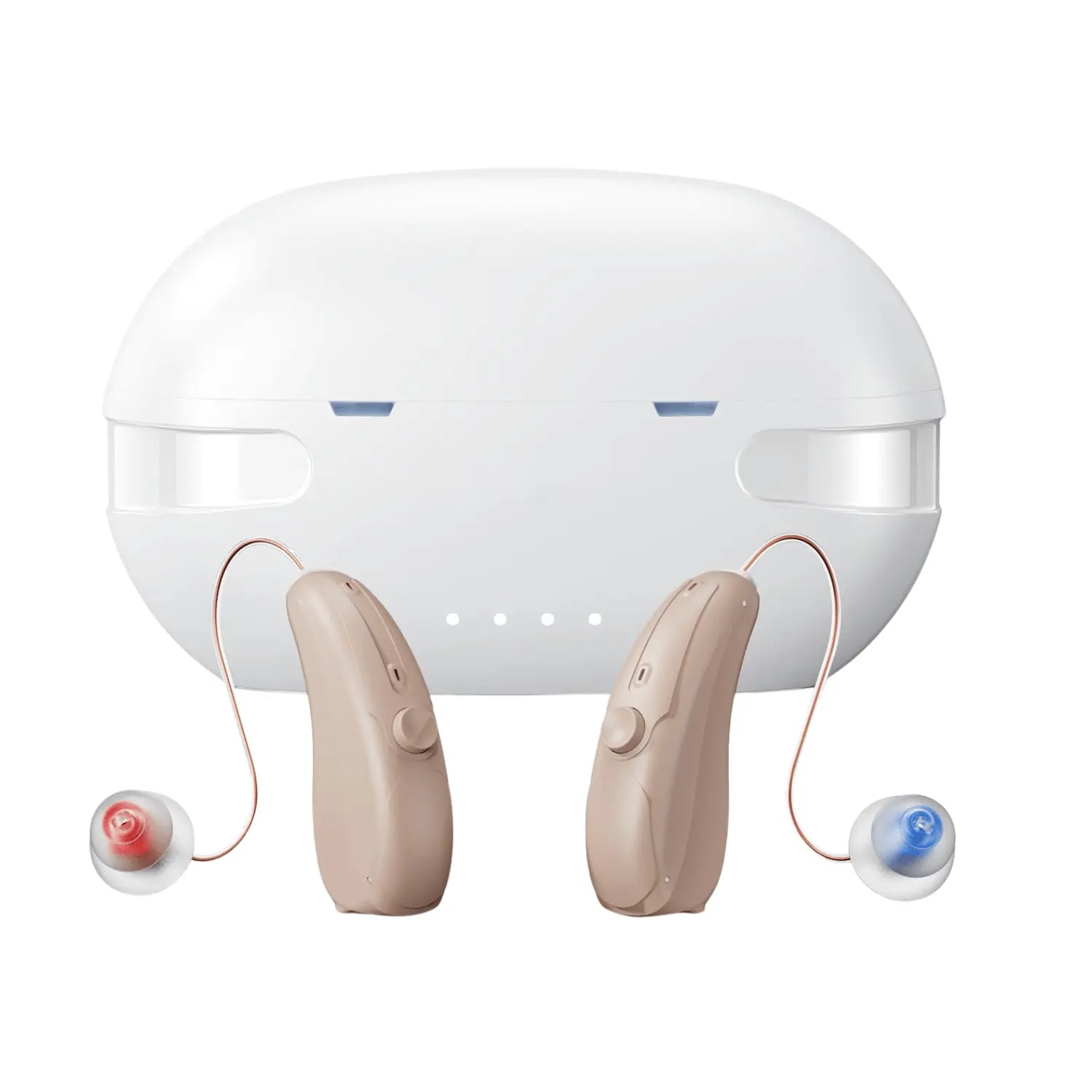
Panda Quantum is one over-the-counter example of that approach. After it arrives, the wearer pairs it with the Panda app and runs a frequency-specific hearing test through the device itself; the app then programs the gain and frequency response to match that person's audiogram, much like the starting point an audiologist would set at a clinical fitting. Because the personalization runs off your own results, it is closer to an app-based hearing personalization tool than a one-size preset. Quantum is a 16-channel device with adaptive noise reduction aimed at clearer speech in noisy environments, the exact listening situation this study found hardest to pin down with a single setting. It also includes a self-hearing test, Bluetooth for calls and TV, up to 80 hours of total battery with its case, a 5-year warranty, and a 45-day return window.
One honest caveat: over-the-counter devices are intended for mild-to-moderate hearing loss. People with severe or profound loss still tend to benefit most from a clinic-based fitting.

Limitations of This Research
This was a controlled laboratory study with 41 participants who listened through a research hearing aid, not a shipping consumer product, and the settings were tested in a single session rather than over weeks of daily life. Preferences measured in a lab may shift once a person wears a device through real conversations, restaurants, and television at home. The preference advantage for the largest collection was clear in quiet but did not reach statistical significance in noise, so the noise results should be read cautiously. The publication did not include a specific funding or conflict-of-interest statement in the record reviewed here.
Where This Leaves Us
If you are weighing an over-the-counter hearing aid, it is worth asking not only how it is set up out of the box but whether it lets you adjust the sound to your liking. A good first step, before buying anything, is a baseline hearing check so you know where your hearing stands and have a reference point for judging whether a device is actually helping.
Jorgensen E, Kreul L, Werner M, Vyas D, Chipara O, Wu YH. An Evaluation of Preset Collection Size in Over-the-Counter Hearing Aids. Ear and Hearing. 2026. Retrieved from PubMed. DOI: 10.1097/AUD.0000000000001835