86 Percent of Veterans Had Hearing Loss and 47 Percent Reported Tinnitus in a 267,000-Person Study
One of the largest audiometric datasets ever assembled found hearing loss and tinnitus at rates far above a comparison civilian group, and identified a pattern of hearing difficulty that a standard hearing test does not fully capture.
Most of what is known about how common hearing loss is comes from surveys of a few thousand people, extrapolated outward. Those studies are valuable, but they are small enough that unusual patterns get smoothed away and subgroups get thin. Occasionally a dataset arrives that is large enough to look at the detail directly.
A team from the University of California San Diego, the VA healthcare system, and Harvard Medical School has done exactly that, analyzing hearing test results for more than a quarter of a million U.S. Veterans gathered over two decades. Their findings, published in Ear and Hearing, describe a population carrying an unusually heavy hearing burden, and they point toward a form of hearing difficulty that routine testing tends to miss.
Title: A National Cohort Study of Tinnitus and Hearing Loss in the Million Veteran Program
Authors: Royce E. Clifford, Chiara Casolani, Daniel B. Polley, M. Charles Liberman, Stéphane F. Maison
Affiliations: Department of Otolaryngology, Head and Neck Surgery, University of California School of Health Sciences, San Diego; Research Department, VA Hospitals, San Diego; Department of Otolaryngology, Head and Neck Surgery, Harvard Medical School and Eaton-Peabody Laboratories, Massachusetts Eye and Ear, Boston
Journal and publication date: Ear and Hearing, 2026
Study type: Retrospective cross-sectional cohort study of 267,395 Veterans tested between 1999 and 2021, described alongside a clinical comparison group of 40,912 civilian adults
PubMed DOI: 10.1097/AUD.0000000000001873
Background: Why the Researchers Looked at This
Military service is one of the most reliable predictors of hearing damage in adults. Weapons fire, aircraft, engine rooms, and heavy machinery all deliver the kind of sustained and impulsive noise that injures the inner ear, and protection has historically been imperfect. Hearing loss and tinnitus, the perception of ringing, buzzing, or hissing with no external source, are consistently among the most claimed service-connected conditions.
The Million Veteran Program is a long-running research effort that links health records, self-reported health information, and genetic data across a very large group of Veterans. That structure makes it possible to ask questions that smaller studies cannot support, such as how tinnitus relates to head injury, mood, sleep, and substance use once age and hearing thresholds are accounted for.
There is also a technical question underneath. A standard audiogram measures the quietest tone you can detect at a set of frequencies. It is the backbone of hearing care, but it does not measure how well you understand speech, and it does not detect damage to the nerve fibers connecting the inner ear to the brain. Researchers have argued for years that this gap explains why some people struggle to follow conversation despite a hearing test that looks acceptable.
How the Study Was Done
The researchers pulled audiometric thresholds and word recognition scores for 267,395 Veterans tested between 1999 and 2021, linking each record to demographic details and self-reported health information. Word recognition in quiet is a separate measure from the tone thresholds: it asks how many words a person can correctly repeat back, which is closer to what people mean when they say they cannot understand someone.
They calculated how common hearing loss and tinnitus were overall, broke thresholds down by age and sex, and used multivariable models to test which factors were independently associated with word recognition and with reporting tinnitus. Modeling matters here because age drives so much of hearing loss that almost anything correlated with age will look important until age is controlled for.
To put the numbers in context, the team compared them descriptively against a clinical cohort of 40,912 adults seen at Massachusetts Eye and Ear. That comparison group is not a random sample of the general public, a point the authors treat as a descriptive reference rather than a formal control.
What the Researchers Found
Among the 267,395 Veterans in the analysis, 94 percent of whom were men, 86 percent had hearing loss and 47 percent reported tinnitus. Compared with the civilian clinical cohort, Veterans showed hearing loss that began earlier and ran deeper, with the difference most pronounced at 4 kHz. That frequency is the classic signature of noise damage, and its prominence here is consistent with occupational noise exposure rather than ordinary aging.
Word recognition was independently associated with older age and with worse hearing thresholds. The tinnitus comparison is where the analysis gets interesting. Veterans reporting tinnitus tended to be younger than their hearing thresholds alone would predict, so adjusting only for thresholds made their word recognition look similar to everyone else's. Once age was also taken into account, the tinnitus group came out slightly worse at understanding words.
Tinnitus was reported more often by Veterans with a history of traumatic brain injury or concussion, and by those reporting anxiety or depression. Smaller increases were associated with sleep disturbance and alcohol use. Tobacco use showed no association with tinnitus prevalence at all, which runs against a common assumption.
Patterns also differed across groups. African American Veterans had better hearing thresholds and lower tinnitus prevalence than other racial groups in the cohort, while Asian Veterans showed greater hearing loss at older ages. By sex, men showed greater loss in the high frequencies, whereas women showed steeper declines in the low frequencies as they aged.
The authors read the overall picture, particularly the occurrence of tinnitus in people whose audiograms look preserved alongside subtle deficits above threshold, as consistent with cochlear nerve degeneration, a form of damage that a conventional audiogram is not designed to reveal.
What It Means for People with Hearing Loss
The first message is about scale. In this population, hearing loss was not a minority condition affecting a few older individuals. It was the norm, and tinnitus accompanied it in nearly half of cases. Anyone who has spent years around loud equipment, whether in uniform or in a workshop, has a reasonable basis for assuming some damage has occurred whether or not it has yet become obvious.
The second message concerns testing. If you feel you cannot follow conversation but have been told your hearing test is fine, this study suggests that experience deserves to be taken seriously rather than dismissed. The measure that captures it, word recognition, is a different test from the tone thresholds, and asking for it is a reasonable request.
The third concerns the company tinnitus keeps. Its association with head injury, anxiety, and depression in this cohort supports treating tinnitus as connected to sleep and mental health rather than as an isolated ear complaint. That is an argument for care that addresses more than the ringing itself.
When Hearing Loss Is This Common, Getting Help Becomes the Bottleneck
A finding that 86 percent of a very large population has measurable hearing loss changes the shape of the problem. At that scale the limiting factor is rarely whether treatment exists. It is whether people can reach it without a long wait, a referral, and a price that stops the conversation before it starts.
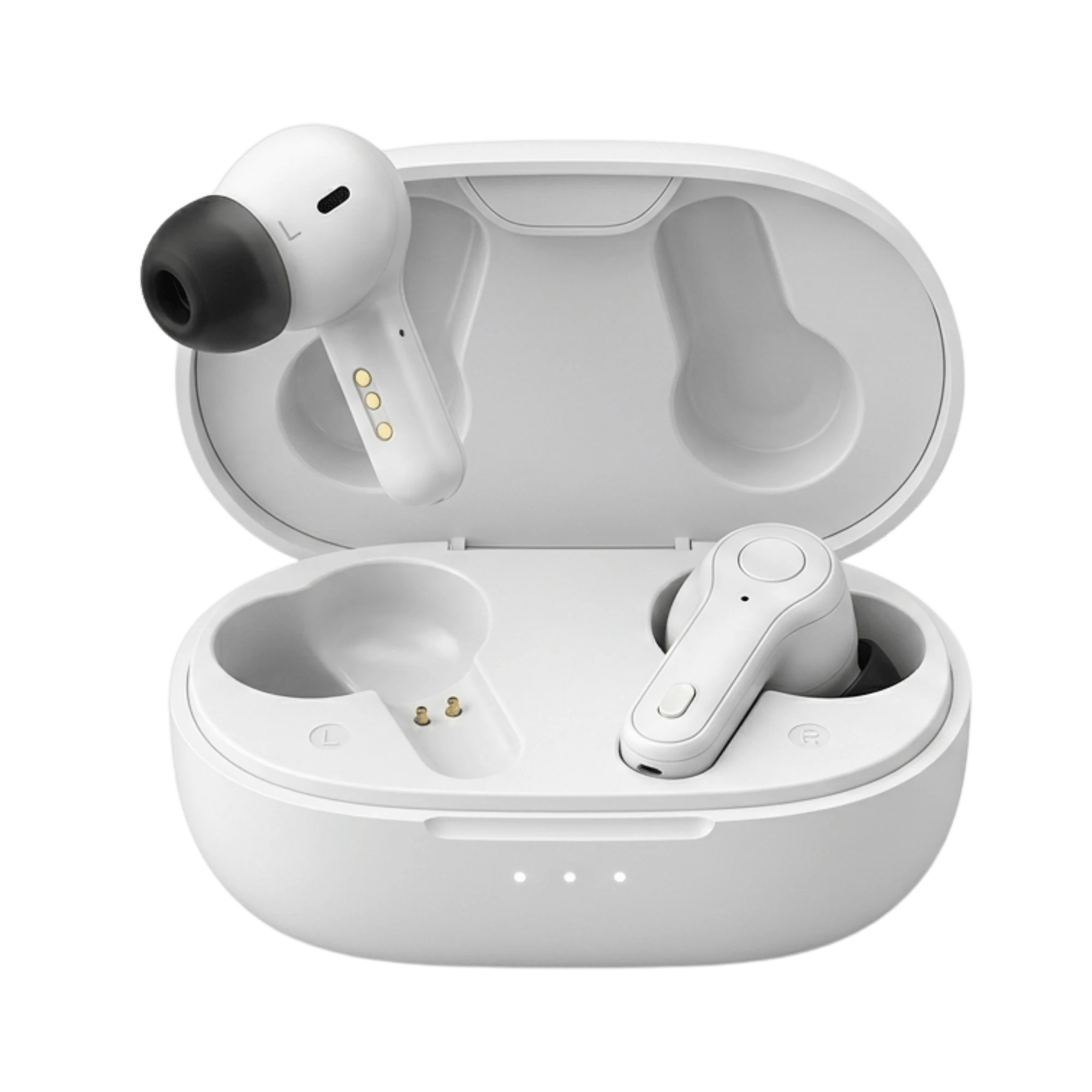
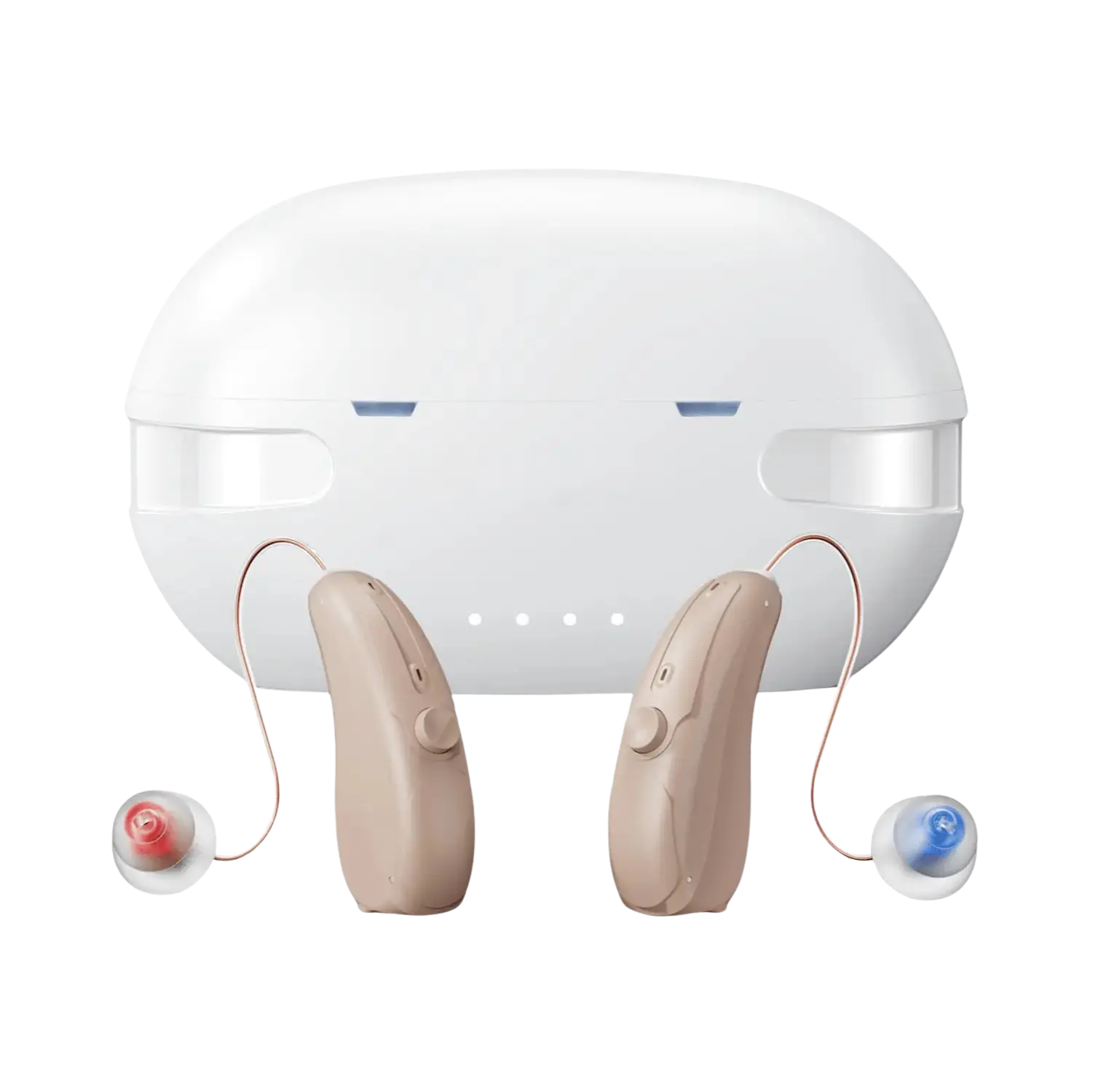
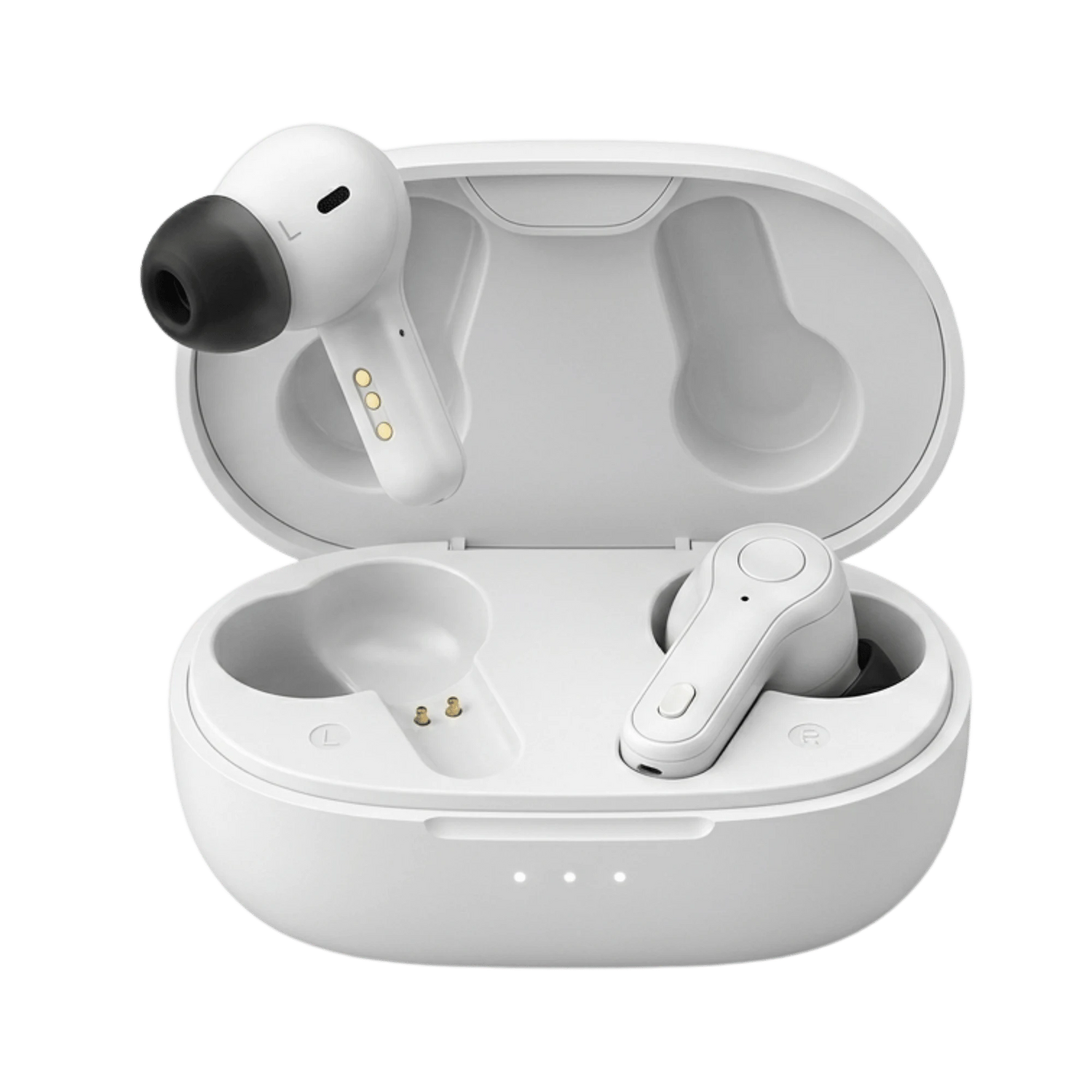
FDA-cleared over-the-counter devices exist to lower that barrier, and Panda Air is one of them. It is an earbud-style in-the-canal aid with 16-channel wide dynamic range compression and multi-band adaptive noise reduction, and it belongs to the category of self-fitting OTC hearing aids: after delivery it pairs with the Panda app, runs a frequency-specific hearing test through the aid itself, and programs gain and frequency response to the result, which is the same idea behind app-tuned hearing aids more generally. For someone who suspects a problem but has not yet been through a clinic, that removes a step rather than replacing professional care.
Air ships with a 60-hour fast-charge case, placing it among rechargeable hearing aids with charging case designs that avoid disposable batteries, and it carries a 5-year warranty and 45-day returns. One important limit given the severity this study documents: over-the-counter aids are approved for mild-to-moderate hearing loss, and severe or profound loss still benefits most from a clinical fitting. Details are at pandahearing.com.
Limitations of This Research
The design is cross-sectional and retrospective, which means it describes associations at a point in time and cannot establish that one thing caused another. The cohort is 94 percent male, so the findings about women rest on a much smaller group and should be treated as preliminary. Everyone included was using VA healthcare and had received a hearing test, which selects for people with a reason to be tested and makes the prevalence figures higher than they would be for all Veterans. Tinnitus was self-reported, with no objective measure available. The civilian comparison group came from a single specialty hospital's clinical population rather than from the general public, so the contrast is descriptive and not a population-level comparison.
The PubMed record for this article does not include funding or competing-interest statements, so those could not be reviewed here. The published article is the place to check them.
What to Do With This
The value of a study this size is that it turns suspicions into numbers. Noise exposure during service shows up decades later as measurably earlier and deeper hearing loss, tinnitus travels with head injury and mood rather than alone, and a normal-looking audiogram does not settle the question of whether someone can follow a conversation. If any of that describes your experience, the practical next step is a hearing evaluation that includes word recognition and not tone thresholds alone, and a conversation about tinnitus that includes sleep and stress rather than stopping at the ears.
Clifford RE, Casolani C, Polley DB, Liberman MC, Maison SF. A National Cohort Study of Tinnitus and Hearing Loss in the Million Veteran Program. Ear and Hearing. 2026. Retrieved from PubMed. https://doi.org/10.1097/AUD.0000000000001873