Hearing Aid Directional Microphones Change How Listeners Find Speech
A research team in Denmark and the United States built a virtual room full of competing voices, and found that the microphone setting designed to help in noise also made it harder for listeners to work out where the voice was coming from.
Almost everyone who wears hearing aids knows the hard case: a room with several people talking at once, hard walls, and a voice somewhere in the crowd that you are supposed to follow. Hearing aid makers have attacked that problem for decades with directional microphones, which amplify sound arriving from in front of the wearer more than sound arriving from the sides and behind.
Directional processing works well when the person you want to hear stays in front of you. Real conversations are not that tidy. People move, the talker changes, and you turn your head to find them. A new study published in Ear and Hearing set out to measure what happens to both listening performance and head and eye behavior when the target voice could be almost anywhere in the room.
Title: Effects of Hearing Loss and Hearing Aid Directionality on Performance and Orienting Behavior in a Multi-Talker Audiovisual Search Task
Authors: Sreeram Kaithali Narayanan, Axel Ahrens, Filip Rønne, Torsten Dau, Virginia Best, Tobias Neher
Affiliations: Hearing Systems Section, Department of Health Technology, Technical University of Denmark; Department of Clinical Research, University of Southern Denmark; Technical Audiology Section, Odense University Hospital and University of Southern Denmark; ORCA Labs, Lynge, Denmark; Department of Speech, Language and Hearing Sciences, Boston University
Journal and publication date: Ear and Hearing, August 4, 2026
Study type: Controlled laboratory experiment comparing listeners with and without hearing loss across unaided and aided conditions
PubMed DOI: 10.1097/AUD.0000000000001872
Background: Why the Researchers Looked at This
A directional microphone system uses two or more microphones in each hearing aid and compares the tiny timing differences between them to work out which direction a sound came from. Sound from the front is passed through at full strength, and sound from other directions is reduced. In a quiet clinic booth with a loudspeaker directly in front of the listener, this reliably improves speech understanding in noise.
The catch is that the same processing removes some of the natural cues people use to locate sound. Human localization depends on comparing the loudness and arrival time of a sound at the two ears. If a hearing aid quietly reshapes those differences, the listener may hear the speech better but have a harder time knowing where to look. Reverberation, meaning the sound reflections that bounce off walls and furniture, makes this harder still.
Earlier work had mostly measured speech understanding when the researchers already told the listener where to attend. The Danish and American team wanted to know what happens when finding the talker is itself part of the task, and whether hearing loss changes the search strategy people use.
How the Study Was Done
Twenty listeners with normal hearing and twenty two listeners with hearing loss took part. Each person sat inside an array of 64 loudspeakers in a moderately reverberant room and wore virtual reality glasses that rendered the visual scene. Several narratives played at once from different places in the room, and the participant had to find the assigned target narrative and identify it. The target could appear at any of fifteen positions around the listener.
The glasses tracked head position and eye position throughout, so the researchers could reconstruct exactly how each person searched: where they turned first, whether they moved their head or only their eyes, and how efficiently they converged on the target. Performance was scored on response accuracy, localization error, and response time.
Everyone completed the task unaided and then aided, and the aided condition was run twice, once with the hearing aids in omnidirectional mode and once with directional microphones switched on. Running the same people through all conditions meant differences could be attributed to the processing rather than to differences between participants.
What the Researchers Found
The clearest result was the gap between the two groups. Across every condition tested, participants with hearing loss were less accurate, made larger localization errors, and took longer to respond than participants with normal hearing. Hearing loss did not just make the task harder in the sense of more mistakes, it changed how people went about it.
The search behavior of the hearing impaired group was measurably less direct. They turned their heads away from the target more often on the first move, and their overall scan paths were less efficient. They also leaned more heavily on eye movements than head movements, a pattern that became more pronounced when they were aided.
One of the more striking behavioral findings came at the moment of responding. Listeners with hearing loss frequently pointed their gaze at the target location while leaving their head facing somewhere else. Listeners with normal hearing tended to bring both into alignment. Since a directional microphone aims where the head aims and not where the eyes aim, that habit means the beam was often pointed away from the voice the listener had already found.
The effect of the hearing aids themselves was not uniformly positive. In the normal hearing group, being aided actually reduced accuracy and increased localization error compared with unaided listening, and the drop was largest with the directional setting. Aided listening also increased the complexity of eye movements in both groups, with the hearing impaired participants showing the most complex gaze patterns of all.
Taken together, the pattern points in a consistent direction. Directional processing is built to solve a signal problem, and it does, but it does so by discarding spatial information that listeners were using for a different job. When the task requires finding the talker rather than simply understanding one already in front of you, that trade becomes visible.
What It Means for People with Hearing Loss
The practical lesson is not that directional microphones are a bad idea. In the situation they were designed for, a known talker in front of the listener in a noisy room, they remain one of the most effective tools in a hearing aid. The lesson is that a single fixed setting is unlikely to be right for every moment of a real evening out.
It also gives some useful language for a conversation with an audiologist. If a wearer says that speech is clearer but the room feels harder to navigate, or that they keep looking in the wrong direction when someone calls their name, that is a recognized and now measured effect rather than a sign that the aids are faulty or that the wearer is doing something wrong.
There is a small behavioral takeaway too. Because directional processing follows the head and not the eyes, turning to face a talker rather than only glancing at them puts the beam where the wearer actually wants it. That habit costs nothing and works with the technology instead of against it.
When Clear Speech in Noise Is the Priority
This study is a reminder that the hardest part of hearing loss is rarely quiet conversation. It is the restaurant, the family dinner, the meeting room, and how well a device handles competing voices in a reflective space. That is the problem worth shopping for.
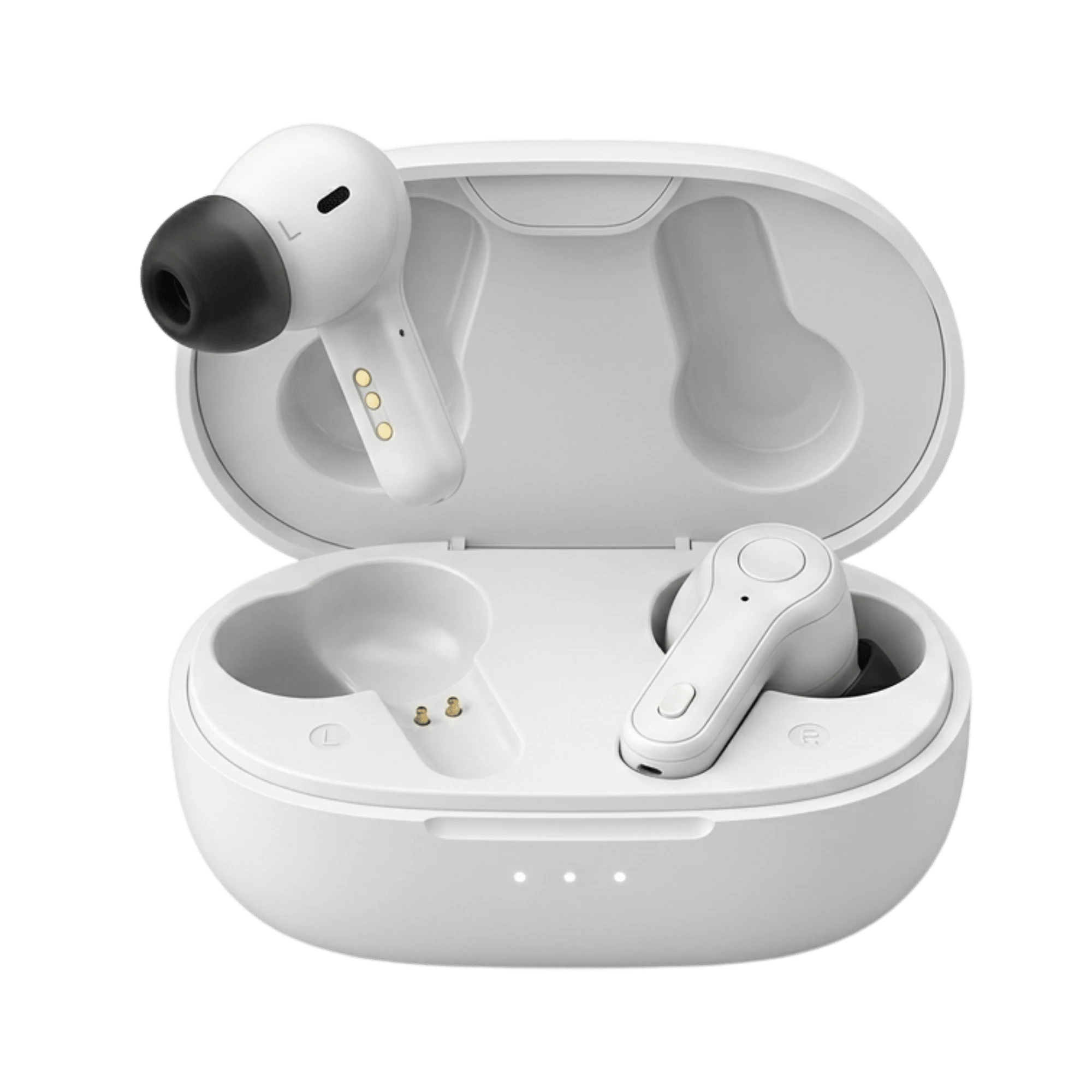
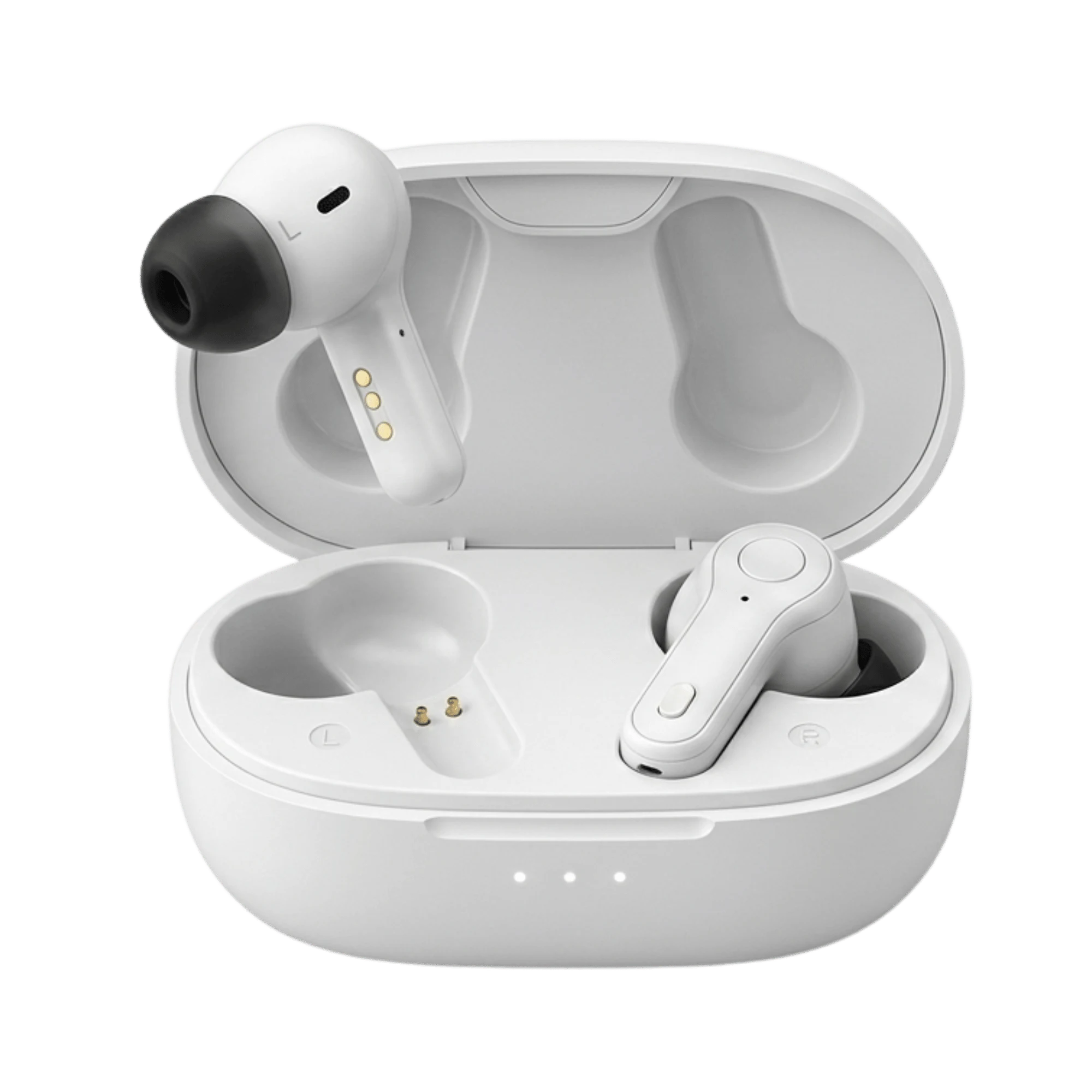
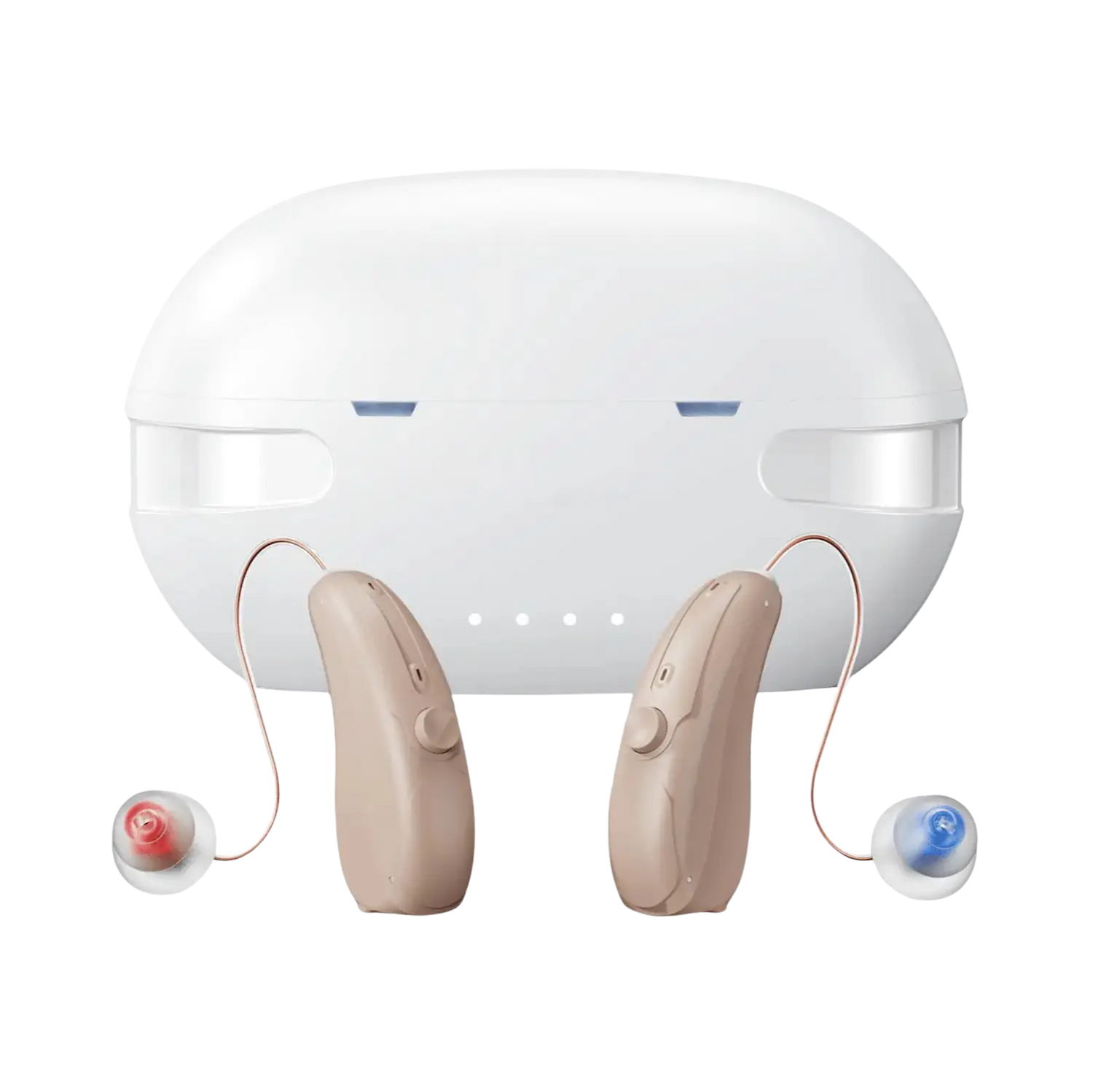
Panda Quantum is built around that priority. It is a 16-channel receiver in canal hearing aid with active noise reduction, one of the adaptive noise reduction hearing aids designed to keep speech intelligible when the background will not cooperate, and its 16-channel WDRC processing shapes gain band by band rather than simply making everything louder. It also pairs with the Panda app to run an in-ear hearing test through the aid itself, which sets gain and frequency response to the wearer's own audiogram rather than to a generic curve. Bluetooth handles calls, television, and music directly, and the case carries the pair to roughly 80 hours of total battery.
One honest caveat applies to every over the counter device, including this one. OTC hearing aids are cleared for mild to moderate hearing loss, and people with severe or profound loss still get the most from a clinical fitting. Quantum comes with a 5-year warranty and 45-day returns, which makes trying it in the rooms that actually give you trouble a low risk proposition.

Limitations of This Research
This was a laboratory study. The loudspeaker array and virtual reality environment were designed to be realistic, but a rendered room with assigned target narratives is not a dinner party, and the sample of 42 participants across two groups is modest. The results describe what these listeners did in this task, and should not be read as a verdict on any particular hearing aid model.
The abstract as indexed does not state a funding source. Readers should also note that one co-author is affiliated with ORCA Labs, an industry research laboratory, which is common and openly disclosed in hearing science but worth knowing when weighing conclusions about hearing aid processing.
Where This Leaves Us
Directional microphones make speech easier to understand and, in this task, harder to locate. Both things are true at once, and a good fitting is the work of balancing them for the rooms a particular person actually spends time in. The more useful question to bring to an audiologist is not whether a hearing aid has directionality, but how flexibly it moves between settings and how well it is tuned to the wearer's own hearing.
Narayanan SK, Ahrens A, Rønne F, Dau T, Best V, Neher T. Effects of Hearing Loss and Hearing Aid Directionality on Performance and Orienting Behavior in a Multi-Talker Audiovisual Search Task. Ear and Hearing. 2026. Retrieved from PubMed. https://doi.org/10.1097/AUD.0000000000001872