Tinnitus or Tinnitus Disorder? Scientists Map What Separates Ringing From Suffering
An international team of tinnitus researchers argues that the ringing itself and the distress it can cause are two distinct conditions, with different genes, risk factors, and brain pathways behind them.
Tinnitus, the experience of hearing a sound such as ringing, buzzing, or hissing when no outside source is present, is one of the most common conditions in audiology. For a great many people it sits quietly in the background and asks little of them. For others it disrupts sleep, frays concentration, and weighs on mood, turning a sound into a source of genuine suffering.
A new synthesis published in the journal iScience proposes a cleaner way to think about that divide. Drawing on genetics, large population studies, and brain imaging, the authors make the case that the perception of phantom sound and the distress it sometimes causes are not simply mild and severe versions of one thing, but two related conditions that deserve to be named and treated differently.
About This Study
Title: Tinnitus and tinnitus disorder: Genetic, neurobiological, and clinical differentiation
Authors: Dirk De Ridder, Tobias Kleinjung, Jae-Jin Song, Divya Adhia, Matt Hall, Anusha Yasoda-Mohan, Sven Vanneste, Alain Londero, Nathan Weisz, Winfred Schlee, Ana Belen Elgoyhen, Christopher Cederroth, Jose Antonio Lopez-Escamez, Silvano Gallus, Stefan Schoisswohl, William Sedley, Grant Searchfield, Shi Nae Park, Berthold Langguth
Affiliations: A multinational group including the University of Otago and University of Auckland (New Zealand), University Hospital Zurich (Switzerland), Seoul National University Bundang Hospital and the Catholic University of Korea, Trinity College Dublin (Ireland), Hopital Lariboisiere in Paris, the University of Salzburg (Austria), the University of Buenos Aires (Argentina), the Karolinska Institute (Sweden), the University of Sydney (Australia), the Mario Negri Institute in Milan, the University of Regensburg (Germany), and Newcastle University (UK)
Journal and date: iScience, June 3, 2026
Study type: Perspective and evidence synthesis (review)
PubMed (DOI): 10.1016/j.isci.2026.116080
Background: Why the Researchers Looked at This
For decades, tinnitus has often been measured along a single scale that runs from mild to severe. The problem with that approach is that loudness and suffering do not always travel together. Some people perceive a strong, steady tone yet barely notice it, while others are tormented by a sound that, on paper, seems faint. Lumping everyone onto one line can blur the differences that matter most for care.
To sharpen the picture, the authors lean on a distinction that has been gaining ground in the field. They use the word tinnitus for the perception of sound itself, and the phrase tinnitus disorder for cases in which that perception is accompanied by emotional distress, difficulty thinking, or a stress response strong enough to interfere with daily life. The aim of separating the two is not academic. It is meant to guide who needs reassurance and sound management, and who needs more intensive support for the distress component.
How the Study Was Done
This paper is a synthesis rather than a single new experiment. The authors, a large group of tinnitus specialists from across Europe, Asia, the Americas, and Oceania, gathered and interpreted three streams of existing evidence: genetic studies that look for inherited contributions, epidemiological research that tracks who develops tinnitus and who develops the more distressing form, and neuroimaging that observes which brain networks are active.
By laying these lines of evidence side by side, the team tested whether tinnitus and tinnitus disorder show consistent differences across biology, risk, and brain activity. Because it is a perspective piece, its strength lies in connecting dots that already exist in the literature rather than in producing new measurements of its own.
What the Researchers Found
The genetics, they argue, point in two directions. The everyday perception of tinnitus appears to be linked to many common gene variants that each nudge risk only slightly. Tinnitus disorder, the distressing form, seems to involve rarer variants that carry larger individual effects. In other words, the suffering may have a partly separate biological footing from the sound itself.
The epidemiology tells a complementary story. Hearing loss stands out as the primary risk factor for developing tinnitus in the first place. What predicts whether tinnitus tips into tinnitus disorder is different: traits such as neuroticism, mood difficulties, and disturbed sleep are the stronger signals there. The trigger for the sound and the driver of the distress, in short, are not the same.
Brain imaging rounds out the argument. The authors describe three interconnected pathways. A lateral pathway appears to handle the loudness or presence of the sound. A descending pathway works to inhibit or dampen it. And a separate medial pathway, associated with distress, is the one that lights up specifically in tinnitus disorder. That distress network offers a physical basis for why some people suffer while others coexist peacefully with the same phantom sound.
Looking ahead, the authors say the field still lacks agreed-upon diagnostic criteria and a standard way to grade how severe tinnitus disorder is. Building those tools, they argue, is the next step toward matching people to the right kind of help.
What It Means for People with Hearing Loss
For anyone living with ringing in the ears, the most practical thread in this research is the role of hearing loss. If reduced hearing is the leading risk factor for tinnitus, then paying attention to hearing is not a side issue, it is close to the center of the problem. Restoring access to the ordinary sounds of a room can change how prominent an internal sound feels.
The framework also gives people language for their own experience. Someone who notices a sound but is not distressed by it can take genuine reassurance from the finding that perception and suffering are different. Someone whose tinnitus is bound up with anxiety, low mood, or sleepless nights now has scientific backing for seeking support aimed at the distress itself, not only at the sound.
Because Hearing Loss Drives Tinnitus, Better Hearing Is a First Step
If this synthesis sharpens one message for consumers, it is that hearing loss sits upstream of tinnitus for many people. Clinicians have long observed that when amplification brings back the soft, constant background sounds of daily life, an internal ringing tends to stand out less by comparison. That is one reason well-fitted hearing aids are a common first move for tinnitus tied to hearing loss.
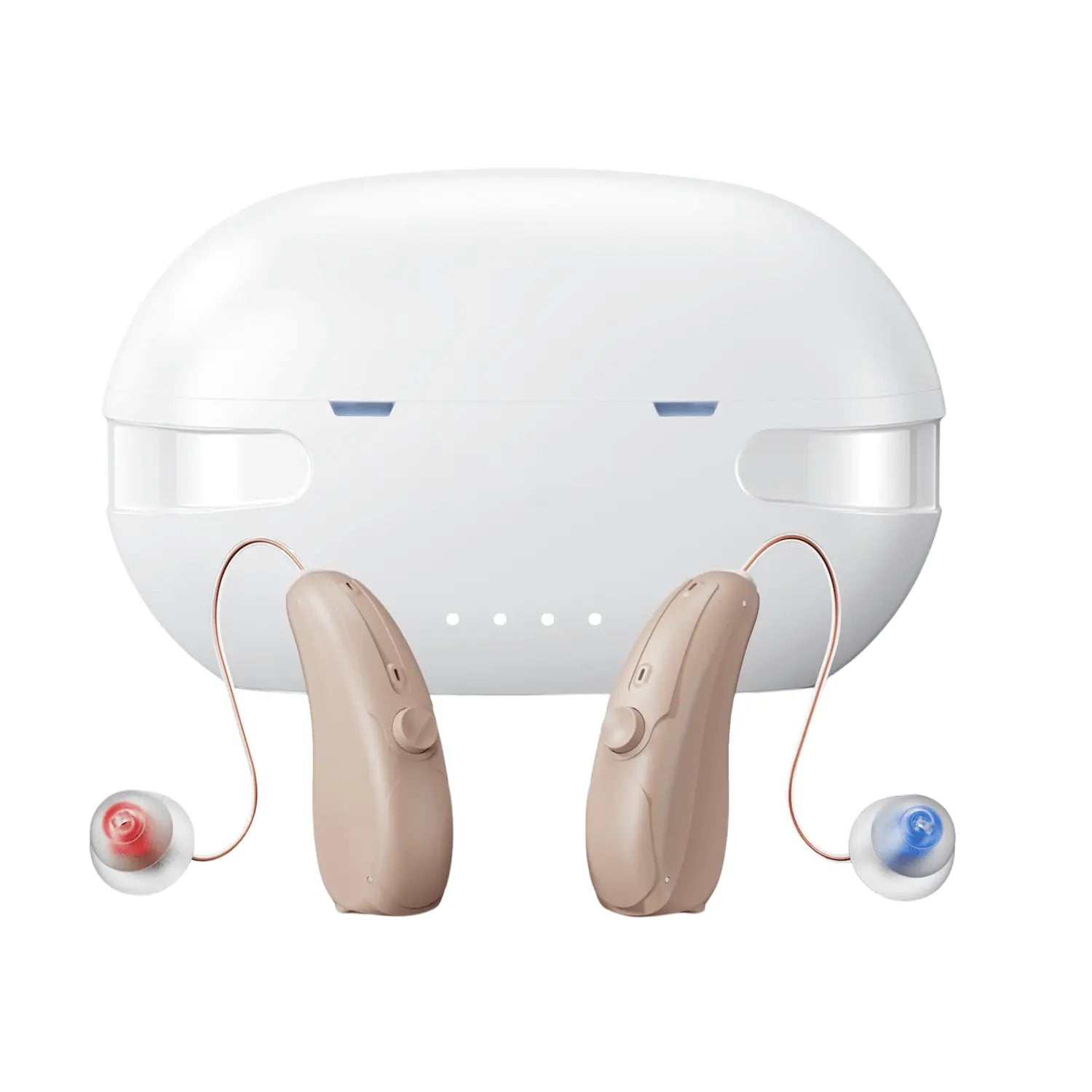
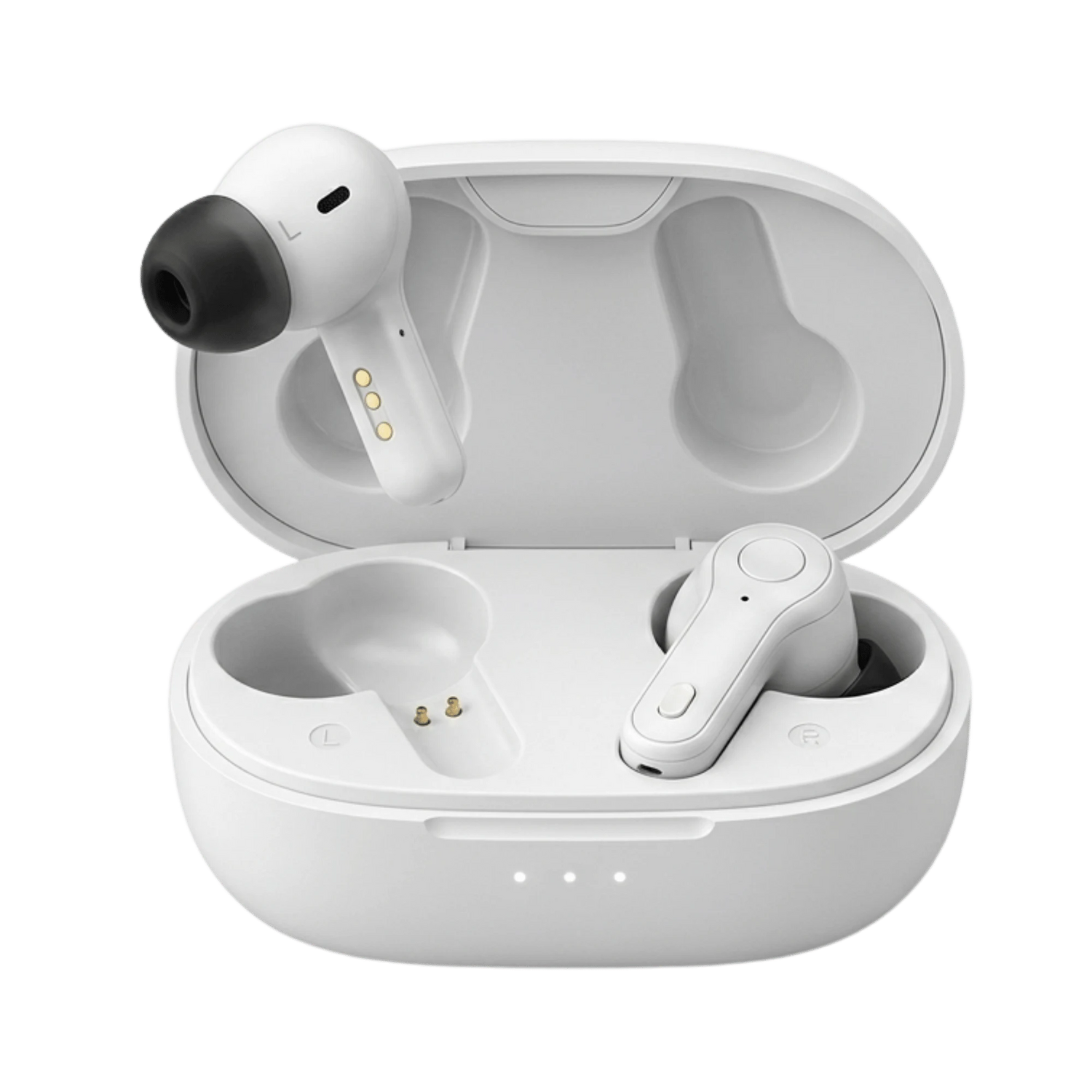
Panda Air is an example of how accessible that first step has become. It is a self-fitting OTC hearing aid in an earbud style, and it pairs with the Panda app for an in-ear hearing test that runs through the device and then tunes its amplification to match the exact pattern of a person's hearing loss, the same loss that often feeds the tinnitus. Because it is an app-tuned hearing aid with Bluetooth, it can also stream low, calming background audio when a quiet room makes the ringing louder, putting a simple sound-management tool within easy reach.
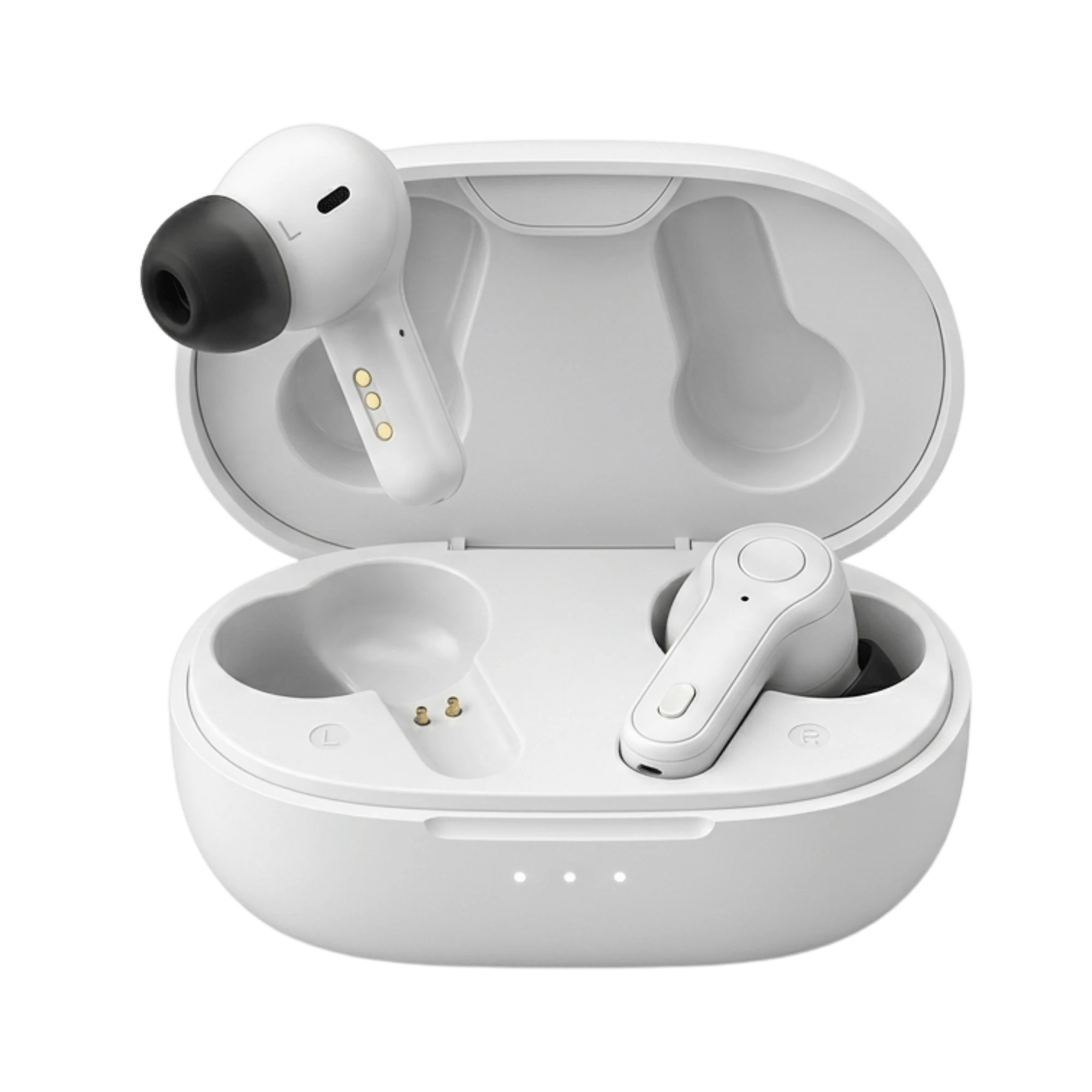
A hearing aid is not a cure for tinnitus, and these over-the-counter devices are meant for adults with mild-to-moderate hearing loss, while severe or profound loss is still best served by a clinical fitting. For the large group of people whose ringing rides along with age-related hearing loss, though, addressing the hearing is a reasonable and increasingly affordable place to begin.
Limitations of This Research
This is a perspective and synthesis, not a controlled experiment, so it carries the usual caveats of that format. It interprets and connects evidence gathered by others, which means its conclusions are only as firm as the underlying studies, and the direction of cause and effect in the brain pathways it describes is still being worked out. The authors are explicit that the field does not yet have standardized diagnostic criteria or an agreed severity scale for tinnitus disorder, which limits how cleanly the distinction can be applied in the clinic today.
The published abstract does not lay out the funding behind the work or the authors' competing interests, details that readers would reasonably want when weighing a paper written by a large group of specialists in a single field.
What to Do With This
The value of this work is in how it reframes a familiar problem. Tinnitus is not one thing, and treating the sound and the suffering as separate targets may help people find the help that actually fits them. For many, that begins with caring for their hearing. For those whose tinnitus brings real distress, or whose ringing appears suddenly or in only one ear, it is worth having a professional take a closer look, because the right path depends on what is driving the sound.
De Ridder D, Kleinjung T, Song JJ, Adhia D, Hall M, Yasoda-Mohan A, Vanneste S, Londero A, Weisz N, Schlee W, Elgoyhen AB, Cederroth C, Lopez-Escamez JA, Gallus S, Schoisswohl S, Sedley W, Searchfield G, Park SN, Langguth B. Tinnitus and tinnitus disorder: Genetic, neurobiological, and clinical differentiation. iScience. 2026. Retrieved from PubMed. DOI: 10.1016/j.isci.2026.116080