A new systematic review and meta-analysis pooling 15 studies and 774 participants found that adults who fitted over-the-counter hearing aids themselves did about as well as those fitted by an audiologist.
Since the U.S. Food and Drug Administration created an over-the-counter (OTC) hearing aid category in 2022, millions of adults with mild to moderate hearing loss have been able to buy a device without a clinic visit, a prescription, or a professional fitting. The promise is lower cost and easier access. The open question has been whether people who set the devices up on their own actually hear as well as those whose devices are programmed by a trained audiologist.
A team of audiology researchers set out to answer that by combining the findings of every rigorous head-to-head comparison they could locate. Their analysis, published in Otolaryngology-Head and Neck Surgery, offers one of the clearest pictures so far of how self-fitting stacks up against the traditional clinic approach.
Study: Effectiveness of Over-the-Counter Hearing Aids Versus Professionally Fitted Devices: A Systematic Review and Meta-analysis
Authors: Karina C. De Sousa, Ibrahim Almufarrij, Megan Kruger, Vinaya Manchaiah, Kevin J. Munro, De Wet Swanepoel
Affiliations: University of Pretoria (South Africa); the Virtual Hearing Lab (a University of Colorado and University of Pretoria collaboration); King Saud University (Saudi Arabia); University of Manchester (UK); and the University of Colorado School of Medicine (USA)
Journal and date: Otolaryngology-Head and Neck Surgery, published June 17, 2026
Study type: Systematic review and meta-analysis (15 unique studies, 774 participants)
Source: PubMed, DOI 10.1002/ohn.70306
Background: Why the Researchers Looked at This
A conventional hearing aid is usually fitted by an audiologist, who measures a person's hearing, programs the device to match the specific pattern of loss, and fine-tunes it over follow-up visits. Over-the-counter hearing aids flip that model. Many are self-fitting, meaning the user runs a guided hearing check, often through a smartphone app, and the device adjusts its own settings to the result. No clinic appointment is required.
Supporters argue that self-fitting removes cost and convenience barriers that keep many people from treating their hearing loss for years. Skeptics counter that a person fitting a device alone, without a professional checking the result, might end up with poorly tuned amplification and a worse outcome. Until now, the evidence on that question had been scattered across many small trials, with no clear consensus.
The researchers wanted to pull those trials together into a single, statistically pooled answer: across the available evidence, do self-fitting OTC devices produce hearing outcomes that are meaningfully different from professionally fitted ones?
How the Study Was Done
The team searched five major databases, including PubMed, Scopus, and Web of Science, along with FDA clearance records and the ClinicalTrials.gov registry. The initial searches ran in March 2025 and were updated in August 2025. The reviewers also screened reference lists and contacted manufacturers to ask for unpublished data, an effort to avoid missing studies that never made it into journals.
Two reviewers independently selected studies and rated their quality, with established tools (RoB 2 and ROBINS-I) used to judge the risk of bias and the GRADE framework used to rate the overall certainty of the evidence. Eligible studies were field trials that compared FDA-cleared self-fitting OTC hearing aids or fitting software against audiologist-fitted prescription devices in adults. The results were combined using a random-effects meta-analysis reported as Hedges' g, a standardized measure of difference between two groups in which a value near zero means the two approaches performed about the same.
From 712 records, 24 reports met the criteria, representing 15 unique studies and 774 participants, of whom 739 were included in the pooled analyses. Most were short-term field trials lasting from 10 days to 8 weeks, and many compared self-fitting and professional fitting of the very same device, which isolates the effect of who did the fitting rather than which product was used.
What the Researchers Found
Across four standard hearing-outcome measures, the self-fitting and professionally fitted groups came out essentially even. On the Abbreviated Profile of Hearing Aid Benefit, a questionnaire that captures how much a device helps in everyday situations, the pooled difference was a Hedges' g of -0.05 (95% confidence interval -0.19 to 0.09), statistically indistinguishable from no difference.
The pattern held for the other three measures. The Speech, Spatial and Qualities of Hearing Scale (a 12-item version) returned a g of 0.01 (95% CI -0.33 to 0.36). The International Outcome Inventory for Hearing Aids, which gauges overall satisfaction and benefit, returned a g of 0.12 (95% CI -0.35 to 0.59). And the Quick Speech-in-Noise test, which measures the ability to follow speech against background noise, returned a g of 0.03 (95% CI -0.22 to 0.28).
In every case, the confidence interval comfortably included zero, meaning the analysis found no reliable advantage for either approach. Put simply, people who fitted the devices themselves reported hearing about as well as people fitted by a professional.
The authors were careful about the strength of that conclusion. Most of the outcomes were patient-reported rather than measured in a lab, the risk of bias in the underlying studies ranged from moderate to high, and the overall certainty of the evidence was rated low. Their bottom line was that self-fitting OTC hearing aids deliver outcomes comparable to professionally fitted devices, while calling for larger and more independent trials carried out within standard clinical pathways.
What It Means for People with Hearing Loss
For the large group of adults with mild to moderate hearing loss who have hesitated to get help, the practical message is encouraging. The best available evidence suggests that a quality self-fitting device, set up at home, can deliver benefit on par with a clinic fitting, while costing less and skipping the scheduling and travel that a series of appointments demands.
That does not erase the value of professional care. The trials were short, the measures were largely subjective, and complex cases still benefit from an expert. But for someone weighing whether an OTC device is a real solution or just a cheaper compromise, this analysis lands firmly on the side of it being a legitimate option for the right candidate.
When Self-Fitting Works, the Quality of the Built-In Hearing Test Is What Counts
The review's central finding, that self-fitting can match a clinic fitting, hinges on one thing: the device needs a fitting method good enough to stand in for the audiologist. That is exactly where the newer generation of self-fitting OTC hearing aids has focused.

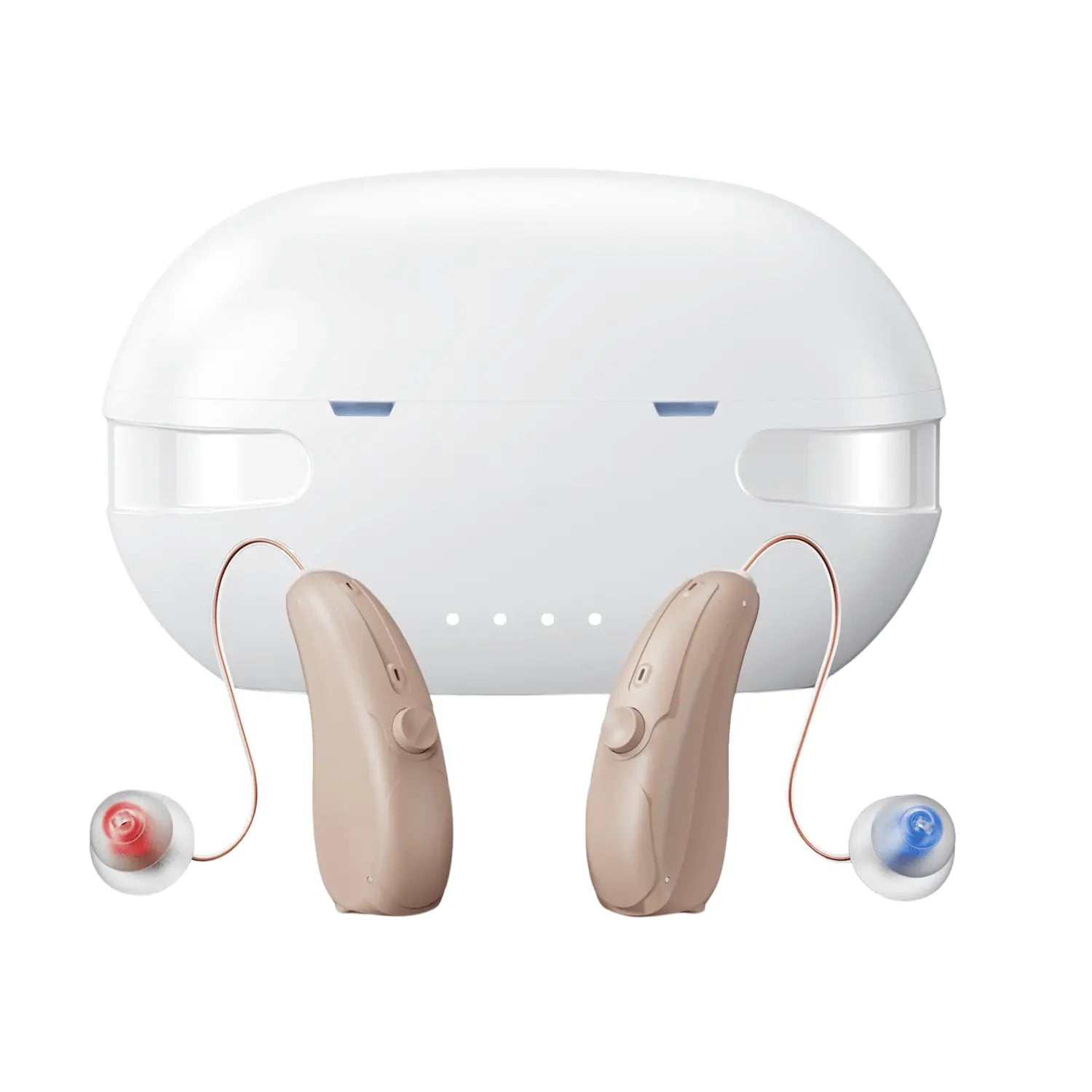
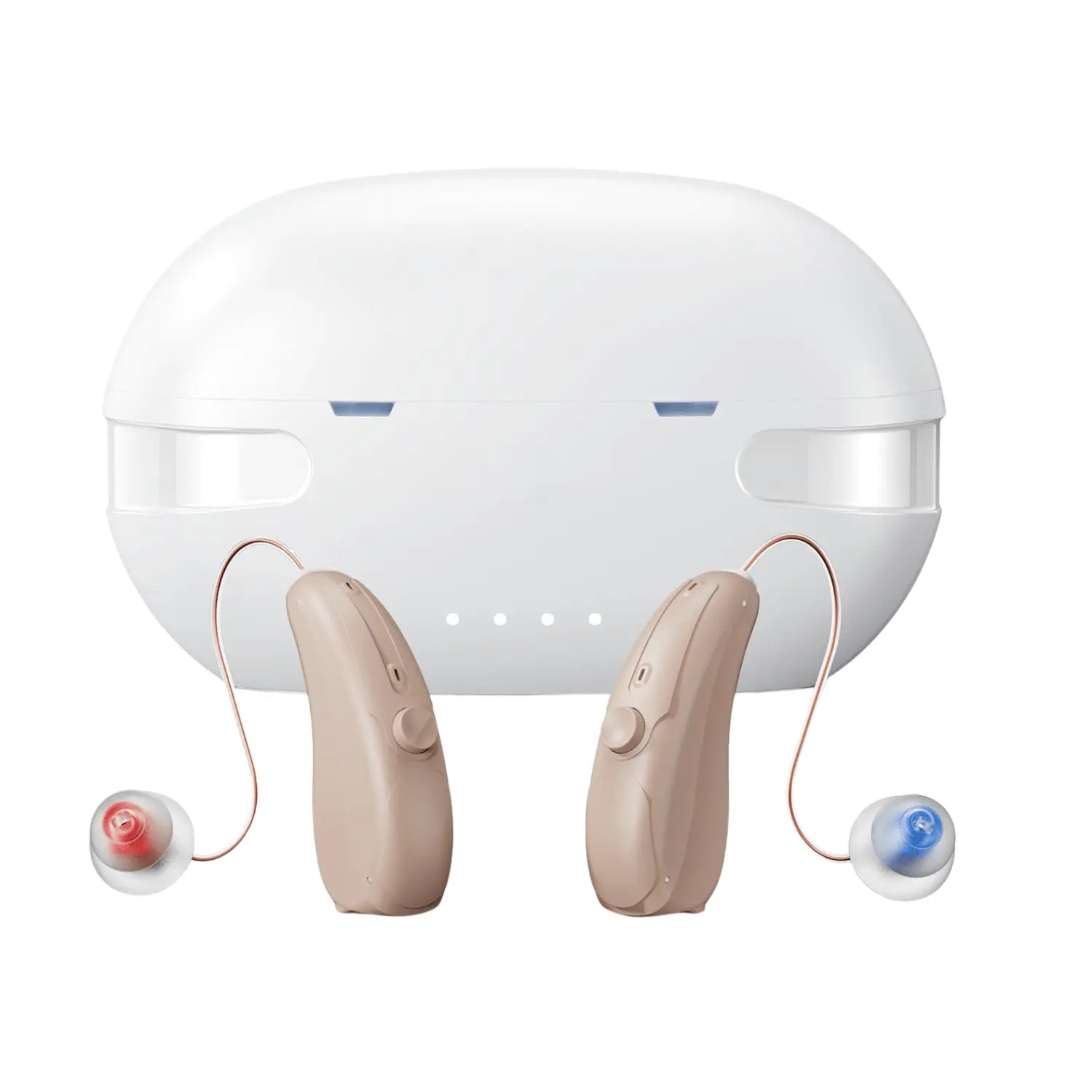
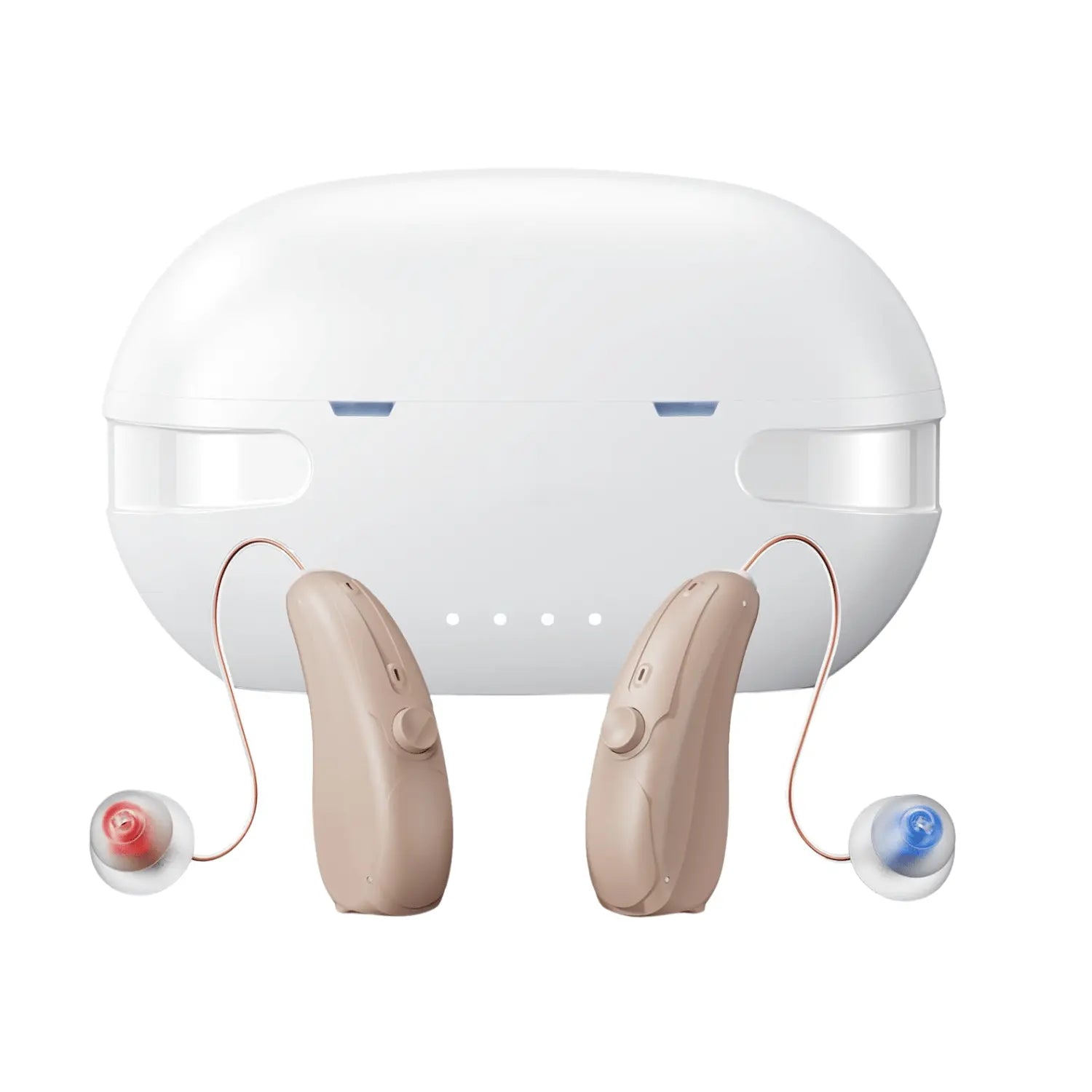
The Panda Quantum is one example of how this works in practice. It is one of the self-fitting OTC hearing aids built around a self-hearing test that runs inside the device itself: after the Quantum arrives, the user pairs it with the Panda app, the app runs a frequency-specific hearing check through the hearing aids, and the device then programs its own gain and frequency response to match the resulting audiogram, much like the personalized tuning an audiologist performs at a clinical fitting. Because the meta-analysis included a speech-in-noise measure among the outcomes where self-fitting held its own, that kind of app-based hearing personalization is doing real work, not just convenience.
On the hardware side, the Quantum is a 16-channel receiver-in-canal device with adaptive noise reduction and Bluetooth for phone calls, television, and music, with up to 80 hours of total battery life using its charging case. It carries a 5-year warranty and a 45-day return window, which gives a self-fitting user time to confirm the device suits them, the same trial-and-adjust process the research describes.
One caveat worth keeping in view: OTC devices are cleared for adults with mild to moderate hearing loss. People with severe or profound loss, or with complex medical histories, still benefit most from a professional clinical fitting.
Limitations of This Research
The authors are transparent that the evidence base is still thin. Most of the pooled studies were short, running from 10 days to 8 weeks, so they cannot speak to how self-fitting and professional fitting compare over months or years of real-world use. The outcomes leaned heavily on self-reported questionnaires rather than objective laboratory testing, and the risk of bias across the studies was judged moderate to high, with the overall certainty of evidence rated low under the GRADE system.
Many of the trials also compared self versus professional fitting of the same device rather than different commercial products, so the results speak to the fitting process more than to any specific brand. The authors, several of whom work in audiology research and device-evaluation collaborations, call for larger and independent trials embedded in standard clinical care. Funding sources and competing interests were not detailed in the study abstract.
Where This Leaves Us
The takeaway is measured but meaningful. For adults with mild to moderate hearing loss, the current evidence suggests that fitting a capable OTC device yourself can produce results on par with a professional fitting, which lowers the cost and effort of finally addressing a problem many people put off for years. The science is early and deserves stronger trials, but anyone who has hesitated to act now has solid reason to take self-fitting seriously, while keeping professional care in mind for more complex hearing needs.
De Sousa KC, Almufarrij I, Kruger M, Manchaiah V, Munro KJ, Swanepoel W. Effectiveness of Over-the-Counter Hearing Aids Versus Professionally Fitted Devices: A Systematic Review and Meta-analysis. Otolaryngology-Head and Neck Surgery. 2026. Retrieved from PubMed. DOI 10.1002/ohn.70306