Tinnitus and Tinnitus Disorder: New Research Explains Why They Are Not the Same Thing
A new international review argues that the ringing many people hear and the smaller group for whom that ringing becomes disabling are biologically and clinically distinct, with different genetics, brain circuits, and risk factors.
Tinnitus, the perception of sound when no external sound is present, is one of the most common hearing complaints in the world. Most people describe it as ringing, buzzing, or hissing, and for many it stays in the background. For a smaller group, the same sensation becomes a source of real suffering that disrupts sleep, concentration, and mood.
A team of tinnitus researchers from across Europe, Asia, Oceania, and the Americas argues that treating these two experiences as one condition has slowed progress in diagnosis and treatment. In a new review, they lay out the case for separating ordinary tinnitus from what they call tinnitus disorder, and they point to genetics, large population studies, and brain imaging to support the split.
Title: Tinnitus and tinnitus disorder: Genetic, neurobiological, and clinical differentiation.
Authors: Dirk De Ridder, Tobias Kleinjung, Jae-Jin Song, Divya Adhia, Matt Hall, Anusha Yasoda-Mohan, Sven Vanneste, Alain Londero, Nathan Weisz, Winfred Schlee, Ana Belen Elgoyhen, Christopher Cederroth, Jose Antonio Lopez-Escamez, Silvano Gallus, Stefan Schoisswohl, William Sedley, Grant Searchfield, Shi Nae Park, and Berthold Langguth.
Affiliations: An international group spanning the University of Otago and the University of Auckland (New Zealand), University Hospital Zurich (Switzerland), Seoul National University Bundang Hospital and the Catholic University of Korea (South Korea), Trinity College Dublin (Ireland), Hopital Lariboisiere in Paris (France), the University of Salzburg (Austria), the University of Buenos Aires (Argentina), the Karolinska Institute (Sweden), the University of Sydney (Australia), the Mario Negri Institute in Milan (Italy), the University of Regensburg (Germany), and Newcastle University (United Kingdom).
Journal and date: iScience, published June 3, 2026 (volume 29, issue 6).
Study type: Perspective and review synthesizing genetic, epidemiological, and neuroimaging evidence.
Reference: PubMed PMID 42291209. https://doi.org/10.1016/j.isci.2026.116080
Background: Why the Researchers Looked at This
Almost everyone has heard a brief ring in the ears after a loud concert. Tinnitus becomes a clinical concern when the sound persists and, in some people, when it is paired with distress. The authors propose a clear vocabulary for this. Tinnitus is the simple perception of phantom sound. Tinnitus disorder is the term they reserve for cases in which that perception is accompanied by emotional distress, difficulty thinking clearly, or a heightened stress response that leads to real impairment in daily life.
The distinction matters because the two may call for different care. Someone who simply notices a ring may need reassurance and help with any underlying hearing loss. Someone whose tinnitus drives anxiety, sleeplessness, and low mood may need support aimed at the distress itself. Lumping both groups together in studies, the authors argue, can blur results and make treatments look weaker than they are.
To build their case, the team draws on three kinds of evidence. Genetic studies look at which inherited differences, called variants, are linked to tinnitus. Epidemiological studies track who develops it across large populations. Neuroimaging, meaning brain scans, shows which networks become active when the phantom sound is present.
How the Study Was Done
This paper is a synthesis rather than a single new experiment. The authors gathered and weighed evidence from across the tinnitus field and organized it around one question: do tinnitus and tinnitus disorder differ at the level of genes, brain activity, and risk factors, or are they simply mild and severe versions of the same thing?
A review like this is useful because no single study can capture genetics, population patterns, and brain imaging at once. By placing these strands side by side, the authors look for points where the evidence consistently separates the perception of tinnitus from the distressing disorder. They then use that pattern to propose how future research and clinics might define and grade the condition.
What the Researchers Found
The genetic picture pointed to two different architectures. Ordinary tinnitus appears to be linked to many common gene variants, each with only a small individual effect. Tinnitus disorder, by contrast, seems to involve rarer variants that carry larger effects. In plain terms, the distressing form is not simply more of the same. It may rest on a partly separate biological foundation.
The risk factors diverged in a similar way. Across populations, hearing loss stood out as the primary risk factor for developing tinnitus in the first place. What predicted whether tinnitus tipped into a disorder was different: personality traits such as neuroticism, along with mood problems and sleep disturbances. So the ear and the auditory system help explain who hears the sound, while psychological and emotional factors help explain who suffers from it.
Brain imaging tied these threads together. The authors describe three interrelated pathways. A lateral pathway relates to the perceived loudness of the phantom sound. A descending inhibitory pathway reflects the brain's ability to turn that signal down. A medial distress pathway is the one that becomes specifically active in tinnitus disorder, offering a biological basis for the suffering rather than the sound alone.
From this, the authors call for standardized diagnostic criteria and a severity grading system for tinnitus disorder. Such tools would let clinicians and researchers speak the same language, sort patients more accurately, and judge treatments on fairer terms.
What It Means for People with Hearing Loss
For the many people who live with both hearing loss and tinnitus, the most practical message is that the two are deeply connected. The review identifies hearing loss as the leading driver of tinnitus, which means that taking hearing loss seriously is a sensible starting point for anyone bothered by ringing in the ears.
The findings also help explain why two people with similar ringing can have very different experiences. If your tinnitus comes with significant distress, poor sleep, or low mood, the research suggests that the distress deserves attention in its own right, not only the sound. Recognizing that difference can guide people toward the kind of help that fits their situation.
Because Hearing Loss Is the Leading Risk Factor for Tinnitus, Addressing It Is a Logical First Step
When a review names hearing loss as the primary risk factor for tinnitus, it points to a clear and often overlooked action: making everyday sounds audible again. Many people find that restoring the frequencies they have lost reduces the harsh contrast between silence and the phantom sound, which is part of why hearing aids are a common tool in tinnitus care.
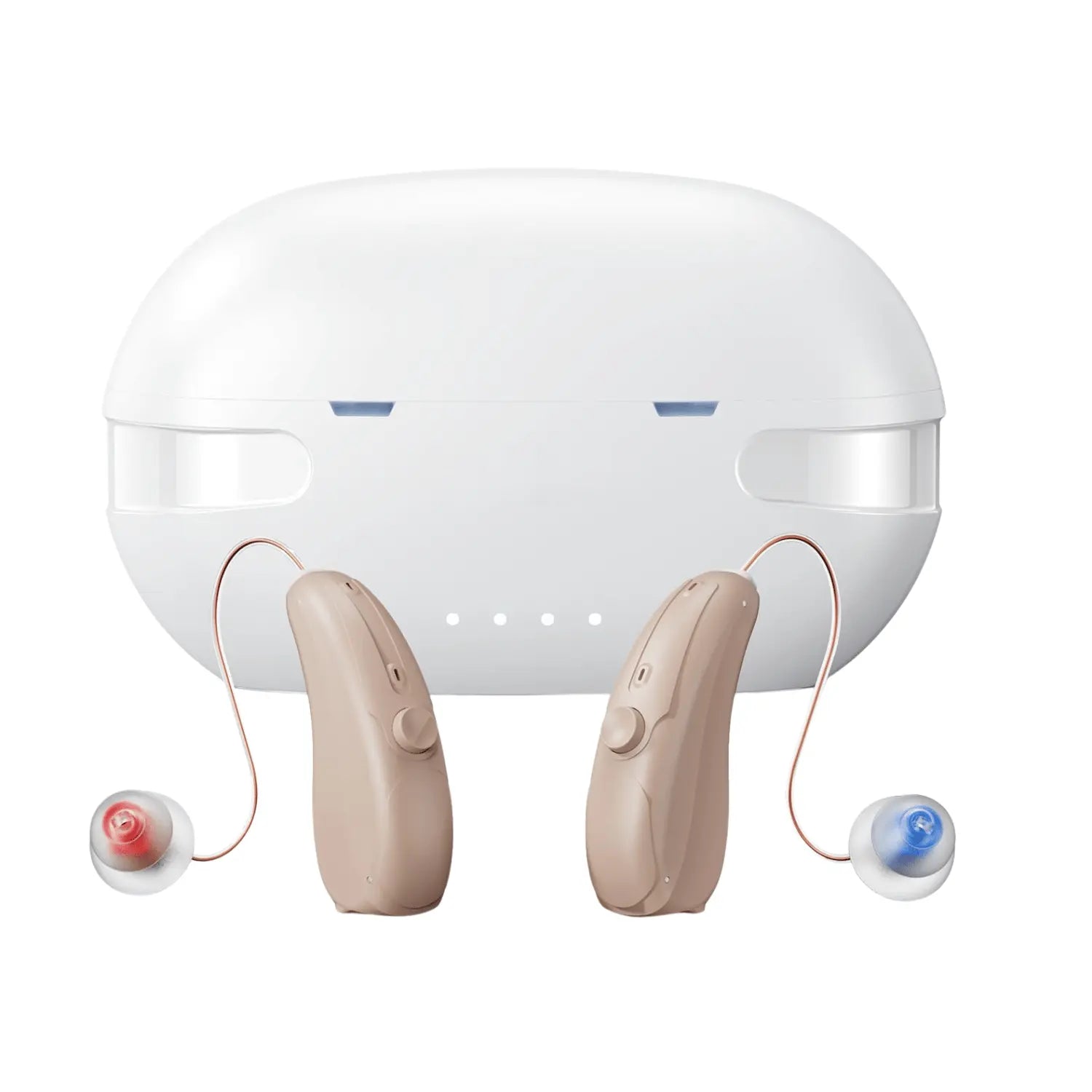
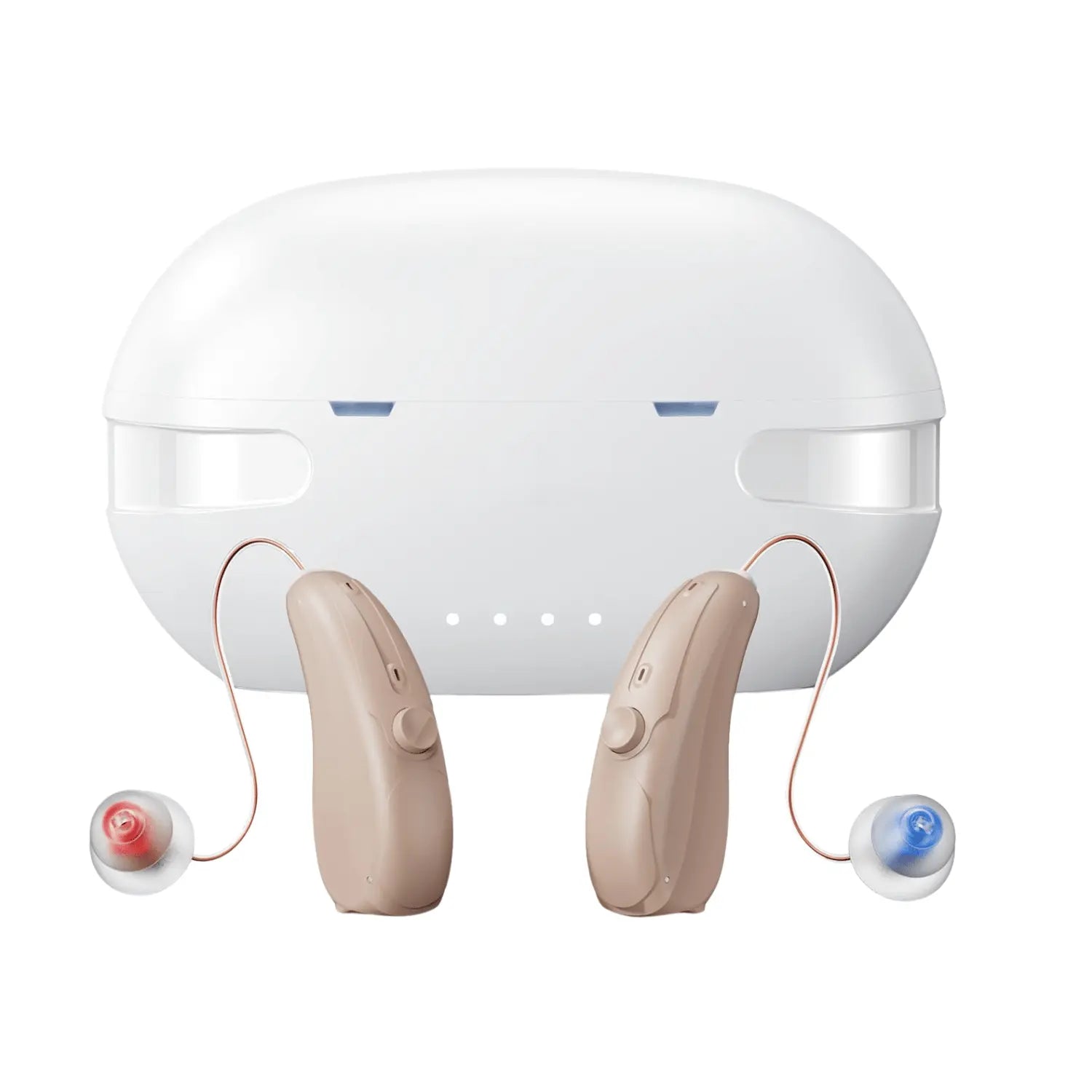
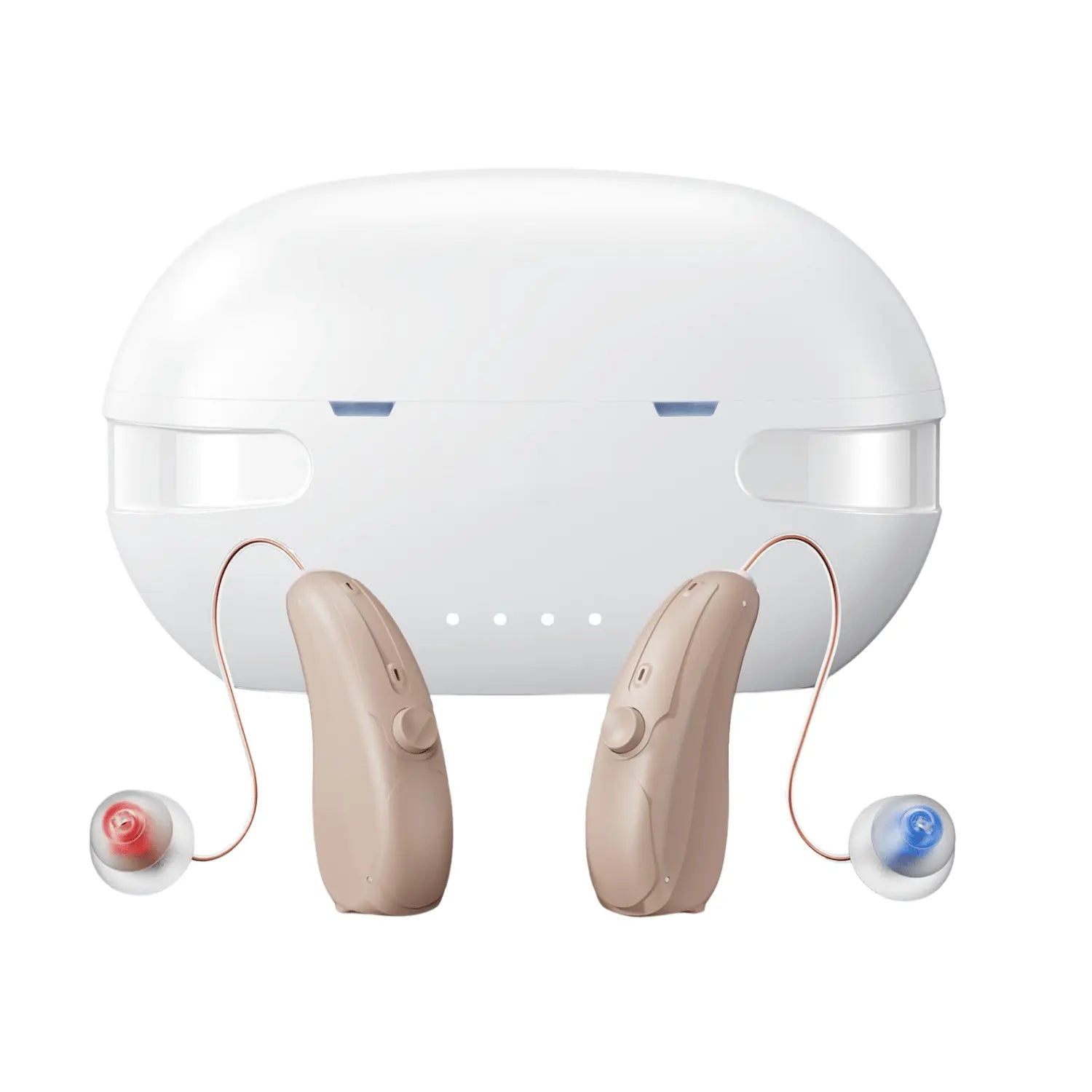
Panda Quantum is one device built around that idea. After it arrives, you pair it with the Panda app, which runs a frequency-specific hearing test through the device itself and then programs the gain and frequency response to match your audiogram automatically, much as an audiologist would at a clinical fitting. That frequency-specific hearing adjustment is relevant here because tinnitus is often tied to the exact pitches where hearing has dropped, so app-based hearing personalization aims amplification where it is most needed. With 16-channel processing, Quantum can shape sound finely across the range rather than simply turning everything up.
It is worth keeping expectations grounded. Over-the-counter devices like Quantum are designed for mild to moderate hearing loss, and Quantum carries a 5-year warranty and a 45-day return window so it can be tried at home. People with severe or profound loss, or with significant tinnitus-related distress, are still best served by working with a clinician.

Limitations of This Research
This paper is a perspective and review, not a single controlled experiment, so it inherits the limits of the studies it draws on. The authors note that the proposed split between tinnitus and tinnitus disorder still lacks standardized diagnostic criteria and an agreed severity scale, which means different clinics may still define the conditions in different ways. The genetic and imaging evidence, while suggestive, comes from varied study designs that are not always directly comparable.
The abstract does not detail the funding sources or competing interests behind the work, so readers cannot weigh those factors from the summary alone. As with any framework that is still taking shape, the proposals here are best read as a direction for future research rather than a settled clinical standard.
Where This Leaves Us
The takeaway is reassuring in its clarity. Hearing the sound and suffering from it are not the same problem, and they may need different responses. If ringing in your ears bothers you, having your hearing checked is a reasonable place to begin, since hearing loss is the strongest known risk factor for tinnitus. If the ringing carries distress that affects your sleep or mood, that distress is worth addressing on its own terms, and emerging research is steadily building better tools to do so.
De Ridder D, Kleinjung T, Song JJ, Adhia D, Hall M, Yasoda-Mohan A, Vanneste S, Londero A, Weisz N, Schlee W, Elgoyhen AB, Cederroth C, Lopez-Escamez JA, Gallus S, Schoisswohl S, Sedley W, Searchfield G, Park SN, Langguth B. Tinnitus and tinnitus disorder: Genetic, neurobiological, and clinical differentiation. iScience. 2026. Retrieved from PubMed. https://doi.org/10.1016/j.isci.2026.116080