Hearing Loss and Communication During Hemodialysis: What Patients Want Their Care Team to Know
A Canadian qualitative study finds that for kidney patients with hearing loss, the noisy dialysis floor can turn routine conversations with nurses and doctors into a real barrier, and that no single communication tool fits everyone.
Hemodialysis means spending hours, several times a week, in a busy treatment unit. Machines hum, alarms beep, and conversations overlap. For a patient who already strains to hear, that environment can make it hard to catch a nurse's instructions or to ask a question and feel confident in the answer.
Hearing loss is common among people living with kidney failure, yet there has been little guidance on how to support communication in dialysis settings. Researchers in Alberta, Canada, set out to fill that gap by asking patients directly about their experiences and about the tools that might help.
Title: Communication Experiences of Patients With Hearing Loss During Hemodialysis Treatment and the Potential Role of Communication Tools: A Qualitative Study.
Authors: Alex DeBusschere, Meaghan Lunney, Sonja Reid, Nancy Verdin, Shannan Love, Gillian Crysdale, Stephanie Thompson, David Nicholas, Tiffany Boulton, Kara Schick-Makaroff, Lorienne Jenstad, Sharon Straus, Jayna Holroyd-Leduc, Maoliosa Donald, Patti-Jo Sullivan, Tanis Howarth, Julie Evans, and Marcello Tonelli.
Affiliations: University of Calgary and University of Alberta, with collaborators at the University of British Columbia School of Audiology and Speech Sciences, the University of Toronto, Alberta Health Services, and patient partners in Calgary.
Journal and date: Canadian Journal of Kidney Health and Disease, published June 12, 2026 (volume 13).
Study type: Qualitative descriptive study using semi-structured interviews.
Reference: PubMed PMID 42293165. https://doi.org/10.1177/20543581261454470
Background: Why the Researchers Looked at This
People who depend on dialysis interact constantly with their care team, from safety checks to changes in their treatment plan. Clear communication is part of safe care. When hearing loss enters the picture, the ordinary back and forth of a clinic can break down, and the consequences can range from frustration to missed information.
Tools exist to help. Assistive listening devices, which are products that amplify or clarify speech for a listener, are one example. So are personal hearing aids that a patient already owns. What was unclear, the authors note, is whether and how such tools should be used on a busy dialysis floor, and what patients themselves think about them. Understanding the patient perspective, they argue, is an essential first step before rolling out any solution.
How the Study Was Done
The researchers used a qualitative descriptive approach, which means they set out to capture and describe people's real experiences in their own words rather than to measure an outcome with numbers. They recruited 14 adults with kidney failure who were receiving maintenance hemodialysis and who reported having hearing loss.
Between October 2023 and January 2024, the team carried out individual semi-structured interviews at outpatient hemodialysis centers in Calgary and Edmonton. The conversations were audio-recorded, transcribed, and then coded using a validated communication framework, a structured way of tagging recurring ideas so that patterns can be identified across many interviews.
What the Researchers Found
Across the 14 interviews, patient views on communication tools varied widely, and the authors grouped the differences into three themes. The first was that tools seemed most needed in transitional or clinically complex situations, for example when something new or complicated had to be explained, rather than during every routine exchange.
The second theme was that patients who already had their own resources, such as their own hearing aids, tended to rely less on tools provided by the center. Having a personal solution that traveled with them reduced their dependence on whatever happened to be available on the floor that day.
The third theme concerned awareness and self-advocacy, which varied considerably from person to person. Some patients readily asked for support, while others were less comfortable raising the issue or accepting help. The authors concluded that communication needs are both person-specific and context-dependent, and that not everyone who could benefit from a tool will be willing to ask for one. Their practical recommendation was that clinicians routinely check in with patients about communication and offer a range of options rather than assume one approach fits all.
What It Means for People with Hearing Loss
Although the study took place in dialysis units, its lessons reach far beyond them. Noisy rooms with overlapping voices are part of daily life, from clinics and pharmacies to restaurants and family gatherings. The finding that patients with their own reliable hearing solution leaned less on borrowed equipment speaks to a wider point: having a personal device that you trust can make hard listening situations more manageable wherever they happen.
The research also underscores the value of speaking up. Because awareness and comfort with asking for help varied so much, the people who fared best were often those who could name their needs. For anyone with hearing loss, a little self-advocacy, paired with the right equipment, can go a long way toward staying connected to the conversation.
Why a Personal Device That Cuts Through Background Noise Helps in Settings Like This
The barrier this study keeps returning to is noise: humming machines and overlapping conversations that bury the voice a patient is trying to follow. That is exactly the listening problem modern hearing aids are designed to tackle, and it is why the patients who carried their own solution depended less on whatever the center could offer.
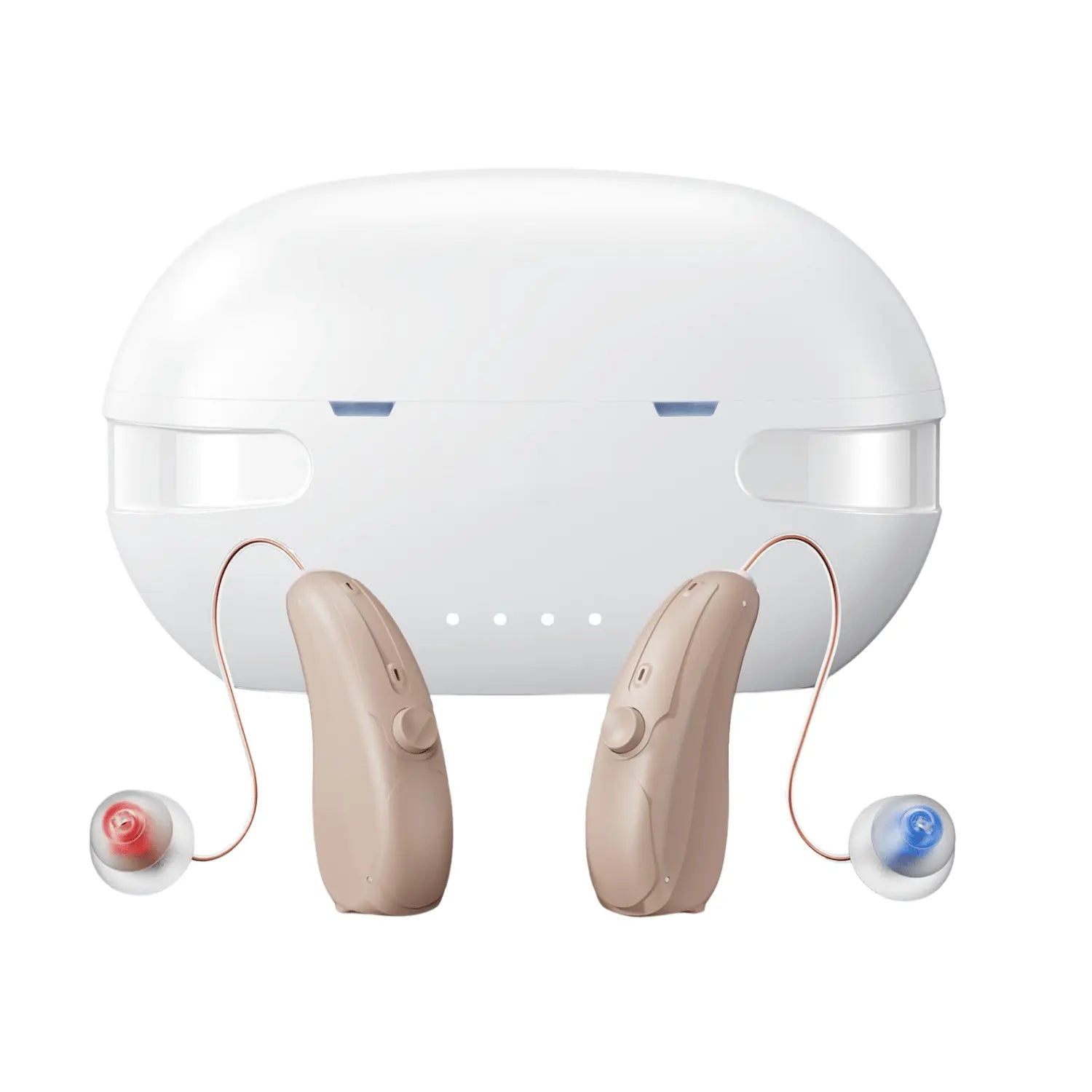
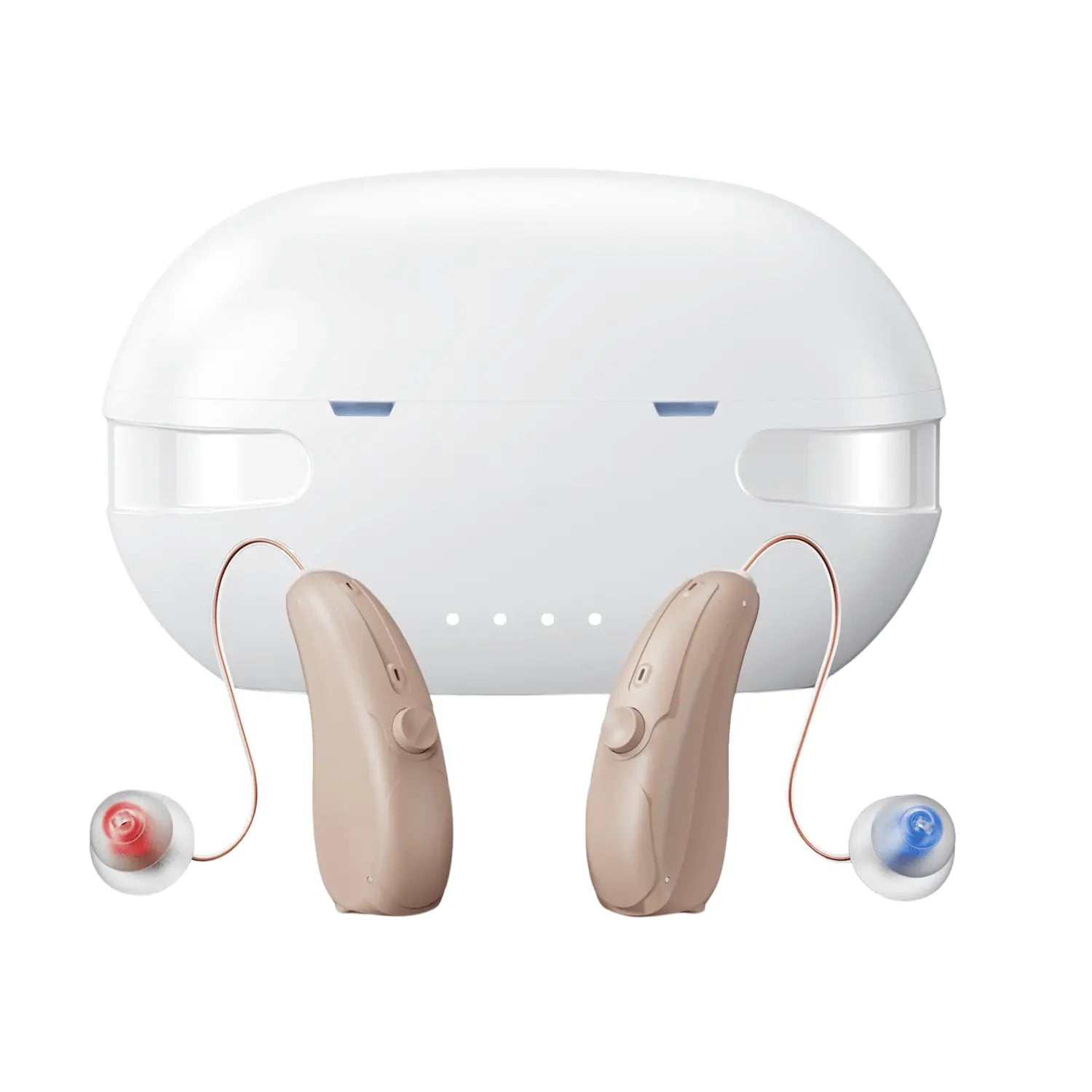
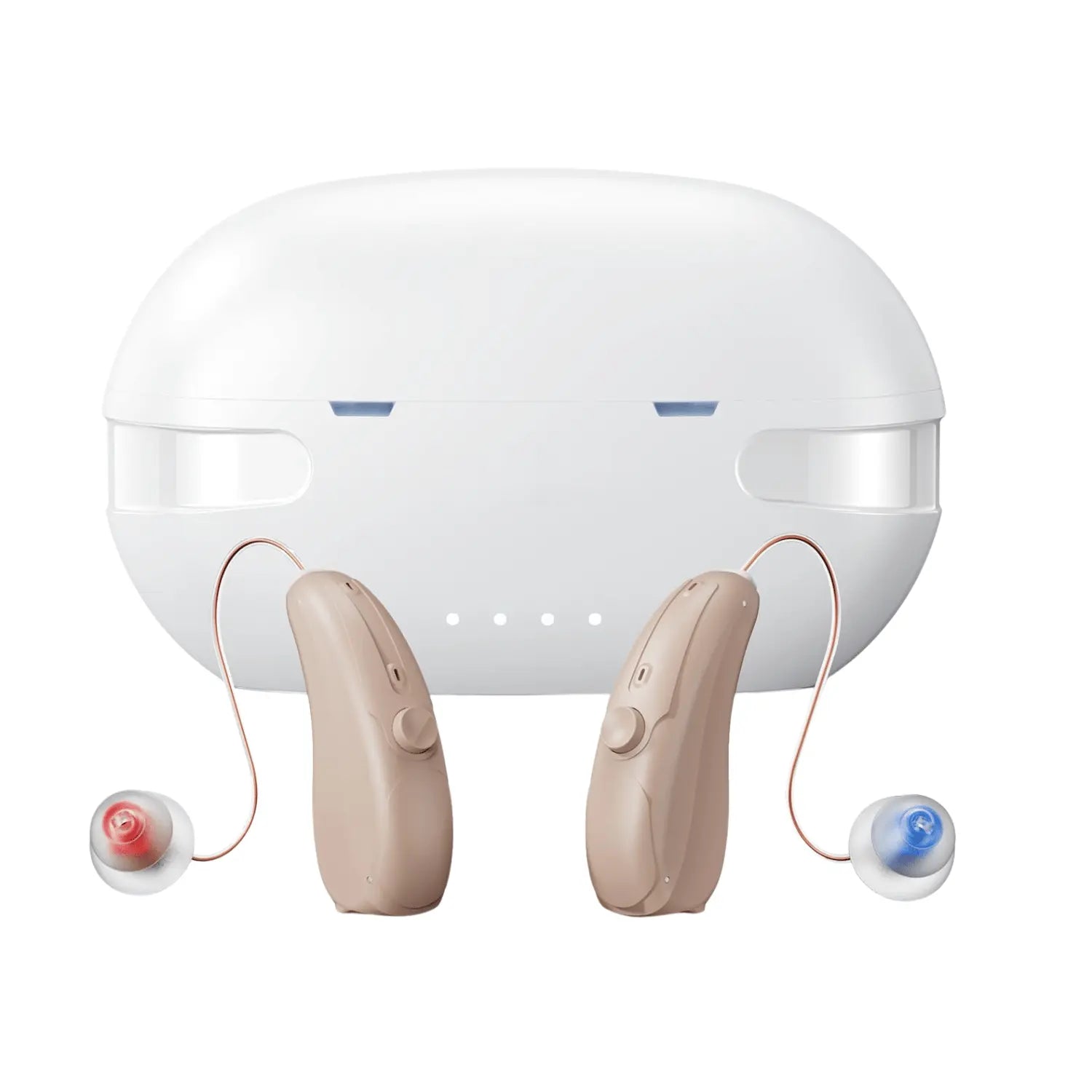
Panda Quantum is built for clear speech in noisy environments. Its 16-channel processing works alongside adaptive noise reduction to lift a speaker's voice while easing steady background sound, which is the core of what speech-in-noise hearing aids are meant to do. Because it is a personal device that goes where you go, it offers the kind of dependable, always-available support the study found patients valued. Quantum also includes Bluetooth for calls and television and an app-based in-ear hearing test that tunes the fit to your own hearing, and it is backed by a 5-year warranty and a 45-day return window.
As with any over-the-counter option, Quantum is intended for mild to moderate hearing loss. People with more advanced loss, or with complex medical communication needs like those described in the study, may still do best with the involvement of a hearing professional.

Limitations of This Research
This was a small qualitative study of 14 patients in a single Canadian province, and hearing loss was self-reported rather than measured with audiometry. Those choices suit the goal of exploring experiences in depth, but they mean the findings are not meant to be generalized to all dialysis patients or to people with hearing loss elsewhere.
The authors also point out that their sample did not include patients facing language barriers, members of the Deaf community, or people whose hearing difficulties had been overlooked, so important perspectives are missing. The abstract does not detail funding sources or competing interests. As the researchers note, larger and more diverse studies are needed before firm recommendations can be made.
What to Do With This
If you or someone you care for lives with hearing loss and spends time in noisy clinical settings, the study offers two simple ideas. Ask your care team about communication support, since they may not realize you are missing parts of the conversation. And consider whether a reliable personal hearing solution, one that travels with you and handles background noise, would reduce your reliance on whatever happens to be available in the room. Small steps like these can help keep you in the loop when it matters most.
DeBusschere A, Lunney M, Reid S, Verdin N, Love S, Crysdale G, Thompson S, Nicholas D, Boulton T, Schick-Makaroff K, Jenstad L, Straus S, Holroyd-Leduc J, Donald M, Sullivan PJ, Howarth T, Evans J, Tonelli M. Communication Experiences of Patients With Hearing Loss During Hemodialysis Treatment and the Potential Role of Communication Tools: A Qualitative Study. Canadian Journal of Kidney Health and Disease. 2026. Retrieved from PubMed. https://doi.org/10.1177/20543581261454470