Tinnitus After Sudden Hearing Loss: A Dose Trial Finds Time, Not Dose, Drives Recovery
A multi-center randomized trial in China tracked tinnitus for 18 months and found that a higher dose of a popular herbal extract offered little extra benefit.
Tinnitus, the perception of ringing or buzzing when no outside sound is present, is one of the most common and most frustrating symptoms in ear care. It often appears alongside hearing loss, and when the hearing loss comes on suddenly, the tinnitus that accompanies it can be especially distressing.
One widely used treatment is ginkgo biloba extract, an herbal preparation prescribed for tinnitus in many countries. But studies have disagreed on whether it helps and at what dose, partly because trials have measured outcomes in different ways. A randomized trial published in 2026 set out to settle one piece of that puzzle.
Title: Tinnitus outcomes after ginkgo biloba extract in sudden sensorineural hearing loss: a dose-comparative and prognostic study
Authors: Nishan Chen, Xin Ma, Yan Huo, Mingming Wang, Jijun Song, Hongyan Liu, Zigang Jiang, Yanping Yu, Xia Gao, and colleagues, with Lisheng Yu as senior author
Affiliations: Department of Otorhinolaryngology, Head and Neck Surgery, People's Hospital, Peking University, Beijing, and a multi-center network of otolaryngology departments across China
Journal and date: Acta Oto-Laryngologica, March 2026, volume 146, pages 718 to 727
Study type: Randomized controlled trial, dose comparison
Background: Why the Researchers Looked at This
Sudden sensorineural hearing loss, often shortened to SSNHL, is a rapid drop in hearing that develops over hours or a few days, usually in one ear. It is treated as a medical urgency, and many people who experience it also develop tinnitus at the same time. For those patients, the ringing can outlast the hearing changes and become the symptom that bothers them most day to day.
Ginkgo biloba extract, identified in research by the code EGB 761, is commonly used in this setting. The open question is whether a higher daily dose works better than a lower one. Because tinnitus naturally tends to ease for some people over time, a trial needs a long follow-up and a careful design to tell a real drug effect apart from ordinary recovery.
The researchers measured tinnitus severity with the Tinnitus Handicap Inventory, or THI, a standard questionnaire that scores how much tinnitus interferes with daily life. A higher score means more handicap, so a falling score over time signals improvement.
How the Study Was Done
The team enrolled patients from mainland China who had newly developed tinnitus connected to sudden sensorineural hearing loss. Participants were randomly assigned, in a one-to-one split, to take either 120 milligrams or 240 milligrams of EGB 761 tablets per day for one month.
What sets this study apart is the length of the follow-up. Rather than checking in once, the researchers reassessed participants at 1, 2, 3, 4, 6, 9, 12, and 18 months after treatment began. That long timeline let them watch how tinnitus changed well after the one-month course of tablets ended.
Beyond comparing the two doses, the team also looked for clues about who tends to recover and who does not. They examined whether factors like anxiety, acid reflux symptoms, and a history of balance problems were tied to how tinnitus played out over the year and a half.
What the Researchers Found
A total of 195 valid datasets were analyzed. Across the whole group, tinnitus eased substantially over time. The average THI score started at about 49 at baseline, fell to roughly 28 by the first month, dropped to about 17 by six months, and reached around 11 by 18 months. In plain terms, the typical participant moved from a moderate level of tinnitus handicap down to a mild one over the course of the study.
The central comparison, higher dose versus lower dose, produced no meaningful gap. A slightly larger share of the high-dose group met the improvement criterion, about 96 percent compared with roughly 92 percent in the low-dose group, but that difference was not statistically significant. Neither the reduction in THI nor the other outcomes separated clearly by dose.
The prognostic side of the analysis was more revealing. Participants with higher anxiety, measured as a GAD-7 score of 10 or above, tended to have less favorable tinnitus outcomes. The same was true for those with a heavier burden of reflux symptoms and for those with a history of vestibular, or balance, disorders.
Put together, the results suggest that for this herbal extract, pushing the dose higher did not buy much, while a patient's broader health picture, especially anxiety, was linked to how their tinnitus evolved. That points toward treating the whole person rather than chasing a single number on a pill bottle.
What It Means for People with Hearing Loss
For someone living with tinnitus after a sudden hearing change, the encouraging part of this study is the trajectory: on average, tinnitus handicap kept declining for many months. That fits a broader truth about tinnitus, which is that the brain often adjusts over time, and that managing the things that amplify distress, such as anxiety, can matter as much as any single remedy.
It is also a reminder that tinnitus and hearing loss usually travel together. Because the two are linked, addressing the hearing loss itself is one of the most established ways to make tinnitus less noticeable, since restoring everyday sound gives the brain something other than the ringing to focus on.
When Tinnitus Tracks the Frequencies You Have Lost, Matched Amplification Can Help
Because this trial centers on tinnitus that arrives with hearing loss, it is worth noting why hearing aids are a first-line option in that situation. Tinnitus often sits at the same pitches where a person's hearing has faded, so amplifying those specific frequencies can soften how prominent the ringing feels. The closer the amplification matches the actual shape of the loss, the more natural that relief tends to be.

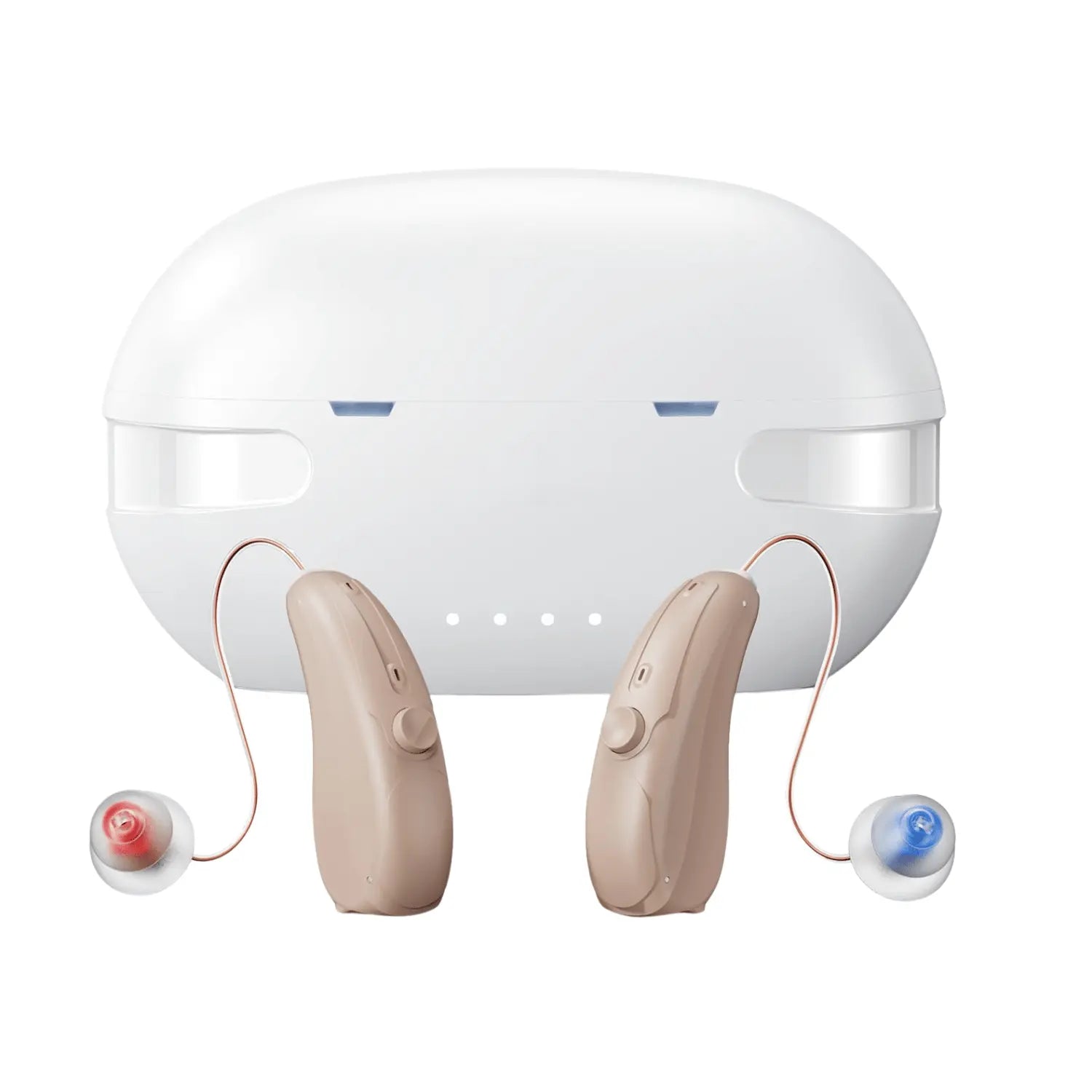
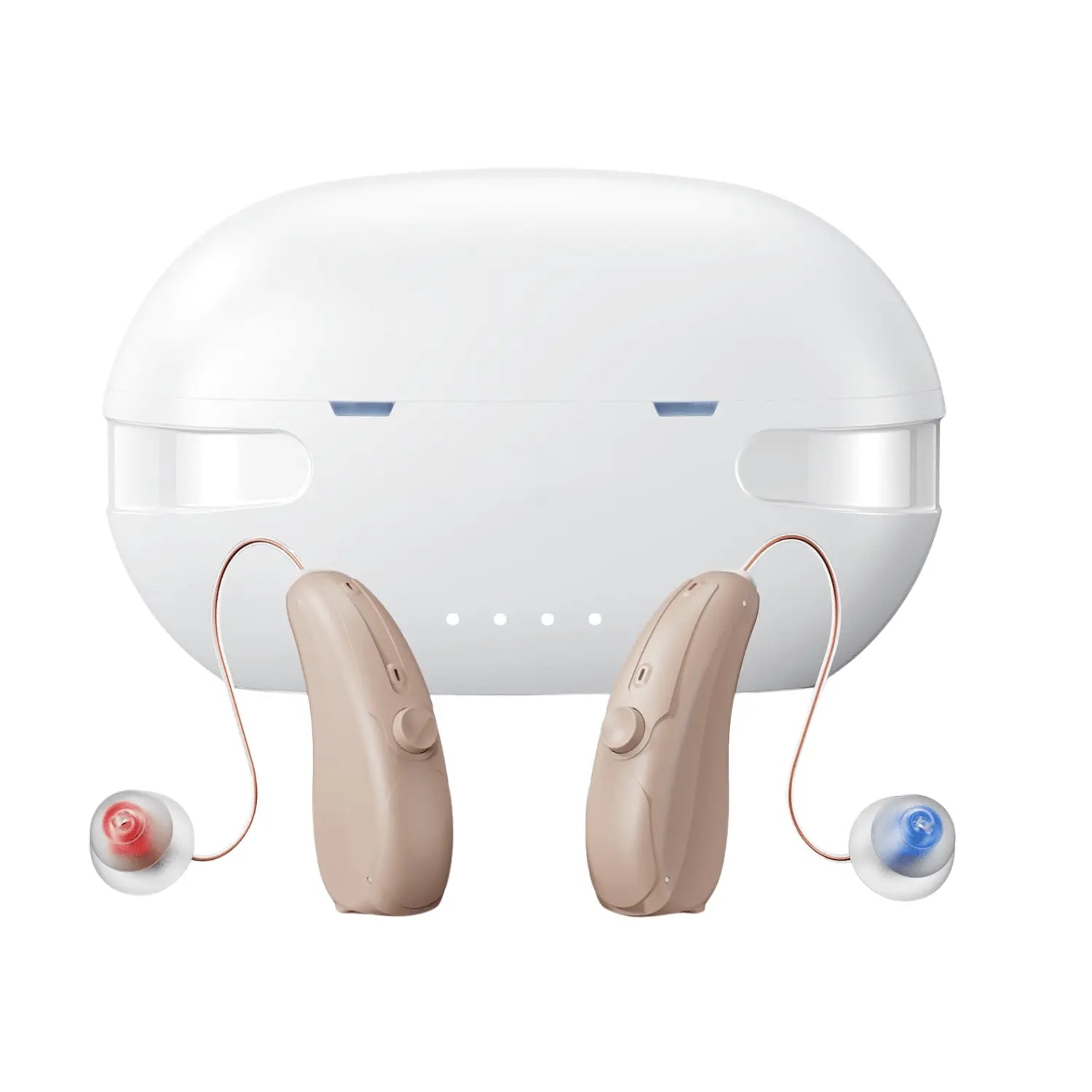
Panda Quantum is built around that idea of precise, personalized tuning. It includes an app-based in-ear hearing test: after the device arrives, the user pairs it with the Panda app, runs a frequency-specific test through the hearing aid, and the fitting is then applied automatically to match the user's audiogram, similar to what an audiologist does at a clinical fitting. That frequency-specific hearing adjustment is exactly the kind of targeted amplification that can make tinnitus less intrusive, and the app-based hearing personalization means the settings reflect your ears rather than a generic preset.
As a self-fitting OTC hearing aid, it backs that up with adaptive, speech-focused noise reduction, Bluetooth for calls, TV, and music, up to roughly 80 hours of total battery with the case, a 5-year warranty, and a 45-day return window. One honest caveat: over-the-counter devices are intended for mild to moderate hearing loss, and anyone with severe or profound loss, or with sudden hearing loss that has not been evaluated, should see a clinician first. Details are at pandahearing.com/products/panda-hearing-aids-quantum.
Limitations of This Research
The trial compared two doses of the same extract but did not include a placebo group, so it cannot fully separate the drug's effect from the natural improvement that tinnitus often shows over time. The steady decline in scores may reflect both. The study was also conducted entirely in China, which may limit how directly the findings apply to other populations and care settings.
The prognostic links, such as the connection between anxiety and poorer outcomes, come from observational analysis within the trial and show association rather than proven cause. The published report did not detail funding sources or conflicts of interest in the information available here, so readers cannot fully weigh those factors.
Where This Leaves Us
For tinnitus that follows sudden hearing loss, this study suggests that more of a popular herbal extract is not necessarily better, and that recovery often unfolds gradually while broader health factors shape the path. The practical message is to treat tinnitus as part of a bigger picture, attending to hearing, to anxiety, and to overall wellbeing rather than relying on any single fix, and to talk through the options with a qualified professional.
Chen N, Ma X, Huo Y, Wang M, Song J, Liu H, Jiang Z, Yu Y, Gao X, et al. Tinnitus outcomes after ginkgo biloba extract in sudden sensorineural hearing loss: a dose-comparative and prognostic study. Acta Oto-Laryngologica. 2026;146(6):718-727. Retrieved from PubMed. https://doi.org/10.1080/00016489.2026.2629608