The Hidden Cognitive Barriers That Keep Older Adults From Trying Hearing Aids
A new Canadian study finds that everyday mental habits like boredom and mind-wandering can quietly steer people away from getting a hearing aid, even when their own ears tell them something is wrong.
For decades, the conventional thinking on hearing aid adoption has been straightforward. The worse a person's measured hearing loss, the more likely they are to seek out a device. Yet audiologists have long noticed that audiometry alone explains only part of who actually walks out of a clinic with hearing aids.
A new study from the University of Guelph, the University of British Columbia, and Toronto Metropolitan University adds a surprising new layer to that picture. Personality and attention patterns that have nothing to do with the ear itself appear to influence whether an older adult decides to act on their hearing difficulties.
About This Study
Title: The Cognitive-Affective Hearing Aid Paradox: Boredom Proneness and Attentional Difficulties Predict Worse Age-Related Subjective Hearing but Lower Rates of Hearing Aid Adoption
Authors: Alyssa C. Smith, Carolyn M. L. Crawford, Gurjit Singh, Mark J. Fenske
Affiliations: Department of Psychology, University of Guelph; Department of Psychology, University of British Columbia Okanagan; Sonova Canada and University of Toronto and Toronto Metropolitan University
Journal: Ear and Hearing, published online June 5, 2026
Study type: Prospective observational study with mediation analysis in older adults recruited through hearing-care clinics
Reference: PubMed DOI: 10.1097/AUD.0000000000001840
Background: Why the Researchers Looked at This
Adults aged 50 and older are at progressively greater risk for age-related hearing loss, and that loss has been linked to higher rates of depression, loneliness, social isolation, and cognitive decline. Hearing aids can blunt some of those downstream effects, yet the gap between people who could benefit and people who actually use a device remains enormous. National surveys put adoption among older adults with measurable hearing loss at roughly one in four.
Earlier work by the same Guelph group had already shown that two cognitive-affective traits, "boredom proneness" and "spontaneous mind-wandering," predict a worse subjective experience of hearing difficulty even after objective audiometry is held constant. Boredom proneness is a stable tendency to find ordinary situations unengaging. Spontaneous mind-wandering refers to attention drifting off-task without a person realizing it. Both are well-studied in attention research and both have been linked to slower processing of difficult listening situations. The team wanted to see whether these same traits could help explain why some people with significant hearing handicap still do not buy hearing aids.
How the Study Was Done
The researchers recruited older adults from Connect Hearing Canada clinics across the country. Every participant completed a standard audiogram so the team could measure pure-tone thresholds. They also filled out validated self-report questionnaires that captured the everyday cost of hearing loss, including a hearing handicap inventory and a scale that asked how much mental effort listening typically required.
In parallel, participants filled out standard psychology measures for boredom proneness and spontaneous mind-wandering, plus a self-perceived cognitive functioning questionnaire. The team then tracked whether each person purchased a hearing aid in the following five years. To untangle the relationships, the analysts ran parallel-mediation models, which test whether one variable explains the link between two others. Here the question was whether boredom and mind-wandering could account for some of the gap between feeling that hearing loss is a problem and actually doing something about it.
What the Researchers Found
On their own, neither boredom proneness nor mind-wandering directly predicted whether someone bought a hearing aid in the next five years. That was the simple, surface-level result, and the authors note it would have been easy to stop there and conclude the traits did not matter for adoption.
The mediation models told a more nuanced story. As expected, higher self-reported hearing handicap and higher reported effort while listening were strong predictors of going on to buy a hearing aid. People who said hearing loss was making everyday life harder were more likely to act on that experience.
But the same models showed that boredom proneness and spontaneous mind-wandering partially blunted that pathway. Participants who scored higher on either trait were more likely to describe their hearing as worse, yet less likely to actually purchase a device. In statistical terms, those traits ran in the opposite direction of the hearing-handicap pathway, partly cancelling it out. The authors call this the "cognitive-affective hearing aid paradox": the people who report the most subjective burden are not always the people who end up wearing hearing aids.
The team interprets the pattern as evidence that the decision to adopt a hearing aid is not just a function of how severe the loss feels in the moment. It is also shaped by how a person tends to process effortful, unrewarding tasks in general. For someone who finds clinic visits, fittings, follow-ups, and adjustment periods tedious, the everyday hurdle of acting on hearing loss may be larger than the clinical numbers suggest.
What It Means for People with Hearing Loss
For older adults and their families, the takeaway is not that personality is destiny. It is that ordinary mental habits can quietly tilt the scales toward putting off a decision. Someone who notices that they bow out of long appointments, lose focus during paperwork, or feel restless during multi-step processes might benefit from picking a hearing solution that has as few of those friction points as possible.
The findings also reframe what success looks like for clinicians. Reducing the steps between curiosity and a working device, simplifying the fitting process, and lowering the up-front cost commitment may matter as much as picking the perfect prescription, especially for the subgroup of patients whose attention naturally wanders away from anything tedious.
Lowering the Friction to Try a Hearing Aid: Where Panda Air Fits
If everyday boredom and attention drift are part of why people put off hearing aids, the answer is not louder warnings about the consequences of hearing loss. The answer is reducing the steps and the cost it takes to try a device in the first place. That is the gap that newer FDA-cleared OTC hearing aids are designed to close, and Panda Air is one example.
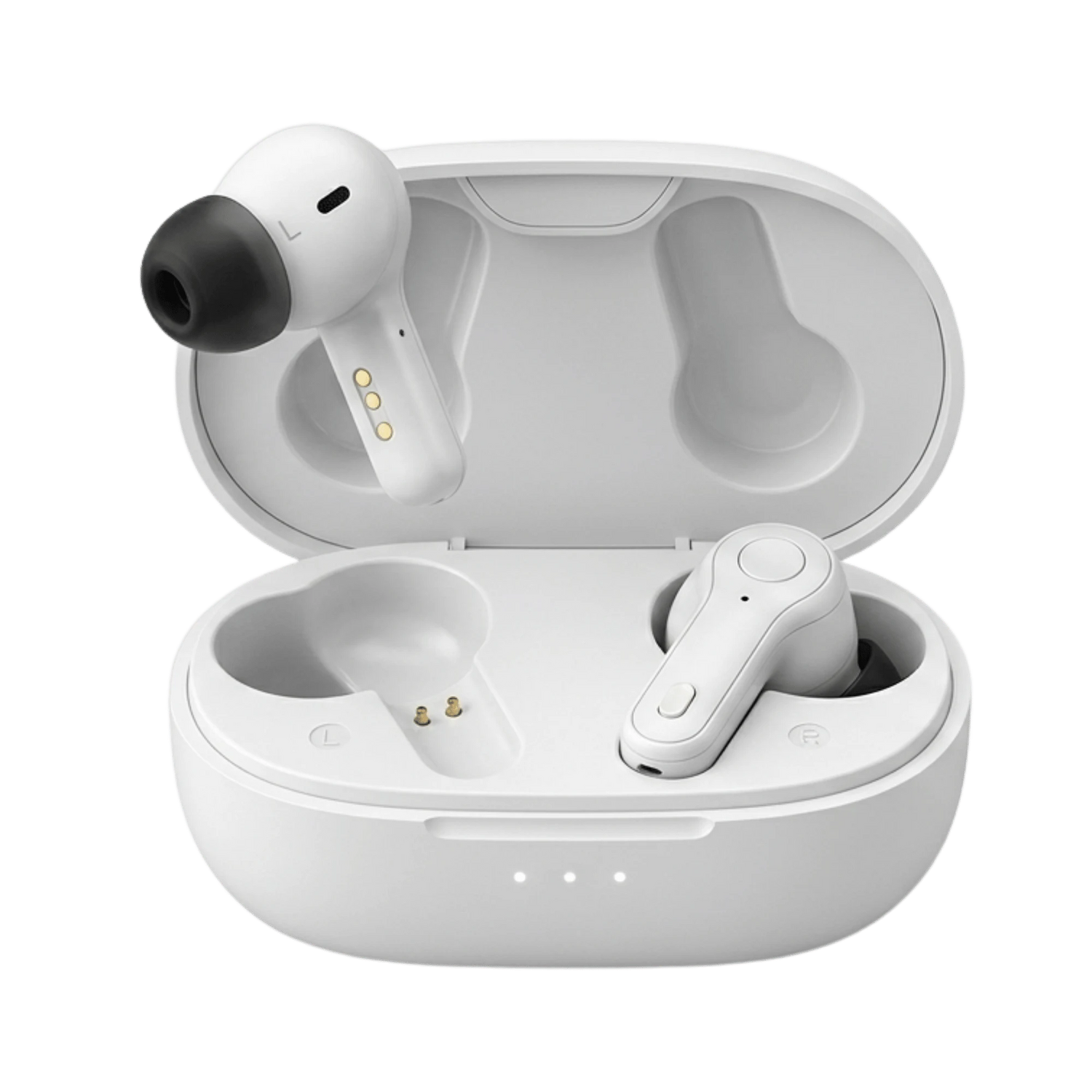
Panda Air is an earbud-style in-the-canal hearing aid that ships direct to the user, with no in-clinic fitting required. After delivery, the user pairs the device with the Panda app, which runs a frequency-specific hearing test through the hearing aid itself and then programs the device automatically to match the user's audiogram. The end result is similar to what an audiologist does at a clinical fitting, without the in-person appointments. That removes one of the very steps the Guelph researchers describe as a common drop-off point for people who are prone to losing focus on long processes.
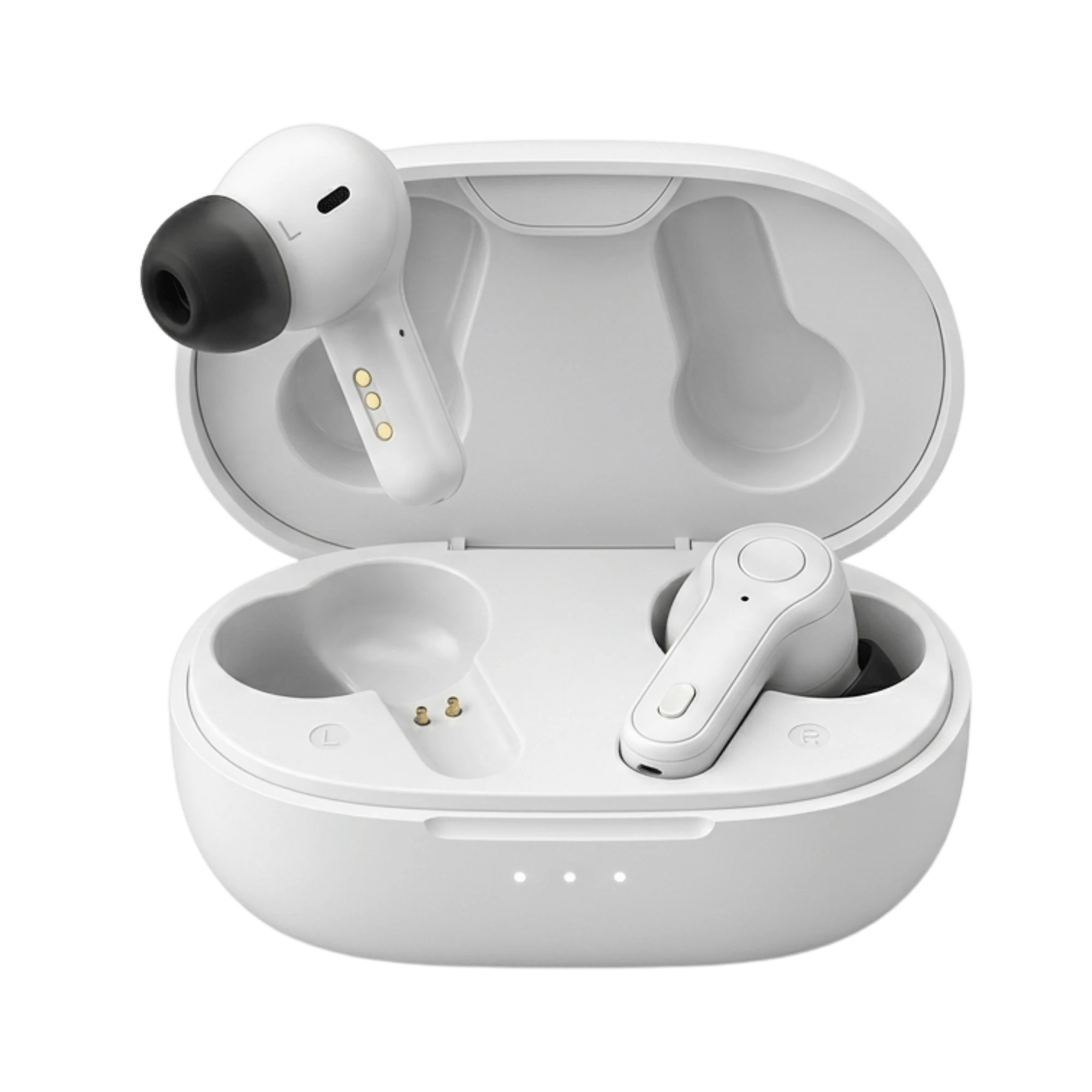
The trade-offs that older adults usually cite, including cost, scheduling, and a feeling that the process drags on, are exactly the kind of barrier this study suggests can derail adoption. As a self-fitting OTC hearing aid with a 16-channel processing core, adaptive noise reduction, a 60-hour fast-charge case, a 5-year warranty, and a 45-day return window, Panda Air is built around app-based hearing personalization rather than clinic visits. The OTC framework, established by the FDA in 2022, applies to perceived mild-to-moderate hearing loss; people with severe or profound loss are still best served by a clinical fitting.
Limitations of This Research
The participants in this study were all recruited through hearing-care clinics, which means they had already taken the first step of getting their hearing tested. People who never reach a clinic in the first place may have an even stronger cognitive-affective profile than the sample studied here, but they are not represented in the data. The study also relies on self-reported questionnaires for traits like boredom proneness and mind-wandering, which capture tendencies but cannot pinpoint the exact moment a decision tips one way or the other. One author is affiliated with Sonova Canada, the parent company of Connect Hearing, which the authors disclose in the paper.
What to Do With This
If you or a family member has been "meaning to look into" hearing aids for years, this study suggests that the delay is not unusual and may have less to do with how bad the hearing is and more to do with how appealing the next step feels. Cutting the process down to the smallest first action, whether that is a short at-home hearing screen, a single low-friction trial, or a 45-day return window, is one of the most evidence-aligned ways to act on what your ears are already telling you.
Smith AC, Crawford CML, Singh G, Fenske MJ. The Cognitive-Affective Hearing Aid Paradox: Boredom Proneness and Attentional Difficulties Predict Worse Age-Related Subjective Hearing but Lower Rates of Hearing Aid Adoption. Ear and Hearing. 2026. Retrieved from PubMed. DOI: 10.1097/AUD.0000000000001840