A Flavonoid-Rich Diet Linked to Lower Risk of New Hearing Loss in 55,000 Adults
Researchers tracking over half a million person-years of UK Biobank data report that participants whose diets were richest in flavonoids were about 16 percent less likely to develop hearing loss, with reduced inflammation appearing to carry part of the effect.
Hearing loss is now the third most common chronic health condition in older adults, yet most clinical attention focuses on managing the problem after it has already developed. A new analysis from the UK Biobank shifts the lens upstream, asking whether the food on the plate, decades before a hearing aid is needed, can change a person's odds.
The study, published in the Journal of Nutrition, Health and Aging, suggests that a dietary pattern rich in flavonoid-containing foods is associated with a meaningful reduction in the risk of developing hearing loss over time. It also offers an early biological clue: reduced systemic inflammation appears to mediate part of the relationship.
About This Study
Title: Flavonoid-rich dietary patterns and the risk of incident hearing loss: evidence from the UK Biobank cohort
Authors: Youngji Han, Kyu-Yup Lee, Jeong Heon Lee, Incheol Seo, Da Jung Jung
Affiliations: Bio-Medical Research Institute, Kyungpook National University Hospital; Department of Otorhinolaryngology Head and Neck Surgery, School of Medicine, Kyungpook National University; Department of Artificial Intelligence, Kyungpook National University; Department of Immunology, School of Medicine, Kyungpook National University, Republic of Korea
Journal: The Journal of Nutrition, Health and Aging, volume 30, issue 7, page 100891, published June 3, 2026
Study type: Prospective cohort analysis of UK Biobank participants with mediation testing
Reference: PubMed DOI: 10.1016/j.jnha.2026.100891
Background: Why the Researchers Looked at This
Hearing loss develops over years, often silently. Two of the most consistent contributors identified in laboratory studies are oxidative stress, where unstable molecules damage the delicate hair cells of the inner ear, and low-grade chronic inflammation, which can wear down sensitive sensory tissue over time. Flavonoids are a broad family of plant compounds found in foods like berries, citrus, tea, apples, onions, dark chocolate, and many leafy vegetables. They are known in nutrition research for two properties: antioxidant activity and a tendency to reduce markers of inflammation.
Cross-sectional surveys have hinted that people who eat more flavonoids report better hearing, but cross-sectional data cannot show direction or rule out reverse causation. The Kyungpook National University team set out to ask the cleaner question: among adults with normal hearing at baseline, does a flavonoid-rich diet predict who will develop hearing loss later?
How the Study Was Done
The researchers drew on UK Biobank, a large ongoing cohort of UK adults who agreed to share detailed health, diet, and biological data. They included 55,859 participants who had no diagnosed hearing loss at baseline and had completed at least one 24-hour dietary recall. From those food records, the team built a Flavonoid Diet Score, summing intake of major flavonoid-rich foods, and split participants into four quartiles from lowest to highest intake.
Every participant was then followed through linked UK hospital records and death registries. New cases of hearing loss were identified by ICD-10 codes H90 and H91, the standard diagnostic codes for sensorineural and other forms of hearing loss. Over 613,590 person-years of follow-up, 1,681 new cases were captured. The team used Cox proportional hazards models to estimate the relative risk in each diet quartile, adjusting for age, sex, education, smoking, alcohol, physical activity, body mass index, and key cardiometabolic conditions like diabetes and high blood pressure. To probe the mechanism, they ran mediation analyses asking whether blood biomarkers of inflammation, including C-reactive protein, glycoprotein acetyls, neutrophil counts and percentage, and total leukocyte counts, helped explain the link.
What the Researchers Found
Participants in the highest quartile of flavonoid intake had a 16 percent lower hazard of developing hearing loss compared with those in the lowest quartile after full adjustment for demographic, lifestyle, and cardiometabolic factors. The hazard ratio was 0.84, with a 95 percent confidence interval of 0.73 to 0.96 and a p-value for trend of 0.021, meaning the protective association grew steadily across diet quartiles.
The mediation analyses pointed to a specific mechanism. Of the five inflammation biomarkers tested, only C-reactive protein significantly explained part of the diet-hearing link. The average causal mediation effect was -0.0079 with a p-value of 0.010, accounting for roughly 4.8 percent of the total effect. The other markers, including neutrophil counts and glycoprotein acetyls, did not show statistically significant mediation in this dataset.
In plain terms, eating more flavonoid-rich foods was associated with lower long-term odds of needing care for hearing loss, and part of that protection appeared to travel through reduced systemic inflammation. The rest of the effect almost certainly involves additional pathways, possibly including direct antioxidant action on the inner ear, improved blood flow, or interactions with the cardiovascular system, but those would need follow-up studies to confirm.
What It Means for People with Hearing Loss
A 16 percent relative risk reduction is moderate, not dramatic, but it shows up in the kind of foods nutritionists already recommend for cardiovascular and metabolic health. Berries, citrus, apples, tea, cocoa, onions, and leafy greens all sit near the top of the flavonoid charts. For an older adult who is already trying to eat well for blood pressure or blood sugar, the hearing protection signal is essentially a bonus benefit, not a new prescription.
It also reframes how to think about hearing health over a lifetime. Hearing aids are the right answer once loss has set in, but this kind of population evidence puts a clearer number on the value of upstream choices, particularly for adults in their 40s, 50s, and 60s who still have time to influence the trajectory.
When Speech in Noise Becomes a Problem Anyway: Where Panda Quantum Fits
Even with the best diet, age and noise exposure still take a toll, and the earliest sign of that toll is rarely silence in a quiet room. It is the feeling that everyone at a restaurant table is suddenly mumbling. That is the speech-in-noise problem most older adults describe, and it is the cue the inner ear has begun losing its ability to separate signal from background.
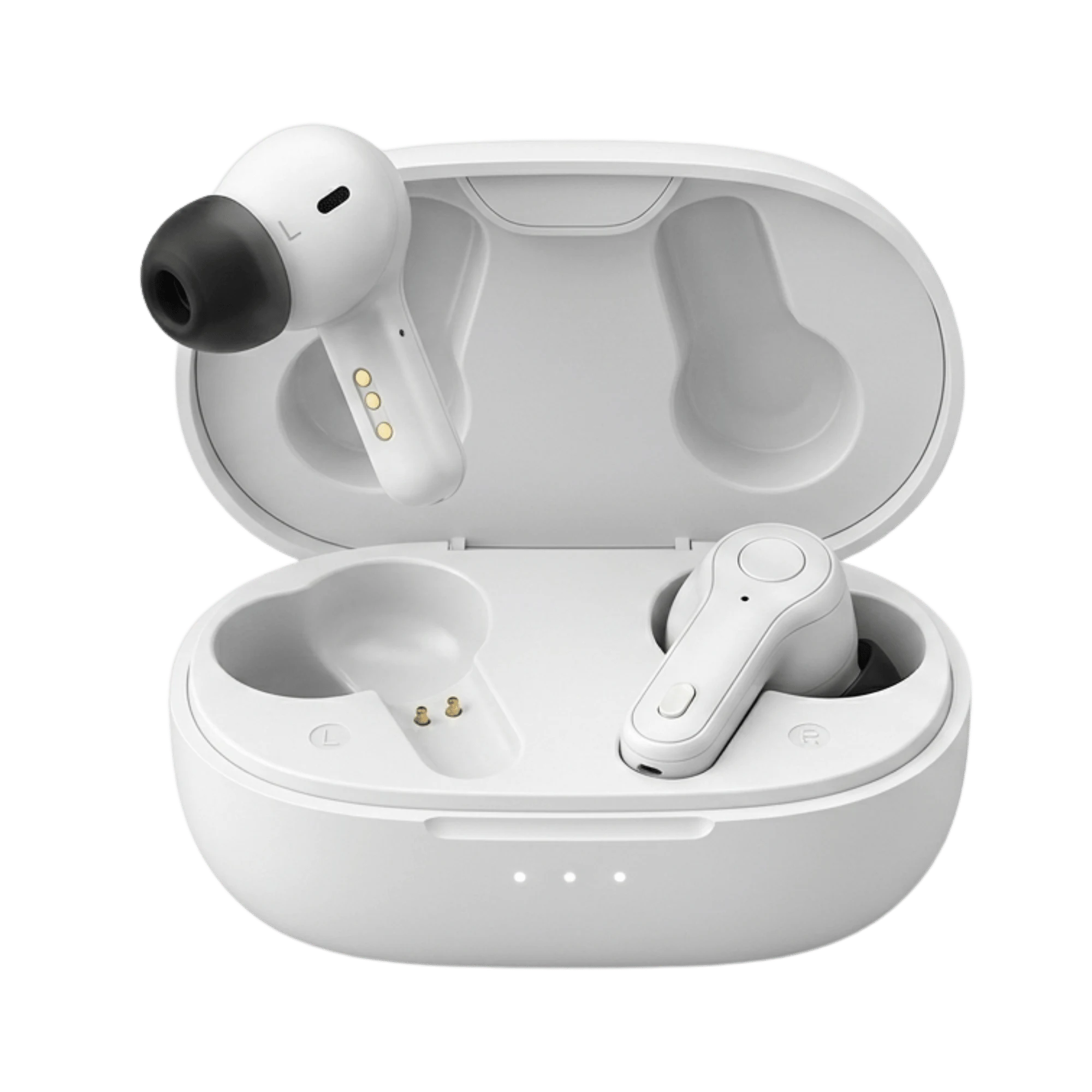
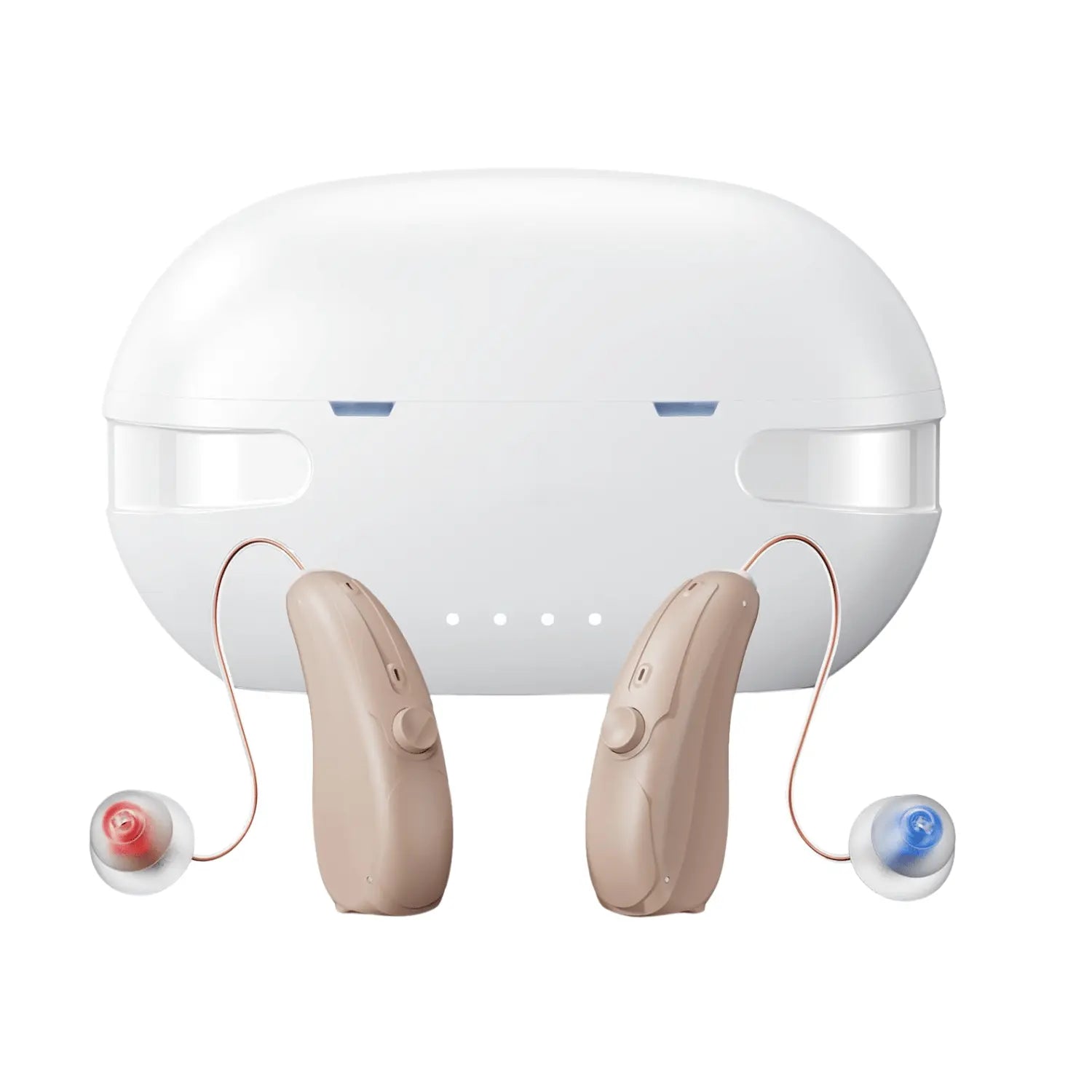
When that point arrives, the clinical-grade option in Panda's lineup is Panda Quantum, a 16-channel receiver-in-canal hearing aid with adaptive noise reduction and Bluetooth for calls, TV, and music. Like Panda Air, Quantum includes the Panda app-based in-ear hearing test, which runs frequency-specific testing through the hearing aid itself and then automatically programs the device's gain to match the user's audiogram, similar to what an audiologist does at a clinical fitting. That means a person can move from "I think I might be missing things" to a personalized fitting without a clinic visit, and the device is engineered for the speech-in-noise listening situations the UK Biobank study tracks across years of follow-up.

Panda Quantum offers up to 80 hours of total battery life with its charging case, a 5-year warranty, and a 45-day return window. The OTC framework, established by the FDA in 2022, is designed for perceived mild-to-moderate loss; people with severe or profound hearing loss still benefit most from a clinical fitting. For adults whose audiograms have started to slip into the typical age-related range, Panda Quantum is built around app-based hearing personalization and 16-channel adaptive noise reduction for clearer speech in noisy environments, the very situations that often surface first as hearing declines.
Limitations of This Research
UK Biobank participants tend to be healthier and better educated than the broader UK population, which can blunt the size of effects when they are extrapolated to the general public. Dietary intake was captured through 24-hour recalls, a method that is reliable on average across thousands of people but imprecise for any one person. Incident hearing loss was identified through ICD-10 hospital and death records rather than serial audiograms, which means milder cases that never reached the medical system would not have been captured and the protective association could be slightly under- or over-estimated. C-reactive protein explained only about 4.8 percent of the total effect, leaving the bulk of the mechanism still unaccounted for. The authors declared no specific funding conflicts in the published abstract.
Where This Leaves Us
The UK Biobank analysis adds hearing protection to the lengthening list of reasons to favor a flavonoid-rich diet, alongside cardiovascular and metabolic benefits already in textbooks. The effect is real, the cohort is large, and the mechanism is plausible. None of that makes hearing aids obsolete for people who already need them, but it does sharpen one of the few prevention levers individuals can reach for at home, well before a clinical appointment.
Han Y, Lee KY, Lee JH, Seo I, Jung DJ. Flavonoid-rich dietary patterns and the risk of incident hearing loss: evidence from the UK Biobank cohort. The Journal of Nutrition, Health and Aging. 2026;30(7):100891. Retrieved from PubMed. DOI: 10.1016/j.jnha.2026.100891