A new clinical study published in Medicine reports that chronic tinnitus patients who used sound therapy at least 30 minutes per session, 2.5 times a week, during their first six months of treatment had significantly greater symptom relief at both 6 and 12 months than those with lower early adherence [1].
Sound therapy is one of the most widely used and least expensive treatments for chronic tinnitus. The premise is straightforward: by exposing the auditory system to controlled background sound, the brain has less reason to focus on the tinnitus signal, and over time the perceived loudness and distress associated with it can decrease. The catch, as anyone who has tried it knows, is that sound therapy is a self-administered behavior. There is no clinic appointment to show up to. It is up to the patient to actually put the device in their ear, choose a program, and stick with it long enough for the brain to adapt.
A 2026 Korean clinical study set out to measure how much that early commitment matters. The answer, as it turns out, is "a lot." The patients who built the habit in the first six months responded to treatment; the ones who didn't, mostly didn't [1]. The result fits within a broader literature on tinnitus therapy. A 2026 scoping review found that cognitive behavioral therapy and audiologist-led counseling produce comparable outcomes in most published comparisons [2], and a separate survey reported that chronic tinnitus patients strongly prefer non-invasive options like sound therapy and tinnitus retraining therapy over pharmaceutical interventions [3]. The connecting thread is that the therapy that works best is the one a patient will actually do, consistently, for long enough.
About This Study
Title: Initial compliance as a predictor of therapeutic outcomes in chronic tinnitus
Authors: Sang-Yoon Han et al.
Journal: Medicine - 2026
Citations: 0
Source: Consensus - https://consensus.app/papers/details/7d067a28aa625682ada8e26225e77325
Background: Why the Researchers Looked at This
Sound therapy is cost-effective and self-administered, which makes it attractive for both patients and clinicians, but the evidence base around its real-world efficacy has been mixed. One reason is methodological: studies that report group-level outcomes can hide a substantial split between participants who used the therapy regularly and those who didn't. Without measuring adherence, it is hard to tell whether sound therapy is failing or whether the patient never really gave it a chance.
The Han team's hypothesis was that early adherence specifically (during the first six months of self-training) would predict tinnitus relief at 12 months. If true, the practical implication would be substantial: clinicians could focus on supporting habit formation in the first half-year rather than treating low responders as treatment failures [1].
How the Study Was Done
Between January 2020 and August 2023, the researchers enrolled 53 patients with chronic tinnitus who agreed to one year of self-administered sound therapy combined with reinforced directive counseling. Patients received the counseling component every six months from the clinical team. Tinnitus distress was tracked using three established instruments: the Tinnitus Handicap Inventory (THI), the numeric rating scale (NRS, 0 to 100), and a visual analogue scale [1].
Adherence to sound therapy was measured at six and twelve months by participant report of frequency and duration of sessions. The team analyzed whether early adherence predicted both early and late tinnitus outcomes, and then split the sample post-hoc into responders (n=33) and non-responders (n=20) to look for differences.
What the Researchers Found
The split between responders and non-responders mapped tightly onto early adherence. Responders engaged in sound therapy significantly more often (P less than 0.001) and for significantly longer sessions (P = 0.001) than non-responders during the first six months. They also maintained higher session frequency through the twelve-month mark (P = 0.037) [1].
The team identified a usable cutoff. Patients who completed more than 30 minutes per session at least 2.5 times per week during the first six months had significantly greater improvements in NRS scores at six months (P less than 0.001) and at twelve months (P = 0.013), as well as improved tinnitus awareness at twelve months (P = 0.018) [1]. Below that adherence threshold, outcomes were noticeably weaker.
The authors emphasize that the critical window appears to be early. Patients who built the habit in the first half-year carried that benefit forward; patients who did not establish the habit in that window tended not to recover it later, and their twelve-month outcomes reflected that gap.
What It Means for People with Tinnitus
For patients, the message is that sound therapy is a real intervention but it requires real practice. "Try it for a few weeks and see how it goes" is unlikely to produce the kind of distress reduction this study documents. The clinically meaningful effect appeared at a specific dose, applied consistently for half a year [1].
For patients who can't access psychologist-led CBT, this is useful news. Sound therapy paired with structured counseling delivered by an audiologist is a reasonable starting point, and the Campbell scoping review supports the view that well-organized counseling can produce outcomes comparable to formal CBT for many patients [2]. Patient preferences are aligned with this trajectory too: in a recent survey, 73.4 percent of chronic tinnitus patients preferred sound therapy over other options [3].
The harder part is the operational one: how to actually deliver 30-plus minutes of sound therapy 2.5 times a week for six months when patients have lives, jobs, and competing demands on their attention. Anything that lowers the friction on that habit is likely to translate into better outcomes.
When the Therapy Lives in the Device You Already Wear
One concrete way to reduce friction is to embed the sound source in a device the patient is already wearing for hearing support. The Han study did not test specific delivery hardware, but its core finding (that habit formation in the first six months drives outcomes) suggests the value of a setup where the patient doesn't have to schedule sound therapy as a separate activity [1].
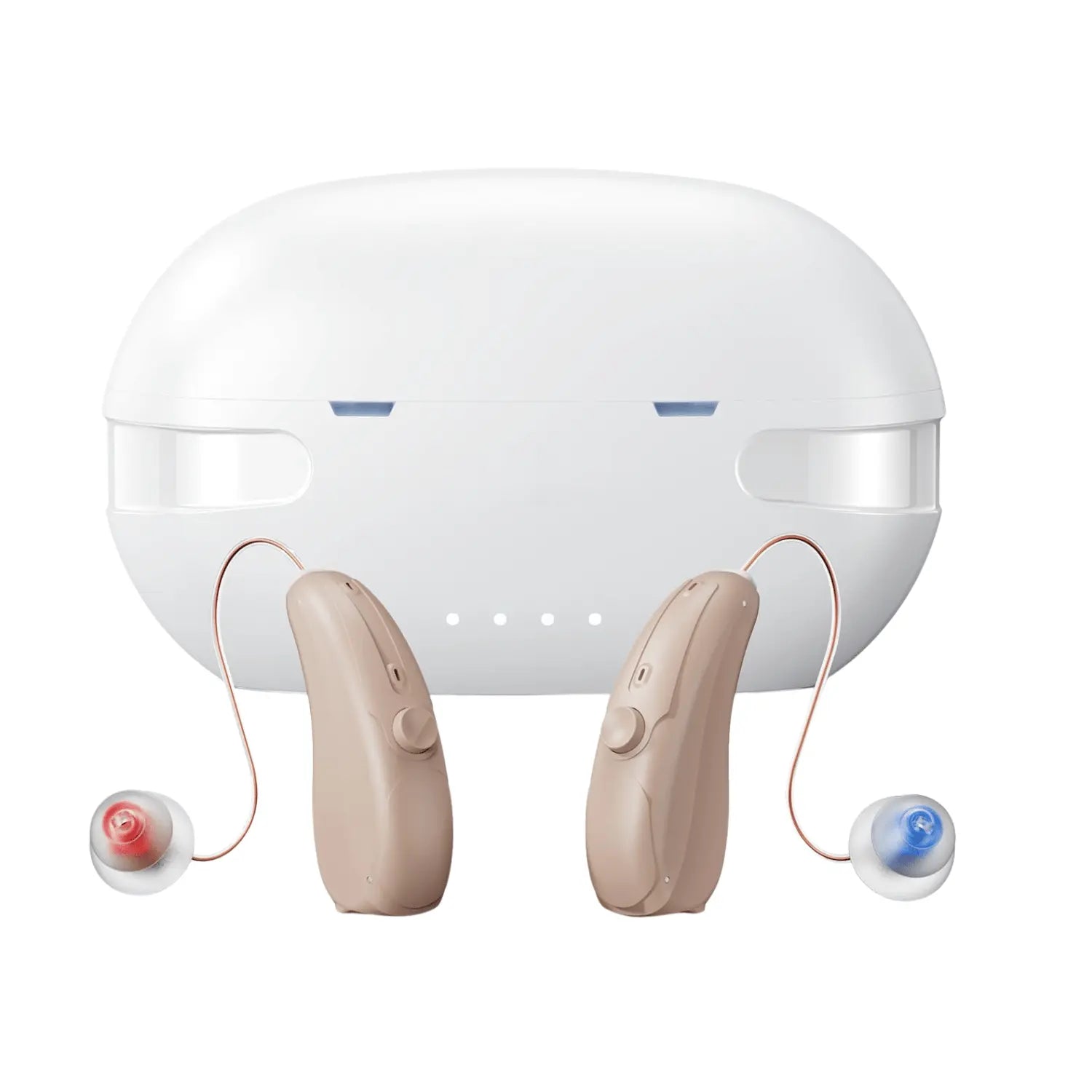
Panda Quantum is a Bluetooth-enabled RIC hearing aid that streams audio from a phone, tablet, or television directly into the device. That includes sound-therapy tracks, masking noise, and the relaxation or nature-sound playlists many audiologists recommend as part of a sound-therapy program. Rather than asking the patient to add a new daily practice with new equipment, the therapy becomes a few taps on the phone that's already paired to the hearing aid.

Panda Quantum is a 16-channel RIC platform with adaptive noise reduction, up to 80 hours of total battery life with the charging case, a 5-year warranty, and a 45-day return window. It is not a tinnitus treatment in itself, but for someone with co-occurring hearing loss who has been prescribed sound therapy, it removes one of the most common reasons patients drop the habit in the first six months: the inconvenience of using a separate device. Learn more about Panda Quantum.
Limitations of This Research
The study sample was modest at 53 patients and was drawn from a single clinical center, which limits generalizability. Adherence was measured by patient self-report rather than by an objective sensor, which can overestimate actual practice. And because the design was observational rather than randomized, the association between high adherence and better outcomes could reflect a third variable: patients with mild or improving tinnitus may have been more able to sustain a daily practice, while patients with severe or worsening symptoms may have struggled to engage even when motivated.
It is also worth noting, per the Kim survey, that more than half of chronic tinnitus patients expect complete symptom resolution despite the absence of evidence that any current therapy delivers that [3]. Patients who set up the practice with realistic, distress-focused goals are likelier to sustain the habit through the early months when symptom change is gradual.
What to Do With This
If you are starting sound therapy for chronic tinnitus, treat the first six months as the period that matters most. Aim for the adherence pattern the Han study identified: at least 30 minutes per session, 2.5 times a week, sustained [1]. If your clinic offers structured counseling alongside the sound therapy, take it; the available evidence suggests this combination is at least as effective as more specialized psychotherapy formats [2]. And set realistic expectations: the goal is meaningful distress reduction, not silence.
References
[1] Initial compliance as a predictor of therapeutic outcomes in chronic tinnitus (Sang-Yoon Han et al., 2026, Medicine, 0 citations).
[2] Counseling and Cognitive Behavioral Therapy for tinnitus - The same but different: a scoping review (Bree Campbell et al., 2026, Frontiers in Audiology and Otology, 0 citations).
[3] Treatment preferences and values in chronic tinnitus patients: A cross-sectional survey study (Hyun Jung Kim et al., 2026, American Journal of Otolaryngology, 0 citations).