A new clinical evaluation reports that over-the-counter hearing glasses, set up by the wearer through a smartphone app, produced measurable gains in both hearing thresholds and speech understanding for older adults with mild to moderate age-related hearing loss.
Since over-the-counter hearing aids became available in the United States and similar self-fitting devices spread internationally, manufacturers have experimented with form factors that look less like medical equipment. One of the newer ideas places the amplification hardware inside ordinary eyeglass frames, so the technology disappears into something many older adults already wear every day.
A research team in Italy set out to measure whether one such product actually delivers the hearing improvement it promises. Their results, published in a peer-reviewed otolaryngology journal, give an early look at how well a self-fitting, glasses-based device performs on standard hearing tests.
About This Study
Title: A novel approach to hearing amplification: audiometric outcomes from Nuance Audio over-the-counter hearing aid glasses.
Authors: Andrea Albera, Marco Boldreghini, Luca Girotto, Roberto Albera, Claudia Cassandro, Andrea Canale.
Affiliations: ENT Unit, Department of Surgical Sciences, University of Turin, Italy.
Journal and publication date: Acta Otorhinolaryngologica Italica, June 2026.
Study type: Prospective audiometric outcome study comparing aided and unaided hearing in a single group of 32 adults.
Reference: PubMed, DOI 10.14639/0392-100X-A1581
Background: Why the Researchers Looked at This
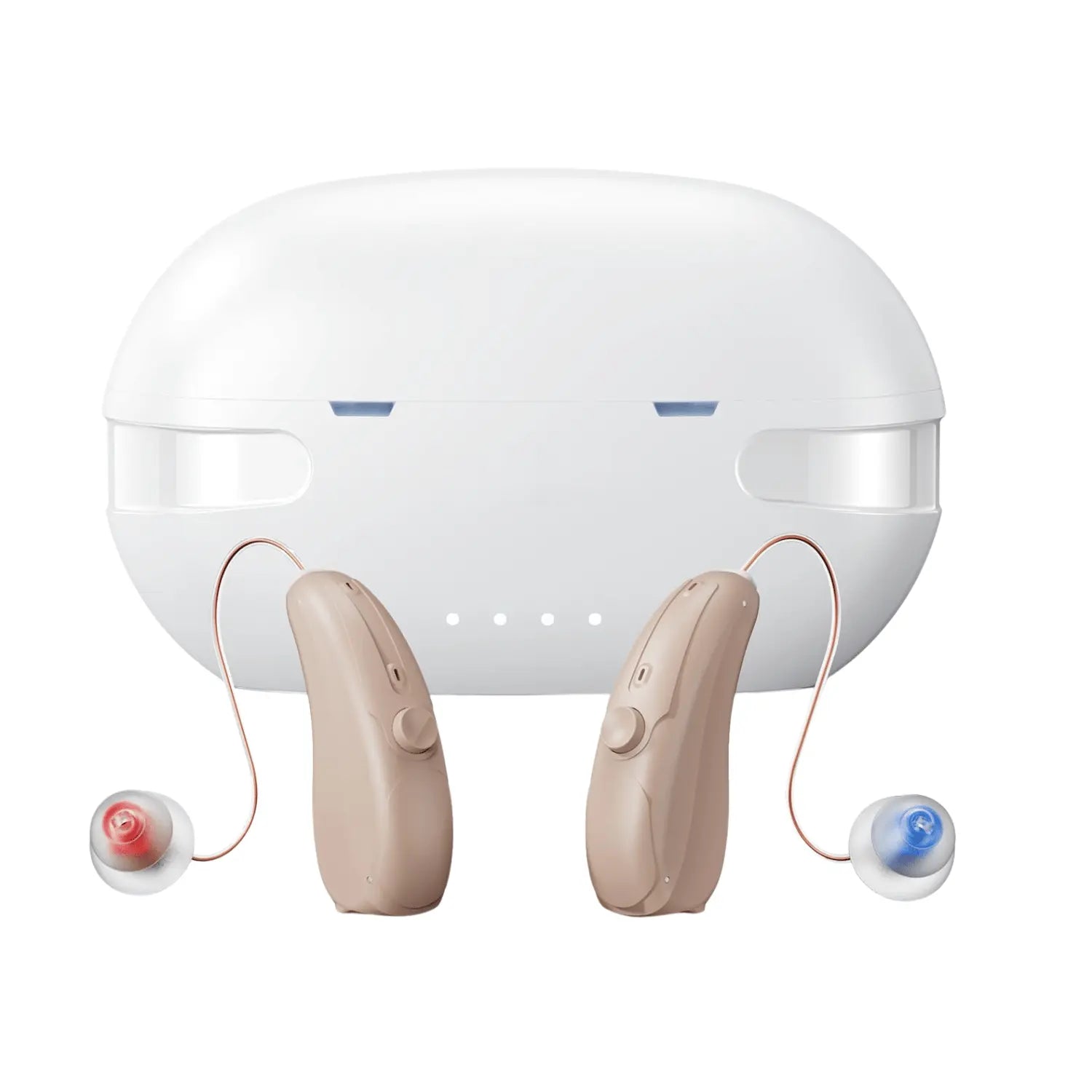
Age-related hearing loss, known medically as presbycusis, is one of the most common conditions of later life. It usually begins with the high-pitched sounds that carry consonants, which is why many people first notice that speech sounds muffled or that conversations in noisy rooms become hard to follow. Despite how common it is, only a minority of adults who could benefit from hearing aids actually use them, and cost, stigma, and the hassle of clinic visits are among the most cited reasons.
Over-the-counter hearing aids are designed to remove some of those barriers by letting adults with mild to moderate hearing loss buy and adjust a device without a prescription or an in-person fitting. Self-fitting means the user, rather than a clinician, programs the device, often by following prompts in a smartphone app. The product tested here pairs that self-fitting approach with an open-ear design, meaning the ear canal is left unblocked, and it uses air conduction amplification, the same general method conventional hearing aids use to make sounds louder.
The open question the researchers wanted to answer was practical. When the hardware is built into eyeglasses and the wearer does the fitting, does the device still produce the kind of measurable improvement that audiologists look for on a hearing test?
How the Study Was Done
The team enrolled 32 adults with an average age of 74 who had symmetric, age-related sensorineural hearing loss in the mild to moderate range. Symmetric means both ears were affected to a similar degree, and sensorineural refers to hearing loss that originates in the inner ear or hearing nerve rather than a blockage in the outer or middle ear.
Each participant completed two kinds of hearing tests under two conditions. Pure-tone audiometry measures the softest tones a person can hear across a range of pitches, while speech audiometry measures how well a person can recognize spoken words. Both were performed in a free-field setting, meaning sound was played through loudspeakers in a sound-treated room, first without the device and then with it in place. Device settings were adjusted through the smartphone app based on each person's hearing profile and personal preference. The researchers then used paired statistical tests to compare each participant's aided results against their own unaided baseline.
What the Researchers Found
Wearing the glasses produced statistically significant improvements in hearing thresholds, and the largest gains showed up in the higher frequencies that matter most for understanding speech. At 4000 to 6000 Hz, the average improvement was roughly 10 to 11 decibels, a range that audiologists generally consider clinically meaningful for everyday listening.
Speech understanding improved as well. The speech reception threshold, which is the level at which a listener can correctly repeat about half of the words presented, improved by about 7 decibels. At the level where listeners could understand essentially all of the words, the improvement was about 6 decibels. In practical terms, that means speech became audible and intelligible at quieter volumes than participants needed without the device.
The researchers also noticed that participants tended to choose amplification settings that closely matched the actual shape of their hearing loss, suggesting the self-fitting process guided people toward sensible choices rather than arbitrary ones. Notably, people with moderate hearing loss benefited about as much as those with milder loss, which suggests the device was not only helping the people who needed it least.
What It Means for People with Hearing Loss
For adults who have been putting off hearing help, the most encouraging part of this study is that a self-fitted device, programmed without a clinician in the room, still delivered the kind of threshold and speech gains that have historically required a professional fitting. The app-guided setup appeared to steer users toward settings that fit their measured hearing loss.
The form factor also speaks to a quieter barrier. Many people avoid hearing aids because they do not want to look like they are wearing one, and a discreet design can make the decision to try amplification feel lower stakes. Findings like these add to a growing body of evidence that well-designed over-the-counter options can be a reasonable starting point for the right candidates, namely adults with mild to moderate age-related loss.
When the Fitting Happens Through an App, Not a Clinic Visit
The central lesson of this study is that the moment of fitting, long the part of the process that required a clinic appointment, can increasingly happen at home through a phone. That shift is what makes self-fitting OTC hearing aids practical for people who balk at the cost or inconvenience of traditional care.
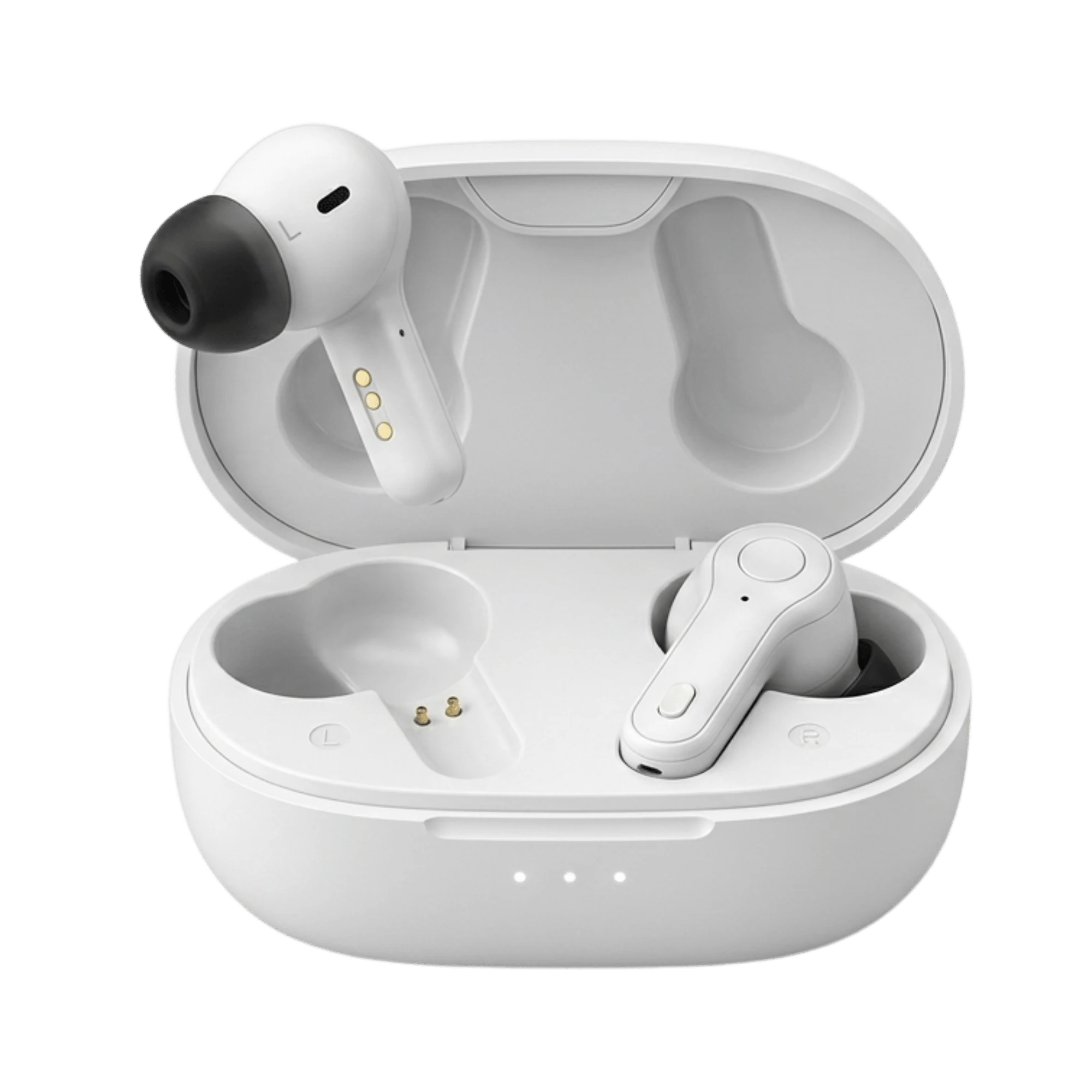
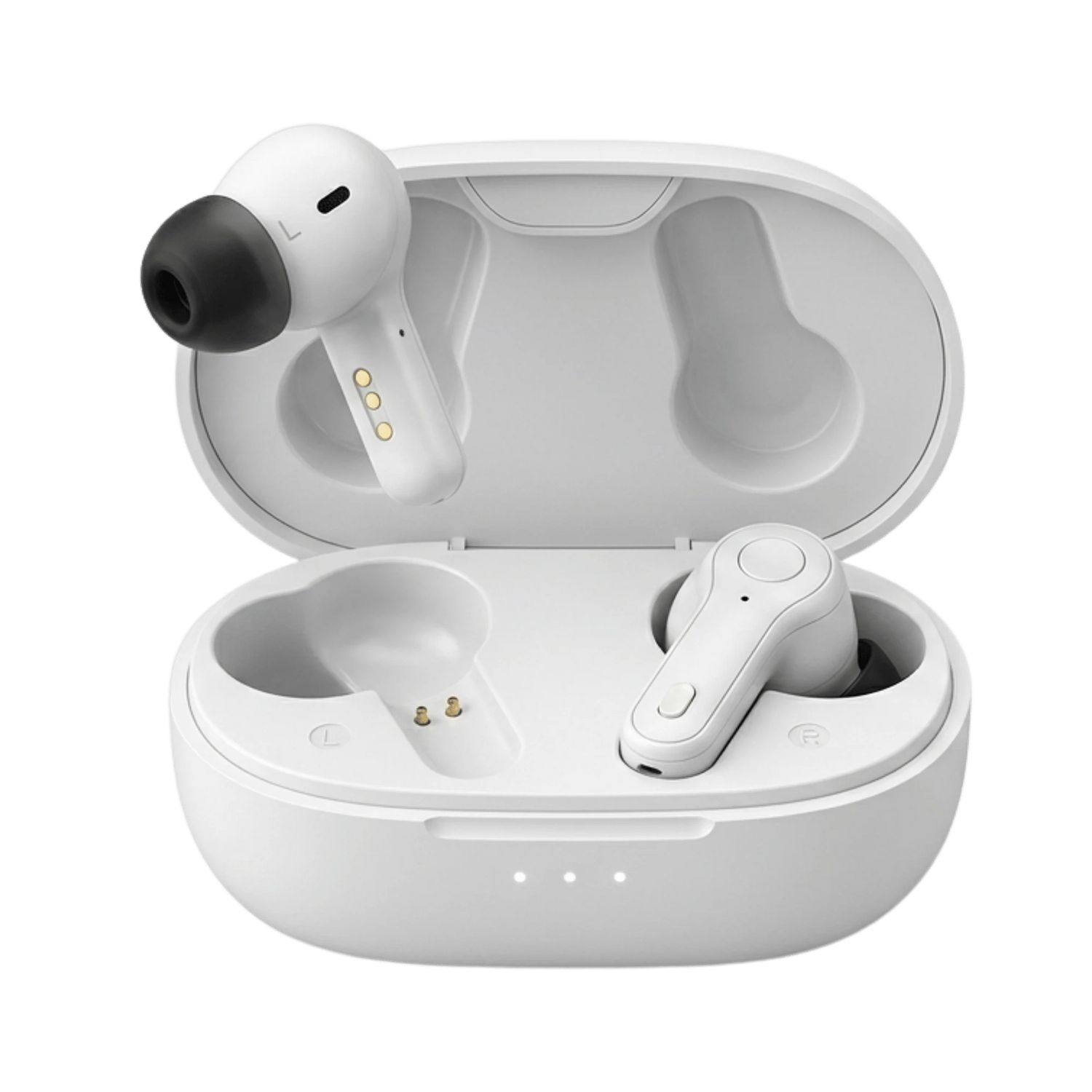
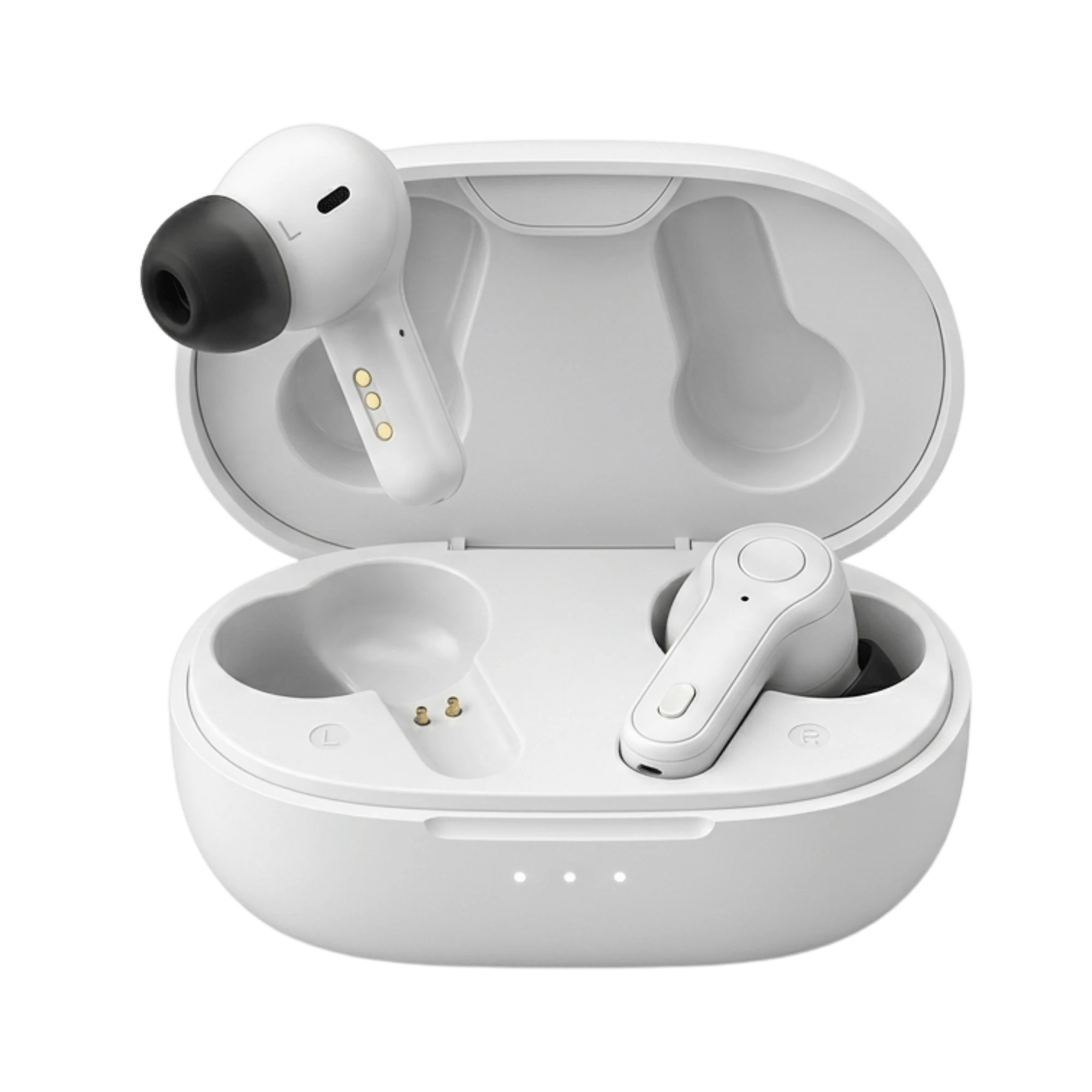
The Panda Air is one example of an earbud-style over-the-counter device built around that idea. After the device arrives, the wearer pairs it with the Panda app, which runs a frequency-specific hearing test through the hearing aid itself and then automatically programs the gain and frequency response to match the resulting audiogram, much as an audiologist would at a clinical fitting. Because the high-frequency region drove the speech gains in this study, that audiogram-matched approach is meant to put amplification where a person's hearing test says it is needed rather than applying a one-size setting.
The Panda Air pairs that app-tuned hearing personalization with 16-channel wide dynamic range compression and multi-band adaptive noise reduction, and it ships as a rechargeable device with a 60-hour fast-charge case, a 5-year warranty, and a 45-day return window so a person can test it in their own daily life. As with any over-the-counter device, the candidates who benefit most are adults with mild to moderate hearing loss; severe or profound loss is still best served by a clinical fitting.
Limitations of This Research
This was a small study of 32 people, and it measured hearing in a sound-treated room rather than in the noisy, real-world settings where users most want help. It also compared each participant to their own unaided hearing rather than to a separate control group or to a conventional hearing aid, and it captured short-term results rather than how people fared after weeks or months of daily wear. The evaluation focused on a single commercial product, and the abstract does not report study funding or potential conflicts of interest, which readers should keep in mind when weighing results tied to a specific device.
Where This Leaves Us
The study adds to evidence that self-fitting, over-the-counter devices can produce real, measurable hearing improvement for adults with mild to moderate age-related loss, even when the device looks nothing like a traditional hearing aid. Larger and longer trials in everyday listening conditions would help confirm how durable those benefits are, but for anyone weighing whether a self-fitted option is worth trying, results like these suggest the technology has matured well beyond simple sound amplifiers.
Albera A, Boldreghini M, Girotto L, Albera R, Cassandro C, Canale A. A novel approach to hearing amplification: audiometric outcomes from Nuance Audio over-the-counter hearing aid glasses. Acta Otorhinolaryngologica Italica. 2026. Retrieved from PubMed. DOI 10.14639/0392-100X-A1581