A new review synthesizing 96 studies concludes that hearing loss and obstructive sleep apnea are two common, often underrecognized contributors to cognitive decline, and that addressing them early may offer protection for the aging brain.
Dementia is one of the defining health challenges of the century. More than 57 million people live with cognitive decline worldwide today, a number projected to surpass 150 million by 2050. Because there is still no cure, researchers have turned their attention to risk factors that can be changed, the everyday conditions that, if treated, might delay or reduce how many people develop dementia.
Two of those conditions are the focus of this review. The first is hearing loss, which a major 2024 expert commission ranked as the single largest modifiable contributor to dementia risk. The second is obstructive sleep apnea, a breathing disorder during sleep that affects hundreds of millions of adults and frequently goes undiagnosed.
About This Study
Title: A Global Burden Perspective on Obstructive Sleep Apnea, Hearing Loss, and Early-Onset Cognitive Decline.
Authors: Alice Tomaselli, Antonina Luca, Mario Lentini, Jerome Rene Lechien, Federico Mollame, Alberto Caranti, Claudio Vicini, Matteo Lazzeroni, Pasquale Capaccio, Giannicola Iannella, Valentin Favier, Antonino Maniaci.
Affiliations: University of Enna Kore, Italy, with co-authors from institutions in Italy, France, and Belgium, including the YO IFOS research group and the University of Mons.
Journal and publication date: Neurology International, June 2026.
Study type: Narrative review following SANRA guidance, drawing on 96 included studies.
Reference: PubMed, DOI 10.3390/neurolint18060117
Background: Why the Researchers Looked at This
A modifiable risk factor is a condition or behavior that can be changed, treated, or managed, as opposed to fixed factors like age or genetics. When researchers say hearing loss carries a population-attributable fraction of roughly 7 percent, they mean that if its contribution could be fully removed across the population, an estimated 7 percent of dementia cases might be avoided. That makes it, by this measure, the most influential single factor on the list.
The reasons hearing loss may affect the brain are still being worked out, but several explanations recur in the literature. Straining to decode muffled speech places a constant extra load on mental resources, a phenomenon sometimes called cognitive load. Hearing loss also tends to pull people out of conversation and social life, and that isolation is itself linked to cognitive decline. Over time, the brain regions that normally process sound may reorganize when they receive less input.
Obstructive sleep apnea, in which the airway repeatedly collapses during sleep, can starve the brain of steady oxygen and fragment rest. The authors set out to pull together what is known about how both conditions relate to thinking and memory, and where the science remains uncertain.
How the Study Was Done
This was a narrative review, a type of paper in which experts gather and interpret a body of research rather than pooling numbers statistically as a meta-analysis would. The authors followed a structured reporting framework known as SANRA and searched four major databases, including PubMed and the Cochrane Library, for studies published through February 2026.
After removing duplicate records, they screened 3,847 studies and kept the 96 that met their criteria. They included original studies, systematic reviews, meta-analyses, and reports from global health bodies, while leaving out editorials and non-English publications. The goal was to map the overall landscape of evidence connecting these two conditions to cognitive decline, with particular attention to lower-income regions where both often go untreated.
What the Researchers Found
The review reaffirmed that hearing loss stands out among modifiable dementia risk factors, and it described the main pathways through which untreated hearing loss is thought to tax the brain: the mental effort of constant listening, withdrawal from social contact, and gradual changes in how sound-processing regions function.
On sleep apnea, the authors catalogued several plausible mechanisms, including intermittent drops in oxygen, fragmented sleep, impaired clearance of waste from the brain, and buildup of amyloid-beta, a protein associated with Alzheimer's disease. They were careful to note that the direction of these relationships is not settled, and that long-term studies are needed to confirm what causes what.
The most actionable finding concerns timing. Both treating sleep apnea with airway therapy and rehabilitating hearing appeared to offer cognitive benefits when started early, while evidence that either could reverse cognitive impairment already established was much weaker. The authors also stressed that the two conditions disproportionately burden low- and middle-income regions, where diagnosis and treatment are hardest to reach, and that the possibility the two conditions amplify each other remains largely unexplored.
What It Means for People with Hearing Loss
The practical message is one of opportunity rather than alarm. Unlike age or family history, hearing loss is something that can be measured and treated, and the review suggests the window for protecting cognition is widest when hearing is addressed early rather than after years of going without help.
For an individual, that reframes a hearing test from a chore into a piece of preventive health, on par with checking blood pressure or vision. It also underscores why access matters. If early treatment is where the cognitive benefit lies, then anything that helps people start sooner, including lower-cost and easier-to-obtain options, is part of the public-health picture the authors describe.
Why Acting Early on Hearing Loss Argues for Clear, Accessible Amplification
If the benefit of treating hearing loss for cognition is greatest when people act early, then the friction that delays treatment, cost, clinic visits, and the sense that hearing aids are only for advanced loss, is exactly what gets in the way. Newer devices try to lower that friction while still delivering clinical-grade sound.
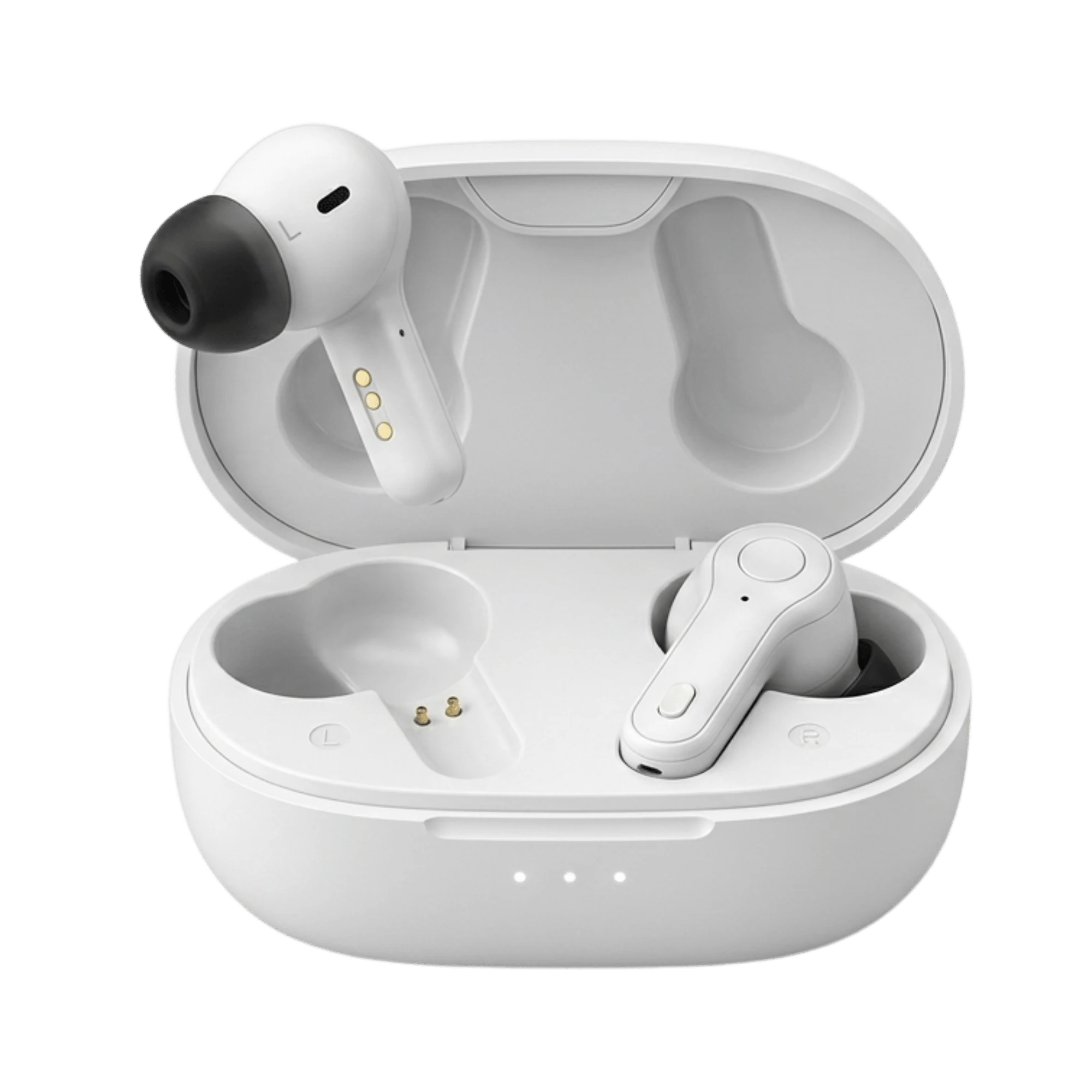
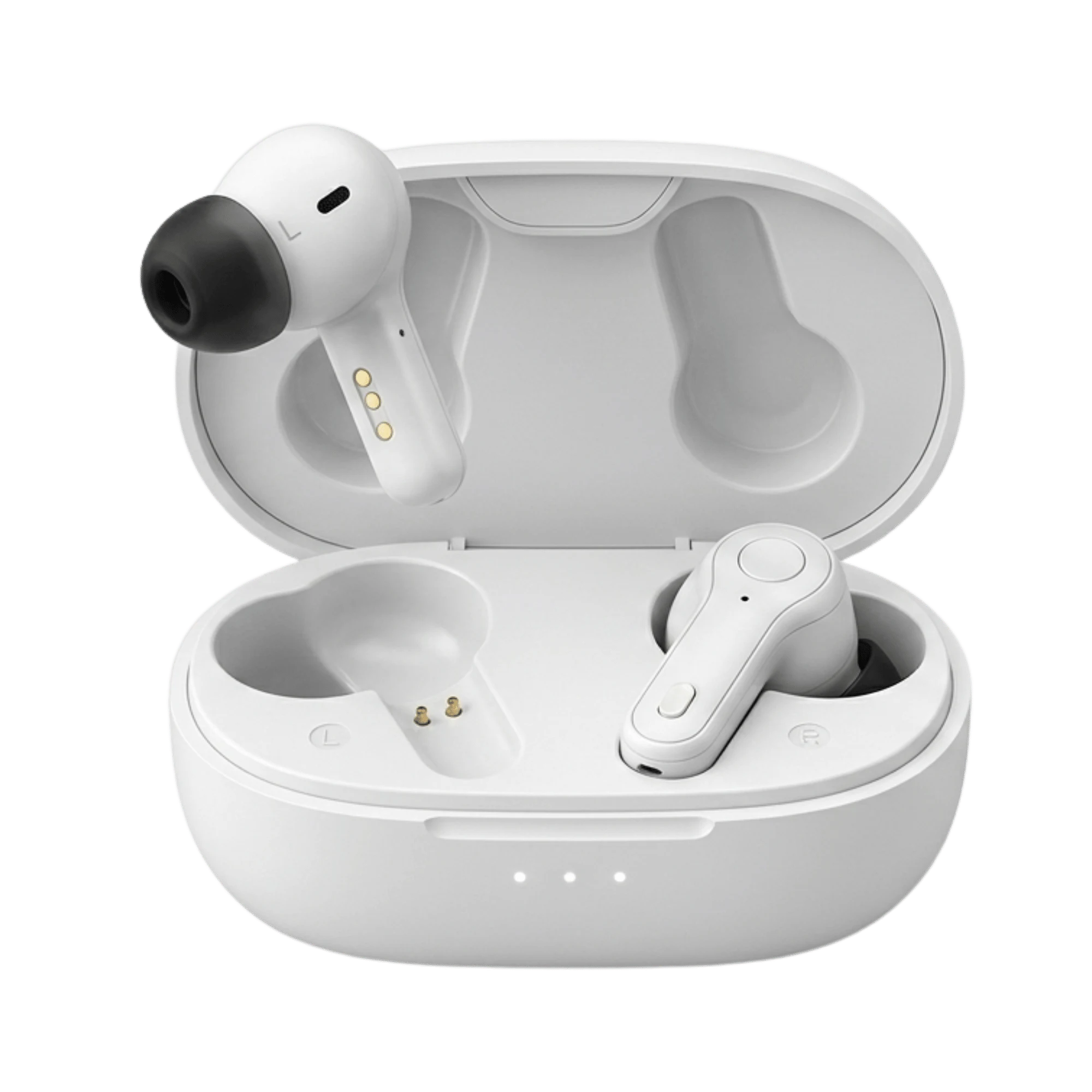
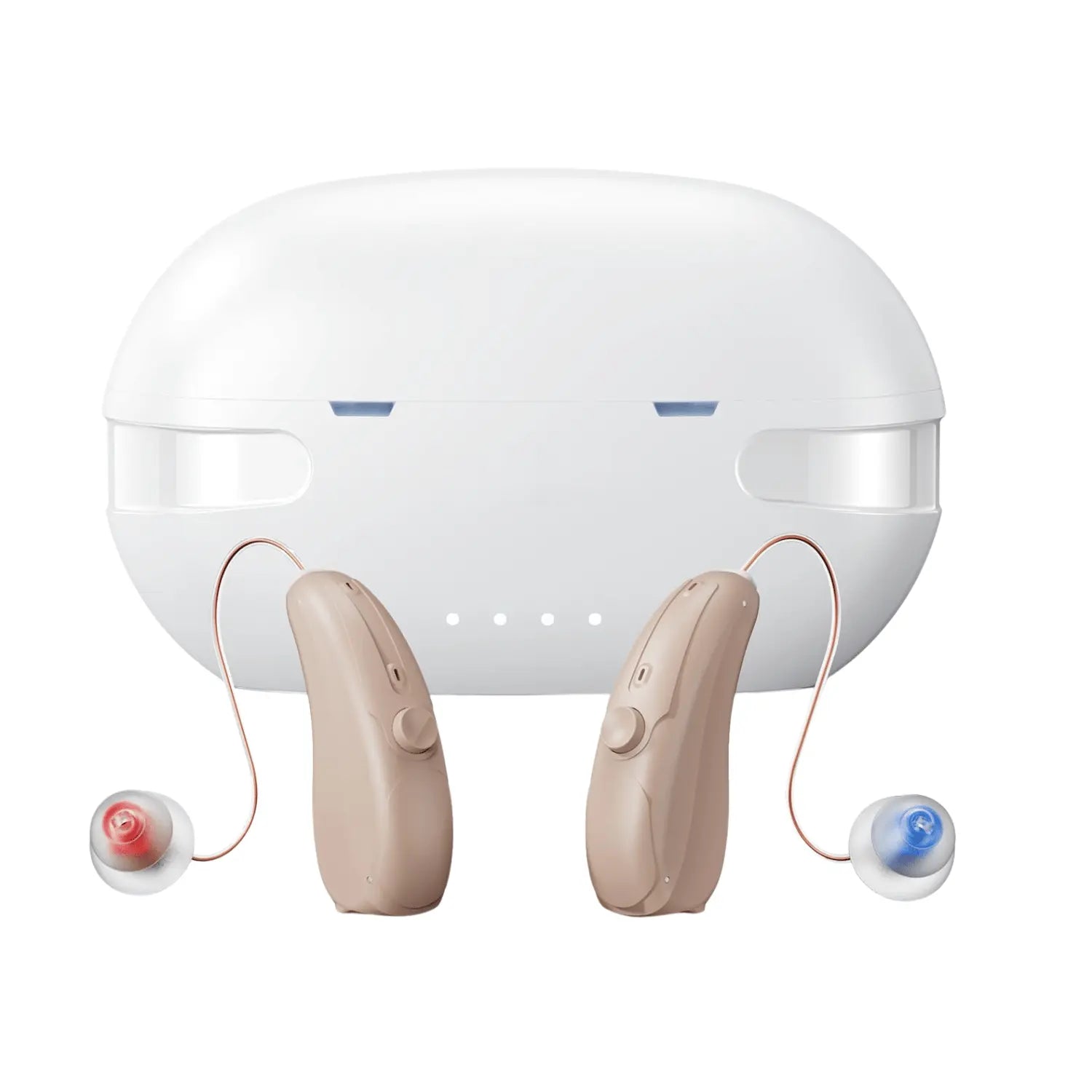
The Panda Quantum is one device built along those lines. Like the Panda Air, it includes the Panda app-based in-ear hearing test: after the device arrives, the wearer pairs it with the app, the app runs a frequency-specific hearing test through the hearing aid itself, and it then programs the device to match the resulting audiogram, much as an audiologist would at a clinical fitting. That self-hearing test approach lets someone begin properly fitted amplification without first scheduling a clinic appointment, which is the kind of early start this review highlights.
On the hardware side, the Quantum is a 16-channel receiver-in-canal device with active noise reduction aimed at clearer speech in noisy environments like restaurants and family gatherings, the very settings where people with untreated hearing loss tend to disengage. It adds Bluetooth for phone calls, television, and music, up to 80 hours of total battery life with its case, a 5-year warranty, and a 45-day return window. Over-the-counter devices like this are intended for adults with mild to moderate hearing loss; those with severe or profound loss still benefit most from a clinical fitting.

Limitations of This Research
Because this is a narrative review rather than a systematic review or meta-analysis, it summarizes and interprets the literature rather than statistically combining it, which leaves more room for the authors' judgment in what to emphasize. The authors themselves caution that the evidence linking these conditions to cognitive decline is mixed and that the direction of cause and effect is not established, so it remains possible that early cognitive changes contribute to some of the associations rather than the other way around. The estimate of how much benefit early treatment provides is also uncertain. The abstract does not report funding or conflicts of interest, and several authors work in sleep and ear, nose, and throat fields, context worth keeping in mind.
Where This Leaves Us
The review does not prove that treating hearing loss prevents dementia, and it is careful not to claim as much. What it does is strengthen the case that hearing is worth taking seriously as part of long-term brain health, and that the time to act is sooner rather than later. For anyone who has noticed their hearing slipping, a simple hearing check is a low-cost first step, and this body of research suggests it may be one worth taking before the conversations get harder to follow.
Tomaselli A, Luca A, Lentini M, Lechien JR, Mollame F, Caranti A, Vicini C, Lazzeroni M, Capaccio P, Iannella G, Favier V, Maniaci A. A Global Burden Perspective on Obstructive Sleep Apnea, Hearing Loss, and Early-Onset Cognitive Decline. Neurology International. 2026. Retrieved from PubMed. DOI 10.3390/neurolint18060117