A pilot randomized controlled trial found that a home-based program pairing listening exercises with brain games improved attention and eased the emotional strain of hearing difficulty in older adults with age-related hearing loss.
Age-related hearing loss is one of the most common conditions of later life, and researchers increasingly see it as more than a matter of missed conversations. It has been tied to reduced social engagement, loneliness, faster cognitive decline, and a higher risk of dementia, which has pushed scientists to look for ways to support hearing and thinking at the same time.
A research team based largely at The Hong Kong Polytechnic University, working with collaborators in the United States and the Philippines, tested whether a culturally adapted, web-based training program could deliver that kind of combined benefit to older adults at home. They published the results in JMIR Aging.
Study: Web-Based Gamified Auditory-Cognitive Dual-Task Training for Older Adults With Age-Related Hearing Loss: Pilot Randomized Controlled Trial
Authors: Ivy Yan Zhao, Angela Yee Man Leung, Chen Li, Laurence Lloyd Parial, Hongming Ma, Jed Montayre, Justin S. Golub, Robert Sweetow, Janet Ho-Yee Ng, Engle Angela Chan
Affiliations: The Hong Kong Polytechnic University (Hong Kong); University of the Philippines Manila; Columbia University Irving Medical Center (USA); and the University of California, San Francisco (USA)
Journal and date: JMIR Aging, published June 16, 2026
Study type: Single-blinded pilot randomized controlled trial (60 participants)
Source: PubMed, DOI 10.2196/84083
Background: Why the Researchers Looked at This
Age-related hearing loss, known clinically as presbycusis, is the gradual decline in hearing that comes with aging, usually starting with the higher pitches that carry much of the clarity in speech. Beyond the obvious difficulty following conversation, it forces the brain to work harder to make sense of degraded sound, and researchers believe that extra strain, combined with the social withdrawal that often follows, helps explain the links between hearing loss, cognitive decline, and dementia.
That has prompted interest in interventions that train hearing and thinking together rather than separately. The approach tested here is called auditory-cognitive dual-task training, in which a person practices a listening task and a thinking task at the same time, the way real life constantly asks people to do. The researchers built theirs as a gamified program, meaning it uses game-like activities to keep older users engaged, and delivered it over the web so it could be done at home.
The team also noted a practical gap: few auditory or cognitive training programs exist in Chinese languages, which leaves many older adults facing linguistic and cultural barriers to this kind of help. Their program was designed specifically to close that gap.
How the Study Was Done
The researchers enrolled 60 community-dwelling older adults with mild to moderate age-related hearing loss and randomly assigned them, in equal numbers, to either the training program or a waitlist control group that did not receive it during the study. The design was single-blinded, and the participants averaged about 68 years of age, with men making up roughly three-quarters of the group.
Outcomes were measured at the start, at 6 weeks, and at 12 weeks, covering attention, global thinking ability on a Hong Kong version of the Montreal Cognitive Assessment, memory on an auditory verbal learning test, the emotional and social burden of hearing difficulty, hearing thresholds, and social engagement. After the program ended, the team also interviewed participants to understand how the training felt to use, blending hard numbers with personal experience.
What the Researchers Found
The program proved both feasible and well liked, an important result for an at-home tool aimed at older users who are not always comfortable with technology. Beyond that, the training group showed measurable gains the control group did not.
Attention improved significantly in the people who trained. Focused attention showed a meaningful change (P=.02, with a moderate effect size of about 0.46), and divided attention, the ability to track more than one thing at once, improved more strongly still (P=.002, effect size about 0.63). On the cognitive assessment, the training group made significant gains in naming and visual cognition, while the control group showed no significant improvement on those measures.
Both groups reported a drop in the emotional burden of their hearing difficulty over the study, with the improvement slightly larger in the training group. Memory testing showed a small to moderate advantage for the trained group on five-minute delayed recall, and the statistical model behind that result accounted for about 69 percent of the variation in scores. The researchers also recorded a significant difference between the groups over time in left-ear hearing thresholds.
The interviews surfaced three consistent themes: participants found the program coherent and felt positively about it, they perceived real benefits to their thinking and self-awareness, and they described it as low-burden while reporting a stronger sense of being able to manage their own hearing and cognitive health.
What It Means for People with Hearing Loss
The study is small and early, but it reinforces a message that has grown louder in hearing research: age-related hearing loss is a whole-person issue, bound up with attention, memory, mood, and social connection, not just with the ears. Approaches that treat it as such, and that people can actually keep up with at home, may offer benefits that reach beyond hearing alone.
Just as important is what made the program work for older adults: it was low-burden, engaging, and delivered at home rather than requiring repeated trips to a clinic. That same principle, meeting older people where they are, applies to the most basic step of all, which is making sure they can hear clearly in the first place.
An At-Home, App-Guided Way to Address the Hearing Loss Underneath
A training program like this assumes a person can hear the sounds it presents. For many older adults, the first step toward staying mentally and socially engaged is simply amplifying what they have been missing, and the study's reminder that emotional hearing burden weighs on this group makes that step urgent. Yet the cost, travel, and scheduling of traditional clinic fittings are exactly the barriers that keep at-risk older adults from acting.
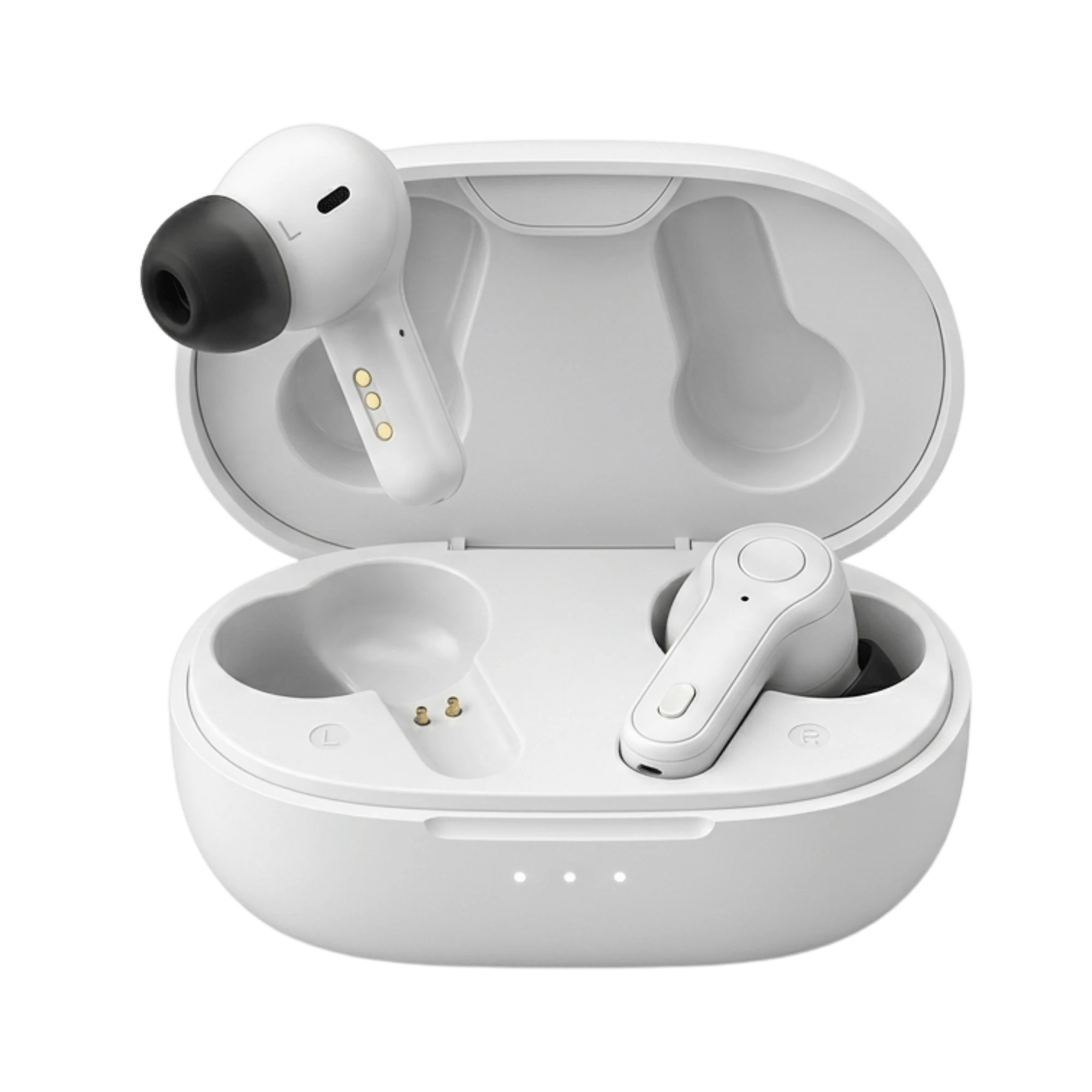
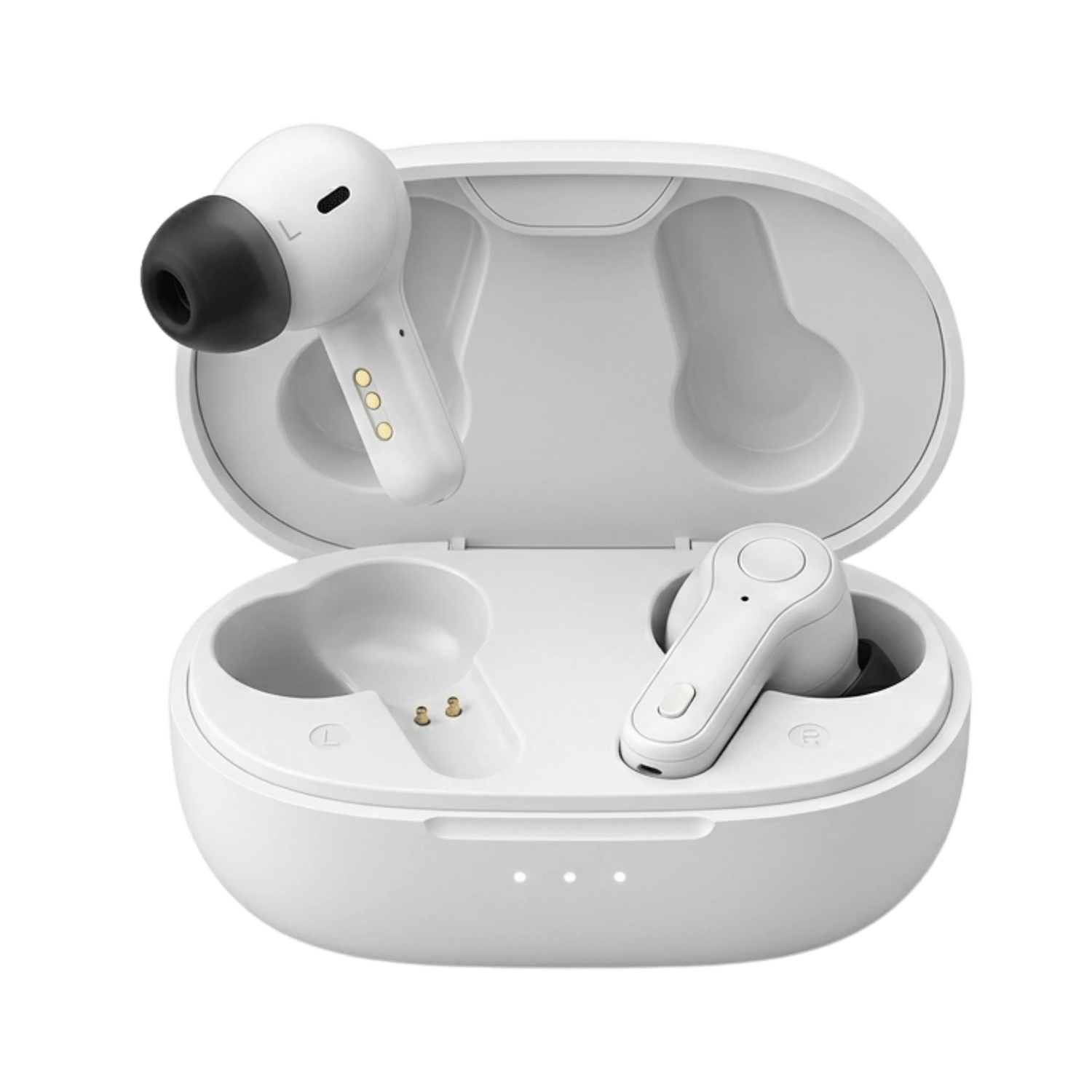
The Panda Air is built around the same at-home, low-effort logic the study found worked for older users. It is an earbud-style device, and like other app-tuned hearing aids it sets itself up through a phone: after delivery, the user pairs the Air with the Panda app, which runs a frequency-specific hearing test through the device and then automatically programs its gain and frequency response to match that personal hearing profile, similar to what an audiologist does at a clinical fitting. For an older adult wary of a clinic visit, that makes it one of the more approachable self-fitting OTC hearing aids to start with.
Practical details matter for daily use too. The Air uses 16-channel processing with multi-band adaptive noise reduction, and as one of the rechargeable hearing aids with a charging case (a 60-hour fast-charge case, in this instance), it spares users the fiddly disposable batteries that frustrate many older wearers. It is backed by a 5-year warranty and a 45-day return window. One caveat holds here as well: OTC devices are intended for mild to moderate hearing loss, and anyone with severe or profound loss is still best served by a professional clinical fitting.
Limitations of This Research
This was a pilot study, and its limits are real. With only 60 participants drawn from a single setting, a group that was about three-quarters male, and a comparison against a waitlist rather than an active alternative, the findings should be treated as preliminary signals rather than firm proof. The follow-up ran just 12 weeks, so the durability of the gains is unknown, and the program was tailored for Chinese-language older adults, which means the results may not transfer directly to other populations.
The authors themselves call for larger randomized trials with more diverse participants and active control conditions to confirm whether the benefits hold up and translate into real-world functioning. They also point to future versions adding more personalized tuning. Funding sources and competing interests were not detailed in the study abstract.
What to Do With This
The most useful way to read this study is as one more piece of evidence that hearing and brain health travel together in later life, and that accessible, at-home approaches can help older adults engage with both. The training itself is still experimental, but the underlying lesson is not: addressing age-related hearing loss early, and keeping the path to doing so as low-friction as possible, gives older adults a better chance of staying sharp and connected.
Zhao IY, Leung AYM, Li C, Lloyd Parial L, Ma H, Montayre J, Golub JS, Sweetow R, Ng JH, Chan EA. Web-Based Gamified Auditory-Cognitive Dual-Task Training for Older Adults With Age-Related Hearing Loss: Pilot Randomized Controlled Trial. JMIR Aging. 2026. Retrieved from PubMed. DOI 10.2196/84083