Preventing Hearing Loss From Chemotherapy: New Review Surveys Local Drug Options Beyond Sodium Thiosulfate
An international team reviewed 78 preclinical and clinical studies and concluded that no locally applied otoprotective drug currently offers a reliable replacement for the systemic FDA-approved standard in children treated with cisplatin.
Cisplatin is one of the most effective chemotherapy drugs in modern oncology, used to treat solid tumors in both children and adults. It also has a well known and unwelcome side effect: it damages the inner ear and frequently causes permanent, progressive hearing loss. The damage starts in the high frequencies, the range that carries consonants like "s," "f," and "th," and can interfere with classroom learning, speech understanding, and quality of life long after treatment ends.
Sodium thiosulfate, often abbreviated STS, was recently approved by the FDA as a systemic protective drug for children receiving cisplatin. Giving STS through the bloodstream works, but it raises practical and biological concerns, including questions about timing, dosing in younger patients, and whether it could blunt cisplatin's anticancer effect in some tumor types. That is why scientists have been investigating locally applied alternatives, drugs delivered straight into the middle or inner ear, that might protect the cochlea without traveling through the rest of the body.
Title: Local application of otoprotective compounds other than sodium thiosulfate to prevent cisplatin-induced hearing loss: a systematic review.
Authors: Amirhossein Masroor, Nienke Streefkerk, Martine Van Grotel, James I. Geller, Marc Ansari, Eric Bouffet, Archie Bleyer, Brice Fresneau, Michael Sullivan, Kristin Knight, Per Kogner, Rudolf Maibach, Allison F. O'Neill, Vassilios Papadakis, Kaukab M. Rajput, Penelope R. Brock, Gareth J. Veal, Alexander E. Hoetink, Alwin D. R. Huitema, Marry M. van den Heuvel-Eibrink.
Affiliations: Princess Maxima Center for Pediatric Oncology (Utrecht, Netherlands); Rady Children's Hospital (San Diego); University of California San Diego; University of Geneva and University Geneva Hospitals; The Hospital for Sick Children, University of Toronto; Knight Cancer Institute, Oregon Health and Science University; Gustave Roussy and University Paris Saclay; Royal Children's Hospital Melbourne; Karolinska University Hospital and Karolinska Institutet; ETOP IBCSG Partners Foundation (Bern); Dana-Farber/Boston Children's Cancer and Blood Disorders Center; Agia Sofia Children's Hospital (Athens); Great Ormond Street Hospital for Children NHS Foundation Trust (London); Newcastle University Centre for Cancer; University Medical Center Utrecht; Netherlands Cancer Institute, Antoni van Leeuwenhoek Hospital (Amsterdam).
Journal: Drug Delivery, May 2026, volume 33, issue 1, article 2665892.
Study type: Systematic review.
PubMed DOI: 10.1080/10717544.2026.2665892
Background: Why the Researchers Looked at This
Cisplatin damages the inner ear by attacking the sensory hair cells in the cochlea, the snail-shaped organ that converts sound vibrations into nerve signals. Hair cells do not regenerate in humans, so the loss is permanent. Researchers call this side effect ototoxicity, and in the case of cisplatin it is dose-related, cumulative, and especially common in children.
Systemic sodium thiosulfate has changed the landscape because it is the first agent with a clear regulatory approval for reducing cisplatin ototoxicity in pediatric patients. Even so, the authors note real world implementation challenges with systemic STS, and the evidence base for delivering STS locally to the ear, rather than through the whole body, is limited. That gap motivates the search for local otoprotective options that could be administered close to the site of injury, ideally with fewer systemic effects.
Local delivery to the ear typically means an intratympanic injection (a small injection through the eardrum into the middle ear), or a sustained-release vehicle placed into the middle ear so the drug diffuses across the round window into the cochlea. The advantage is high local concentration with low systemic exposure. The challenge is consistent dosing, predictable absorption, and avoiding interference with the cancer treatment itself.
How the Study Was Done
The authors performed a systematic review, meaning they searched the published literature using a defined protocol and inclusion criteria, then summarized everything that met those criteria. They focused on otoprotective agents other than STS that had been delivered locally rather than systemically.
In total they identified 78 studies: 70 preclinical (animal or cell-based) and 8 clinical (in human patients). They grouped the candidate compounds by their underlying biology, including anti-inflammatory drugs, chemical deactivators that intercept cisplatin's reactive byproducts, calcium channel blockers, biological agents such as growth factors, and a miscellaneous category for everything else. They also looked at the delivery vehicle and the route of administration.
Importantly, the review tried to translate findings toward future use in children, since pediatric oncology is where cisplatin ototoxicity is most disabling and most studied.
What the Researchers Found
Across the 70 preclinical studies, 45 distinct compounds had been tested as local otoprotective agents. Most of these never advanced beyond animal or cell models. Two compounds did make it into human trials: dexamethasone, a corticosteroid commonly used for inflammation, and N-acetylcysteine, an antioxidant familiar from acetaminophen overdose treatment.
Dexamethasone was studied in three randomized clinical trials and three non-randomized clinical studies. According to the review, the drug produced a statistically significant benefit in two of the trials, but the size of the effect was not large enough to be considered clinically meaningful. In other words, the numbers moved, but not by a margin a clinician could rely on to protect a child's hearing.
N-acetylcysteine had even thinner evidence behind it. It had been investigated in two clinical trials plus one randomized controlled trial, and the review reports that it was minimally effective in the randomized trial and in one of the other studies. None of the local agents reviewed produced results that would justify replacing systemic STS as the standard of care.
The authors also flagged how much we still do not know about the pharmacology of locally delivered drugs in the cochlea: the right dose, the best vehicle, and the right timing relative to a cisplatin infusion remain open questions across nearly every compound studied.
What It Means for People with Hearing Loss
For children currently receiving cisplatin, this review reinforces that systemic sodium thiosulfate, when it is appropriate for the cancer being treated, is the only otoprotective agent with strong enough evidence to be used in routine care today. Local drugs delivered directly into the ear remain experimental.
For adults who received cisplatin in the past, often as part of treatment for testicular, ovarian, lung, bladder, or head and neck cancer, the practical implication is different. Many of those survivors live with permanent high-frequency hearing loss that started during chemotherapy and may have worsened with age. That kind of hearing loss often goes underdiagnosed because it does not affect volume so much as clarity, especially around consonants and in noise.
A baseline audiogram, then periodic monitoring, is the simplest way for cisplatin survivors to track their hearing over time. If the loss is interfering with conversation, work, or family life, a properly fitted hearing aid is the most evidence-supported intervention.
When Prevention Falls Short: Modern Hearing Aids for Treatment-Related High-Frequency Loss
Cisplatin-related hearing loss in adult survivors is usually a sloping high-frequency sensorineural pattern, sometimes accompanied by tinnitus. The amplification challenge is to restore clarity in the high frequencies (so consonants become audible again) without making low-frequency speech and ambient noise feel boomy. Modern receiver-in-canal hearing aids handle that well, especially when paired with multi-channel noise reduction and Bluetooth streaming for phone calls and TV.
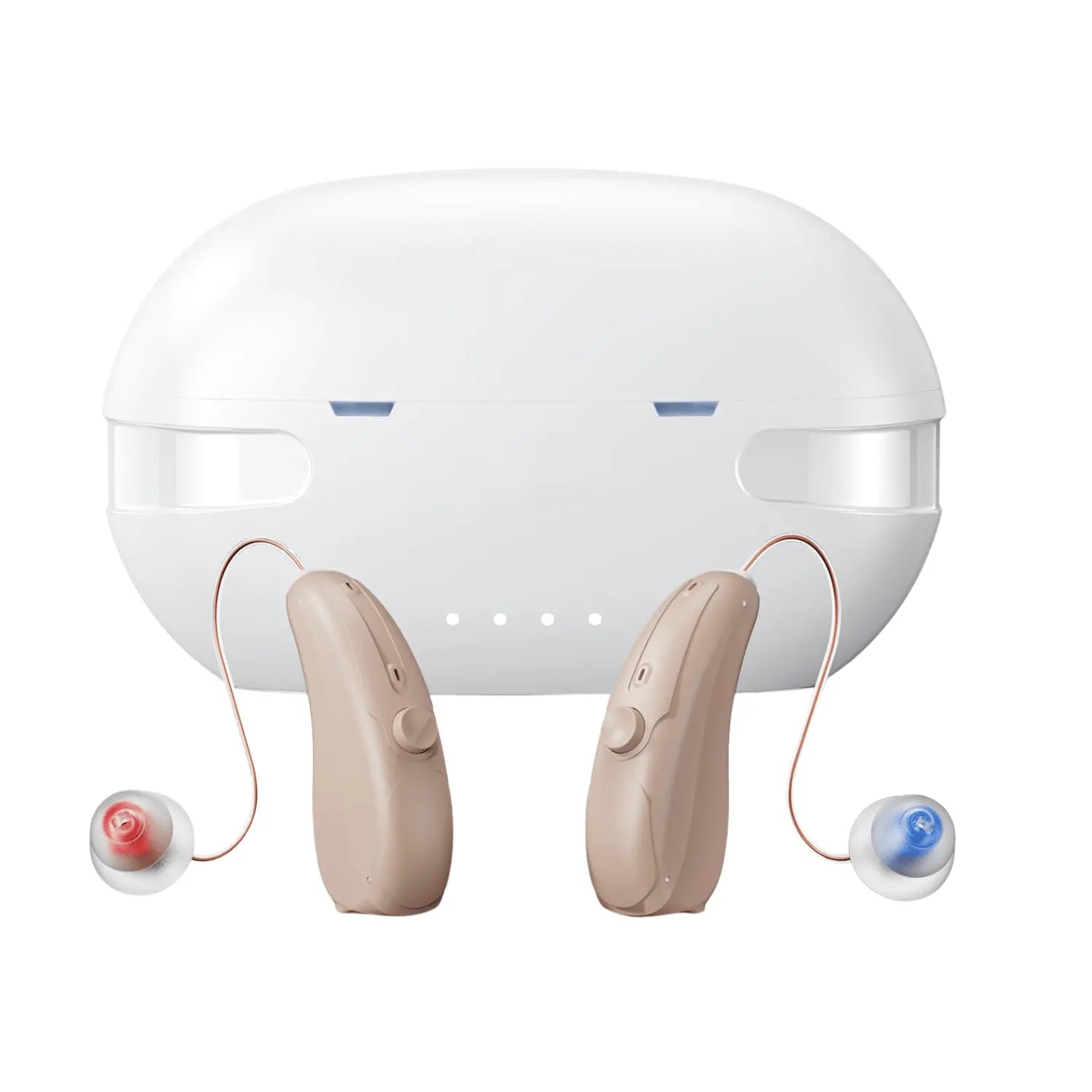
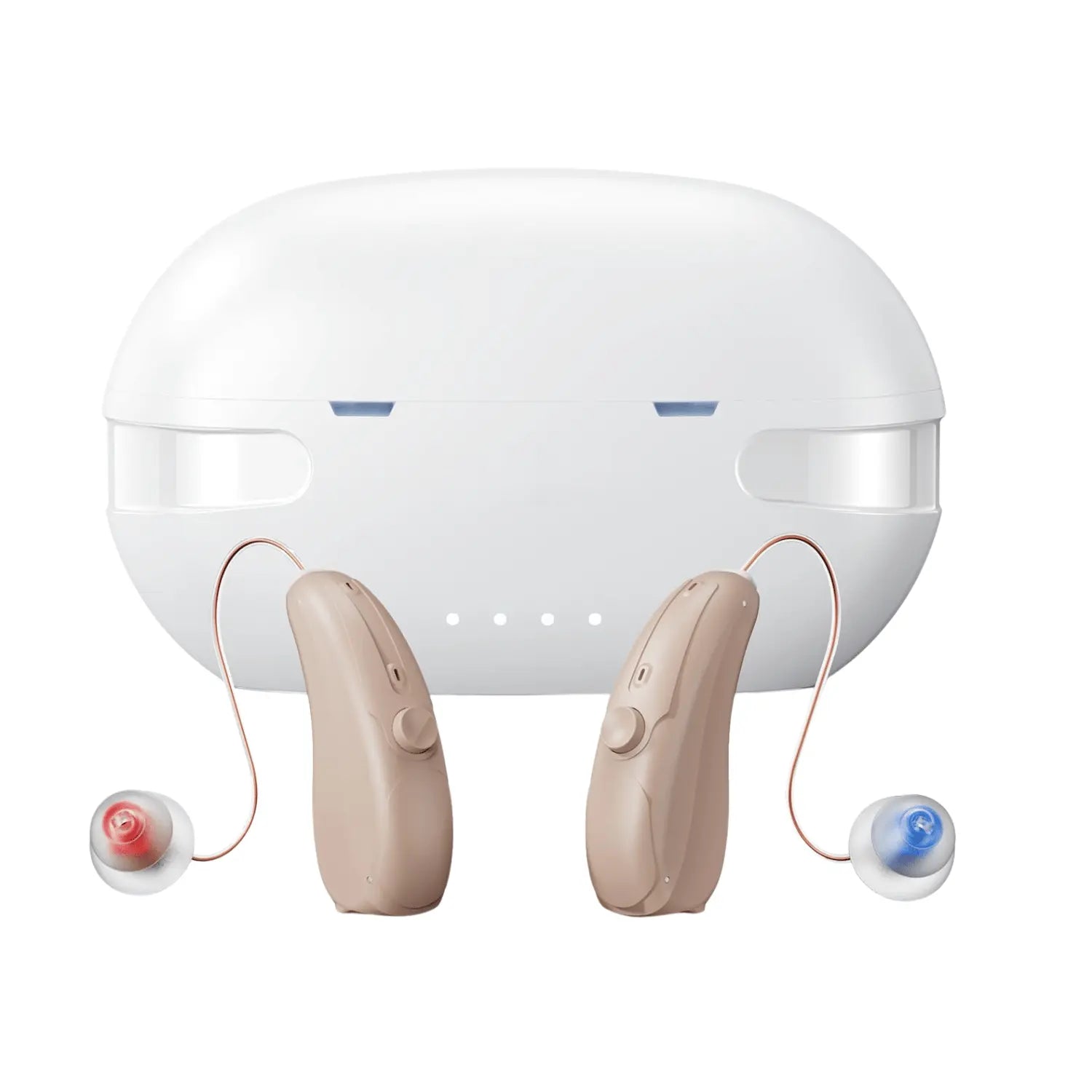
Panda Quantum is an example of an OTC option built around that adult use case. It is a 16-channel receiver-in-canal device with active noise reduction, up to 80 hours of total battery life with the charging case, and Bluetooth for calls, TV, and music. After delivery, you pair Panda Quantum with the Panda app, run an in-ear hearing test through the device itself, and the app automatically programs the gain and frequency response of the hearing aids to match your audiogram, similar to what an audiologist does at a clinical fitting. The device comes with a 5-year warranty and a 45-day return window. More on Panda Quantum.

A practical caveat: OTC hearing aids in the United States are approved for adults with perceived mild to moderate hearing loss. Cisplatin survivors with severe or profound loss, or with sudden recent changes in hearing, still benefit most from a clinical evaluation and a fitting performed by a licensed audiologist.
Limitations of This Research
A systematic review is only as strong as the studies it pools. The authors note that most of the included evidence is preclinical, and the human trials varied in design, dose, delivery vehicle, and outcome measurement. That heterogeneity makes it difficult to compare effect sizes across compounds, and it makes pediatric extrapolation harder still since some of the human data come from adult populations.
The review also highlights uncertainty about pharmacokinetics in the cochlea: how much drug actually reaches the hair cells after a middle-ear injection, how long it stays there, and how that exposure compares with what is needed for protection. Until those questions are answered with consistent clinical methodology, comparisons between local agents will remain tentative.
Where This Leaves Us
Systemic sodium thiosulfate is, for now, the best supported pharmacologic option for preventing cisplatin-induced hearing loss in children, and locally delivered alternatives are not ready to replace it. For survivors already living with treatment-related hearing loss, the next step is not another preventive drug but careful audiologic follow-up and, when appropriate, well-fitted amplification that restores clarity in the high frequencies where most of the damage tends to sit.
Masroor A, Streefkerk N, Van Grotel M, Geller JI, Ansari M, Bouffet E, Bleyer A, Fresneau B, Sullivan M, Knight K, Kogner P, Maibach R, O'Neill AF, Papadakis V, Rajput KM, Brock PR, Veal GJ, Hoetink AE, Huitema ADR, van den Heuvel-Eibrink MM. Local application of otoprotective compounds other than sodium thiosulfate to prevent cisplatin-induced hearing loss: a systematic review. Drug Delivery. 2026;33(1):2665892. Retrieved from PubMed. https://doi.org/10.1080/10717544.2026.2665892
Preventing Hearing Loss From Chemotherapy: New Review Surveys Local Drug Options Beyond Sodium Thiosulfate
An international team reviewed 78 preclinical and clinical studies and concluded that no locally applied otoprotective drug currently offers a reliable replacement for the systemic FDA-approved standard in children treated with cisplatin.
Cisplatin is one of the most effective chemotherapy drugs in modern oncology, used to treat solid tumors in both children and adults. It also has a well known and unwelcome side effect: it damages the inner ear and frequently causes permanent, progressive hearing loss. The damage starts in the high frequencies, the range that carries consonants like "s," "f," and "th," and can interfere with classroom learning, speech understanding, and quality of life long after treatment ends.
Sodium thiosulfate, often abbreviated STS, was recently approved by the FDA as a systemic protective drug for children receiving cisplatin. Giving STS through the bloodstream works, but it raises practical and biological concerns, including questions about timing, dosing in younger patients, and whether it could blunt cisplatin's anticancer effect in some tumor types. That is why scientists have been investigating locally applied alternatives, drugs delivered straight into the middle or inner ear, that might protect the cochlea without traveling through the rest of the body.
Title: Local application of otoprotective compounds other than sodium thiosulfate to prevent cisplatin-induced hearing loss: a systematic review.
Authors: Amirhossein Masroor, Nienke Streefkerk, Martine Van Grotel, James I. Geller, Marc Ansari, Eric Bouffet, Archie Bleyer, Brice Fresneau, Michael Sullivan, Kristin Knight, Per Kogner, Rudolf Maibach, Allison F. O'Neill, Vassilios Papadakis, Kaukab M. Rajput, Penelope R. Brock, Gareth J. Veal, Alexander E. Hoetink, Alwin D. R. Huitema, Marry M. van den Heuvel-Eibrink.
Affiliations: Princess Maxima Center for Pediatric Oncology (Utrecht, Netherlands); Rady Children's Hospital (San Diego); University of California San Diego; University of Geneva and University Geneva Hospitals; The Hospital for Sick Children, University of Toronto; Knight Cancer Institute, Oregon Health and Science University; Gustave Roussy and University Paris Saclay; Royal Children's Hospital Melbourne; Karolinska University Hospital and Karolinska Institutet; ETOP IBCSG Partners Foundation (Bern); Dana-Farber/Boston Children's Cancer and Blood Disorders Center; Agia Sofia Children's Hospital (Athens); Great Ormond Street Hospital for Children NHS Foundation Trust (London); Newcastle University Centre for Cancer; University Medical Center Utrecht; Netherlands Cancer Institute, Antoni van Leeuwenhoek Hospital (Amsterdam).
Journal: Drug Delivery, May 2026, volume 33, issue 1, article 2665892.
Study type: Systematic review.
PubMed DOI: 10.1080/10717544.2026.2665892
Background: Why the Researchers Looked at This
Cisplatin damages the inner ear by attacking the sensory hair cells in the cochlea, the snail-shaped organ that converts sound vibrations into nerve signals. Hair cells do not regenerate in humans, so the loss is permanent. Researchers call this side effect ototoxicity, and in the case of cisplatin it is dose-related, cumulative, and especially common in children.
Systemic sodium thiosulfate has changed the landscape because it is the first agent with a clear regulatory approval for reducing cisplatin ototoxicity in pediatric patients. Even so, the authors note real world implementation challenges with systemic STS, and the evidence base for delivering STS locally to the ear, rather than through the whole body, is limited. That gap motivates the search for local otoprotective options that could be administered close to the site of injury, ideally with fewer systemic effects.
Local delivery to the ear typically means an intratympanic injection (a small injection through the eardrum into the middle ear), or a sustained-release vehicle placed into the middle ear so the drug diffuses across the round window into the cochlea. The advantage is high local concentration with low systemic exposure. The challenge is consistent dosing, predictable absorption, and avoiding interference with the cancer treatment itself.
How the Study Was Done
The authors performed a systematic review, meaning they searched the published literature using a defined protocol and inclusion criteria, then summarized everything that met those criteria. They focused on otoprotective agents other than STS that had been delivered locally rather than systemically.
In total they identified 78 studies: 70 preclinical (animal or cell-based) and 8 clinical (in human patients). They grouped the candidate compounds by their underlying biology, including anti-inflammatory drugs, chemical deactivators that intercept cisplatin's reactive byproducts, calcium channel blockers, biological agents such as growth factors, and a miscellaneous category for everything else. They also looked at the delivery vehicle and the route of administration.
Importantly, the review tried to translate findings toward future use in children, since pediatric oncology is where cisplatin ototoxicity is most disabling and most studied.
What the Researchers Found
Across the 70 preclinical studies, 45 distinct compounds had been tested as local otoprotective agents. Most of these never advanced beyond animal or cell models. Two compounds did make it into human trials: dexamethasone, a corticosteroid commonly used for inflammation, and N-acetylcysteine, an antioxidant familiar from acetaminophen overdose treatment.
Dexamethasone was studied in three randomized clinical trials and three non-randomized clinical studies. According to the review, the drug produced a statistically significant benefit in two of the trials, but the size of the effect was not large enough to be considered clinically meaningful. In other words, the numbers moved, but not by a margin a clinician could rely on to protect a child's hearing.
N-acetylcysteine had even thinner evidence behind it. It had been investigated in two clinical trials plus one randomized controlled trial, and the review reports that it was minimally effective in the randomized trial and in one of the other studies. None of the local agents reviewed produced results that would justify replacing systemic STS as the standard of care.
The authors also flagged how much we still do not know about the pharmacology of locally delivered drugs in the cochlea: the right dose, the best vehicle, and the right timing relative to a cisplatin infusion remain open questions across nearly every compound studied.
What It Means for People with Hearing Loss
For children currently receiving cisplatin, this review reinforces that systemic sodium thiosulfate, when it is appropriate for the cancer being treated, is the only otoprotective agent with strong enough evidence to be used in routine care today. Local drugs delivered directly into the ear remain experimental.
For adults who received cisplatin in the past, often as part of treatment for testicular, ovarian, lung, bladder, or head and neck cancer, the practical implication is different. Many of those survivors live with permanent high-frequency hearing loss that started during chemotherapy and may have worsened with age. That kind of hearing loss often goes underdiagnosed because it does not affect volume so much as clarity, especially around consonants and in noise.
A baseline audiogram, then periodic monitoring, is the simplest way for cisplatin survivors to track their hearing over time. If the loss is interfering with conversation, work, or family life, a properly fitted hearing aid is the most evidence-supported intervention.
When Prevention Falls Short: Modern Hearing Aids for Treatment-Related High-Frequency Loss
Cisplatin-related hearing loss in adult survivors is usually a sloping high-frequency sensorineural pattern, sometimes accompanied by tinnitus. The amplification challenge is to restore clarity in the high frequencies (so consonants become audible again) without making low-frequency speech and ambient noise feel boomy. Modern receiver-in-canal hearing aids handle that well, especially when paired with multi-channel noise reduction and Bluetooth streaming for phone calls and TV.
Panda Quantum is an example of an OTC option built around that adult use case. It is a 16-channel receiver-in-canal device with active noise reduction, up to 80 hours of total battery life with the charging case, and Bluetooth for calls, TV, and music. After delivery, you pair Panda Quantum with the Panda app, run an in-ear hearing test through the device itself, and the app automatically programs the gain and frequency response of the hearing aids to match your audiogram, similar to what an audiologist does at a clinical fitting. The device comes with a 5-year warranty and a 45-day return window. More on Panda Quantum.
A practical caveat: OTC hearing aids in the United States are approved for adults with perceived mild to moderate hearing loss. Cisplatin survivors with severe or profound loss, or with sudden recent changes in hearing, still benefit most from a clinical evaluation and a fitting performed by a licensed audiologist.
Limitations of This Research
A systematic review is only as strong as the studies it pools. The authors note that most of the included evidence is preclinical, and the human trials varied in design, dose, delivery vehicle, and outcome measurement. That heterogeneity makes it difficult to compare effect sizes across compounds, and it makes pediatric extrapolation harder still since some of the human data come from adult populations.
The review also highlights uncertainty about pharmacokinetics in the cochlea: how much drug actually reaches the hair cells after a middle-ear injection, how long it stays there, and how that exposure compares with what is needed for protection. Until those questions are answered with consistent clinical methodology, comparisons between local agents will remain tentative.
Where This Leaves Us
Systemic sodium thiosulfate is, for now, the best supported pharmacologic option for preventing cisplatin-induced hearing loss in children, and locally delivered alternatives are not ready to replace it. For survivors already living with treatment-related hearing loss, the next step is not another preventive drug but careful audiologic follow-up and, when appropriate, well-fitted amplification that restores clarity in the high frequencies where most of the damage tends to sit.
Masroor A, Streefkerk N, Van Grotel M, Geller JI, Ansari M, Bouffet E, Bleyer A, Fresneau B, Sullivan M, Knight K, Kogner P, Maibach R, O'Neill AF, Papadakis V, Rajput KM, Brock PR, Veal GJ, Hoetink AE, Huitema ADR, van den Heuvel-Eibrink MM. Local application of otoprotective compounds other than sodium thiosulfate to prevent cisplatin-induced hearing loss: a systematic review. Drug Delivery. 2026;33(1):2665892. Retrieved from PubMed. https://doi.org/10.1080/10717544.2026.2665892
Preventing Hearing Loss From Chemotherapy: New Review Surveys Local Drug Options Beyond Sodium Thiosulfate
An international team reviewed 78 preclinical and clinical studies and concluded that no locally applied otoprotective drug currently offers a reliable replacement for the systemic FDA-approved standard in children treated with cisplatin.
Cisplatin is one of the most effective chemotherapy drugs in modern oncology, used to treat solid tumors in both children and adults. It also has a well known and unwelcome side effect: it damages the inner ear and frequently causes permanent, progressive hearing loss. The damage starts in the high frequencies, the range that carries consonants like "s," "f," and "th," and can interfere with classroom learning, speech understanding, and quality of life long after treatment ends.
Sodium thiosulfate, often abbreviated STS, was recently approved by the FDA as a systemic protective drug for children receiving cisplatin. Giving STS through the bloodstream works, but it raises practical and biological concerns, including questions about timing, dosing in younger patients, and whether it could blunt cisplatin's anticancer effect in some tumor types. That is why scientists have been investigating locally applied alternatives, drugs delivered straight into the middle or inner ear, that might protect the cochlea without traveling through the rest of the body.
Title: Local application of otoprotective compounds other than sodium thiosulfate to prevent cisplatin-induced hearing loss: a systematic review.
Authors: Amirhossein Masroor, Nienke Streefkerk, Martine Van Grotel, James I. Geller, Marc Ansari, Eric Bouffet, Archie Bleyer, Brice Fresneau, Michael Sullivan, Kristin Knight, Per Kogner, Rudolf Maibach, Allison F. O'Neill, Vassilios Papadakis, Kaukab M. Rajput, Penelope R. Brock, Gareth J. Veal, Alexander E. Hoetink, Alwin D. R. Huitema, Marry M. van den Heuvel-Eibrink.
Affiliations: Princess Maxima Center for Pediatric Oncology (Utrecht, Netherlands); Rady Children's Hospital (San Diego); University of California San Diego; University of Geneva and University Geneva Hospitals; The Hospital for Sick Children, University of Toronto; Knight Cancer Institute, Oregon Health and Science University; Gustave Roussy and University Paris Saclay; Royal Children's Hospital Melbourne; Karolinska University Hospital and Karolinska Institutet; ETOP IBCSG Partners Foundation (Bern); Dana-Farber/Boston Children's Cancer and Blood Disorders Center; Agia Sofia Children's Hospital (Athens); Great Ormond Street Hospital for Children NHS Foundation Trust (London); Newcastle University Centre for Cancer; University Medical Center Utrecht; Netherlands Cancer Institute, Antoni van Leeuwenhoek Hospital (Amsterdam).
Journal: Drug Delivery, May 2026, volume 33, issue 1, article 2665892.
Study type: Systematic review.
PubMed DOI: 10.1080/10717544.2026.2665892
Background: Why the Researchers Looked at This
Cisplatin damages the inner ear by attacking the sensory hair cells in the cochlea, the snail-shaped organ that converts sound vibrations into nerve signals. Hair cells do not regenerate in humans, so the loss is permanent. Researchers call this side effect ototoxicity, and in the case of cisplatin it is dose-related, cumulative, and especially common in children.
Systemic sodium thiosulfate has changed the landscape because it is the first agent with a clear regulatory approval for reducing cisplatin ototoxicity in pediatric patients. Even so, the authors note real world implementation challenges with systemic STS, and the evidence base for delivering STS locally to the ear, rather than through the whole body, is limited. That gap motivates the search for local otoprotective options that could be administered close to the site of injury, ideally with fewer systemic effects.
Local delivery to the ear typically means an intratympanic injection (a small injection through the eardrum into the middle ear), or a sustained-release vehicle placed into the middle ear so the drug diffuses across the round window into the cochlea. The advantage is high local concentration with low systemic exposure. The challenge is consistent dosing, predictable absorption, and avoiding interference with the cancer treatment itself.
How the Study Was Done
The authors performed a systematic review, meaning they searched the published literature using a defined protocol and inclusion criteria, then summarized everything that met those criteria. They focused on otoprotective agents other than STS that had been delivered locally rather than systemically.
In total they identified 78 studies: 70 preclinical (animal or cell-based) and 8 clinical (in human patients). They grouped the candidate compounds by their underlying biology, including anti-inflammatory drugs, chemical deactivators that intercept cisplatin's reactive byproducts, calcium channel blockers, biological agents such as growth factors, and a miscellaneous category for everything else. They also looked at the delivery vehicle and the route of administration.
Importantly, the review tried to translate findings toward future use in children, since pediatric oncology is where cisplatin ototoxicity is most disabling and most studied.
What the Researchers Found
Across the 70 preclinical studies, 45 distinct compounds had been tested as local otoprotective agents. Most of these never advanced beyond animal or cell models. Two compounds did make it into human trials: dexamethasone, a corticosteroid commonly used for inflammation, and N-acetylcysteine, an antioxidant familiar from acetaminophen overdose treatment.
Dexamethasone was studied in three randomized clinical trials and three non-randomized clinical studies. According to the review, the drug produced a statistically significant benefit in two of the trials, but the size of the effect was not large enough to be considered clinically meaningful. In other words, the numbers moved, but not by a margin a clinician could rely on to protect a child's hearing.
N-acetylcysteine had even thinner evidence behind it. It had been investigated in two clinical trials plus one randomized controlled trial, and the review reports that it was minimally effective in the randomized trial and in one of the other studies. None of the local agents reviewed produced results that would justify replacing systemic STS as the standard of care.
The authors also flagged how much we still do not know about the pharmacology of locally delivered drugs in the cochlea: the right dose, the best vehicle, and the right timing relative to a cisplatin infusion remain open questions across nearly every compound studied.
What It Means for People with Hearing Loss
For children currently receiving cisplatin, this review reinforces that systemic sodium thiosulfate, when it is appropriate for the cancer being treated, is the only otoprotective agent with strong enough evidence to be used in routine care today. Local drugs delivered directly into the ear remain experimental.
For adults who received cisplatin in the past, often as part of treatment for testicular, ovarian, lung, bladder, or head and neck cancer, the practical implication is different. Many of those survivors live with permanent high-frequency hearing loss that started during chemotherapy and may have worsened with age. That kind of hearing loss often goes underdiagnosed because it does not affect volume so much as clarity, especially around consonants and in noise.
A baseline audiogram, then periodic monitoring, is the simplest way for cisplatin survivors to track their hearing over time. If the loss is interfering with conversation, work, or family life, a properly fitted hearing aid is the most evidence-supported intervention.
When Prevention Falls Short: Modern Hearing Aids for Treatment-Related High-Frequency Loss
Cisplatin-related hearing loss in adult survivors is usually a sloping high-frequency sensorineural pattern, sometimes accompanied by tinnitus. The amplification challenge is to restore clarity in the high frequencies (so consonants become audible again) without making low-frequency speech and ambient noise feel boomy. Modern receiver-in-canal hearing aids handle that well, especially when paired with multi-channel noise reduction and Bluetooth streaming for phone calls and TV.
Panda Quantum is an example of an OTC option built around that adult use case. It is a 16-channel receiver-in-canal device with active noise reduction, up to 80 hours of total battery life with the charging case, and Bluetooth for calls, TV, and music. After delivery, you pair Panda Quantum with the Panda app, run an in-ear hearing test through the device itself, and the app automatically programs the gain and frequency response of the hearing aids to match your audiogram, similar to what an audiologist does at a clinical fitting. The device comes with a 5-year warranty and a 45-day return window. More on Panda Quantum.
A practical caveat: OTC hearing aids in the United States are approved for adults with perceived mild to moderate hearing loss. Cisplatin survivors with severe or profound loss, or with sudden recent changes in hearing, still benefit most from a clinical evaluation and a fitting performed by a licensed audiologist.
Limitations of This Research
A systematic review is only as strong as the studies it pools. The authors note that most of the included evidence is preclinical, and the human trials varied in design, dose, delivery vehicle, and outcome measurement. That heterogeneity makes it difficult to compare effect sizes across compounds, and it makes pediatric extrapolation harder still since some of the human data come from adult populations.
The review also highlights uncertainty about pharmacokinetics in the cochlea: how much drug actually reaches the hair cells after a middle-ear injection, how long it stays there, and how that exposure compares with what is needed for protection. Until those questions are answered with consistent clinical methodology, comparisons between local agents will remain tentative.
Where This Leaves Us
Systemic sodium thiosulfate is, for now, the best supported pharmacologic option for preventing cisplatin-induced hearing loss in children, and locally delivered alternatives are not ready to replace it. For survivors already living with treatment-related hearing loss, the next step is not another preventive drug but careful audiologic follow-up and, when appropriate, well-fitted amplification that restores clarity in the high frequencies where most of the damage tends to sit.
Masroor A, Streefkerk N, Van Grotel M, Geller JI, Ansari M, Bouffet E, Bleyer A, Fresneau B, Sullivan M, Knight K, Kogner P, Maibach R, O'Neill AF, Papadakis V, Rajput KM, Brock PR, Veal GJ, Hoetink AE, Huitema ADR, van den Heuvel-Eibrink MM. Local application of otoprotective compounds other than sodium thiosulfate to prevent cisplatin-induced hearing loss: a systematic review. Drug Delivery. 2026;33(1):2665892. Retrieved from PubMed. https://doi.org/10.1080/10717544.2026.2665892