A survey of 1,013 American adults over 50 found that 39 percent felt comfortable buying an over-the-counter hearing aid, yet 84 percent still preferred going through a hearing care provider.
When the U.S. Food and Drug Administration created a category for over-the-counter hearing aids in 2022, the expectation was that removing the clinic visit from the purchase would move large numbers of people off the sidelines. Hearing aids became something a person could pick up in a pharmacy or order online, without an audiogram, a prescription, or a fitting appointment.
Four years in, researchers are still working out what actually changed in the minds of the people the policy was written for. A new survey study in the American Journal of Audiology asked more than a thousand older adults who have never worn a hearing aid how they would want to buy one, and the answers complicate the simple story about price and convenience.
About This Study
Title: Understanding Hearing Health Care Choices and Customer Archetypes in an Era of Over-the-Counter Hearing Aids
Authors: Jasleen Singh, Sumitrajit Dhar
Affiliations: Department of Speech, Language, and Hearing Sciences, University of Massachusetts Amherst; The Roxelyn and Richard Pepper Department of Communication Sciences and Disorders, Northwestern University, Evanston, Illinois
Journal and date: American Journal of Audiology, published July 31, 2026
Study type: Cross-sectional survey study with principal components analysis and cluster analysis, 1,013 respondents
PubMed DOI: 10.1044/2026_AJA-26-00032
Background: Why the Researchers Looked at This
Hearing health care in the United States now runs on two parallel tracks. The traditional one is provider-driven: a person sees an audiologist or hearing instrument specialist, gets a hearing test, and is fitted with devices programmed to the results of that test. The newer one is direct-to-consumer, where an adult with self-perceived mild to moderate hearing loss buys an FDA-regulated over-the-counter device and sets it up themselves.
The gap between the two is not only price. It is also the amount of decision-making the buyer has to absorb. A provider pathway hands most of the technical judgment to a clinician. A direct-to-consumer pathway asks the buyer to decide whether their hearing loss is the kind these devices are meant for, to pick a model, and to handle the setup.
The researchers, Jasleen Singh at the University of Massachusetts Amherst and Sumitrajit Dhar at Northwestern University, wanted to know which factors actually push a person toward one track or the other, and whether recognizable types of buyers exist within the older adult population. Identifying those types matters because a message that lands with one kind of buyer may do nothing for another.
How the Study Was Done
The team administered a 27-item survey, adapted from earlier work, through Qualtrics Research Panels. The sample was drawn from U.S. residents aged 50 years and older who had never used a hearing aid. That last criterion is important: this is a study of people standing at the entrance to hearing care, not of people already inside it.
A total of 1,013 completed surveys were analyzed. The researchers used multiple linear regression to find which respondent characteristics predicted a preference for the provider-driven pathway versus the over-the-counter pathway. Predictors under consideration included things like insurance coverage and how far along a person was in thinking about their own hearing.
To build the buyer types, the team used principal components analysis to reduce the survey items to a smaller set of underlying dimensions, then applied k-means clustering to group respondents who scored similarly across those dimensions. This is a data-driven approach: the groups emerge from the responses rather than being defined in advance by the researchers.
What the Researchers Found
The headline numbers pull in two directions. Thirty-nine percent of respondents said they were comfortable with the idea of purchasing an over-the-counter hearing aid. That is a meaningful share of a group that has never owned a hearing aid of any kind. But 84 percent said they preferred a provider-driven model. Comfort with the option and preference for the option are clearly not the same thing.
Two factors predicted which pathway a respondent leaned toward. The first was insurance coverage. The second was where the person sat in what the authors call the hearing health care journey, meaning roughly how far they had progressed from not thinking about their hearing at all toward actively planning to do something about it.
Three customer archetypes came out of the clustering. The authors named them the Empowered Evaluator, the Passive Traditionalist, and the Disengaged Skeptic. The groups differed from one another on two axes in particular: their stage in the hearing care journey, and their comfort managing transactions online.
The practical difference between the groups showed up in pathway preference. Passive Traditionalists were more likely to pursue provider-driven care than Empowered Evaluators were. In other words, the people most inclined to research options and make their own call were also the ones most open to buying without a clinic in the loop, while those who preferred to be guided stayed with the traditional route.
The authors summarize the overall pattern as a strong preference for provider-driven care persisting despite growing comfort with over-the-counter options. Insurance coverage, journey stage, and archetype all appear to shape the decision.
What It Means for People with Hearing Loss
If you have been putting off doing anything about your hearing, this study suggests a fairly ordinary explanation, and it is not that you are unusually stubborn. Most first-time buyers want someone knowledgeable involved. That instinct is reasonable. Hearing is complicated, the vocabulary is unfamiliar, and nobody wants to spend money on the wrong thing.
The finding about insurance is worth sitting with. If coverage shapes which pathway people choose, then for a large number of Americans the question is less about which model of care is better and more about which one is financially reachable. Traditional Medicare does not cover routine hearing aids, though some Medicare Advantage plans and private policies do. It is worth checking before assuming either pathway is out of reach.
The archetype finding also carries a quiet practical lesson. Comfort with online transactions turned out to be one of the dividing lines between groups. That is a skill, not a fixed trait, and it is a fairly small obstacle compared with the thing on the other side of it.
Closing the Gap Between Comfort and Confidence
The 39 percent who felt comfortable with over-the-counter devices, set against the 84 percent who still wanted a provider, points at a specific gap: not price, but confidence that a device bought without a clinician will actually be set up correctly for the individual ear. Some direct-to-consumer devices are built to close exactly that gap.
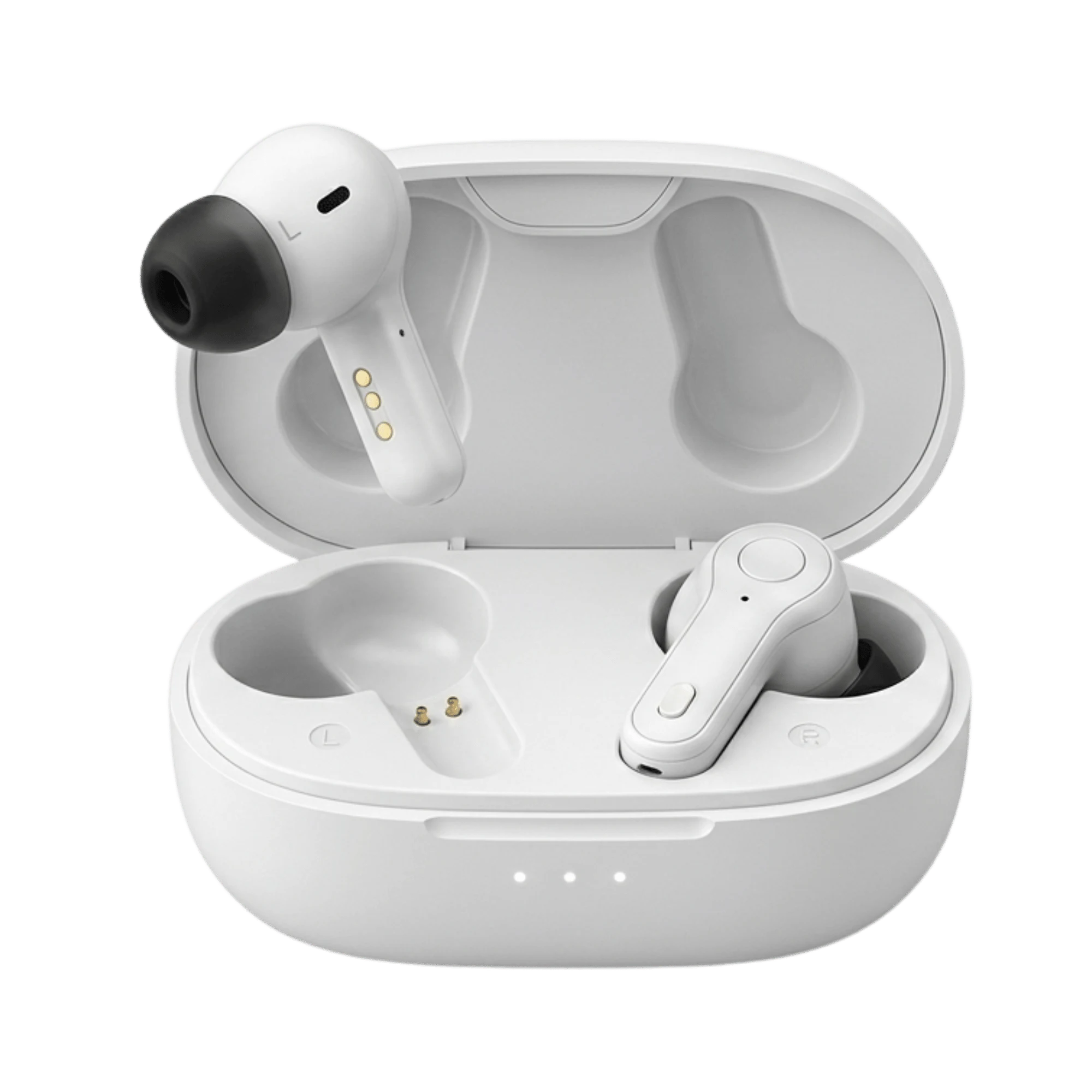
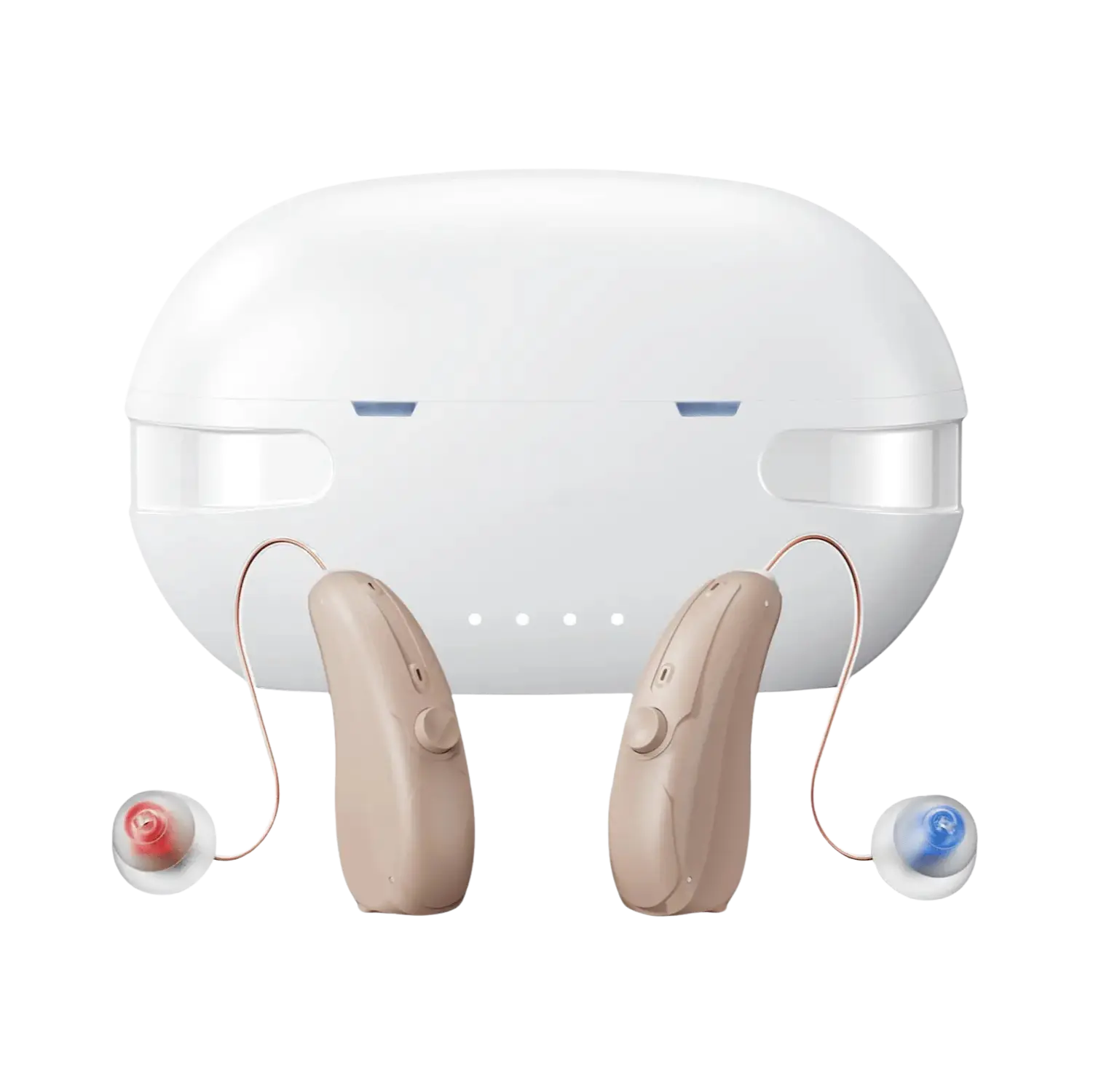
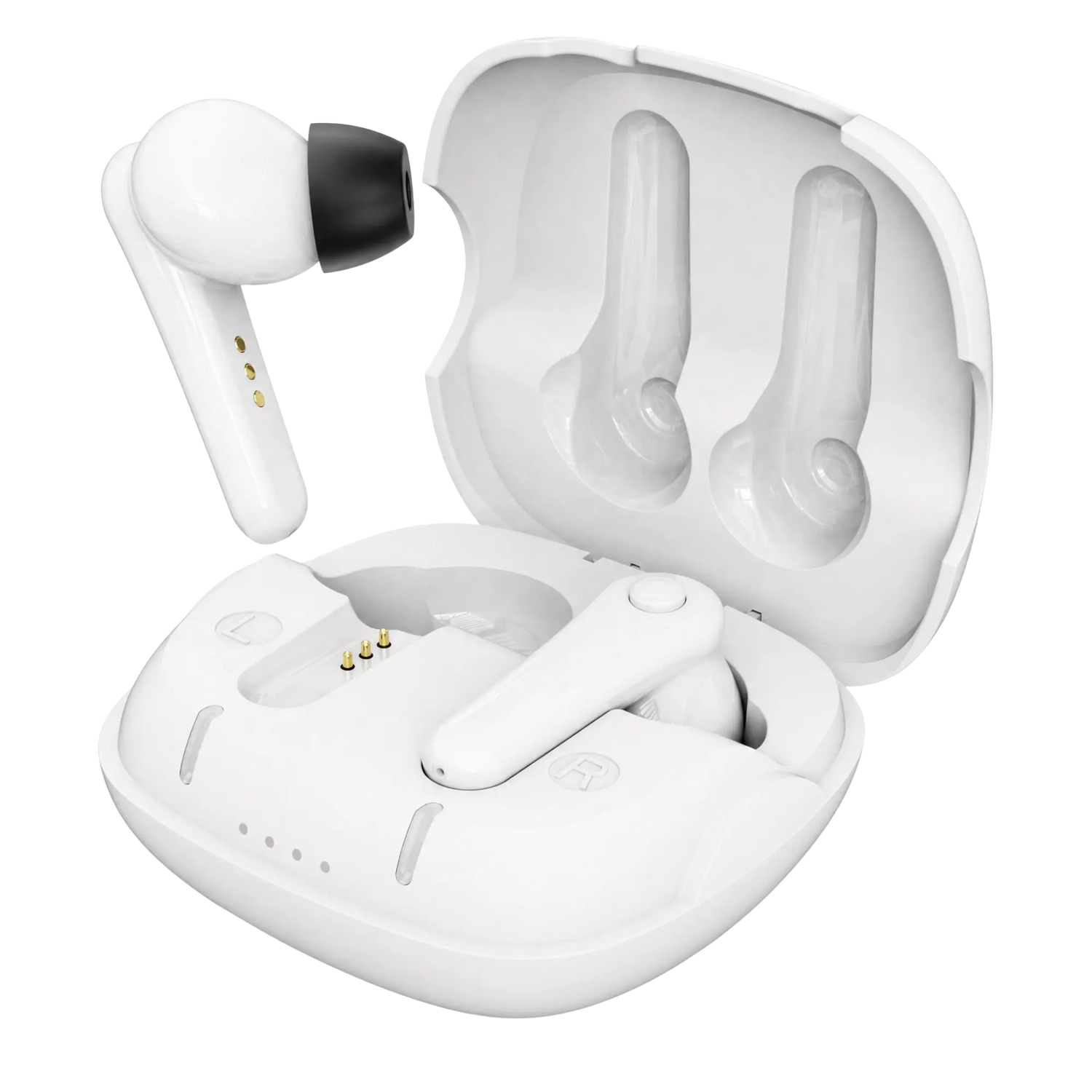
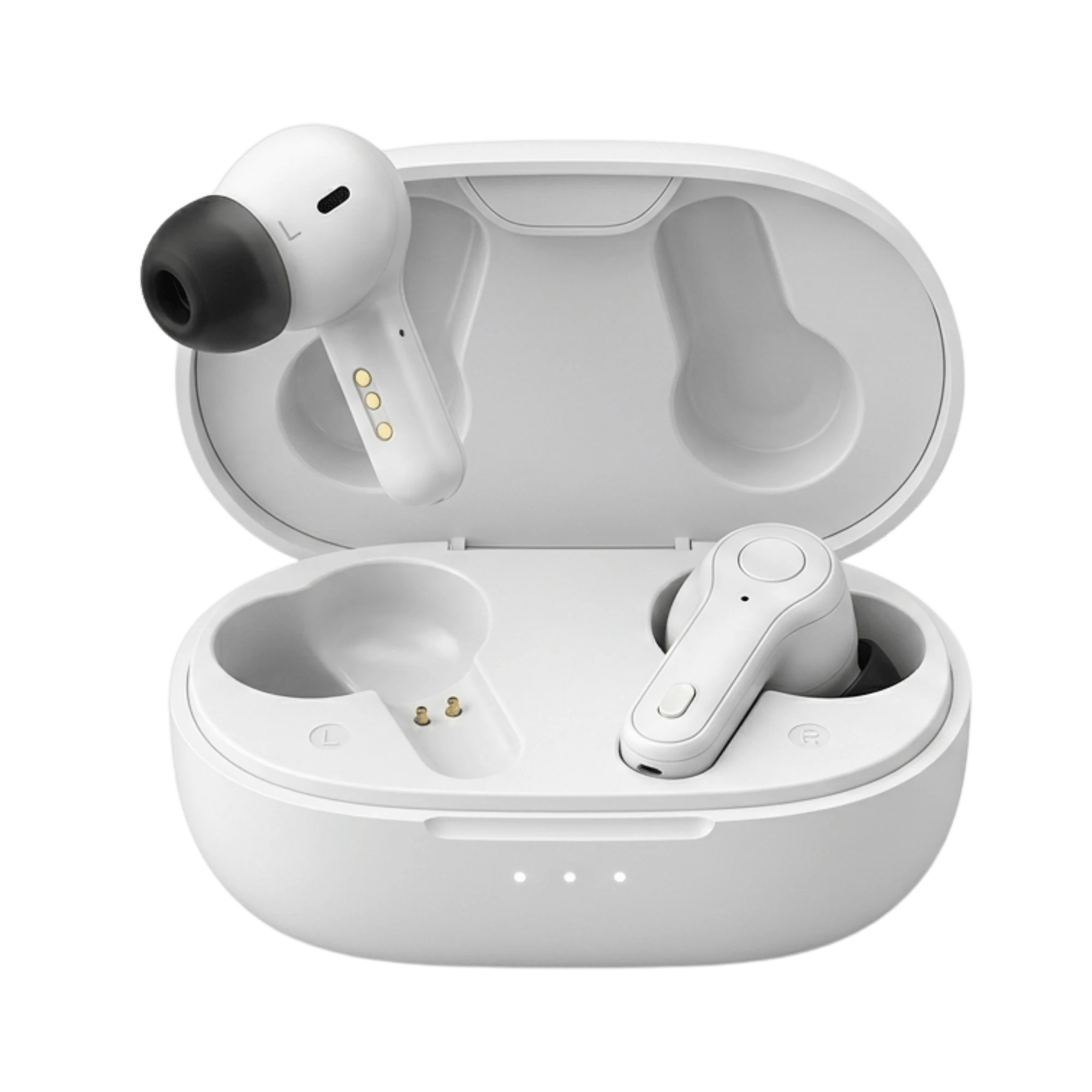
Panda Air is one such device. It is an earbud-style in-the-canal aid that includes an app-based in-ear hearing test: after delivery, you pair the aid with the Panda app, the app runs a frequency-specific test through the aid itself, and it then programs gain and frequency response to match your results, which is the same job a clinical fitting performs. That places it among self-fitting OTC hearing aids rather than among one-size-fits-all amplifiers, and it is the feature that most directly addresses the concern the study surfaced.
On the hardware side, the Air uses 16-channel wide dynamic range compression and multi-band adaptive noise reduction, and it belongs to the newer generation of rechargeable hearing aids with charging case, in this instance a 60-hour fast-charge case. It carries a 5-year warranty and a 45-day return window, which gives a first-time buyer room to find out whether the direct-to-consumer route works for them. One caveat the study's framing makes worth repeating: over-the-counter devices are approved for adults with perceived mild to moderate hearing loss. Severe or profound loss still benefits most from a clinical fitting.
Limitations of This Research
This is a survey of stated preferences, not a record of what people actually bought. Respondents had no prior hearing aid experience, which was the point of the design, but it also means nobody in the sample was reporting on how a purchase turned out. Intentions and behavior come apart routinely in consumer research, and the size of that gap here is unknown.
The sample came from an online research panel, which skews toward people already comfortable with internet-based tasks, one of the very dimensions the archetypes were built on. The archetypes themselves were derived through clustering, a method that will produce groups from almost any dataset, so they need replication in an independent sample before being treated as stable categories. The study is also cross-sectional, so it captures a moment rather than tracking how attitudes shift. The PubMed record for this article does not list funding sources or competing interests.
Where This Leaves Us
Making hearing aids purchasable without an appointment removed one barrier and revealed another. Four years after over-the-counter devices arrived, most first-time buyers still want a person in the process, and the ones who do not are largely the ones who were already comfortable researching and transacting on their own. The useful question for anyone weighing this is narrower than provider versus retail: it is whether a given device can be tuned to your particular hearing, and whether you can return it if it cannot.
Singh J, Dhar S. Understanding Hearing Health Care Choices and Customer Archetypes in an Era of Over-the-Counter Hearing Aids. American Journal of Audiology. 2026. Retrieved from PubMed. https://doi.org/10.1044/2026_AJA-26-00032