Hearing Loss and Tinnitus in 267,000 Veterans: What the Data Show
Audiograms from more than a quarter of a million United States Veterans give one of the clearest pictures yet of how early hearing loss starts and how often tinnitus travels with it.
Most of what is known about how common hearing loss is comes from surveys, from clinic populations, or from national samples of a few thousand people. Those sources are useful, but each has a blind spot. Surveys rely on people noticing and admitting a problem, and clinic samples only include people who already sought help.
A new analysis published in Ear and Hearing took a different route. It pulled actual audiometric test results, not self-reports, from one of the largest research cohorts in the world, and then compared them against a civilian clinical population of similar age.
Title: A National Cohort Study of Tinnitus and Hearing Loss in the Million Veteran Program
Authors: Royce E. Clifford, Chiara Casolani, Daniel B. Polley, M. Charles Liberman, Stéphane F. Maison
Affiliations: Department of Otolaryngology, Head and Neck Surgery, University of California School of Health Sciences, San Diego; Research Department, VA Hospitals, San Diego; Department of Otolaryngology, Head and Neck Surgery, Harvard Medical School and Eaton-Peabody Laboratories, Massachusetts Eye and Ear, Boston
Journal and publication date: Ear and Hearing, August 4, 2026
Study type: Retrospective cross-sectional cohort study
PubMed DOI: 10.1097/AUD.0000000000001873
Background: Why the Researchers Looked at This
Tinnitus, the perception of ringing, hissing, or buzzing with no external source, and hearing loss usually appear together, but the relationship has never been simple. Some people have significant measured hearing loss and no tinnitus at all. Others report constant tinnitus while their audiogram looks close to normal.
That second group is the interesting one. An audiogram measures the softest tone a person can detect at each pitch. It does not measure how well the auditory nerve carries a complex signal such as speech. Researchers have proposed that damage can occur in the connections between the inner ear and the auditory nerve without moving audiogram thresholds much, a pattern sometimes described as cochlear nerve degeneration or hidden hearing loss.
Veterans are an important population for studying this, because military service brings concentrated noise exposure, blast exposure, and head injury. The Million Veteran Program links medical records to research data at a scale that makes it possible to look at these questions with real statistical power.
How the Study Was Done
The team analyzed audiometric thresholds and word recognition scores for 267,395 Veterans tested between 1999 and 2021, linked to demographic information and self-reported health data. Word recognition in quiet measures the percentage of words a listener repeats back correctly, and it captures something an audiogram alone does not, namely clarity rather than audibility.
To put the Veteran figures in context, the researchers descriptively compared them with 40,912 adults from a clinical cohort at Massachusetts Eye and Ear. They then modeled the relationships between tinnitus and a list of conditions including traumatic brain injury, anxiety, depression, sleep disturbance, alcohol use, and tobacco use, adjusting for age and hearing thresholds.
What the Researchers Found
The headline numbers are large. Among the 267,395 Veterans in the cohort, 94 percent of whom were male, 86 percent had measurable hearing loss and 47 percent reported tinnitus. Nearly half of this population lives with ringing in the ears.
Compared with the civilian clinical cohort, Veterans showed hearing loss that appeared earlier and ran deeper, with the difference most pronounced at 4 kHz. That frequency is the classic signature of noise damage, and it sits squarely in the range that carries consonant information in speech. Men showed greater high frequency loss overall, while women showed steeper declines in the low frequencies at older ages.
The tinnitus findings were more subtle. Veterans with tinnitus were younger than Veterans with the same degree of hearing loss, so when the researchers adjusted only for hearing thresholds, word recognition looked similar between the groups. Once age was also taken into account, Veterans with tinnitus had slightly poorer word recognition than would be expected from their audiograms alone. That is precisely the fingerprint the hidden hearing loss hypothesis predicts.
Tinnitus was reported more often by Veterans with traumatic brain injury or concussion, and by those reporting anxiety or depression. Sleep disturbance and alcohol use showed smaller increases. Tobacco use, often assumed to be a risk factor, showed no association with tinnitus prevalence in this cohort.
Patterns also differed by race. African American Veterans had better hearing thresholds and lower tinnitus prevalence than other groups, while Asian Veterans showed greater hearing loss at older ages. The authors describe these as observed differences rather than explained ones.
What It Means for People with Hearing Loss
The most useful takeaway for an individual reader is that a normal or near normal audiogram does not settle the question. If speech sounds muddy in a restaurant while a hearing test comes back reassuring, that experience is consistent with what this cohort shows, and it is worth pursuing rather than dismissing.
The scale of the numbers also reframes hearing loss as something close to a default condition rather than an exception. When 86 percent of a very large group has measurable loss, waiting until a problem feels unusual before checking is not a sensible strategy. Regular testing is more like checking blood pressure than like responding to an emergency.
Finally, the links between tinnitus and anxiety, depression, sleep disturbance, and head injury argue for treating tinnitus as a whole person issue. The authors specifically call for integrated care that addresses both the auditory and the neuropsychiatric side, which is a stronger recommendation than simply learning to live with the noise.
When Most People Have Measurable Loss but Few Get Tested
A finding that 86 percent of a large cohort has measurable hearing loss says something uncomfortable about detection. Formal audiometry means an appointment, a referral, travel, and often a wait, and that friction is a large part of why the average person delays for years before doing anything.
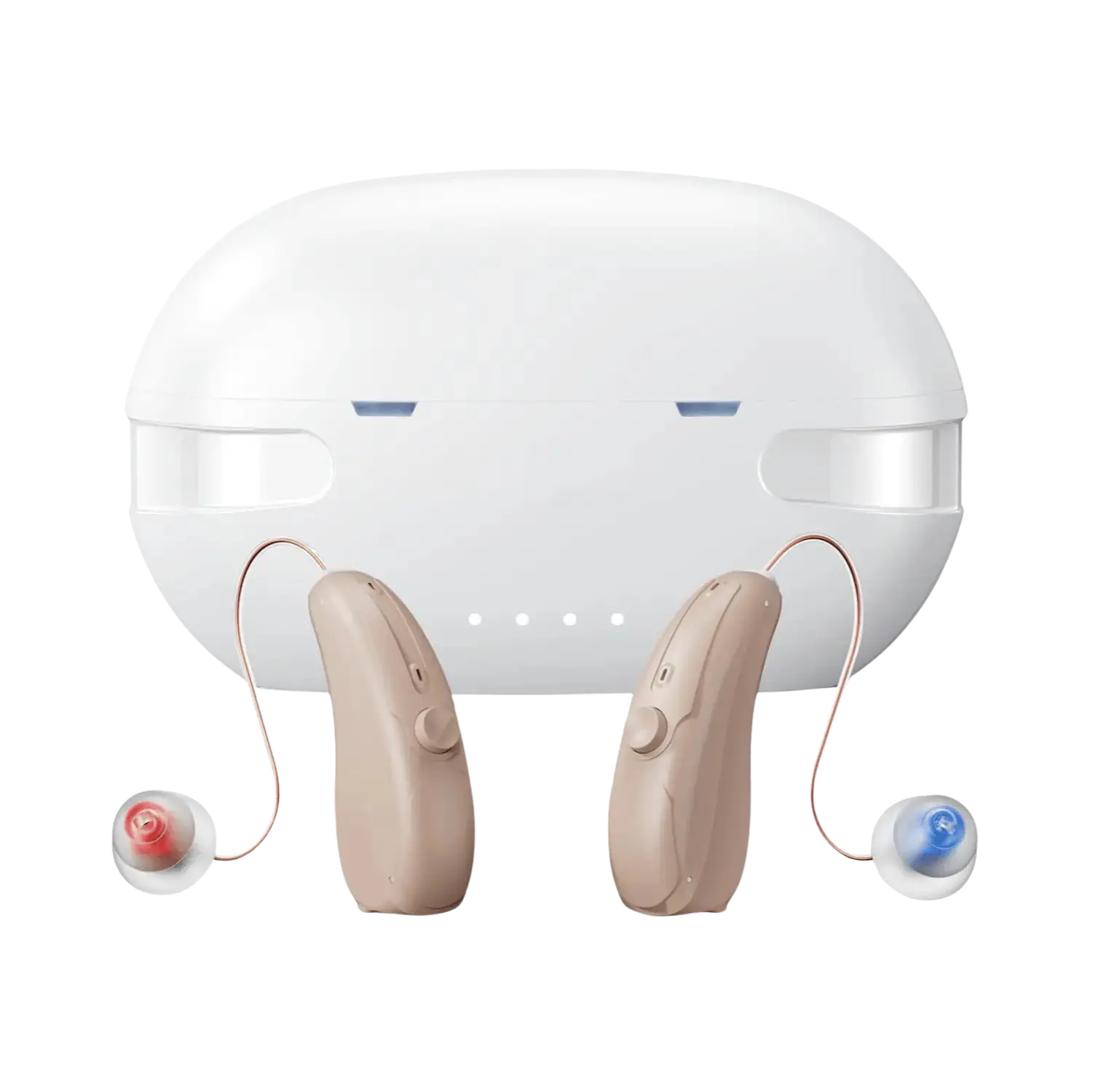
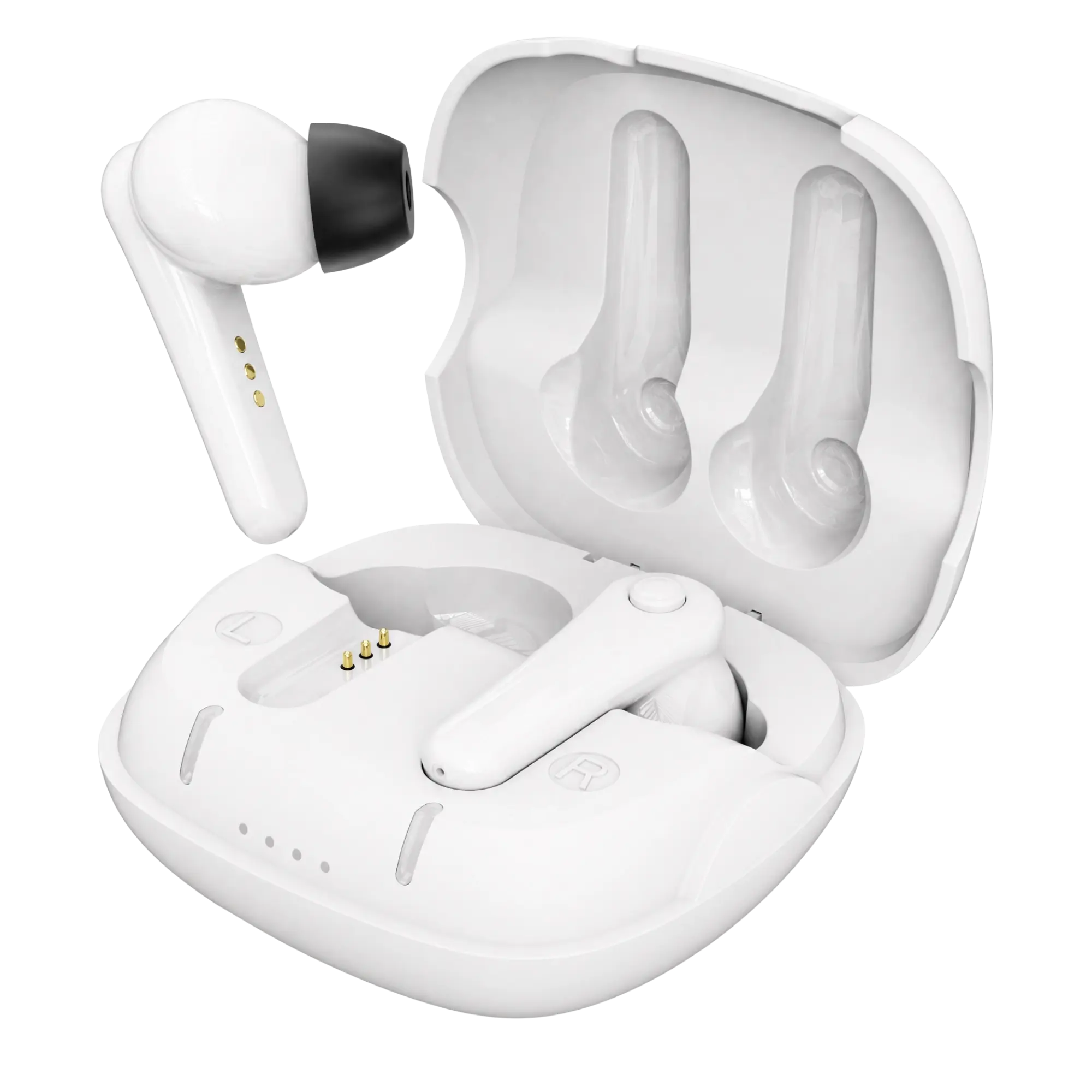
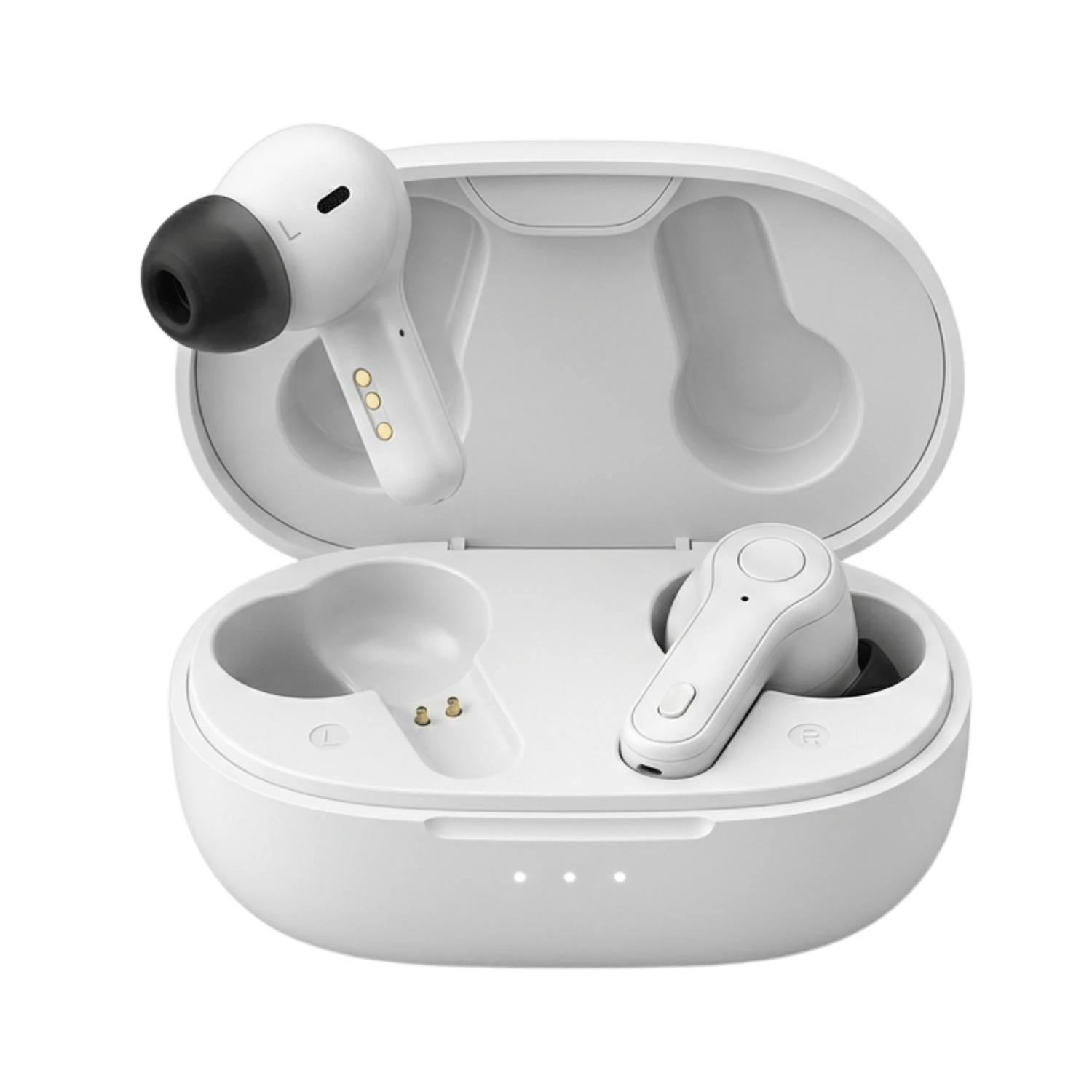
Panda Air is designed to shorten that path. It is one of the AirPod-like hearing aids that look and wear like ordinary earbuds, and it includes an app-based in-ear hearing test: after delivery, the Panda app runs a frequency-specific test through the aid itself and programs gain and frequency response to the results, so it works as one of the self-fitting OTC hearing aids rather than something that needs a clinic visit before it does anything useful. Inside it runs 16-channel WDRC with multi-band adaptive noise reduction, and the fast-charge case holds about 60 hours of power.
This is not a replacement for a diagnostic evaluation, and it should not be. OTC devices are cleared for mild to moderate hearing loss, and anyone with sudden loss, one-sided loss, pain, or severe loss should see a clinician. For the large group in the middle who suspect something has changed and have not yet acted on it, the 5-year warranty and 45-day return window make finding out inexpensive.
Limitations of This Research
This is a cross-sectional study, which means it captures a snapshot rather than following individuals over time, so it can describe associations but cannot establish that one thing caused another. The cohort was 94 percent male, which limits how confidently the sex differences can be generalized, and all participants were Veterans using VA healthcare, a group with more noise exposure and more health system contact than the general population.
The civilian comparison group came from a clinical population at Massachusetts Eye and Ear rather than from a general population sample, so it likely skews toward people with hearing complaints. Tinnitus was self-reported, since no objective test for it exists, which the authors identify as a gap the field still needs to close. No funding source or conflict of interest disclosure appears in the indexed abstract.
What to Do With This
The practical message is short. Hearing loss is more common and starts earlier than most people assume, tinnitus frequently accompanies it, and a clean audiogram does not rule out a real difficulty with speech. If sound has changed for you, get a baseline measurement rather than waiting for certainty, and if tinnitus comes with poor sleep or low mood, treat those as part of the same conversation rather than separate problems.
Clifford RE, Casolani C, Polley DB, Liberman MC, Maison SF. A National Cohort Study of Tinnitus and Hearing Loss in the Million Veteran Program. Ear and Hearing. 2026. Retrieved from PubMed. https://doi.org/10.1097/AUD.0000000000001873