New Model Links Your Audiogram to the Cells That Make You Hear
A new biophysical model tries to reverse-engineer the invisible: which hair cells inside the cochlea are dying, based on the shape of a person's audiogram.
A standard hearing test produces an audiogram, the familiar chart of thresholds by frequency that most people have seen at a clinic. What the audiogram cannot show is why those thresholds are what they are. Two people with the same audiogram can have very different problems inside the ear.
A team of electrical engineers at Tel-Aviv University set out to close some of that gap. They built a computational model that starts from the physics of the cochlea, adds the biology of hair-cell transduction, and then asks how much of the audiogram can be explained purely by how many hair cells are still alive along the length of the cochlear partition.
Title: Estimation of hair cell loss from audiograms
Authors: Miriam Furst, Yonatan Koral, Asaf Zorea
Affiliations: School of Electrical Engineering, Faculty of Engineering, Tel-Aviv University, Tel-Aviv, Israel
Journal: Hearing Research, July 2026, Volume 479, article 109723
Study type: Biophysical modeling study using postmortem human audiograms and matched cochlear histology
PubMed DOI: 10.1016/j.heares.2026.109723
Background: Why the Researchers Looked at This
Age-related hearing loss is not one condition. Inside the cochlea, the snail-shaped inner ear, there are two very different populations of sensory cells: inner hair cells (IHCs), which convert vibrations into signals for the auditory nerve, and outer hair cells (OHCs), which act as tiny biological amplifiers. Different combinations of loss in these two populations produce different real-world hearing problems, even when the audiogram looks similar.
Directly counting cochlear hair cells in a living person is impossible with today's imaging. Clinicians only see the audiogram. That has been a barrier both for research on age-related hearing loss and for the everyday task of picking the right fitting for a patient's hearing aid. Threshold data is what audiologists have; cellular data is what they wish they had.
The Tel-Aviv team wanted to know how much of that cellular picture is actually recoverable from the audiogram alone.
How the Study Was Done
The researchers built a nonlinear, time-domain model of the peripheral auditory system. In plain terms, it is a computer simulation of the ear that runs in real time, from cochlear mechanics through hair-cell transduction to the auditory-nerve response. The point of using this class of model is that it respects the physics: it does not just fit curves, it simulates cause and effect.
They then fed the model postmortem human data from a 2020 study by Wu and colleagues that combined pre-death audiograms with post-death histological counts of surviving hair cells in the same ears. That dataset is rare, and it makes the current work possible. It lets the researchers ask: given a person's real hair-cell survival pattern, does the model predict their real audiogram?
They also ran the analysis the other way, asking how well an audiogram alone can point back to the underlying pattern of cellular loss, which is what a clinician would ultimately want.
What the Researchers Found
The model successfully predicted audiograms from hair-cell survival patterns, meaning the physics of the cochlea can carry that signal forward. Predictions were most accurate in the low-frequency range and got noisier toward the high frequencies. That matters clinically, because most age-related hearing loss shows up first at high frequencies.
The reverse direction, the one that would matter for clinicians, is harder. The authors report that outer hair cell dysfunction primarily affects high-frequency thresholds. That is because OHCs act as biological amplifiers, and losing them changes cochlear mechanics itself. The location of the traveling wave peak on the basilar membrane shifts, cochlear tuning broadens, and amplification drops. Those effects concentrate in the basal, high-frequency region of the cochlea.
The result is that the audiogram is sensitive to the overall level of OHC dysfunction but relatively blind to exactly where along the cochlea the OHC loss is happening. Meanwhile, the audiogram carries more information about inner hair cell loss and about high-frequency OHC problems than about the fine spatial pattern of that damage.
Put simply, an audiogram is a real but partial window on the cochlea. It picks up big changes, especially at higher frequencies and in inner hair cells, but it cannot fully separate two people whose cellular damage happens to add up to a similar threshold pattern.
What It Means for People with Hearing Loss
For patients, this study is a reminder that an audiogram is exactly what audiologists have always said it is: a starting point, not a full diagnosis. A moderate high-frequency loss on paper can reflect several different underlying stories inside the ear, and those different stories can respond differently to amplification.
It also underlines why audiogram-matched fittings matter. Even when an audiogram cannot pin down the exact cellular pattern, matching a hearing aid's gain and frequency response to the individual audiogram is the single most reliable step to get useful amplification into the right frequencies without over-amplifying the wrong ones. A device set to a generic curve leaves value on the table.
For clinicians and researchers, the model gives a rigorous way to test hypotheses about how far you can push audiogram-based inferences before you need additional tests, such as distortion product otoacoustic emissions or speech-in-noise metrics, to get further.
Why Audiogram-Matched Fitting Is the Baseline That Still Matters
Because this study reinforces just how much of the useful information about a person's hearing lives in their own audiogram, it also reinforces the value of hearing aids that are actually fitted to that audiogram rather than to a generic preset.

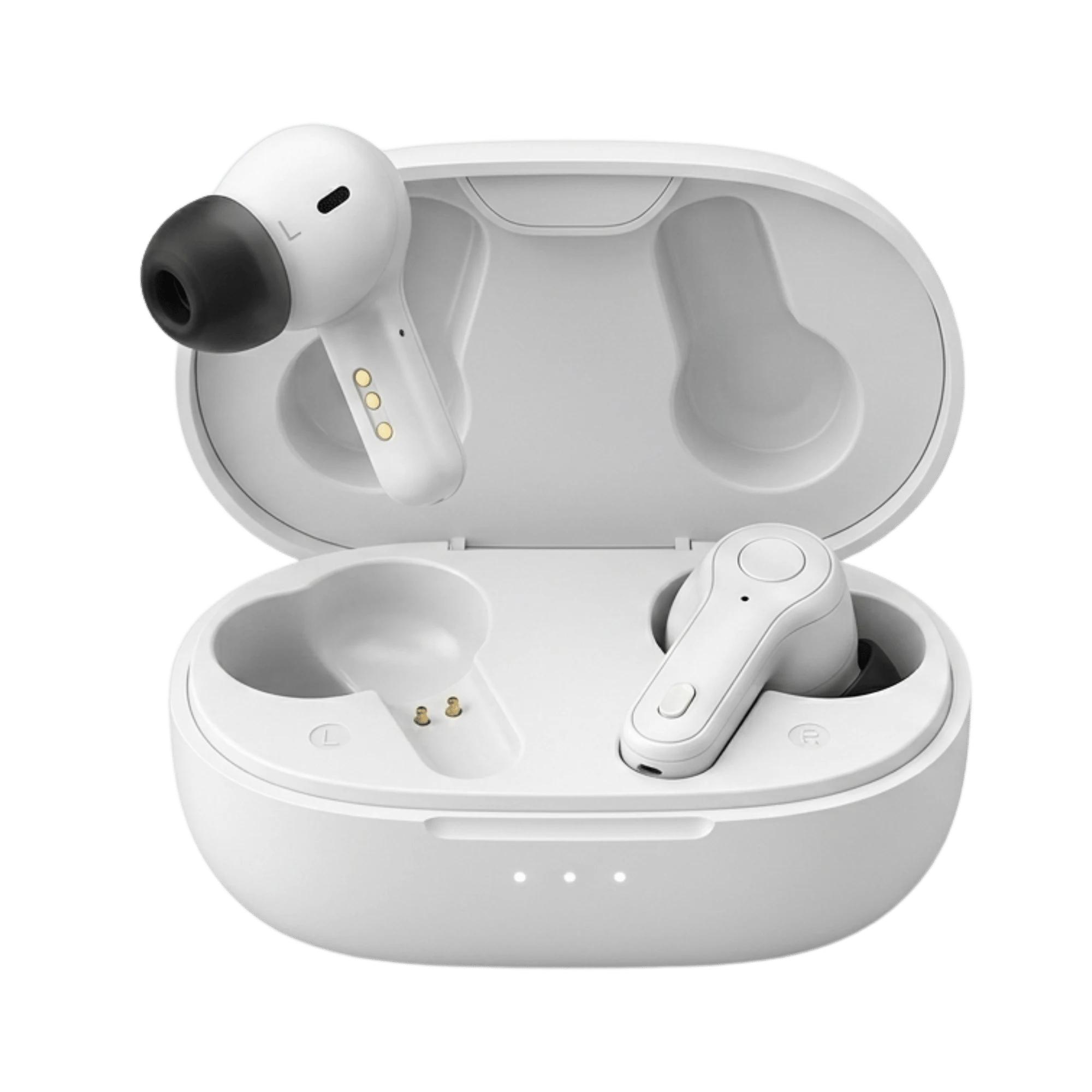
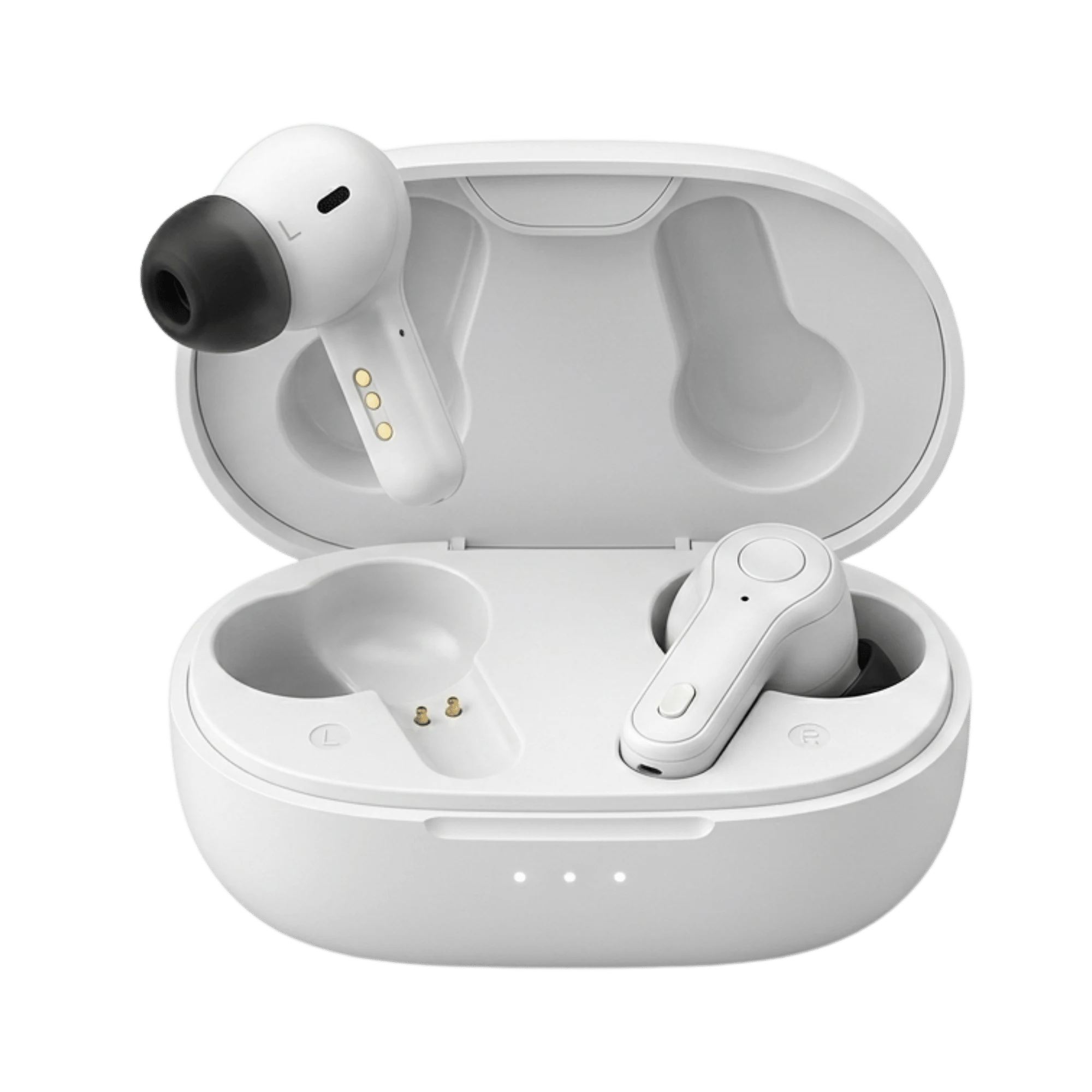
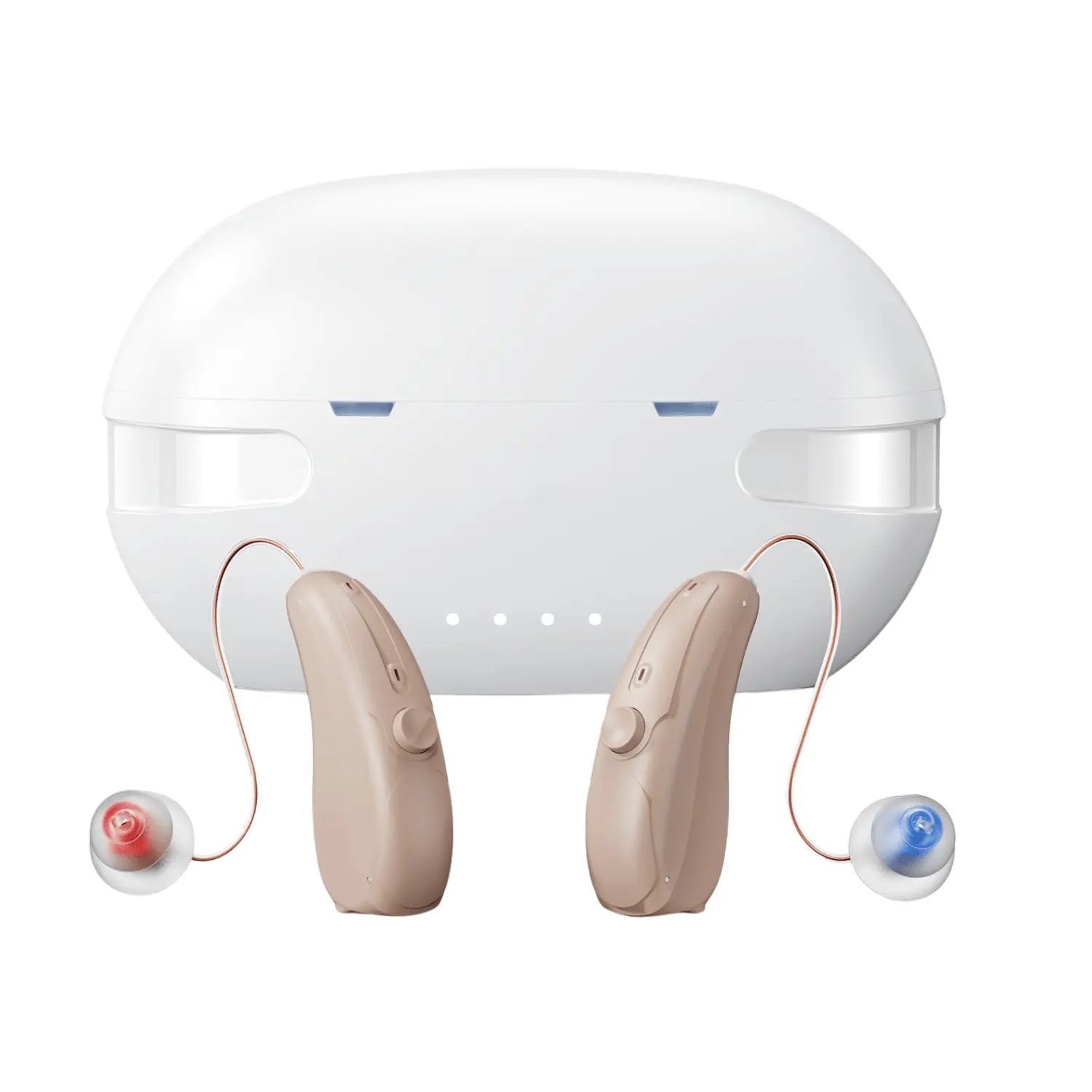
Panda Quantum is a 16-channel receiver-in-canal hearing aid with adaptive noise reduction, up to 80 hours of total battery life with the case, and Bluetooth for phone calls, TV, and music. What makes it particularly relevant here is app-based hearing personalization: after the device arrives, users pair it with the Panda app and run an in-ear hearing test straight through the hearing aid itself. The app then automatically programs the device's gain and frequency response to match the user's audiogram, similar to what an audiologist does at a clinical fitting.
In the language of this modeling study, that means the device is being adjusted to the individual's own threshold pattern, exactly the information Furst and colleagues show is most informative about what is happening inside the cochlea. Frequency-specific hearing adjustment and 16-channel processing aim to focus amplification where the audiogram says it is needed, and adaptive noise reduction is designed to make speech in noisy environments easier to follow. As with any OTC hearing aid, this approach fits people with mild-to-moderate loss best. Severe or profound loss still benefits most from a full clinical fitting.
Limitations of This Research
This is a modeling study grounded in a single, though carefully collected, postmortem human dataset. The Wu 2020 material is invaluable but small compared with the diversity of real ears, and postmortem cochleae reflect an average over decades of exposures. Model accuracy also drops in the high-frequency region, which is exactly where age-related loss tends to be worst, so real-world clinical use will require additional validation.
The paper is a peer-reviewed engineering-side contribution. No industry sponsor is disclosed in the metadata, but as with all computational models, the framework will need to be checked against independent datasets before it can be used for direct clinical inference in individual patients.
What to Do With This
If you have an audiogram, treat it as the best single piece of information about your hearing you can get without opening the ear. Take it seriously, keep a copy, and use it. If you are choosing a hearing aid, pick one that will actually be programmed to that audiogram rather than left on a factory default, and revisit the fitting as your hearing changes over time.
Furst M, Koral Y, Zorea A. Estimation of hair cell loss from audiograms. Hearing Research. 2026;479:109723. Retrieved from PubMed. https://doi.org/10.1016/j.heares.2026.109723