Nearly One in Three Maritime Workers Has Noise-Induced Hearing Loss
A meta-analysis pooling twelve studies and more than 285,000 seafarers puts the prevalence of noise-induced hearing loss at roughly 30 percent, with engine room crews and petroleum vessel workers carrying the highest risk.
Occupational noise is one of the largest preventable causes of hearing loss worldwide, accounting for an estimated 16 percent of disabling hearing loss in adults. Unlike age-related hearing loss, it has an identifiable cause, a known dose relationship, and well-established countermeasures. It is also, on paper, regulated.
Ships are a particularly demanding case. Crews live inside their workplace for weeks at a time, engine spaces run continuously, and exposure does not stop at the end of a shift the way it does for a factory worker who goes home. A Brazilian research team set out to establish how common hearing damage actually is in this workforce, and which roles carry the most risk.
About This Study
Title: Prevalence of noise-induced hearing loss in maritime workers: A systematic review and meta-analysis
Authors: Maria Eduarda Oliveira Onuki, Giulia Carvalho Lopes Mangas, Livia Nunes Albertini, Beatriz do Prado Aguiar, Giovana Rossi, Eliane Marcilio Santos, Ana Luiza Cabrera Martimbianco
Affiliations: Universidade Metropolitana de Santos, Santos, Brazil
Journal and publication date: International Maritime Health, published online 3 August 2026
Study type: Systematic review and meta-analysis of observational studies
PubMed DOI: 10.5603/imh.107163
Background: Why the Researchers Looked at This
Noise-induced hearing loss happens when sustained loud sound damages the hair cells of the inner ear. Those cells do not regenerate in humans, so the loss is permanent. It typically shows up first around 4 kHz, producing a characteristic dip on an audiogram called a noise notch, and it spreads outward from there with continued exposure. Because the frequencies affected early are the ones that carry consonant sounds, people often report that they can hear that someone is speaking but cannot make out the words, long before they would describe themselves as hard of hearing.
Tinnitus, a ringing or hissing perceived without an external source, commonly travels with it. In noise-exposed populations tinnitus is often the symptom that prompts someone to seek help, since a persistent ringing is harder to ignore than a gradual loss of clarity.
Maritime work has preventive measures in place, including hearing protection requirements and periodic audiometric surveillance. What has been unclear is whether those measures are working, because individual studies of seafarers report widely varying rates depending on the fleet, the country, and how hearing loss was defined. Pooling them was the point of this review.
How the Study Was Done
The team searched six databases, MEDLINE, CINAHL, the Cochrane Library, EMBASE, LILACS, and Web of Science, through 28 February 2024. They deliberately imposed no language or publication status restrictions, which matters in occupational health, where a great deal of relevant work appears in national journals and in languages other than English.
Eligible studies were observational studies reporting the prevalence of noise-induced hearing loss or related auditory conditions among maritime workers. Methodological quality was assessed with the Joanna Briggs Institute checklist, a standard instrument for appraising prevalence studies. Where the data allowed, results were combined statistically, and the overall certainty of the evidence was rated using GRADE, the framework used to communicate how much confidence a body of evidence deserves.
Twelve studies met the criteria, together covering 285,818 maritime workers. Overall methodological quality was judged moderate. One third of the studies were rated high quality, and most satisfied at least five of the checklist criteria.
What the Researchers Found
The pooled prevalence of noise-induced hearing loss among maritime workers came out at 30 percent, with a 95 percent confidence interval running from 19 to 42 percent. That is roughly one in three seafarers with measurable, permanent, preventable hearing damage.
The confidence interval is wide, and heterogeneity between studies was substantial, with an I-squared value of 87 percent. In meta-analysis, that statistic estimates how much of the variation between studies exceeds what chance alone would produce. A value that high means the twelve studies were not measuring one uniform quantity, and the authors accordingly rated the certainty of the pooled estimate as very low.
The risk factor findings were more consistent across studies than the headline number. Three variables recurred: advancing age, longer duration of occupational exposure, and specific job functions. The roles singled out were engine room personnel and workers on petroleum vessels, which aligns with where sustained machinery noise is concentrated aboard ship.
Tinnitus was also commonly reported. In some of the included studies, more than half of exposed individuals described it. The authors treat this as a signal that the auditory burden of maritime work extends beyond what a threshold audiogram captures.
Their conclusion is a call to action rather than a claim of precision: even taking the very low certainty seriously, the burden is high enough to warrant stronger use of hearing protection, stricter legislation, and better training.
What It Means for People with Hearing Loss
The most useful takeaway for anyone who has worked around machinery, whether at sea, in a plant, on a flight line, or on a construction site, is that noise-induced hearing loss arrives quietly and early. The damage begins in the high frequencies, which means the first thing you lose is not volume but clarity, particularly in rooms with background noise. People in this position frequently do not think of themselves as having hearing loss at all. They think other people mumble.
The age finding cuts both ways. Longer exposure produces more damage, which is intuitive. But it also means noise-induced loss shows up in working-age adults, decades before age-related hearing loss would normally become noticeable, in a group that is often still working and unlikely to schedule an audiology appointment.
The second takeaway is prevention, which remains the only genuine fix. Hair cells do not come back. Hearing protection worn consistently during exposure prevents damage that no device can later undo, and a baseline audiogram gives you something to compare against in five years.
A Third of a Workforce With Damage That Mostly Falls in the Mild-to-Moderate Range
One reason a 30 percent prevalence figure translates into so little treatment is cost and friction. Noise-notch hearing loss usually sits in the mild-to-moderate range for years, which is precisely the range that feels too minor to justify a clinic visit and a four-figure device, and so it goes unaddressed until it is considerably worse.
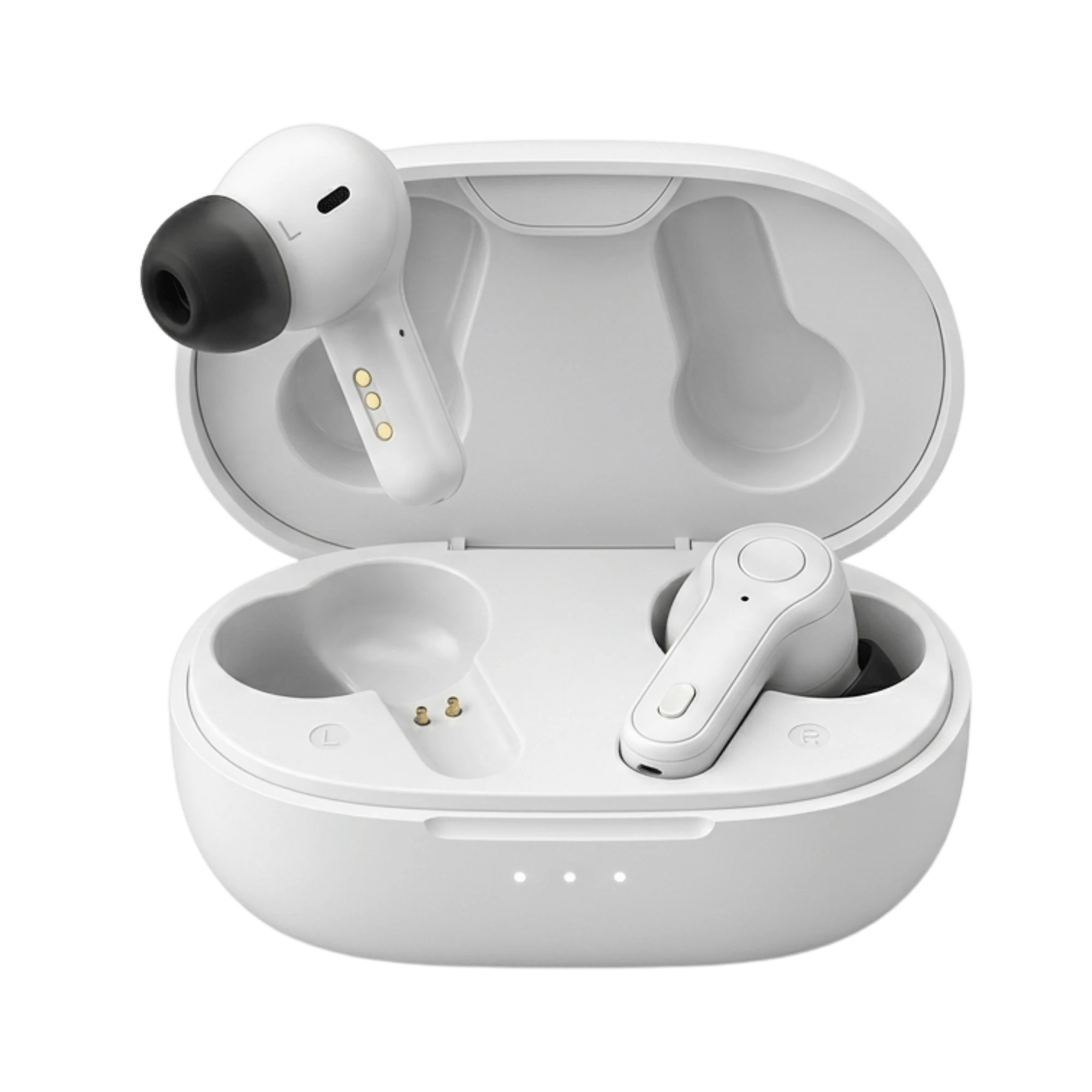
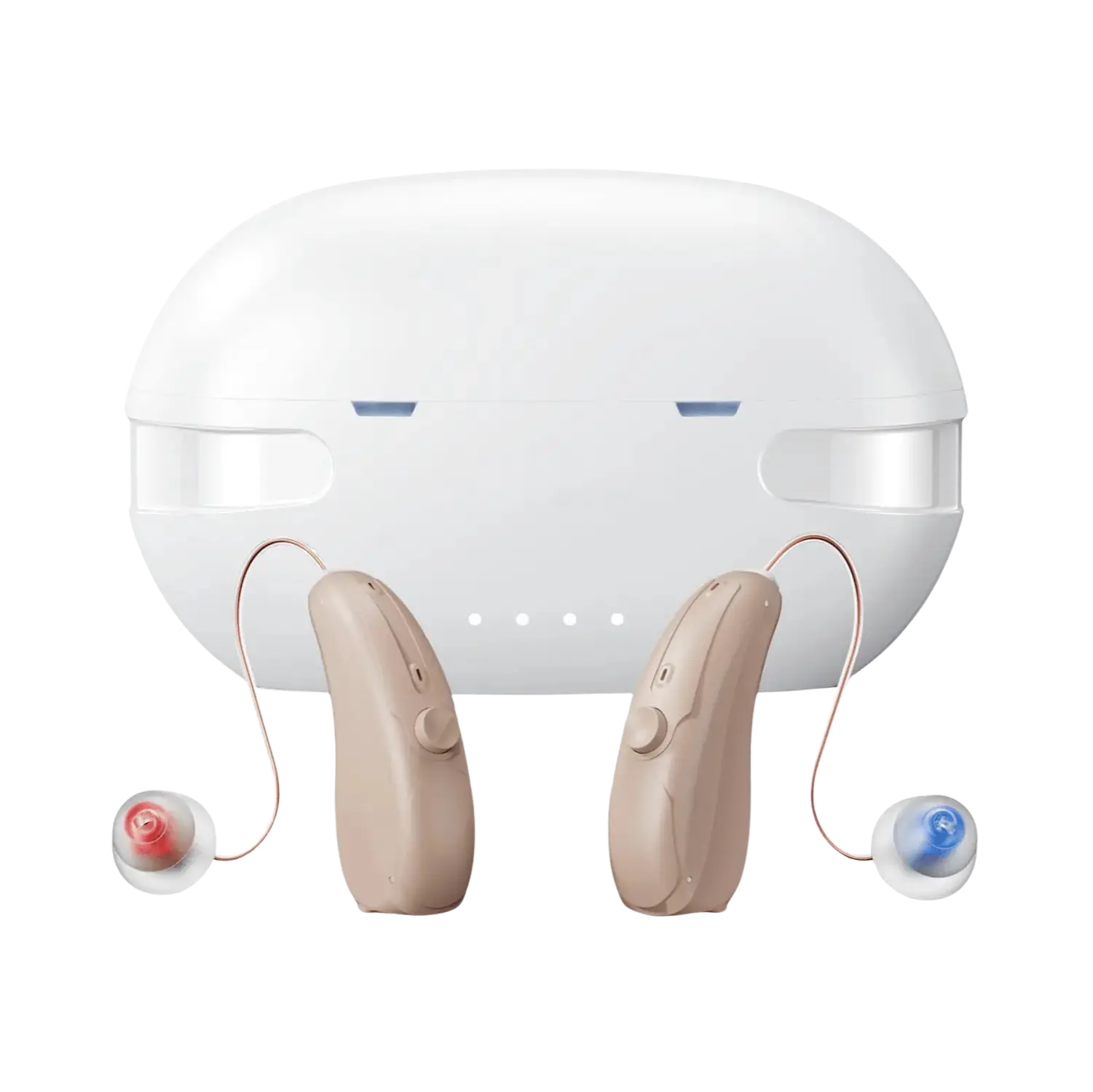
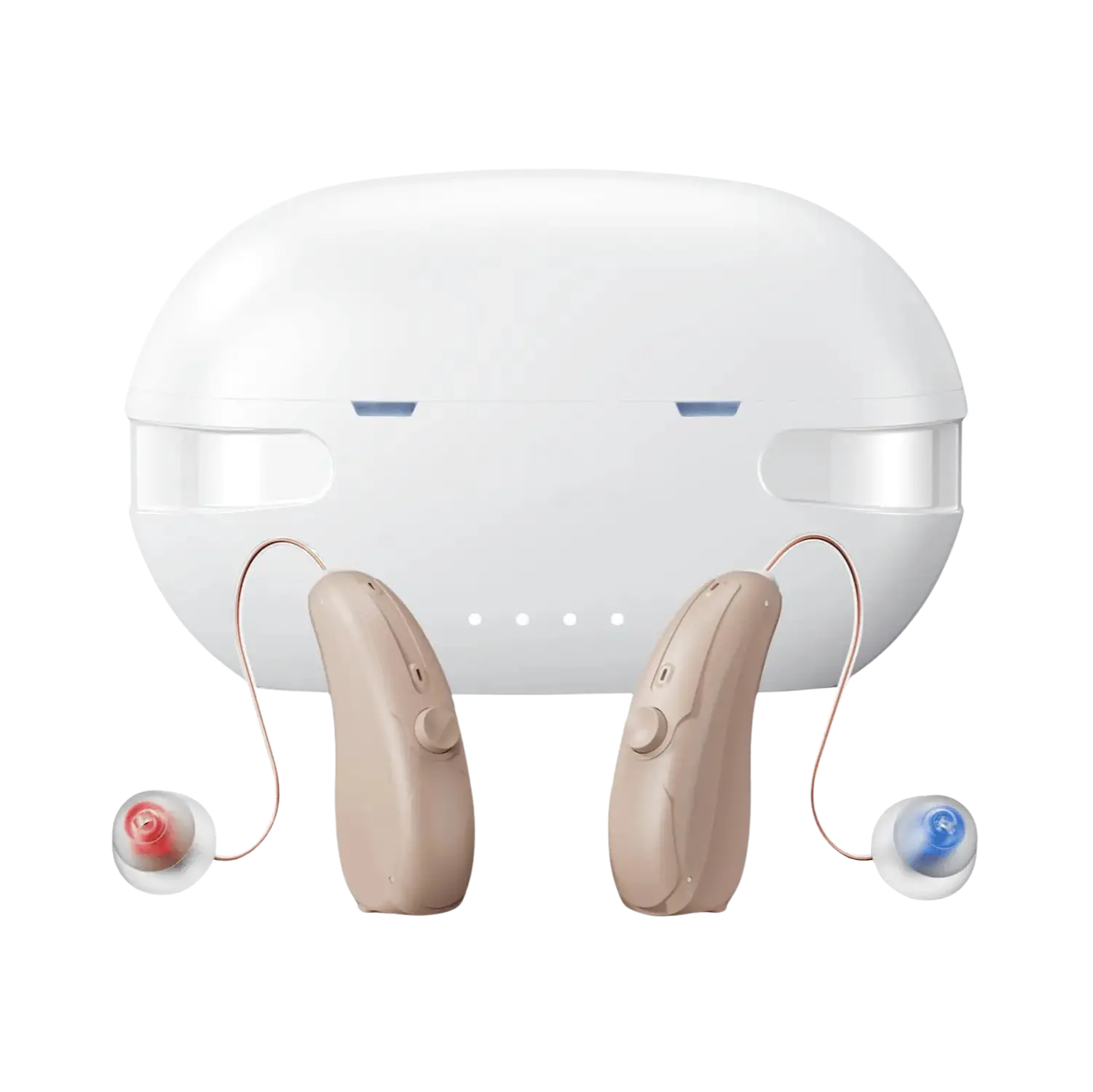
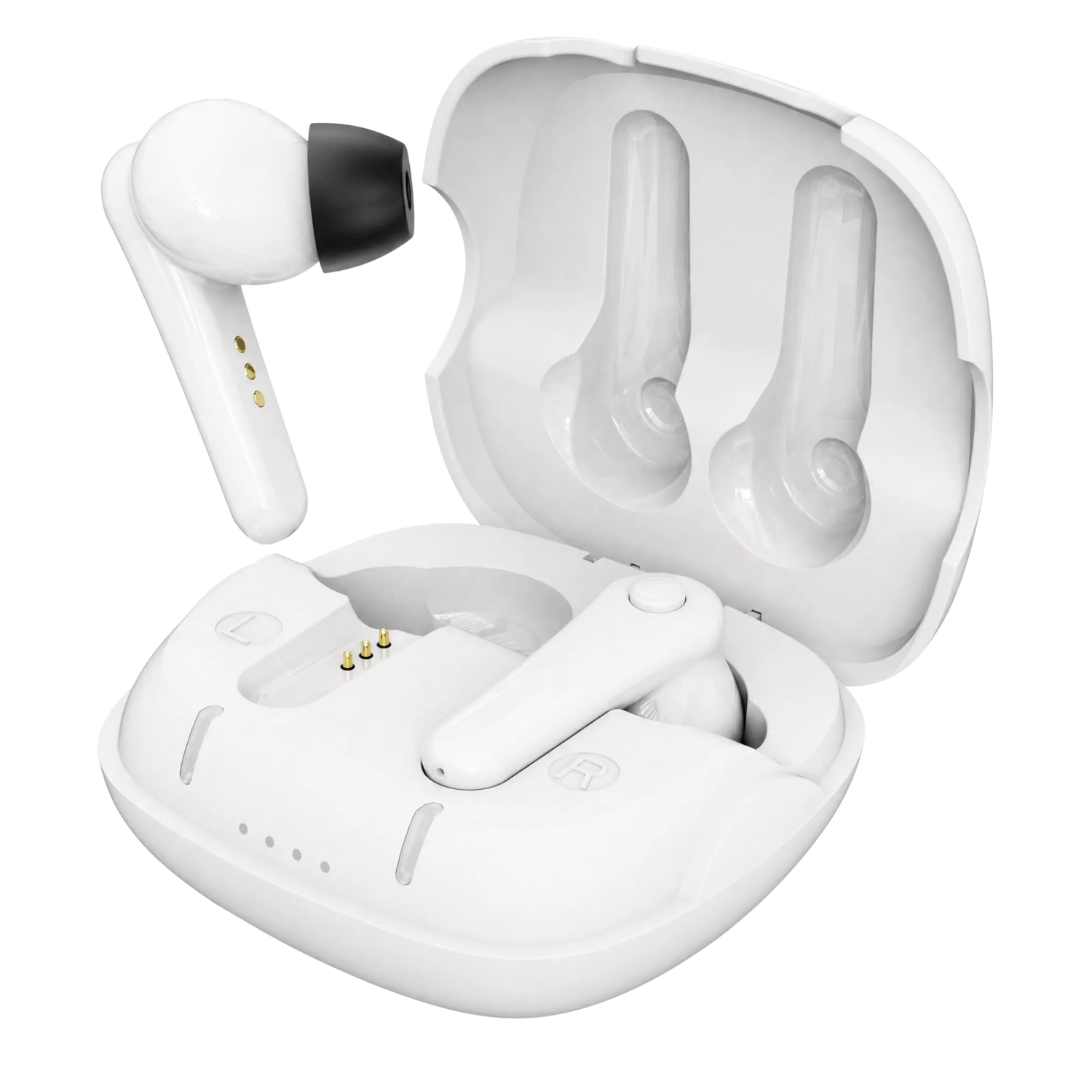
Panda Air is designed for that gap. It is an earbud-style in-the-canal device with 16-channel WDRC and multi-band adaptive noise reduction, and it includes an app-based in-ear hearing test: you pair it with the Panda app after delivery, it runs a frequency-specific test through the aid itself, and it programs gain and frequency response to your audiogram in the way a clinical fitting would. For someone whose loss is concentrated in the high frequencies, that frequency-specific step is the part that matters. As one of the self-fitting OTC hearing aids now available directly, it removes the appointment from the equation, and the AirPod-like hearing aids form factor tends to sit more comfortably with people still in the workforce.
Practical details: it is one of the rechargeable hearing aids with charging case, giving 60 hours with fast charge, and it carries a 5-year warranty and 45-day returns. The category limit is worth stating plainly. Over-the-counter hearing aids are approved for mild-to-moderate hearing loss, and long-exposure workers whose loss has progressed to severe will still be served best by a clinical fitting.
Limitations of This Research
The authors are unusually candid about the weaknesses here, and the very low GRADE rating should be read as part of the finding rather than a footnote to it. Heterogeneity of 87 percent means the twelve studies differed substantially, most likely in how noise-induced hearing loss was defined audiometrically, which fleets and countries were sampled, and whether comparison groups existed. A pooled estimate spanning 19 to 42 percent is a wide target. All included studies were observational, so none can establish causation independently, although the physiological link between noise and hair cell damage is not in dispute.
Prevalence studies in occupational settings are also vulnerable to a specific bias: workers whose hearing deteriorates badly may leave the industry, which can make the remaining workforce look healthier than the true occupational risk. The tinnitus figures came from a subset of studies rather than a formal pooled analysis, so the more than half figure should be read as indicative, not as a summary estimate. The abstract does not report funding sources or competing interests, so readers should consult the full text for those disclosures.
What to Do With This
The precise number here is uncertain, but the direction is not: after decades of regulation, a large fraction of a heavily monitored workforce still carries permanent noise damage, and the risk concentrates exactly where you would expect it to. If you have spent years around engines, compressors, or heavy machinery, the useful next step is a hearing test, even if nothing feels wrong, because the earliest losses are the ones you are least likely to notice. And if you are still in that environment, protection worn consistently is worth more than any device you can buy afterward.
Onuki MEO, Mangas GCL, Albertini LN, Aguiar BDP, Rossi G, Santos EM, Martimbianco ALC. Prevalence of noise-induced hearing loss in maritime workers: A systematic review and meta-analysis. International Maritime Health. 2026. Retrieved from PubMed. https://doi.org/10.5603/imh.107163