Real-Ear Testing Shows Consumer Earbud Hearing Modes Deliver Less Gain Than Clinical Targets
A Japanese research team measured what the AirPods Pro 2 Hearing Aid Program actually puts into the ear canal, and found amplification that sits below the prescriptive targets audiologists fit to.
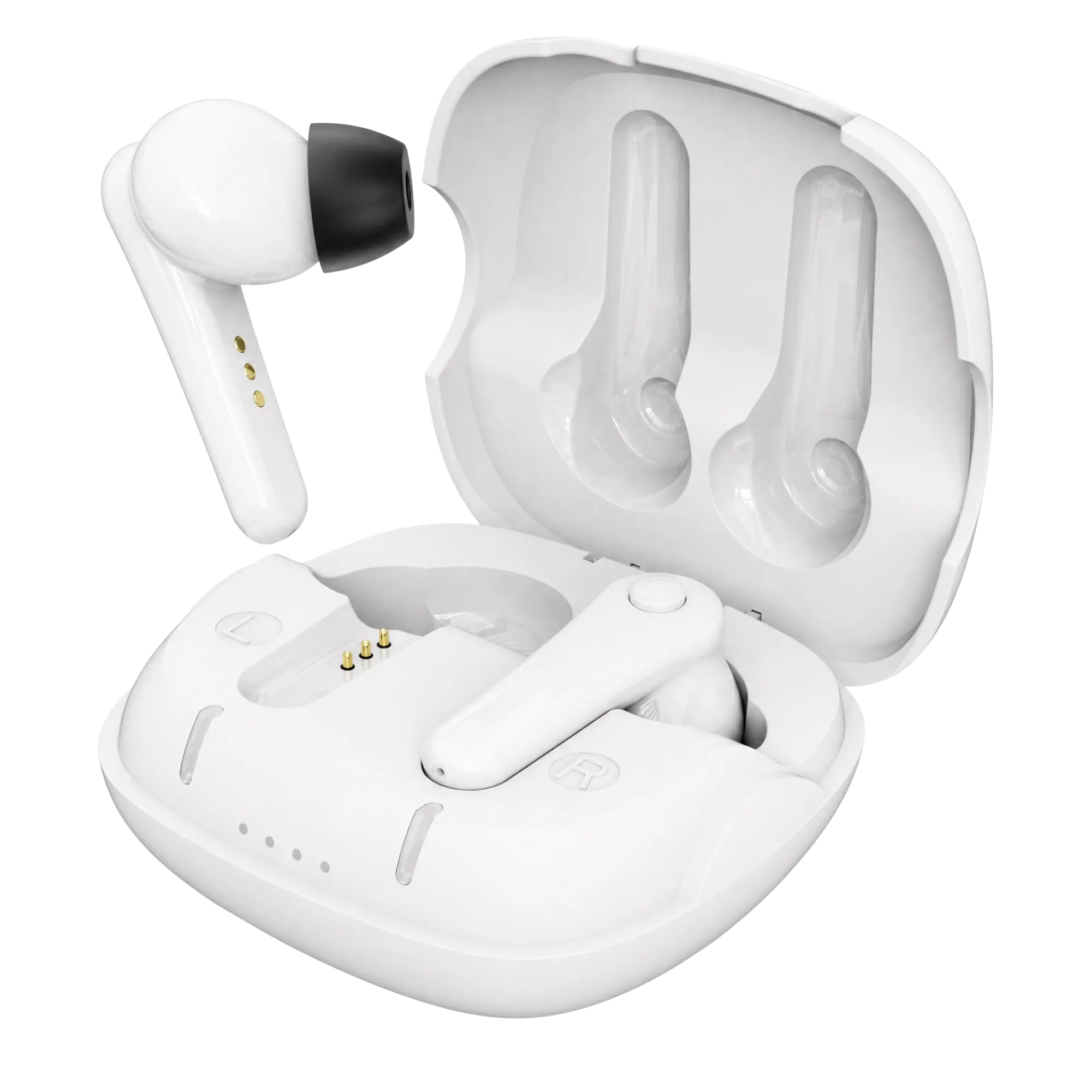
For most of the last century the line between a consumer earbud and a hearing aid was obvious. It is no longer. The AirPods Pro 2 recently received regulatory approval in Japan as a Class II medical device, carrying a self-administered "Hearing Check" and a "Hearing Aid Program" that amplifies sound based on the thresholds that check produces.
What has been missing is independent measurement. Prescription hearing aids are fitted using published formulas, and clinicians verify the result with a probe microphone in the patient ear. Consumer devices use proprietary algorithms whose internal parameters are not disclosed, so the only way to know what they deliver is to measure it. Researchers at Saiseikai Utsunomiya Hospital and Keio University School of Medicine did exactly that.
About This Study
Title: Amplification characteristics of the Hearing Aid Program in AirPods Pro 2
Authors: Ko Hentona, Daisuke Suzuki, Ayaka Sasaki, Takashi Okada, Keigo Oguchi, Motoki Izawa, Hyugo Doi, Wataru Fujita, Mika Yokoyama, Eri Suzuki, Hiroyuki Ozawa, Akifumi Tomizawa, Naoki Oishi, Seiichi Shinden
Affiliations: Department of Otolaryngology, Saiseikai Utsunomiya Hospital, Utsunomiya, Japan; Department of Otolaryngology, Head and Neck Surgery, Keio University School of Medicine, Tokyo; Sapporo Medical University, Sapporo; Faculty of Health Sciences at Narita, International University of Health and Welfare; Otology and Audiology Center, Keio University Hospital, Tokyo
Journal and date: Auris Nasus Larynx, published 3 August 2026
Study type: Laboratory real-ear measurement study in adult volunteers
PubMed DOI: 10.1016/j.anl.2026.05.007
Background: Why the Researchers Looked at This
A hearing aid is not simply a volume knob. Hearing loss is almost never flat, so a properly fitted device gives different amounts of extra sound at different pitches, usually much more in the 2,000 to 4,000 Hz region where consonants live and much less in the low frequencies where most people still hear well. The formulas that turn an audiogram into that target curve are called prescriptive rules, and the two used worldwide are NAL-NL2 and DSL v5.
Clinicians check whether a device is hitting those targets using real-ear insertion gain, or REIG. A thin probe microphone is placed in the ear canal, the sound level is measured with and without the device running, and the difference at each frequency is the insertion gain. It is the closest thing audiology has to an objective receipt for a fitting.
Consumer devices complicate this because the algorithm is a trade secret. If the target is unknown, a clinician cannot check the fitting against it, and a buyer has no way to tell whether a device that feels comfortable is actually delivering the amplification their audiogram calls for. The only remaining option is to measure the output directly and compare it against the published rules.
How the Study Was Done
The team selected five representative audiometric profiles from an independent dataset collected with the AirPods Hearing Check: a 30 dB flat loss, a 50 dB flat loss, a low-frequency loss, a gradually sloping high-frequency loss, and a steeply sloping high-frequency loss. That last pair matters most in practice, because sloping high-frequency loss is the classic age-related pattern.
Each profile was programmed into the device in turn. Ten adult volunteers took part, with measurements taken in ten right ears inside a calibrated sound-treated booth. The stimulus was the International Speech Test Signal, presented at three input levels: 50 dB SPL for soft speech, 65 dB SPL for conversational speech, and 80 dB SPL for loud speech. Testing at three levels is deliberate, because modern hearing aids compress, giving more help to soft sounds and less to loud ones.
Measured insertion gain was then compared descriptively with the NAL-NL2 and DSL v5 targets calculated from the same device-derived thresholds. This was a characterisation study, not a trial of how well people heard, and the comparison was descriptive rather than statistically tested.
What the Researchers Found
Insertion gain varied with both the audiometric profile and the input level, which is what you would expect from a device doing genuine nonlinear processing rather than applying one fixed boost.
Gain generally increased toward the mid and high frequencies relative to the low frequencies. So the device is shaping sound rather than simply making everything louder, and it is shaping in broadly the right direction for typical hearing loss.
Insertion gain fell progressively as the input level rose, with marked attenuation at 80 dB SPL. In plain terms, the louder the incoming sound, the less the device added, and at the loudest test level it added very little. That behaviour protects against uncomfortable output, and it is consistent with a design brief of listening support rather than full amplification.
The central comparison is the one that matters most. Measured insertion gain was generally lower than the NAL-NL2 and DSL v5 targets calculated from the same thresholds, and the variation of gain across frequencies was less pronounced than the targets called for. In other words, the delivered response was both quieter than prescription and flatter than prescription, giving less of the specific high-frequency emphasis that the formulas ask for.
The authors read this as an emphasis on listening support and output control rather than strict prescriptive matching, and they call for further work on the clinical role of consumer-oriented hearing devices.
This is not an isolated result. A 2025 real-ear analysis by Knoetze and colleagues in Audiology Research measured six FDA-registered self-fitting over-the-counter hearing aids and found that user-selected gain generally sat below NAL-NL2 targets, particularly at higher frequencies, and that it stayed there over time rather than being nudged upward with experience. Whether that shortfall matters is suggested by a 2022 study of 885 first-time and 330 experienced hearing aid users in the International Journal of Audiology, in which experienced users whose fittings deviated least from generic prescriptions reported the greatest overall benefit.
What It Means for People with Hearing Loss
The practical takeaway is not that consumer hearing features are useless. They are clearly doing structured, level-dependent amplification, and for someone with a mild loss who wants occasional help in a quiet restaurant that may be exactly enough. The takeaway is that comfortable and correct are not the same measurement.
Under-amplification at high frequencies has a specific symptom. Speech sounds present but unclear, vowels come through and consonants do not, and the listener says they can hear people talking but cannot make out the words. If that describes your experience after several weeks with a device, the honest next step is to question the fitting rather than assume nothing more can be done.
There is a genuine tension here. Full prescriptive gain is often rejected by first-time users as harsh, and a gentler start improves the odds that someone keeps wearing anything at all. A reasonable device gives you room to move toward your targets over weeks instead of locking you permanently below them.
Why Frequency-Specific Fitting Is the Part That Matters
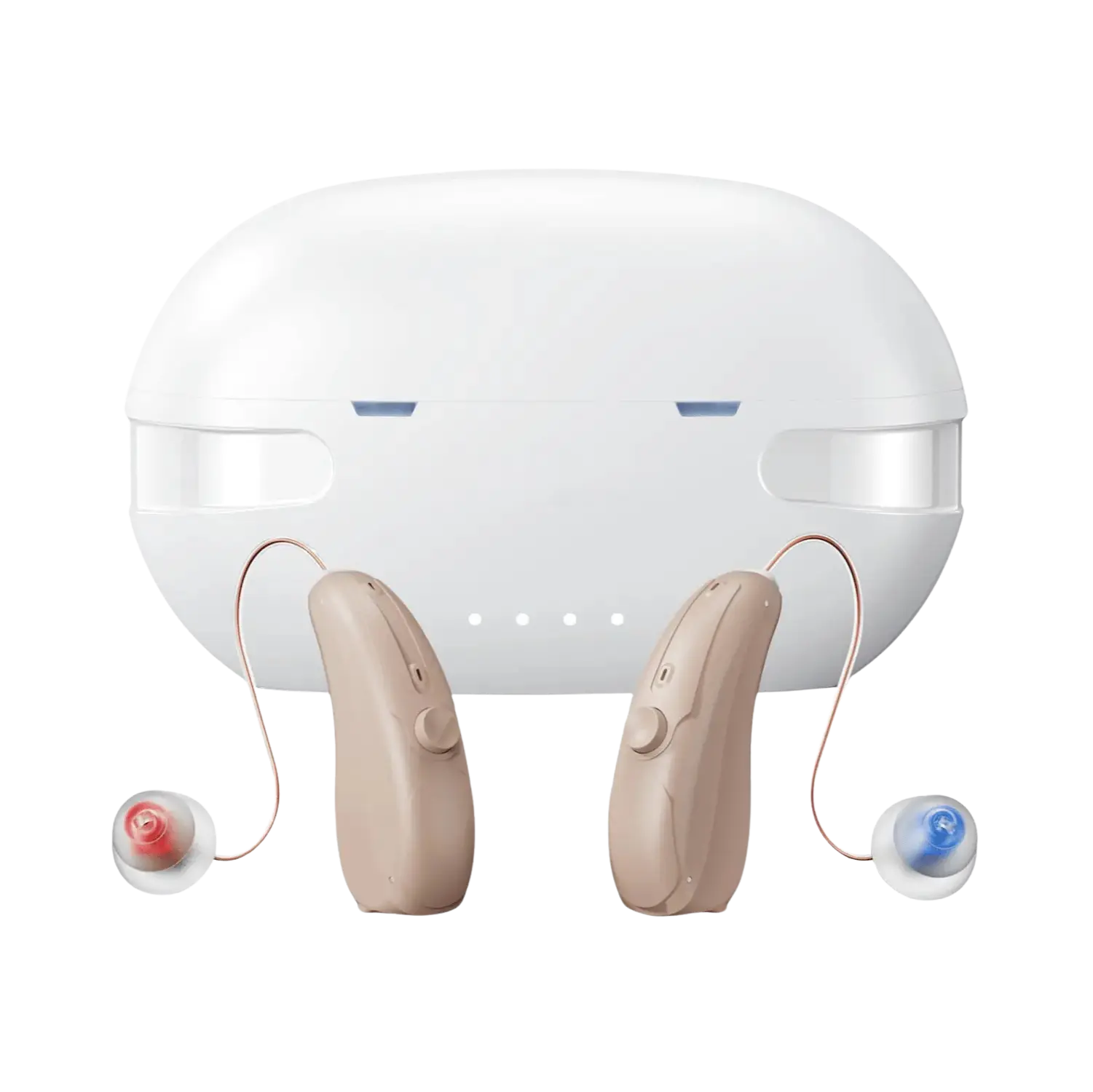
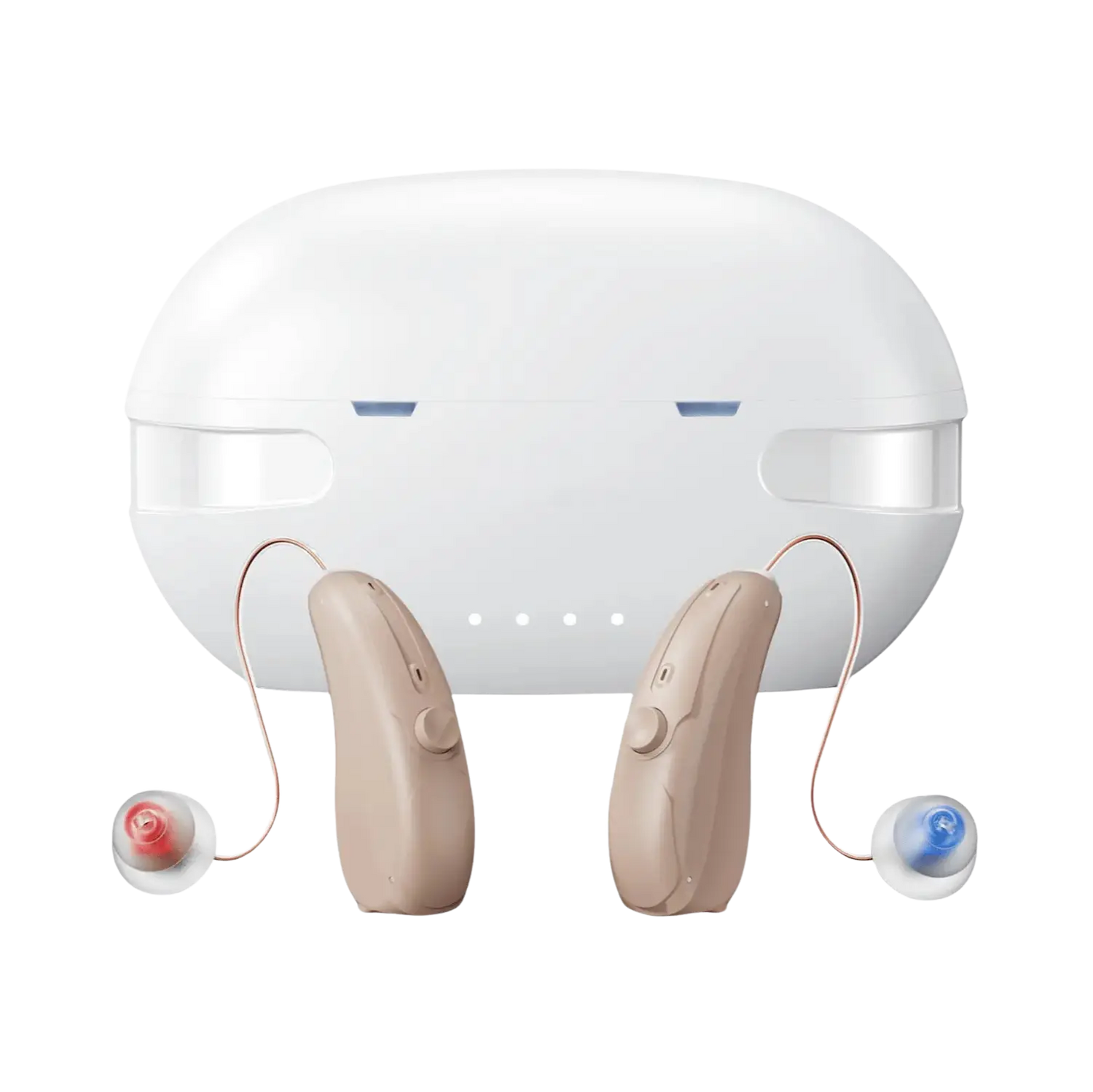
The finding at the centre of this study is about frequency shaping, meaning how much more gain a device applies at 4,000 Hz than at 500 Hz for the same ear. A device can only shape as finely as its processing allows, which is why channel count is not marketing trivia. Panda Quantum is a receiver-in-canal over-the-counter hearing aid built around 16-channel WDRC, so gain is set band by band rather than as one broad tilt, and that band-by-band control is what clear speech in noisy environments actually rests on.
Quantum also includes the app-based in-ear hearing test. After delivery you pair the aid with the Panda app, which runs a frequency-specific test through the aid itself and then auto-programs gain and frequency response to your own audiogram, much like a clinical fitting. That is app-based hearing personalization anchored to your measured thresholds rather than to an average listener. Alongside it, Quantum runs adaptive noise reduction, supports Bluetooth for calls, TV and music, delivers up to 80 hours of total battery with the case, and ships with a 5-year warranty and 45-day returns.
One honest limit applies to every device in this category, Panda included. Over-the-counter hearing aids are intended for mild to moderate hearing loss. Severe or profound loss still benefits most from a clinical fitting verified with the same real-ear measurement this study used.

Limitations of This Research
This was a small characterisation study: ten right ears, five simulated audiometric profiles, one device model on one firmware version. Nothing here tells us how well anyone actually heard, because no speech testing, listening effort measure or satisfaction questionnaire was included. The profiles came from device-derived thresholds rather than clinical audiograms, and the comparison against prescriptive targets was descriptive rather than statistically tested, so no effect size or confidence interval is attached to the shortfall.
There is also a moving-target problem. Consumer device behaviour is set by software that can be revised at any time, so a measurement made in one firmware release is not guaranteed to describe the next. The PubMed record for this article does not disclose funding sources or competing interests.
Where This Leaves Us
Consumer earbuds with hearing features have made amplification radically easier to obtain, and that is a real gain for a population where most people who could benefit from a hearing aid do not have one. What this study adds is a note of precision: easy access to amplification is not the same as access to a fitting, and the gap between the two shows up exactly where speech clarity is decided, in the high frequencies. Anyone choosing a device on convenience alone deserves to know that the amplification they get may be gentler and flatter than their audiogram calls for, and that this is a fixable problem rather than a permanent ceiling.
Hentona K, Suzuki D, Sasaki A, Okada T, Oguchi K, Izawa M, Doi H, Fujita W, Yokoyama M, Suzuki E, Ozawa H, Tomizawa A, Oishi N, Shinden S. Amplification characteristics of the Hearing Aid Program in AirPods Pro 2. Auris Nasus Larynx. 2026. Retrieved from PubMed. DOI: https://doi.org/10.1016/j.anl.2026.05.007