Nearly 1 in 3 Maritime Workers Has Noise-Induced Hearing Loss
A new systematic review pooling data from more than 285,000 seafarers estimates that roughly 30 percent live with noise-induced hearing loss.
Occupational noise is one of the largest preventable causes of hearing damage worldwide. Researchers estimate it accounts for about 16 percent of all disabling hearing loss in adults, and unlike age-related decline it is almost entirely avoidable with the right protection and monitoring.
Ships are a difficult environment to get right. Engine rooms, pump rooms and deck machinery generate continuous noise, crews live inside that noise for weeks at a time, and shift patterns make it hard to give the ear meaningful recovery periods. A research team in Brazil set out to pull together every study that has measured how common hearing loss actually is in this workforce.
Title: Prevalence of noise-induced hearing loss in maritime workers: A systematic review and meta-analysis
Authors: Maria Eduarda Oliveira Onuki, Giulia Carvalho Lopes Mangas, Livia Nunes Albertini, Beatriz do Prado Aguiar, Giovana Rossi, Eliane Marcilio Santos, Ana Luiza Cabrera Martimbianco
Affiliations: Universidade Metropolitana de Santos, Santos, Brazil
Journal: International Maritime Health, published 3 August 2026
Study type: Systematic review and meta-analysis of 12 observational studies covering 285,818 workers
PubMed DOI: https://doi.org/10.5603/imh.107163
Background: Why the Researchers Looked at This
Noise-induced hearing loss, often shortened to NIHL, is damage to the sensory hair cells of the inner ear caused by exposure to loud sound. It typically begins in the high frequencies, around 3,000 to 6,000 Hz, which is exactly the range that carries consonant sounds such as s, f, t and th. That is why the first complaint is rarely quietness. It is usually that people mumble, especially in a group.
Tinnitus, the perception of ringing, hissing or buzzing with no external source, often travels alongside it. Both are permanent once established, which makes prevalence data more than an academic exercise. If a sector has a high background rate, that is an argument for stricter noise limits, better hearing protection and routine audiometric screening.
Individual studies of seafarers have reported wildly different rates, from single digits to well over half the crew. The authors wanted to know what the pooled picture looks like once those studies are assessed and combined systematically.
How the Study Was Done
The team searched six databases, MEDLINE, CINAHL, the Cochrane Library, EMBASE, LILACS and Web of Science, up to 28 February 2024. They deliberately placed no restriction on language or publication status, which reduces the risk of missing work published outside English-language journals.
Eligible studies were observational and had to report the prevalence of noise-induced hearing loss or a related auditory condition in maritime workers. Methodological quality was scored with the Joanna Briggs Institute checklist, a standard tool for appraising prevalence studies. Where the data allowed, results were pooled in a meta-analysis, and the overall strength of the evidence was graded using the GRADE framework.
Twelve studies met the criteria, together covering 285,818 maritime workers. Roughly one third of them were rated high quality and most satisfied at least five of the JBI criteria, giving an overall picture of moderate methodological quality.
What the Researchers Found
The pooled prevalence of noise-induced hearing loss across the twelve studies was 30 percent, with a 95 percent confidence interval running from 19 to 42 percent. In plain terms, the best estimate is that close to one in three maritime workers has measurable noise damage, and the true figure is very likely somewhere between one in five and two in five.
That confidence interval is wide for a reason. Heterogeneity between the studies was substantial, with an I-squared value of 87 percent, meaning most of the variation in reported rates came from real differences between the studies rather than from chance. Different fleets, different job mixes and different diagnostic thresholds all pull the number around.
Three risk factors showed up consistently. Advancing age was one, longer time in the job was another, and specific roles were the third. Personnel working in engine rooms and crews on petroleum vessels carried the highest burden, which fits what is known about where the loudest and most continuous noise sits on a ship.
Tinnitus was also common. In some of the included studies more than half of the exposed workers reported it, a reminder that the audiogram alone understates how much the ear has been through.
The authors are careful to label the certainty of this evidence as very low under GRADE. The direction of the finding is clear and consistent, but the precision of the 30 percent figure should not be over-read.
What It Means for People with Hearing Loss
The practical lesson generalises well beyond ships. Noise damage accumulates quietly over years, and because it starts in the high frequencies most people do not notice it as volume loss. They notice it as difficulty following conversation when there is background noise, which is the single most common reason anyone eventually gets tested.
If you have spent a career around engines, machinery, aircraft, power tools or amplified music, the useful step is a baseline hearing test now rather than a comparison test in ten years. Hearing protection still matters even after damage has started, because the remaining hair cells are worth protecting.
It is also worth separating two problems. Protection prevents further loss. Amplification helps with the loss that is already there. Neither substitutes for the other, and people with occupational noise exposure often need both at the same time.
When Noise Damage Shows Up First in Noisy Rooms
Because this review points to high-frequency damage and tinnitus as the signature pattern of occupational noise exposure, the everyday complaint that follows is almost always the same one. Speech falls apart when there is competing sound in the room, even though quiet one-to-one conversation still feels fine.
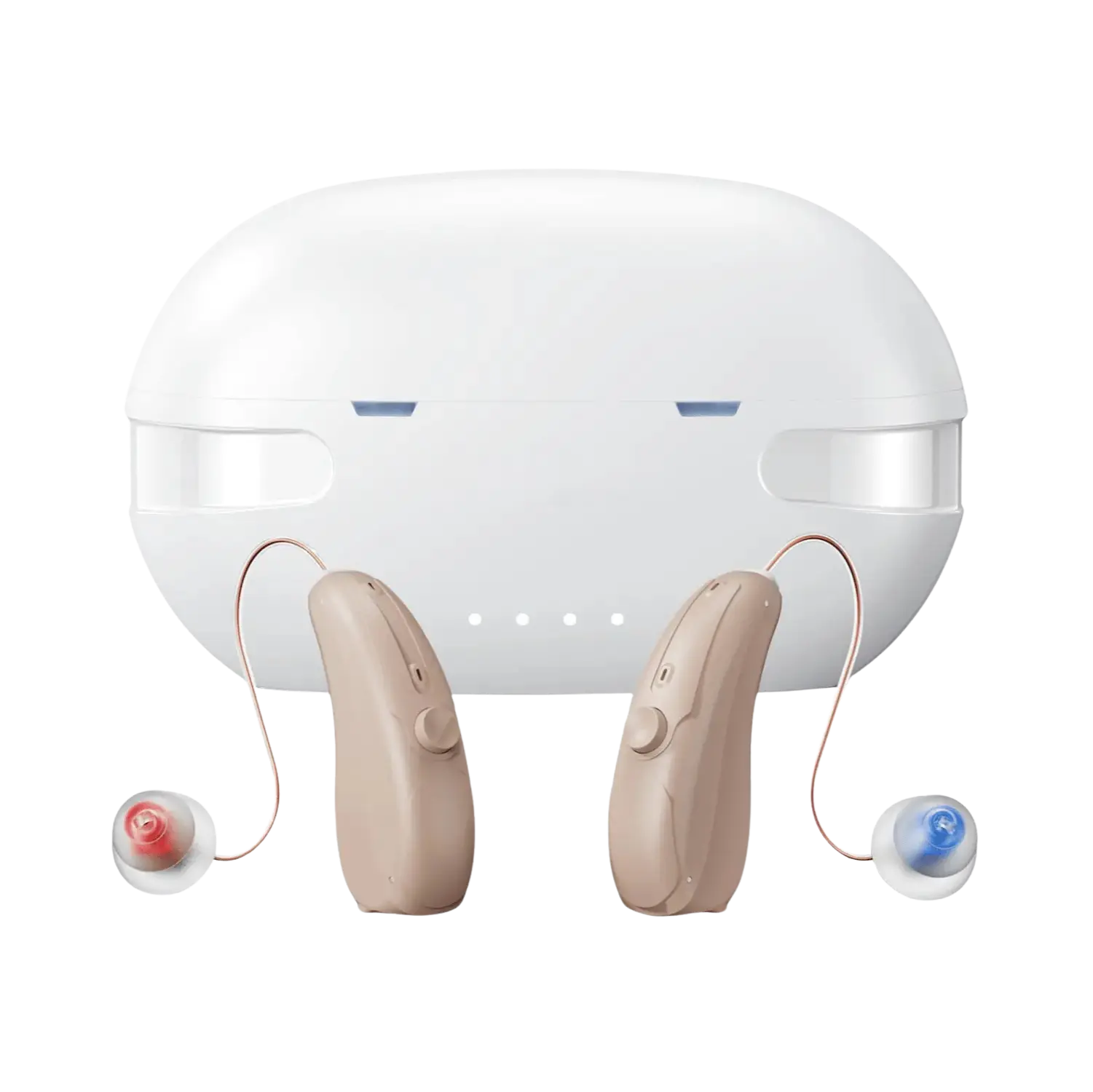
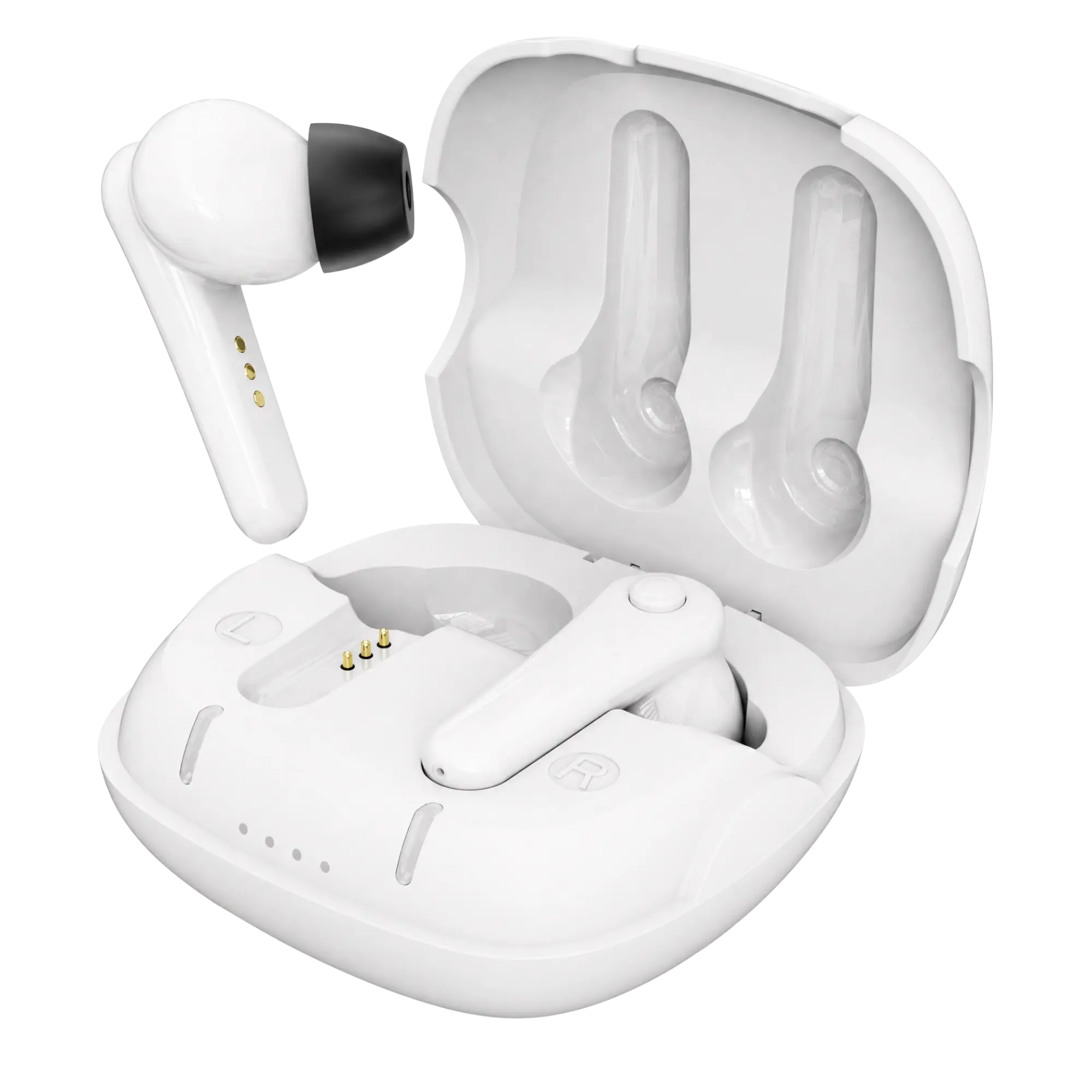
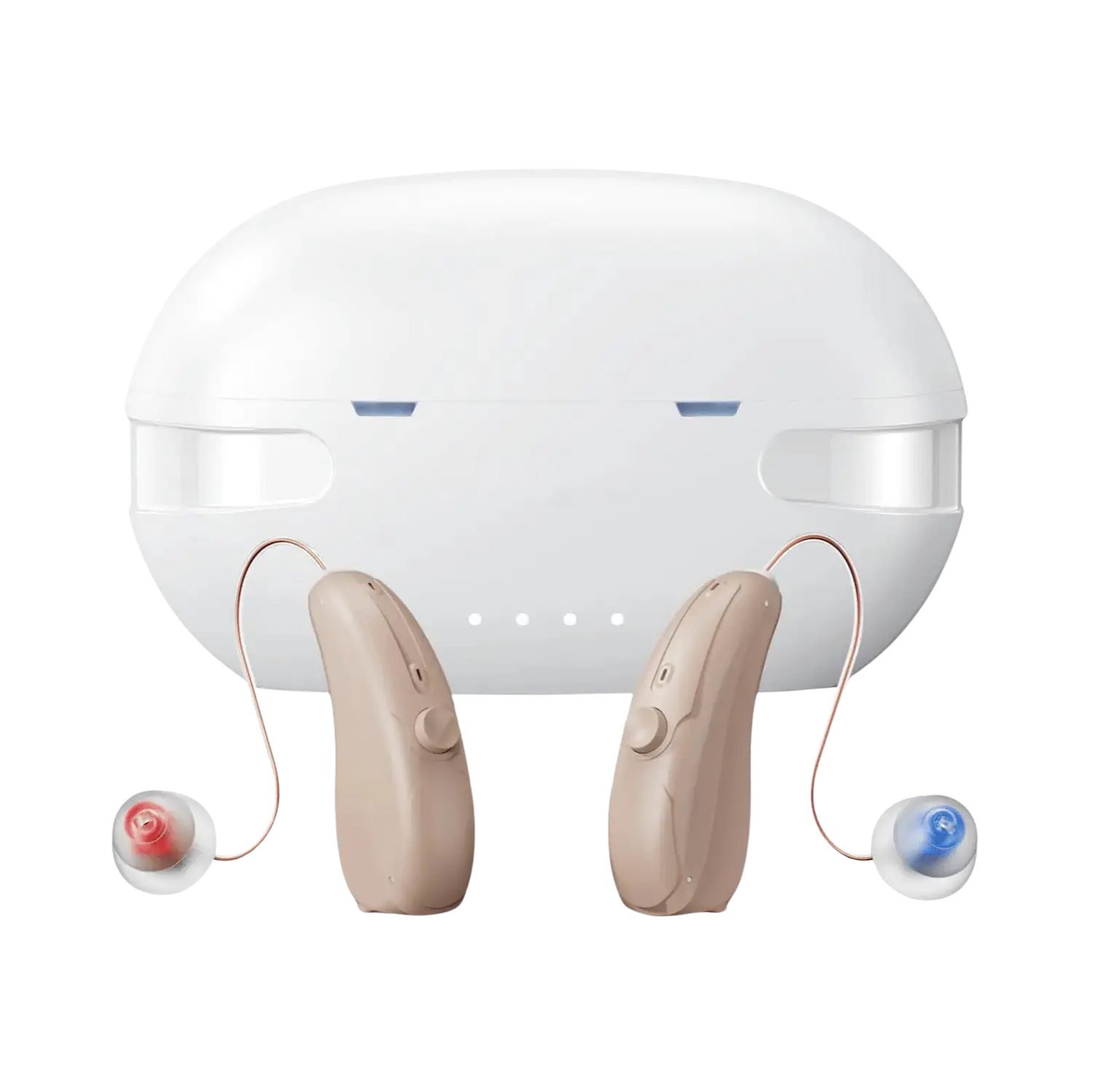
That is the problem modern speech-in-noise hearing aids are built around. Panda Quantum is a receiver-in-canal device with 16-channel processing and active noise reduction, designed to lift the frequencies that carry consonants while holding back steady background sound, so speech stays clearer in noisy environments. It pairs with the Panda app for an in-ear hearing test that programs gain and frequency response to the wearer's own audiogram, and it runs up to 80 hours with its case while streaming calls, TV and music over Bluetooth. It carries a 5-year warranty and a 45-day return window.
One caveat worth stating plainly. Over-the-counter devices are cleared for mild to moderate hearing loss. Long-serving engine room crews sometimes fall outside that range, and severe or profound loss still benefits most from a clinical fitting.

Limitations of This Research
The most important limitation is the one the authors flag themselves. The certainty of the evidence was rated very low, driven by the substantial heterogeneity across studies and by the observational design of everything included. Prevalence studies also differ in how they define hearing loss, which frequencies they average and which workers they sample, and those choices alone can move a reported rate by tens of percentage points.
Only twelve studies qualified, and while the combined sample is large it is dominated by a small number of big datasets. Overall methodological quality was moderate rather than high. The abstract does not disclose funding sources or competing interests, so those cannot be assessed here.
What to Do With This
Treat the 30 percent figure as a signal rather than a precise measurement. The consistent part of the finding, that noise exposure duration, age and specific high-noise roles drive hearing loss in this workforce, is well supported and is exactly what preventive policy should be built around. For anyone with a noisy work history, the actionable version is short: protect what is left, get tested sooner than feels necessary, and treat difficulty in background noise as a reason to check rather than a reason to wait.
Onuki MEO, Mangas GCL, Albertini LN, Aguiar BP, Rossi G, Santos EM, Martimbianco ALC. Prevalence of noise-induced hearing loss in maritime workers: A systematic review and meta-analysis. International Maritime Health. 2026. Retrieved from PubMed. https://doi.org/10.5603/imh.107163