Hearing Aid Use Was a Protective Factor in a New Cognitive Risk Model
In 524 older adults with hearing loss, a machine learning model built to predict cognitive impairment identified hearing aid use and social activity as the two protective variables among five key predictors.
The link between hearing loss and cognitive decline is one of the better-established findings in geriatric research, and it has been reinforced by large trials and long-running cohort studies over the past decade. What has been harder to do is turn that population-level association into something a clinician or a community nurse can act on for an individual patient sitting in front of them.
A study published in Frontiers in Public Health tries to close that gap by building and validating a risk prediction model specifically for older adults who already have hearing loss. The result is notable less for the modeling itself than for which variables ended up mattering.
About This Study
Title: Development and temporal validation of a prediction model for cognitive impairment in older adults with hearing loss based on the population health risk management framework
Authors: Xianyan Xu, Mengting Li, Xuling Gao, Yan Wang, Jun Ge, Rong Zhao, Li Ma, Qiankun Liu
Affiliations: Department of Nursing, Bengbu First People's Hospital, Bengbu, Anhui, China; School of Nursing, Bengbu Medical University, Bengbu, Anhui, China
Journal: Frontiers in Public Health, volume 14, published July 16, 2026
Study type: Cross-sectional development cohort with temporally independent validation, machine learning prediction model
PubMed DOI: 10.3389/fpubh.2026.1873714
Background: Why the Researchers Looked at This
Cognitive impairment is a broad term covering measurable decline in memory, attention, language, or executive function that falls short of dementia. It is usually screened rather than diagnosed in community settings, most often with a short pencil-and-paper instrument. Older adults with hearing loss carry a higher risk than their normally hearing peers, and several mechanisms have been proposed, including reduced social engagement, increased cognitive load during listening, and shared underlying vascular or neurodegenerative causes.
Knowing that a group is at elevated risk is not the same as knowing which members of that group are at highest risk. Risk stratification tools, which assign an individual a probability based on a handful of measurable characteristics, are common in cardiovascular and diabetes care but scarce in this area.
The authors framed their variable selection using the Integrated Framework for Population Health Risk Management, which pushes a model to consider behavioral and social factors alongside clinical ones rather than restricting itself to test results. That framing turns out to matter for what the model found.
How the Study Was Done
The team enrolled 524 adults aged 60 and over with hearing loss between June 2023 and September 2024. Rather than splitting the sample randomly, they split it by enrollment period: everyone recruited from June 2023 to May 2024 formed the development cohort of 367 participants, and everyone recruited from June to September 2024 formed a temporally independent validation cohort of 157. Testing a model on a later time period is a more demanding check than a random split, because it asks whether the model still works on people recruited under slightly different conditions.
Cognitive function was assessed with the Montreal Cognitive Assessment, a widely used screening instrument. Scores below 26, after the standard correction for years of education, were classified as indicating cognitive impairment.
Candidate predictors were narrowed using LASSO regression, a technique that shrinks the influence of weak variables toward zero and effectively selects a compact set. Six machine learning models were then trained and compared on area under the curve, F1 score, sensitivity, specificity, Youden index, predictive values, calibration, and decision curve analysis. The best performer was tuned by grid search with five-fold cross-validation, and SHAP analysis was applied to show how much each variable contributed to individual predictions.
What the Researchers Found
Cognitive impairment was present in 40.8 percent of the sample. That is a high figure, and it reflects both the age of the group and the fact that every participant already had hearing loss, which is itself a risk marker.
LASSO reduced the candidate list to five predictors: age, pure-tone average, depression, hearing aid use, and social activities. Pure-tone average is the standard summary measure of hearing sensitivity, calculated by averaging the softest sound a person can detect across several frequencies, with higher numbers meaning worse hearing.
Three of those five pushed risk upward. In multivariable analysis, depression, older age, and a higher pure-tone average were each associated with greater likelihood of cognitive impairment. The remaining two ran the other way: hearing aid use and participation in social activities were both protective factors.
Random Forest performed best of the six models in the validation cohort. After tuning, it reached an area under the curve of 0.952 in the training cohort and 0.871 in validation, with validation F1 of 0.737, sensitivity of 0.779, Youden index of 0.583, and negative predictive value of 0.863. The drop from 0.952 to 0.871 between training and validation is the expected pattern and suggests the model is not simply memorizing its training data.
The SHAP analysis ranked pure-tone average, age, and social activities as the three most influential variables in the optimized model. Two of those three are things nobody can change. The third is not.
What It Means for People with Hearing Loss
The practical value of a model like this is that it separates the fixed from the modifiable. You cannot change your age, and the degree of hearing loss already present is largely fixed as well. But whether you use amplification, whether you are socially active, and whether depression is being treated are all open questions with real answers.
It is worth being careful about what protective means here. This is a cross-sectional study, so it shows that hearing aid users in this sample had lower odds of cognitive impairment, not that wearing hearing aids prevented decline. People who are already cognitively healthier may be more likely to obtain and persist with hearing aids, which would produce the same pattern. The association is consistent with what randomized work has suggested in at-risk groups, but this study on its own cannot establish direction.
What the model does support is a simple screening logic. If you are older, have poorer hearing sensitivity, are not using amplification, and have withdrawn from social activity, you sit in the higher-risk region of this model, and that is a reasonable prompt to raise the subject with a clinician.
Why Staying in the Conversation Is the Modifiable Part
Social activity was one of the three most influential variables in the tuned model, and it sits closest to daily life. The reason people with hearing loss withdraw from social settings is rarely a lack of interest. It is that restaurants, family gatherings, and group conversation are exactly the environments where hearing loss is hardest to compensate for, and following a conversation across a noisy table becomes exhausting enough that declining the invitation starts to feel easier.
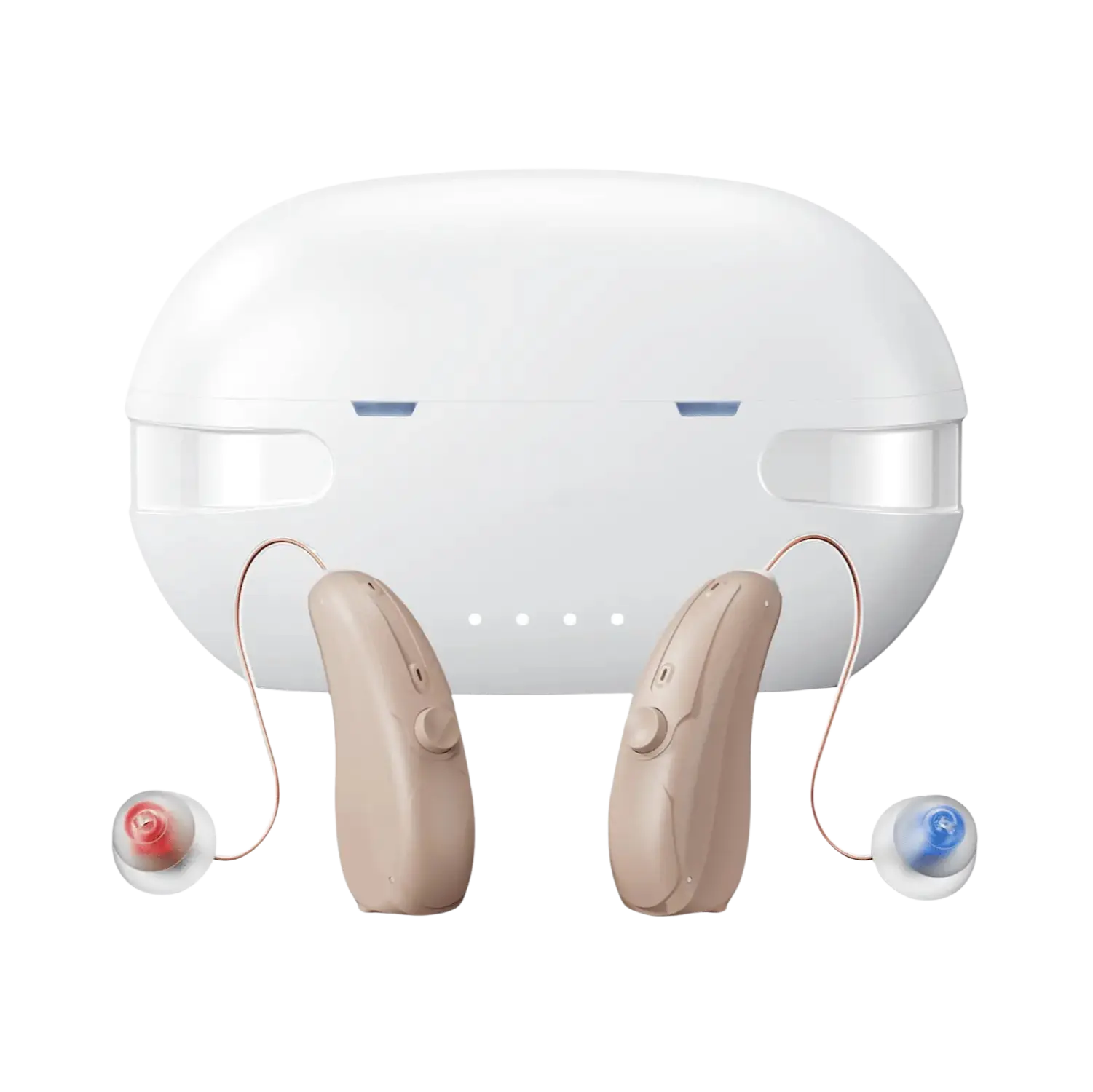
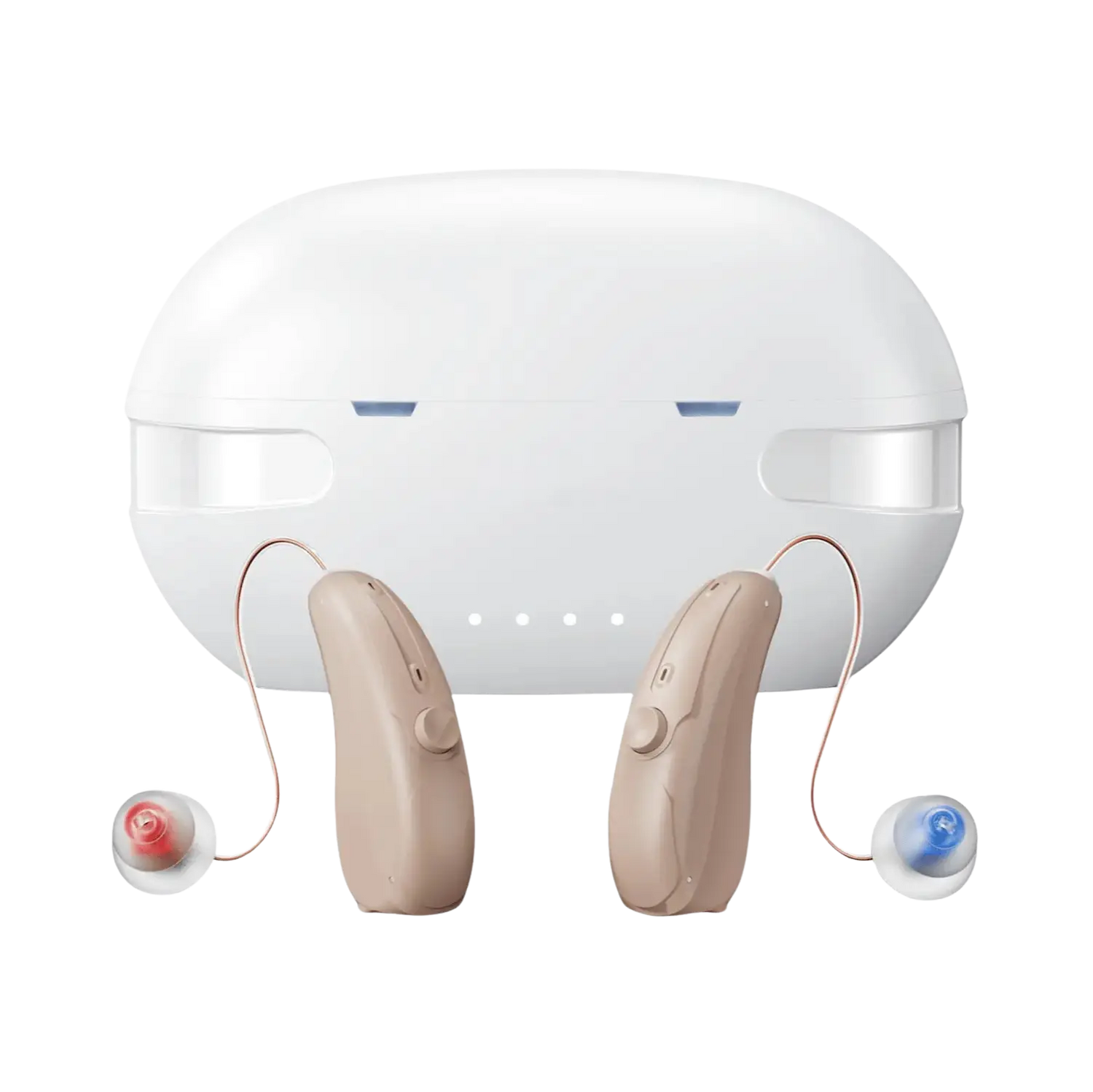
Panda Quantum is designed for that specific problem. It is a 16-channel receiver-in-canal device with active noise reduction, built to prioritize clear speech in noisy environments rather than simply making everything louder, and it uses the same app-based in-ear hearing test as Panda Air: the app runs a frequency-specific test through the aid and programs it to your audiogram, so the app-based hearing personalization is done on your own hearing rather than a generic preset.
Practical details matter for something worn through a long day of company: Quantum runs up to 80 hours total with its charging case, and supports Bluetooth for calls, television, and music. It carries a 5-year warranty and a 45-day return period. As always with this category, over-the-counter devices are approved for mild to moderate hearing loss, and severe or profound loss is still best served by a clinical fitting.

See the Panda Quantum specifications
Limitations of This Research
The largest limitation is the cross-sectional design. Predictors and outcome were measured at the same time, so the model can identify who currently has cognitive impairment but cannot establish that any variable caused it. Reverse causation is a live possibility for both protective factors, since cognitive difficulty can itself reduce the likelihood of adopting hearing aids or maintaining a social calendar.
The sample came from a single hospital catchment in Anhui, China, and the validation cohort was small at 157 participants, so performance figures carry meaningful uncertainty and may not transfer to different health systems or populations. The Montreal Cognitive Assessment is a screening tool rather than a diagnosis, and hearing aid use appears to have been recorded as a simple yes or no without capturing hours of daily wear or fitting quality. The abstract as indexed on PubMed does not report funding sources or conflict-of-interest disclosures.
What to Do With This
A prediction model does not tell you what will happen to you, and this one is early work from a single site. What it does usefully is name the short list. Out of everything the researchers could have measured, five variables carried the signal, and two of them are things a person can act on. If you have hearing loss and have been drifting out of the conversations you used to be part of, the model puts that drift among the most influential factors it found, which is a reasonable argument for addressing the hearing first and letting the social part follow.
Xu X, Li M, Gao X, Wang Y, Ge J, Zhao R, Ma L, Liu Q. Development and temporal validation of a prediction model for cognitive impairment in older adults with hearing loss based on the population health risk management framework. Frontiers in Public Health. 2026;14:1873714. Retrieved from PubMed. https://doi.org/10.3389/fpubh.2026.1873714