Music Training and Music Therapy in Childhood Hearing Loss: What the Evidence Shows
A new narrative review pulls together the research on how children who use cochlear implants or hearing aids respond to music, and where that exposure may benefit listening, language, and emotional development.
For a child growing up with hearing loss, the early years are spent learning to make sense of a sound environment that is filtered through hearing aids or cochlear implants. Most rehabilitation effort is focused on speech: helping the child catch consonants, follow conversation, and build vocabulary. Music is sometimes treated as optional, even though it occupies a huge share of everyday auditory life.
A team at the University of Milan and the Fondazione IRCCS Ca' Granda Ospedale Maggiore Policlinico set out to map what the published research actually says about music-based interventions for children with hearing loss. Their goal was to summarize the state of the evidence on three different strands: how children with hearing loss perceive music, what happens when they receive structured musical training, and what is known about music therapy in this population.
About This Study
Title: Music-Based Interventions in Childhood Hearing Loss: A Comprehensive Narrative Review
Authors: Mirko Aldè, Letizia Casella, Umberto Ambrosetti, Stefania Barozzi, Eleonora Gandolfo, Federica Di Berardino, Diego Zanetti
Affiliations: Department of Clinical Sciences and Community Health, University of Milan, Italy; Audiology Unit, Department of Specialist Surgical Sciences, Fondazione IRCCS Ca' Granda Ospedale Maggiore Policlinico, Milan, Italy.
Journal and date: Children (Basel, Switzerland), April 21, 2026.
Study type: Comprehensive narrative review of the published literature.
PubMed DOI: 10.3390/children13040574
Background: Why the Researchers Looked at This
Childhood hearing loss affects auditory development, but its impact does not stop there. Speech, language, social interaction, and emotional regulation all rest in part on access to sound. Cochlear implants and hearing aids restore meaningful access to the sounds of speech, but they do not always restore the more fine-grained features of music in the same way.
Pitch refers to how high or low a sound is. Timbre refers to the quality that lets a listener tell a piano from a violin even when both play the same note. Rhythm refers to the timing pattern of sound. These three building blocks are processed somewhat differently by the auditory system, and they are also represented differently by the signal-processing inside hearing devices. Researchers have a longstanding interest in whether structured exposure to music can help children with hearing loss sharpen these skills, and whether the benefits ripple out into language and well-being.
How the Study Was Done
This was a narrative review rather than a meta-analysis. The authors searched the published literature for studies involving children who use cochlear implants or hearing aids, and they organized what they found into three categories: musical auditory perception, musical training, and music therapy.
The first category covers studies that measured how accurately children with hearing loss can detect pitch differences, recognize melodies, identify timbre, or follow rhythmic patterns. The second category covers structured training programs that explicitly teach musical skills over time. The third category covers music therapy, which is closer to a clinical intervention and is often delivered by a credentialed therapist with specific developmental, social, or emotional goals in mind.
Because this is a narrative review, the authors describe trends across studies rather than calculating pooled effect sizes. They also flag where the evidence base is thin and where stronger study designs are needed.
What the Researchers Found
A consistent pattern emerged in the perception studies: children who use cochlear implants or hearing aids continue to show measurable limitations in pitch and timbre perception compared with their normally hearing peers. These limitations persist even after years of device use, which suggests they are tied to the way the devices encode complex sound rather than something that simply resolves with time.
Rhythm was a striking exception. Across the perception studies, rhythmic abilities were relatively preserved. That matters, because rhythm offers a usable entry point for music-based work even when pitch perception is harder.
In the musical training studies, programs that emphasized rhythm were associated with improvements in auditory perception, in linguistic processing, and in selected cognitive skills. The authors note that parental involvement appears to support better outcomes, and they observe that long-term study designs are still rare in this field.
The music therapy literature is the smallest and least developed of the three. Even so, the studies that exist describe potential benefits that go beyond auditory skills, including emotional regulation, social interaction, and quality of life. The authors call for more structured studies, with standardized protocols and outcome measures, before music therapy can be confidently positioned as a routine part of pediatric hearing rehabilitation.
Across all three strands, the overall message is cautious optimism. Music-based interventions appear to be a promising complementary approach for children with hearing loss, with rhythm-driven training currently the best-supported angle.
What It Means for People with Hearing Loss
For families navigating childhood hearing loss, the practical takeaway is that music does not have to be set aside. Singing, clapping, drumming, and rhythm games may be more than entertainment, and they may help reinforce listening skills the brain is already learning. Parents and clinicians can use rhythm-based activities as a bridge into more demanding pitch and melody work over time.
For adults with hearing loss, this review is also a reminder that music listening is a known weak spot for many hearing-aid users. Pitch and timbre cues that come through cleanly to a normally hearing listener can sound flat, harsh, or distorted through devices that were tuned primarily for speech. Hearing-aid technology that handles complex sound with more channels and that streams music directly to the ear can make music listening feel less like work.
Why Multichannel Processing and Direct Streaming Matter for Adults Who Want to Enjoy Music Again
A finding that pitch and timbre stay difficult even after years of device use lines up with what many adult hearing-aid users describe: speech sounds clear, but music feels muffled or thin. Two technical features tend to help. The first is more channels of processing, which lets the device handle different frequency regions independently rather than smearing them together. The second is direct streaming, which sends a clean digital signal from a phone or television straight to the hearing aid without losing detail in a noisy room.

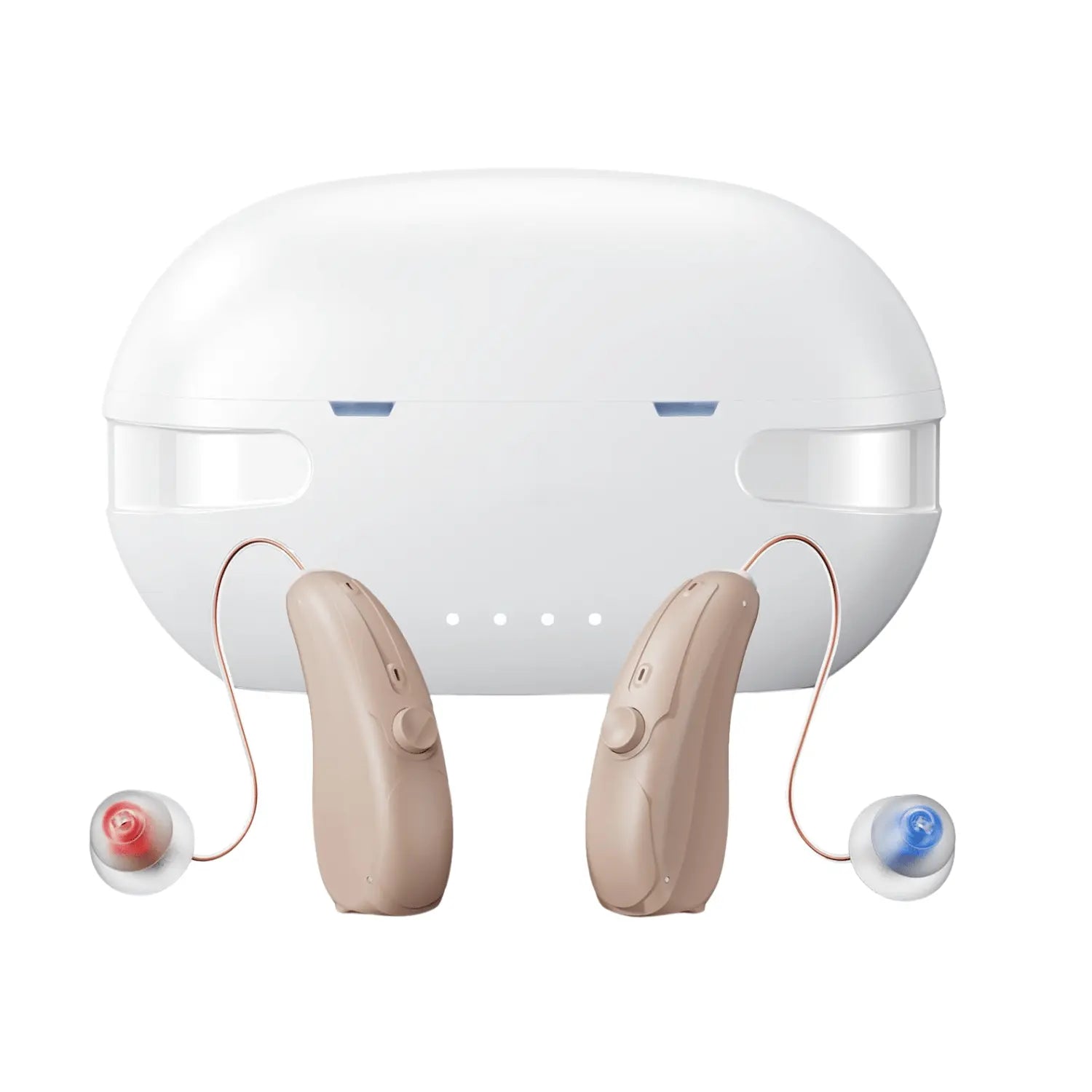
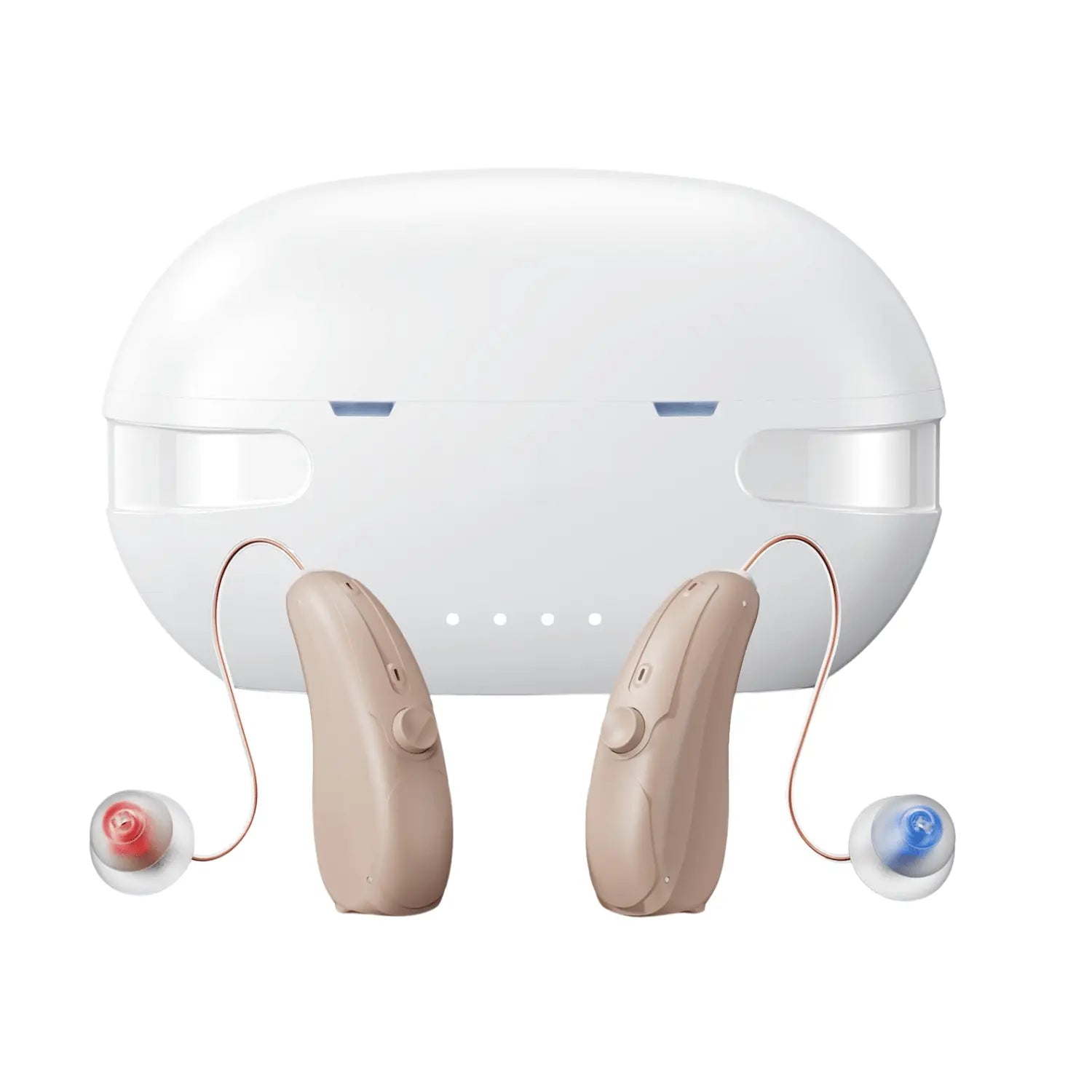
For adults with mild to moderate hearing loss who want a device built around that kind of listening, Panda Quantum is a 16-channel receiver-in-canal hearing aid with active noise reduction and Bluetooth for calls, television, and music. Up to 80 hours of total battery life with the case keeps the device usable through long days, and it ships with a 5-year warranty and a 45-day return window.
Panda Quantum also includes the Panda app-based in-ear hearing test. After the device arrives, the user pairs it with the Panda app, which then runs a frequency-specific hearing test through the hearing aid itself and automatically programs the gain and frequency response to match the user's audiogram, similar to what an audiologist does at a clinical fitting. OTC hearing aids are approved for mild to moderate hearing loss; people with severe or profound loss still benefit most from clinical fittings.
Limitations of This Research
As a narrative review, this paper does not pool effect sizes, and it cannot be used to estimate how large any specific benefit might be. The underlying studies vary widely in design, age range, device type, training duration, and outcome measures, which makes direct comparison difficult. Long-term follow-up is uncommon, parental involvement is reported inconsistently, and studies of music therapy in particular are scarce.
The authors did not report a commercial conflict of interest in the abstract. Their conclusions are explicit that more structured research with standardized protocols and outcome measures is still needed.
Where This Leaves Us
For families and clinicians, music-based work, especially rhythm-led training, looks like a reasonable complement to standard rehabilitation for children with hearing loss. For adults already living with hearing loss, the takeaway is more personal: music does not have to be the part of life that quietly drops away, and the right device features can make a real difference in how it sounds.
Aldè M, Casella L, Ambrosetti U, Barozzi S, Gandolfo E, Di Berardino F, Zanetti D. Music-Based Interventions in Childhood Hearing Loss: A Comprehensive Narrative Review. Children (Basel). 2026. Retrieved from PubMed. https://doi.org/10.3390/children13040574