Just Three Months of Hearing Aids Quiets the Aging Brain's Strain to Hear Speech in Noise, MEG Study Finds
First-time hearing aid users with age-related hearing loss showed measurable changes in auditory cortex activity within 90 days, suggesting the older brain rapidly adapts when listening gets easier.
Trouble following conversation in restaurants, family gatherings, or busy meeting rooms is one of the most common complaints from older adults with age-related hearing loss. Many people pull back from social settings rather than keep asking others to repeat themselves. Researchers have long suspected that the brain works overtime to compensate when the signal arriving at the ears is muffled, and that this extra effort may help explain links between untreated hearing loss and outcomes like social isolation and increased dementia risk.
A new study from the Montreal Neurological Institute at McGill University used magnetoencephalography to look directly at how that compensatory brain effort changes when older adults start wearing hearing aids for the first time. The team reports that as little as three months of regular daily hearing aid use is enough to produce measurable shifts in how the auditory cortex handles speech competing with background noise. The pattern is consistent with the brain easing off some of its compensatory work once the ears are doing more of the heavy lifting.
About This Study
Title: Short-term hearing aid use reduces auditory cortical responses to speech-in-noise listening among older adults with age-related hearing loss
Authors: Becker KM, Voss P, Martinez-Moreno ZE, Prevost F, Zeitouni A, Valdes AL, de Villers-Sidani E
Affiliations: Department of Neurology and Neurosurgery, Montreal Neurological Institute, McGill University; Department of Audiology and Speech-Language Pathology, McGill University Health Center; Department of Otolaryngology-Head and Neck Surgery, McGill University; Trinity College Institute of Neuroscience and Global Brain Health Institute, Trinity College Dublin
Journal & pub date: Frontiers in Aging Neuroscience, April 16, 2026
Study type: Preliminary neurophysiological cohort study using magnetoencephalography
PubMed / DOI: 10.3389/fnagi.2026.1690956
Background: Why the Researchers Looked at This
Age-related hearing loss, or presbycusis, is the gradual high-frequency hearing loss that affects most adults over 65. It is now recognized as one of the largest modifiable risk factors for cognitive decline, in part because struggling to make out speech in noise consumes mental resources that would otherwise be available for memory and attention. The brain compensates for a fuzzier sound signal by recruiting more neural activity in the auditory cortex, the part of the cerebral cortex that processes sound.
Magnetoencephalography, abbreviated MEG, is a brain-imaging method that records the tiny magnetic fields produced by neural activity. It has millisecond timing precision, which makes it well suited for tracking how the brain reacts as a sentence unfolds against background noise. Hearing aids are widely prescribed for age-related hearing loss, but relatively few studies have looked at whether wearing them can change the brain's listening strategy and how quickly that shift might happen.
The Montreal team set out to ask a focused version of that question: in adults newly fitted with hearing aids, do auditory cortex responses during speech-in-noise listening look different after a few months of daily use, and do those neural changes line up with how well people understand speech in noise?
How the Study Was Done
The researchers recruited older adults with age-related hearing loss who were being fitted with hearing aids for the first time. Each participant completed an MEG scan during a speech-in-noise task, in which they listened to spoken words or sentences while a competing noise played in the background. Their job was to identify what they heard, and the scanner recorded the magnetic activity of their auditory cortex throughout.
Participants then went home and wore their hearing aids during their normal daily routines. After roughly three months of regular use, they returned to the lab and repeated the same MEG speech-in-noise task. The researchers compared each person's brain responses before and after the hearing aid wear period, and then looked at whether changes in brain activity tracked with changes in how well people performed on the listening task.
The study was framed as preliminary, meaning the sample was relatively small and the goal was to test the approach and surface effects worth replicating in larger groups.
What the Researchers Found
Three months of regular daily hearing aid use produced significant reductions in auditory cortex activity in the right hemisphere during the speech-in-noise task. In other words, the brain was doing less work to handle the same listening situation than it had been doing before the hearing aids were fitted.
When the team looked at how individual people improved on the speech-in-noise test itself, that improvement was best explained by reductions in left-hemisphere activity rather than right-hemisphere activity. The two hemispheres seem to be doing somewhat different jobs during effortful listening, and the left side appears more closely tied to actual performance gains.
Both findings point to the same broader conclusion: the auditory cortex of older adults can be rapidly modulated by short-term hearing aid use. The authors describe this as evidence of experience-dependent plasticity, the brain's ability to reorganize itself in response to a change in input.
It is worth noting what the result is not. The researchers are not claiming that hearing aids reverse hearing loss in the inner ear. They are saying that once the signal arriving at the brain is improved, the brain quickly stops working as hard to compensate, and people get better at the task at the same time.
What It Means for People with Hearing Loss
Many first-time hearing aid users worry that adapting to hearing aids will be a long, frustrating process. Findings like these add to a growing body of evidence that the brain begins to adjust within weeks to months once it gets cleaner sound, and that this adjustment is visible in objective brain measurements, not just self-report.
It also reinforces a practical message: speech-in-noise performance is one of the most important real-world hearing aid outcomes. People rarely complain about quiet one-on-one conversation. They complain about restaurants, family dinners, places of worship, and meetings. The Montreal study suggests that the brain itself responds to a hearing aid's help in exactly that scenario, and that improvement on the noisy listening task and reductions in compensatory brain effort move together.
For the millions of adults who delay treating hearing loss for years, that suggests there is real value in not waiting. The longer the brain spends compensating without help, the more entrenched that compensatory pattern is likely to become.
Why Speech-in-Noise Performance Often Decides Whether People Stick With Hearing Aids
If the Montreal findings hold up in larger studies, the practical takeaway is that picking a hearing aid that genuinely helps in noisy settings matters more than picking one that simply makes quiet rooms louder. That is the gap that has historically separated clinical-grade hearing aids from basic amplifiers.

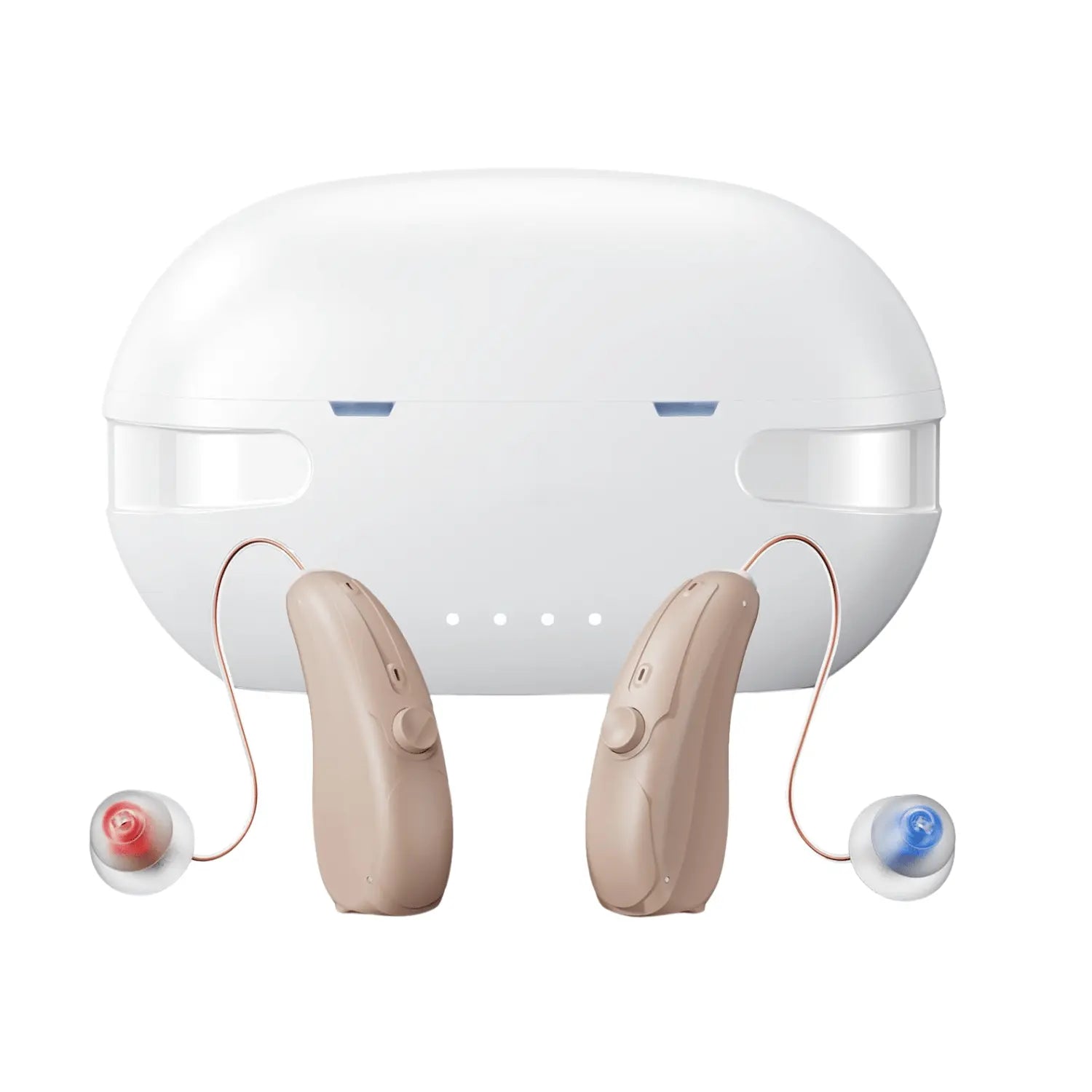
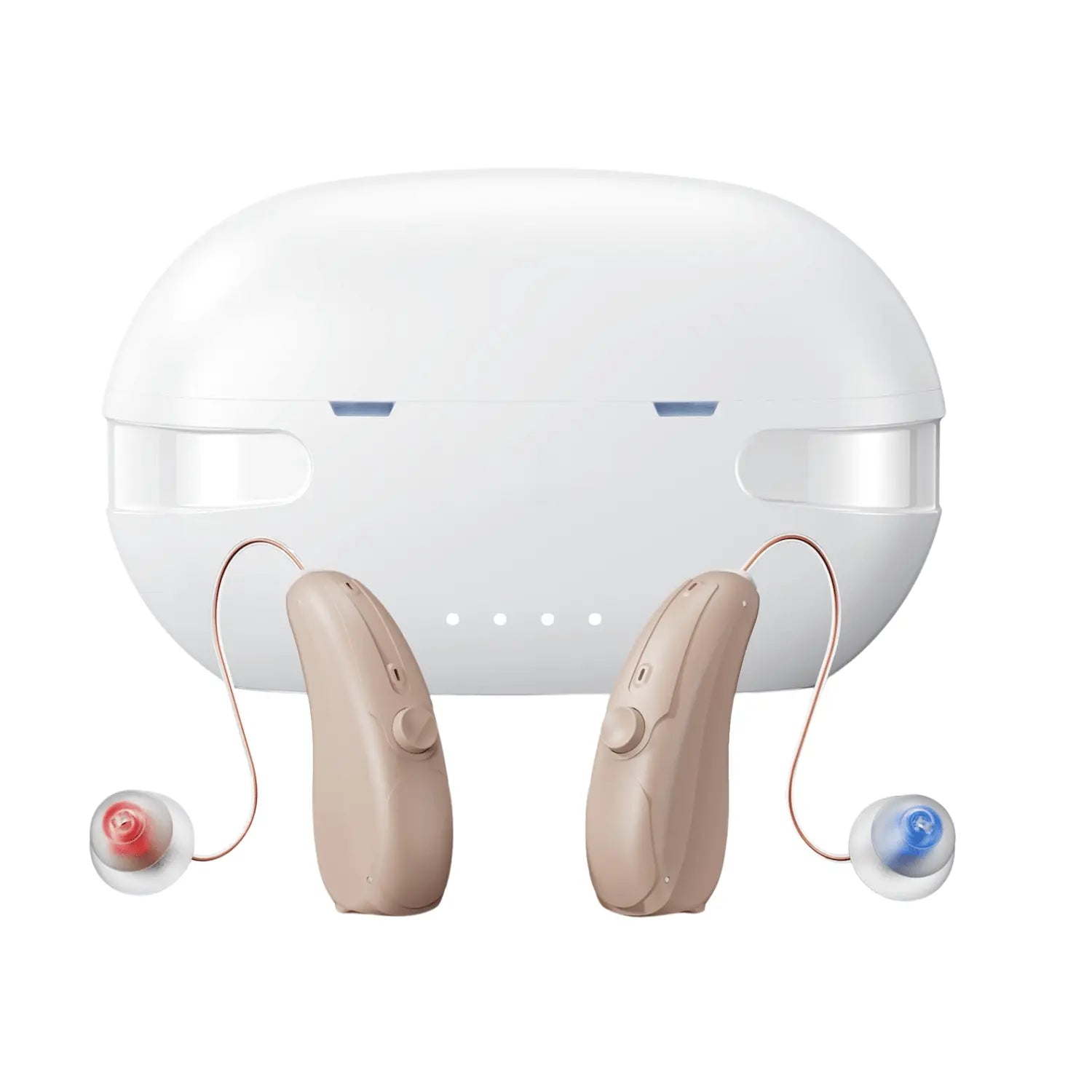
The Panda Quantum is a 16-channel receiver-in-canal model with active noise reduction, which is the type of processing the new research is talking about when it discusses how the brain responds to cleaner speech in background noise. It also includes Bluetooth for phone calls, TV, and music, and runs for up to 80 hours of total battery life with the included case. After delivery, the user pairs the device with the Panda app and runs an in-ear hearing test through the hearing aid itself; the app then automatically programs the gain and frequency response to match the user's audiogram, similar to what an audiologist does at a clinical fitting. Panda Quantum carries a 5-year warranty and a 45-day return window.
One caveat worth keeping in mind: over-the-counter hearing aids in the United States are approved for adults with mild-to-moderate hearing loss. People with severe or profound hearing loss usually still benefit most from a clinical fitting and may need a different category of device.
Limitations of This Research
The authors describe this as a preliminary study with a relatively small sample size, so the specific magnitude of the brain changes and which regions are most affected will need to be confirmed in larger groups. There is also no untreated control arm in the abstract, which makes it harder to fully separate the effect of hearing aid use from the effect of repeating the task. The abstract does not list funding sources or conflicts of interest.
It is also worth remembering that improvements on a controlled speech-in-noise task in the lab are not the same as a guaranteed real-world experience. Many factors, including consistent daily wear time, properly programmed settings, and realistic expectations, shape how much benefit any individual gets.
Where This Leaves Us
For older adults considering hearing aids, the Montreal study is a small but encouraging data point: the aging brain does not appear to be set in its ways when it comes to listening. Within about three months of regular daily wear, the auditory cortex begins to ease off the compensatory effort it had been pouring into hearing speech in noise, and that change tracks with measurable improvement on the task itself.
Becker KM, Voss P, Martinez-Moreno ZE, Prevost F, Zeitouni A, Valdes AL, de Villers-Sidani E. Short-Term Hearing Aid Use Reduces Auditory Cortical Responses to Speech-in-Noise Listening Among Older Adults With Age-Related Hearing Loss. Frontiers in Aging Neuroscience. 2026. Retrieved from PubMed. DOI: 10.3389/fnagi.2026.1690956
h1 style="font-family:Arial,sans-serif;font-size:2em;line-height:1.3;color:#272727;margin-bottom:10px">Just Three Months of Hearing Aids Quiets the Aging Brain's Strain to Hear Speech in Noise, MEG Study Finds
First-time hearing aid users with age-related hearing loss showed measurable changes in auditory cortex activity within 90 days, suggesting the older brain rapidly adapts when listening gets easier.
Trouble following conversation in restaurants, family gatherings, or busy meeting rooms is one of the most common complaints from older adults with age-related hearing loss. Many people pull back from social settings rather than keep asking others to repeat themselves. Researchers have long suspected that the brain works overtime to compensate when the signal arriving at the ears is muffled, and that this extra effort may help explain links between untreated hearing loss and outcomes like social isolation and increased dementia risk.
A new study from the Montreal Neurological Institute at McGill University used magnetoencephalography to look directly at how that compensatory brain effort changes when older adults start wearing hearing aids for the first time. The team reports that as little as three months of regular daily hearing aid use is enough to produce measurable shifts in how the auditory cortex handles speech competing with background noise. The pattern is consistent with the brain easing off some of its compensatory work once the ears are doing more of the heavy lifting.
About This Study
Title: Short-term hearing aid use reduces auditory cortical responses to speech-in-noise listening among older adults with age-related hearing loss
Authors: Becker KM, Voss P, Martinez-Moreno ZE, Prevost F, Zeitouni A, Valdes AL, de Villers-Sidani E
Affiliations: Department of Neurology and Neurosurgery, Montreal Neurological Institute, McGill University; Department of Audiology and Speech-Language Pathology, McGill University Health Center; Department of Otolaryngology-Head and Neck Surgery, McGill University; Trinity College Institute of Neuroscience and Global Brain Health Institute, Trinity College Dublin
Journal & pub date: Frontiers in Aging Neuroscience, April 16, 2026
Study type: Preliminary neurophysiological cohort study using magnetoencephalography
PubMed / DOI: 10.3389/fnagi.2026.1690956
Background: Why the Researchers Looked at This
Age-related hearing loss, or presbycusis, is the gradual high-frequency hearing loss that affects most adults over 65. It is now recognized as one of the largest modifiable risk factors for cognitive decline, in part because struggling to make out speech in noise consumes mental resources that would otherwise be available for memory and attention. The brain compensates for a fuzzier sound signal by recruiting more neural activity in the auditory cortex, the part of the cerebral cortex that processes sound.
Magnetoencephalography, abbreviated MEG, is a brain-imaging method that records the tiny magnetic fields produced by neural activity. It has millisecond timing precision, which makes it well suited for tracking how the brain reacts as a sentence unfolds against background noise. Hearing aids are widely prescribed for age-related hearing loss, but relatively few studies have looked at whether wearing them can change the brain's listening strategy and how quickly that shift might happen.
The Montreal team set out to ask a focused version of that question: in adults newly fitted with hearing aids, do auditory cortex responses during speech-in-noise listening look different after a few months of daily use, and do those neural changes line up with how well people understand speech in noise?
How the Study Was Done
The researchers recruited older adults with age-related hearing loss who were being fitted with hearing aids for the first time. Each participant completed an MEG scan during a speech-in-noise task, in which they listened to spoken words or sentences while a competing noise played in the background. Their job was to identify what they heard, and the scanner recorded the magnetic activity of their auditory cortex throughout.
Participants then went home and wore their hearing aids during their normal daily routines. After roughly three months of regular use, they returned to the lab and repeated the same MEG speech-in-noise task. The researchers compared each person's brain responses before and after the hearing aid wear period, and then looked at whether changes in brain activity tracked with changes in how well people performed on the listening task.
The study was framed as preliminary, meaning the sample was relatively small and the goal was to test the approach and surface effects worth replicating in larger groups.
What the Researchers Found
Three months of regular daily hearing aid use produced significant reductions in auditory cortex activity in the right hemisphere during the speech-in-noise task. In other words, the brain was doing less work to handle the same listening situation than it had been doing before the hearing aids were fitted.
When the team looked at how individual people improved on the speech-in-noise test itself, that improvement was best explained by reductions in left-hemisphere activity rather than right-hemisphere activity. The two hemispheres seem to be doing somewhat different jobs during effortful listening, and the left side appears more closely tied to actual performance gains.
Both findings point to the same broader conclusion: the auditory cortex of older adults can be rapidly modulated by short-term hearing aid use. The authors describe this as evidence of experience-dependent plasticity, the brain's ability to reorganize itself in response to a change in input.
It is worth noting what the result is not. The researchers are not claiming that hearing aids reverse hearing loss in the inner ear. They are saying that once the signal arriving at the brain is improved, the brain quickly stops working as hard to compensate, and people get better at the task at the same time.
What It Means for People with Hearing Loss
Many first-time hearing aid users worry that adapting to hearing aids will be a long, frustrating process. Findings like these add to a growing body of evidence that the brain begins to adjust within weeks to months once it gets cleaner sound, and that this adjustment is visible in objective brain measurements, not just self-report.
It also reinforces a practical message: speech-in-noise performance is one of the most important real-world hearing aid outcomes. People rarely complain about quiet one-on-one conversation. They complain about restaurants, family dinners, places of worship, and meetings. The Montreal study suggests that the brain itself responds to a hearing aid's help in exactly that scenario, and that improvement on the noisy listening task and reductions in compensatory brain effort move together.
For the millions of adults who delay treating hearing loss for years, that suggests there is real value in not waiting. The longer the brain spends compensating without help, the more entrenched that compensatory pattern is likely to become.
Why Speech-in-Noise Performance Often Decides Whether People Stick With Hearing Aids
If the Montreal findings hold up in larger studies, the practical takeaway is that picking a hearing aid that genuinely helps in noisy settings matters more than picking one that simply makes quiet rooms louder. That is the gap that has historically separated clinical-grade hearing aids from basic amplifiers.

The Panda Quantum is a 16-channel receiver-in-canal model with active noise reduction, which is the type of processing the new research is talking about when it discusses how the brain responds to cleaner speech in background noise. It also includes Bluetooth for phone calls, TV, and music, and runs for up to 80 hours of total battery life with the included case. After delivery, the user pairs the device with the Panda app and runs an in-ear hearing test through the hearing aid itself; the app then automatically programs the gain and frequency response to match the user's audiogram, similar to what an audiologist does at a clinical fitting. Panda Quantum carries a 5-year warranty and a 45-day return window.
One caveat worth keeping in mind: over-the-counter hearing aids in the United States are approved for adults with mild-to-moderate hearing loss. People with severe or profound hearing loss usually still benefit most from a clinical fitting and may need a different category of device.
Limitations of This Research
The authors describe this as a preliminary study with a relatively small sample size, so the specific magnitude of the brain changes and which regions are most affected will need to be confirmed in larger groups. There is also no untreated control arm in the abstract, which makes it harder to fully separate the effect of hearing aid use from the effect of repeating the task. The abstract does not list funding sources or conflicts of interest.
It is also worth remembering that improvements on a controlled speech-in-noise task in the lab are not the same as a guaranteed real-world experience. Many factors, including consistent daily wear time, properly programmed settings, and realistic expectations, shape how much benefit any individual gets.
Where This Leaves Us
For older adults considering hearing aids, the Montreal study is a small but encouraging data point: the aging brain does not appear to be set in its ways when it comes to listening. Within about three months of regular daily wear, the auditory cortex begins to ease off the compensatory effort it had been pouring into hearing speech in noise, and that change tracks with measurable improvement on the task itself.
Becker KM, Voss P, Martinez-Moreno ZE, Prevost F, Zeitouni A, Valdes AL, de Villers-Sidani E. Short-Term Hearing Aid Use Reduces Auditory Cortical Responses to Speech-in-Noise Listening Among Older Adults With Age-Related Hearing Loss. Frontiers in Aging Neuroscience. 2026. Retrieved from PubMed. DOI: 10.3389/fnagi.2026.1690956