Most Older Adults Still Prefer Provider-Fitted Hearing Aids Over OTC
A survey of 1,013 U.S. adults aged 50 and older found that comfort with over-the-counter hearing aids is growing, yet a large majority still say they would rather be fitted by a professional.
When the U.S. Food and Drug Administration opened the over-the-counter category in 2022, the expectation was that a large share of people with mild to moderate hearing loss would begin buying devices the way they buy reading glasses. Four years on, researchers are still trying to work out how much consumer behavior has actually shifted.
A new study in the American Journal of Audiology approaches the question from the consumer side rather than the clinic side. Instead of asking what people do after they walk into an audiology practice, it asks what makes them choose one purchasing route over another in the first place, and whether distinct types of buyers can be identified.
About This Study
Title: Understanding Hearing Health Care Choices and Customer Archetypes in an Era of Over-the-Counter Hearing Aids
Authors: Jasleen Singh, Sumitrajit Dhar
Affiliations: Department of Speech, Language, and Hearing Sciences, University of Massachusetts Amherst; The Roxelyn and Richard Pepper Department of Communication Sciences and Disorders, Northwestern University, Evanston, IL
Journal: American Journal of Audiology, published July 31, 2026
Study type: Cross-sectional consumer survey with principal components analysis and k-means clustering
PubMed DOI: 10.1044/2026_AJA-26-00032
Background: Why the Researchers Looked at This
Hearing health care in the United States has historically run through a single channel. A person notices difficulty hearing, sees an audiologist or hearing instrument specialist, receives a hearing test, and is fitted with devices programmed to that test result. That pathway is often described as provider-driven, because a clinician controls both the diagnosis and the device selection.
The over-the-counter category created a parallel route. OTC hearing aids are regulated devices that adults with self-perceived mild to moderate hearing loss can buy directly, without a prescription or a clinical fitting appointment. The policy goal was to reduce cost and remove the appointment as a barrier, since research has long shown that only a minority of people who could benefit from amplification actually use it.
What has been less clear is whether the availability of a cheaper, faster route actually changes what people want. Price is only one of several factors in a purchase decision that also involves trust, self-image, technical confidence, and insurance. Singh and Dhar set out to measure which of those factors predict the route a person says they would take.
How the Study Was Done
The researchers administered a 27-item survey, adapted from earlier work in the same area, through Qualtrics Research Panels. The sample was restricted to U.S. residents aged 50 and older who had never worn a hearing aid, which is an important design choice: it captures people at the decision point rather than people who have already committed to one pathway and formed habits around it.
More than 1,000 people were surveyed, and 1,013 completed responses were analyzed. The team used multiple linear regression to identify which respondent characteristics predicted a stated preference for the provider-driven route versus the over-the-counter route.
They then went a step further. Rather than treating respondents as a single population with an average preference, they applied principal components analysis to reduce the survey items to their underlying dimensions, and k-means clustering to group respondents into distinct types. This is a standard market-segmentation technique, and it is unusual to see it applied to hearing health care in a peer-reviewed audiology journal.
What the Researchers Found
The two headline numbers do not point in the same direction, and that is the most interesting part of the paper. Thirty-nine percent of respondents said they were comfortable with the idea of purchasing an over-the-counter hearing aid. But 84 percent said they preferred a provider-driven model of care. Comfort with the option, in other words, is not the same as preference for it, and a large group appears to hold both positions at once.
Two variables predicted which pathway a respondent leaned toward. The first was insurance coverage, which is unsurprising in a market where a professional fitting can cost several thousand dollars out of pocket and coverage varies enormously between plans. The second was the respondent's stage in what the authors call the hearing health care journey, meaning how far along they were in recognizing a problem and considering action.
The clustering analysis produced three customer archetypes, which the authors named the Empowered Evaluator, the Passive Traditionalist, and the Disengaged Skeptic. The groups differed on two dimensions in particular: where they sat in the hearing health care journey, and how comfortable they were managing transactions online.
Passive Traditionalists were more likely to pursue the provider-driven model than Empowered Evaluators were. That comparison is the practical core of the segmentation: the people who research their own options and are comfortable transacting online are measurably more open to buying directly, while those who prefer to be guided through the process gravitate toward the clinic.
The authors' overall reading is that the direct-purchase route has not displaced professional care in consumer preference, even though awareness and comfort have risen. Insurance status, journey stage, and buyer type all shape the decision, and none of them is addressed simply by putting a cheaper product on a shelf.
What It Means for People with Hearing Loss
If you have been putting off doing something about your hearing because you assume the only real option is an expensive clinical fitting, this study suggests you are far from alone, and also that the assumption is now outdated. Both routes exist, and the evidence here is that a substantial minority of people your age are already comfortable with the direct route.
The more useful takeaway may be the archetype framework. Knowing whether you are the sort of person who wants to compare specifications and set up a device yourself, or the sort who wants a professional to handle the whole process, is a better guide to which route will actually work for you than price alone. A cheap device that sits in a drawer because nobody helped you set it up is not a saving.
It is also worth noting what the 84 percent figure does not mean. It does not mean provider-fitted devices perform better for everyone, and the study did not measure outcomes at all. It measures what people say they would prefer before they have tried either.
What the Empowered Evaluator Is Actually Looking For
The archetype that this study found most open to direct purchase is the one that researches options independently and is comfortable buying online. What that group tends to want is not a stripped-down product but a device that handles the fitting step itself, so that skipping the clinic does not mean skipping personalization.
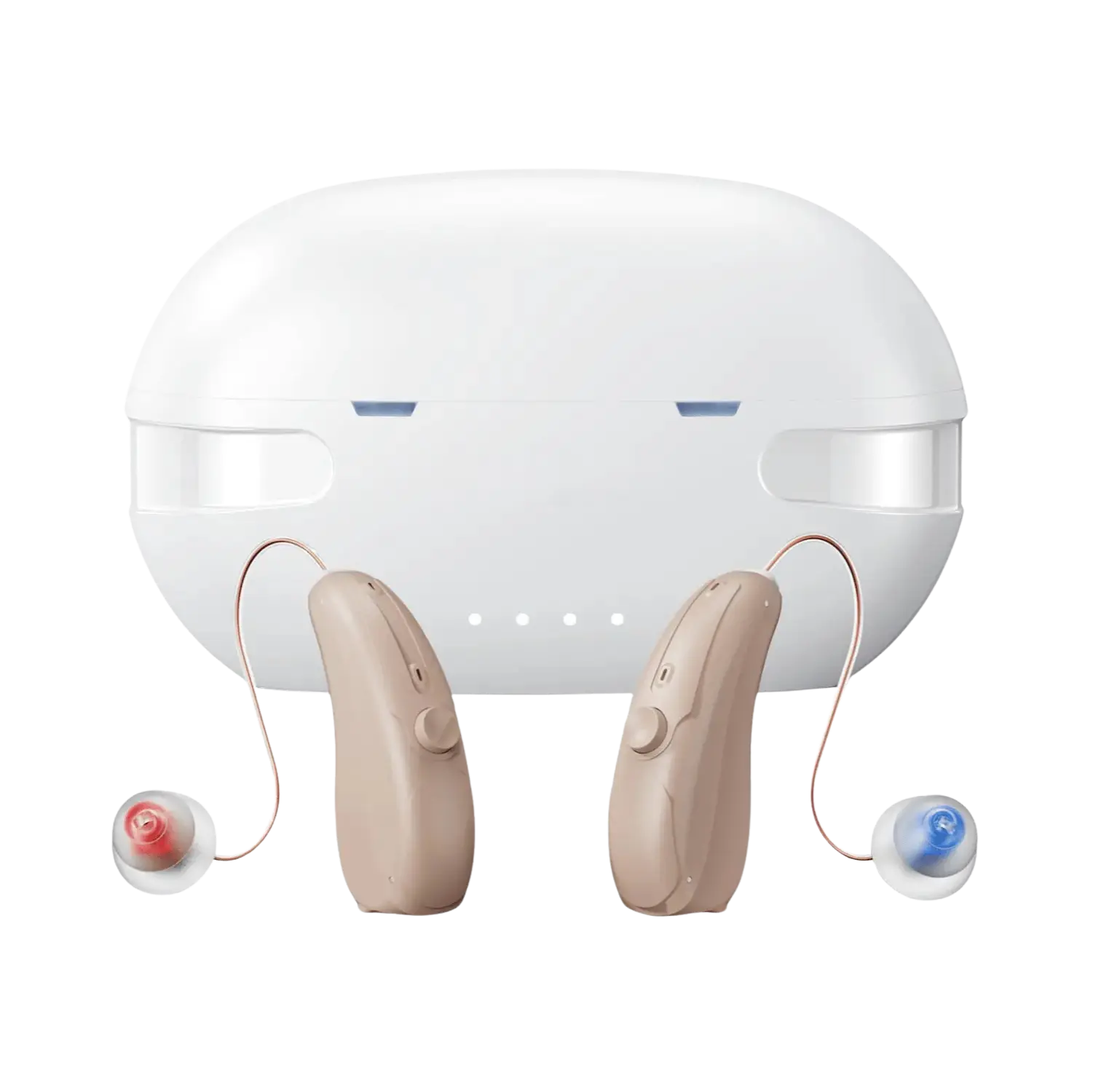
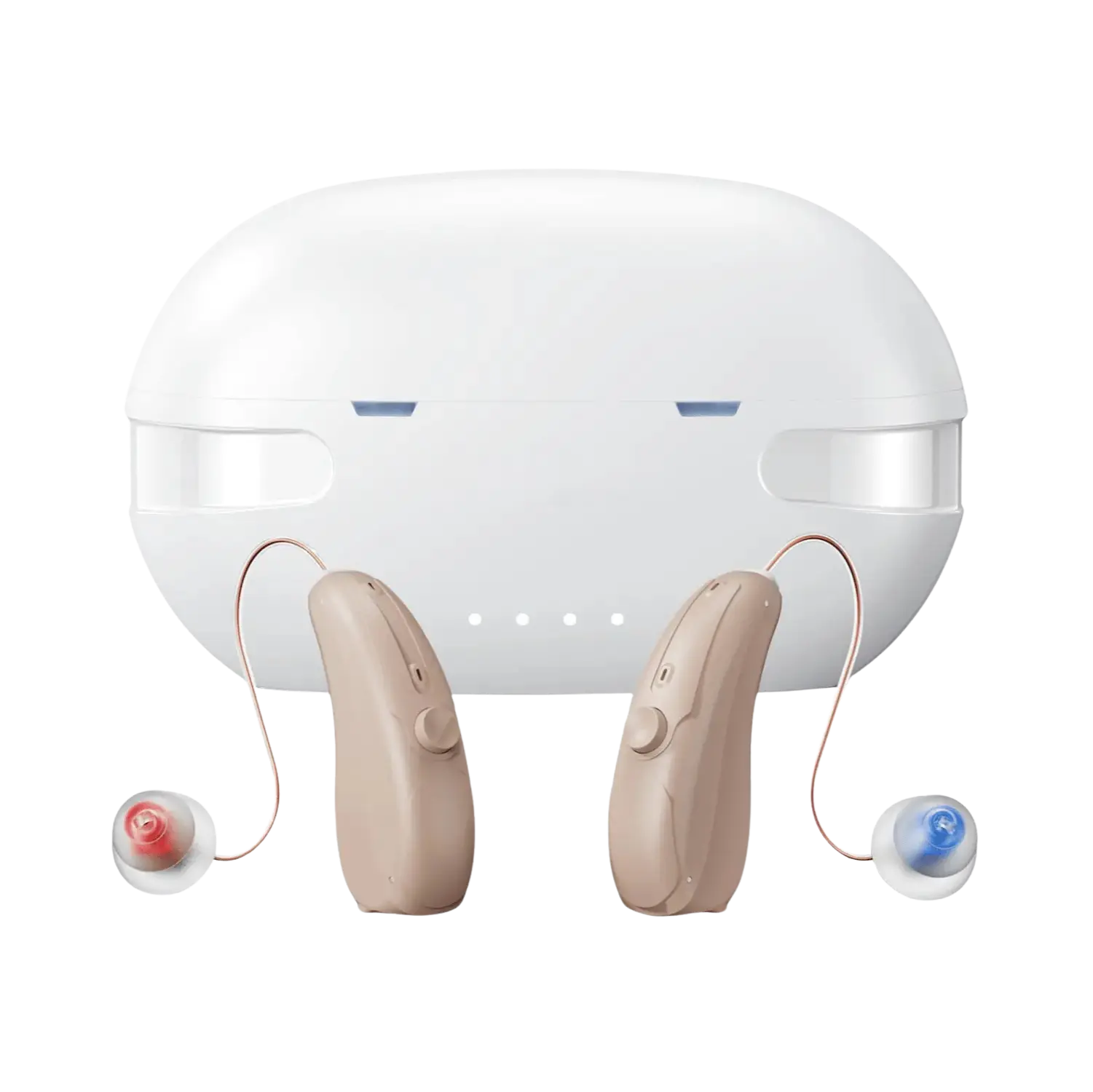
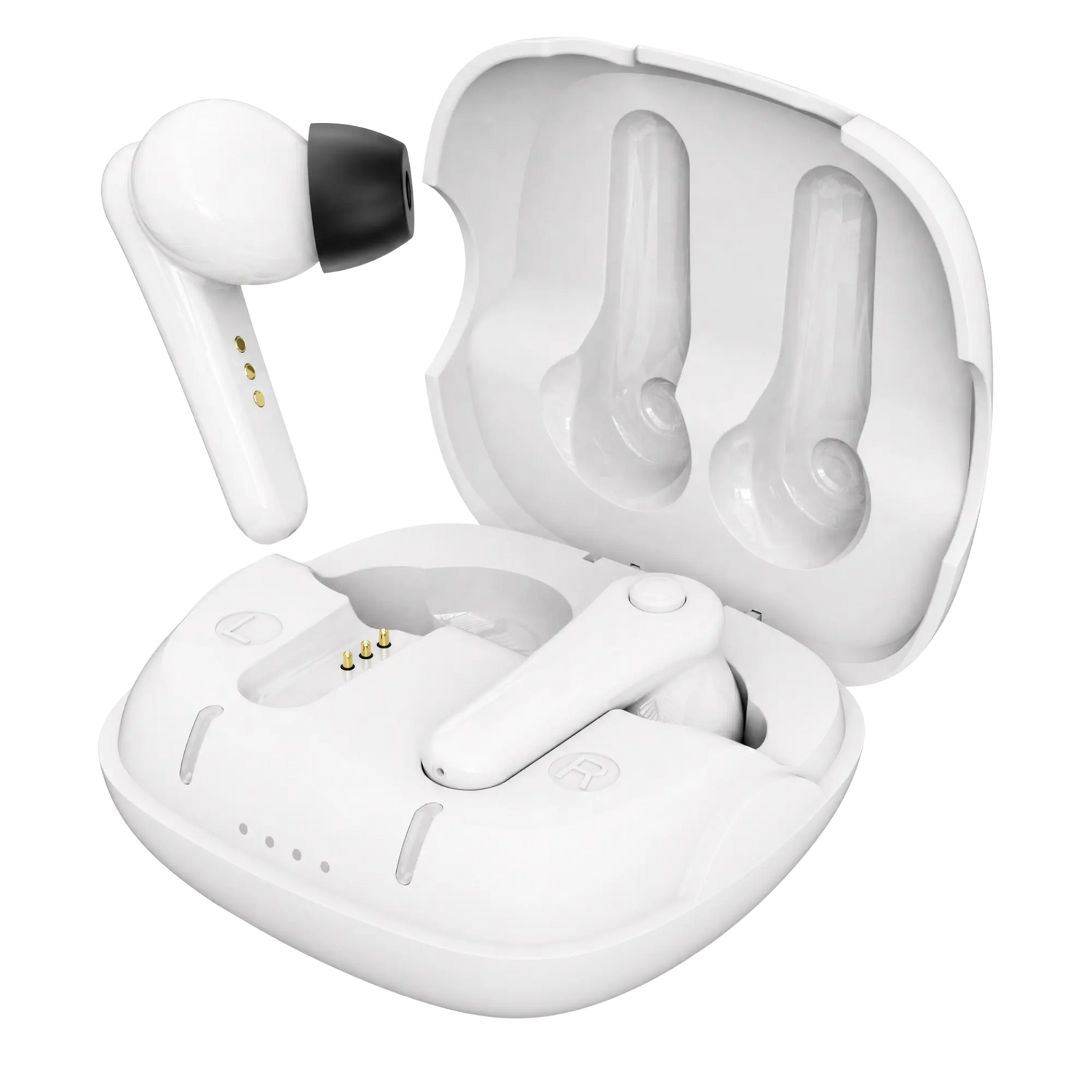
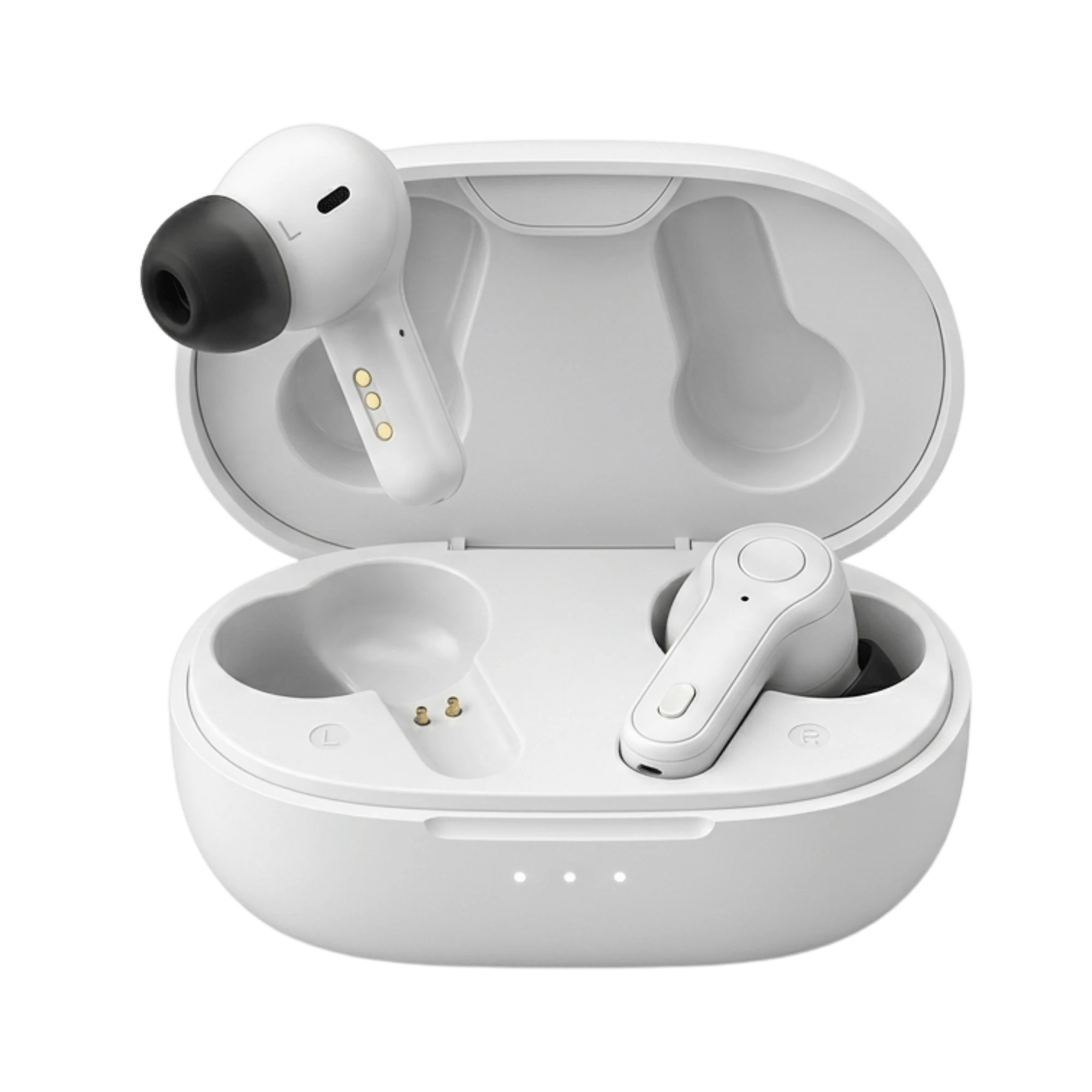
Panda Air is built around that expectation. It is a self-fitting OTC hearing aid in an earbud-style in-the-canal form, and it includes an app-based in-ear hearing test: you pair the aid with the Panda app after delivery, the app runs a frequency-specific test through the device itself, and it then programs gain and frequency response to your own audiogram, in the way a clinical fitting would. The hardware underneath is 16-channel wide dynamic range compression with multi-band adaptive noise reduction, and the fast-charge case carries 60 hours of use.
Because this study identifies insurance coverage as one of the two factors steering people away from direct purchase, the cost side matters too. Panda Air carries a 5-year warranty and a 45-day return window, which is the practical answer to the reasonable worry that buying without an appointment means buying without recourse. One caveat the research does not remove: OTC devices are approved for mild to moderate hearing loss, and severe or profound loss is still best served by a clinical fitting.
See the Panda Air specifications
Limitations of This Research
This is a survey of stated preference, not observed behavior. Respondents were asked which pathway they would prefer, and people are not always accurate predictors of their own purchasing decisions, particularly for a product category most of them have never bought. The sample was also drawn from an online research panel, which by construction skews toward people comfortable enough with the internet to join one, and that may understate rather than overstate resistance to online purchase.
The design is cross-sectional, so the paper describes a snapshot rather than tracking the same people over time as the OTC market matures. The archetypes themselves are derived from clustering, which means the number of groups is partly an analytic choice rather than a fact about the population. The abstract as indexed on PubMed does not report funding sources or conflict-of-interest disclosures.
Where This Leaves Us
Four years after the category opened, the direct-purchase route has clearly earned a place in the consideration set without yet becoming the default. The most useful thing this study offers is not the 84 percent headline but the reminder that hearing aid buyers are not one group. If insurance is covering a clinical fitting and you want to be guided through it, that route is well established. If you would rather evaluate the options yourself and let the device handle its own calibration, that is now a real alternative rather than a compromise, and the research suggests roughly two in five people over 50 are already comfortable with it.
Singh J, Dhar S. Understanding Hearing Health Care Choices and Customer Archetypes in an Era of Over-the-Counter Hearing Aids. American Journal of Audiology. 2026. Retrieved from PubMed. https://doi.org/10.1044/2026_AJA-26-00032