Most Long-Term Care Homes Lack a Plan for Hearing Accessibility
A German study across 74 long-term care facilities found that 81 percent had no acoustic accessibility concept at all, and that more than half of care staff reported limited knowledge of hearing and communication before receiving training.
Age-related hearing loss is one of the most common conditions of later life, and nowhere is it more concentrated than in residential care. The people living in nursing homes and long-term care facilities are, on average, exactly the population most likely to have significant hearing difficulty. They are also the population least able to advocate for themselves about it.
That combination raises an uncomfortable question. Are the buildings and the staff in these facilities actually equipped to communicate with residents who cannot hear well? A team of researchers in Germany went and measured, across dozens of facilities, and then tried to fix what they found.
About This Study
Title: Acoustic accessibility and staff knowledge on hearing and communication in long-term care facilities: evaluation of a preventive training program
Authors: Carolin Gravel, Elena Pützer, Karolin Schäfer
Affiliations: Institute for Special Needs Education, D/deaf and Hard of Hearing, University of Duisburg-Essen, Essen, Germany; Faculty of Human Sciences, University of Cologne, Cologne, Germany
Journal and date: Scientific Reports, volume 16, issue 1, published July 16, 2026
Study type: Mixed-methods intervention study with pre-intervention, post-intervention, and one-year follow-up measurement
PubMed DOI: 10.1038/s41598-026-60991-z
Background: Why the Researchers Looked at This
Acoustic accessibility is a less familiar idea than physical accessibility, but it works the same way. A ramp makes a building usable for someone in a wheelchair. Acoustic accessibility means designing rooms and practices so that someone with reduced hearing can still follow what is being said. That covers things like controlling reverberation, reducing background noise from televisions and kitchen equipment, providing quiet spaces for conversation, and training staff in how to speak so they can be understood.
Reverberation deserves a note of its own. Hard floors, bare walls, and high ceilings cause sound to bounce repeatedly before it fades, so speech arrives smeared together with its own echoes. A younger listener with healthy hearing can usually untangle this. Someone with age-related hearing loss often cannot, because the same condition that reduces sensitivity also degrades the ability to separate speech from competing sound. A room that seems merely lively to a visitor can be functionally unintelligible to a resident.
The researchers wanted to establish three things: what the physical and structural conditions in these facilities actually are, what care staff know and what training they feel they need, and whether staff themselves consider a preventive training program workable and sustainable in a real care environment.
How the Study Was Done
The team worked with 74 long-term care facilities across Germany, which is a substantial sample for this kind of on-site research. Rather than relying on a single method, they combined several. Questionnaires and quantitative surveys captured staff knowledge and self-reported training needs. Room acoustic measurements provided objective physical data about the buildings themselves. Qualitative interviews allowed staff to explain in their own words what was and was not working.
Data collection happened at three points in time: before the training intervention, after it, and again at a one-year follow-up. That third measurement is the part that gives this study unusual value. Plenty of training programs look effective when you measure immediately afterward, while enthusiasm is high. Coming back a year later tests whether anything actually stuck.
Quantitative data were analyzed descriptively, and the interview material was interpreted using structuring qualitative content analysis, a systematic method for coding open-ended responses into themes rather than reading them impressionistically.
What the Researchers Found
The baseline picture was poor. Of the facilities studied, 81 percent had no acoustic accessibility concept in place. Not a deficient one, not a partially implemented one, but none at all. In a setting whose residents are drawn disproportionately from the population most affected by hearing loss, roughly four in five facilities had never formally addressed the acoustic environment.
Staff knowledge told a matching story. More than half of the staff surveyed had limited knowledge about hearing and communication before the program began. Importantly, they knew it. Staff expressed high training needs on this topic, which suggests the gap was not a matter of complacency but of never having been given the material.
After the training, the interview data pointed to a strong increase in awareness. Staff were noticing the acoustic environment and thinking about communication in ways they had not before. Alongside that, the same interviews surfaced organizational barriers, the practical realities of staffing levels, time pressure, and competing priorities that make it hard to convert awareness into changed routine.
The one-year follow-up produced the study's most instructive split. Hearing-related practices and communication showed moderate improvement and had held over the year. Structural acoustic changes to the buildings, on the other hand, remained difficult to implement in any sustainable way. Teaching people to communicate differently proved achievable. Renovating the physical environment largely did not happen.
The authors' conclusion follows directly from that asymmetry. Improving hearing accessibility in long-term care requires an integrated approach that strengthens both the acoustics of the facilities and the competencies of staff, because in practice neither one substitutes for the other.
What It Means for People with Hearing Loss
For families evaluating a care facility for a relative, this study effectively hands over a checklist that few people would think to bring. It is reasonable to ask whether a facility has any acoustic accessibility concept, given that most in this sample did not. It is reasonable to ask what training staff receive on hearing and communication. And it is worth simply standing in the dining room at a busy hour and listening to how much the sound bounces.
There is a broader point about what untreated hearing difficulty costs in these settings. When a resident cannot follow conversation, the consequences are not confined to inconvenience. Withdrawal from social contact, being misread as confused or uncooperative, and isolation all follow from communication breakdown, and all of them are frequently attributed to something other than hearing.
The follow-up result also carries a quietly pragmatic lesson. If the acoustic properties of a building are the hardest thing to change, and this study found they were, then the parts of the problem that an individual and their family can influence directly become proportionally more important.
When the Building Will Not Change, Access to a Device Matters More
The clearest practical finding in this study is that structural acoustic improvements proved difficult to sustain even when a facility was actively engaged in a research program about them. Waiting for the room to improve is not a strategy that this evidence supports. What remains within reach is whether the person themselves has working amplification.
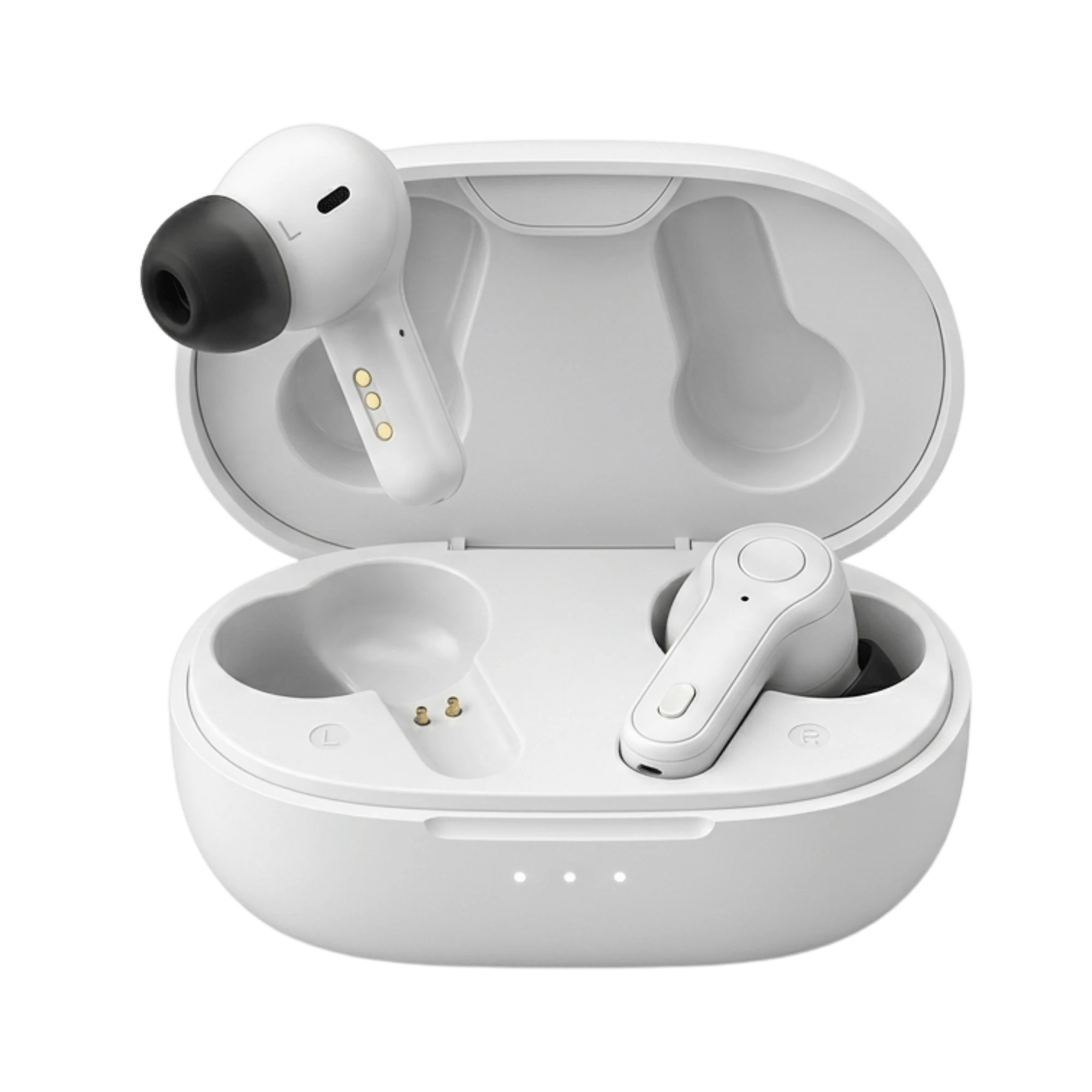
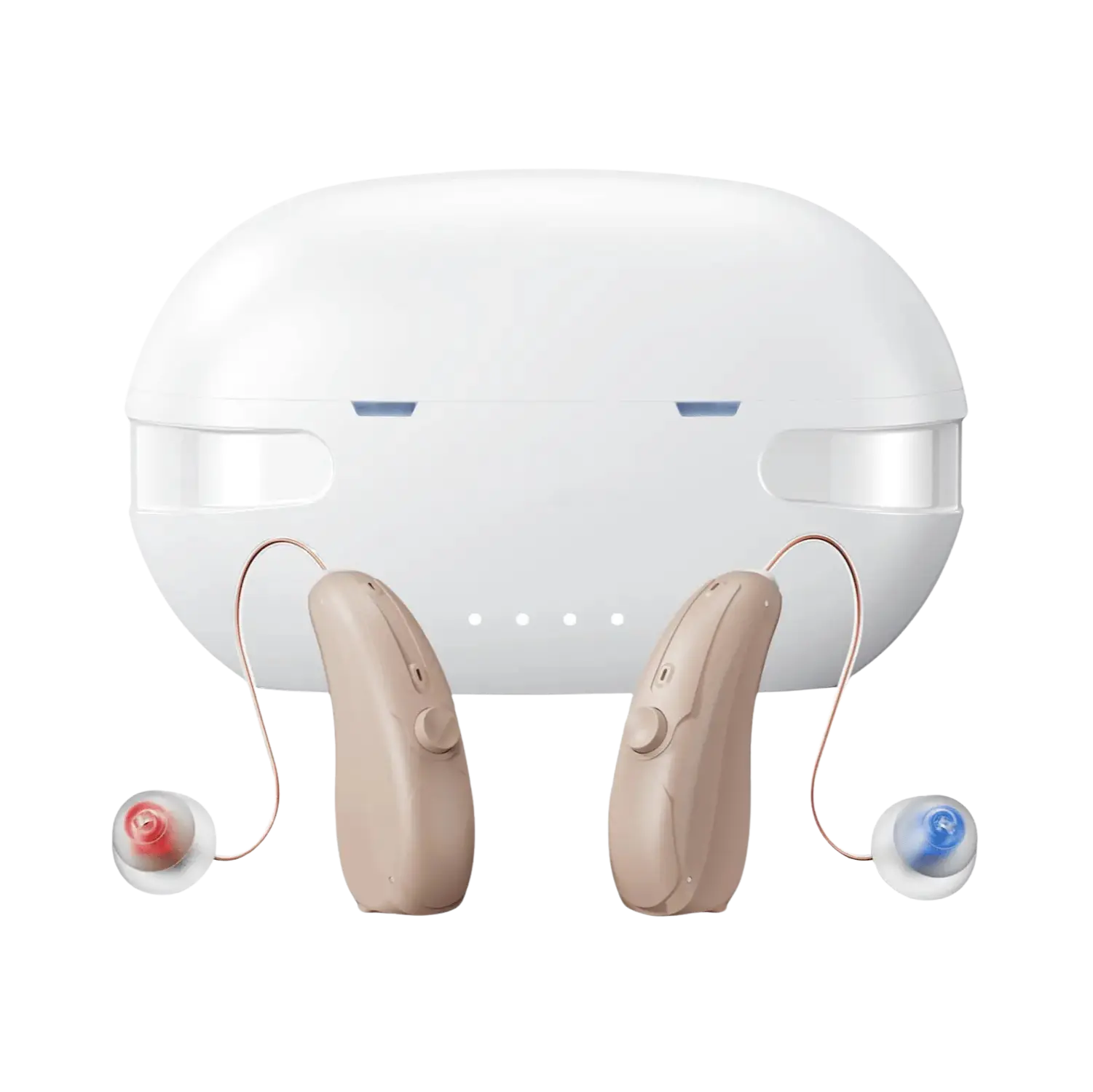
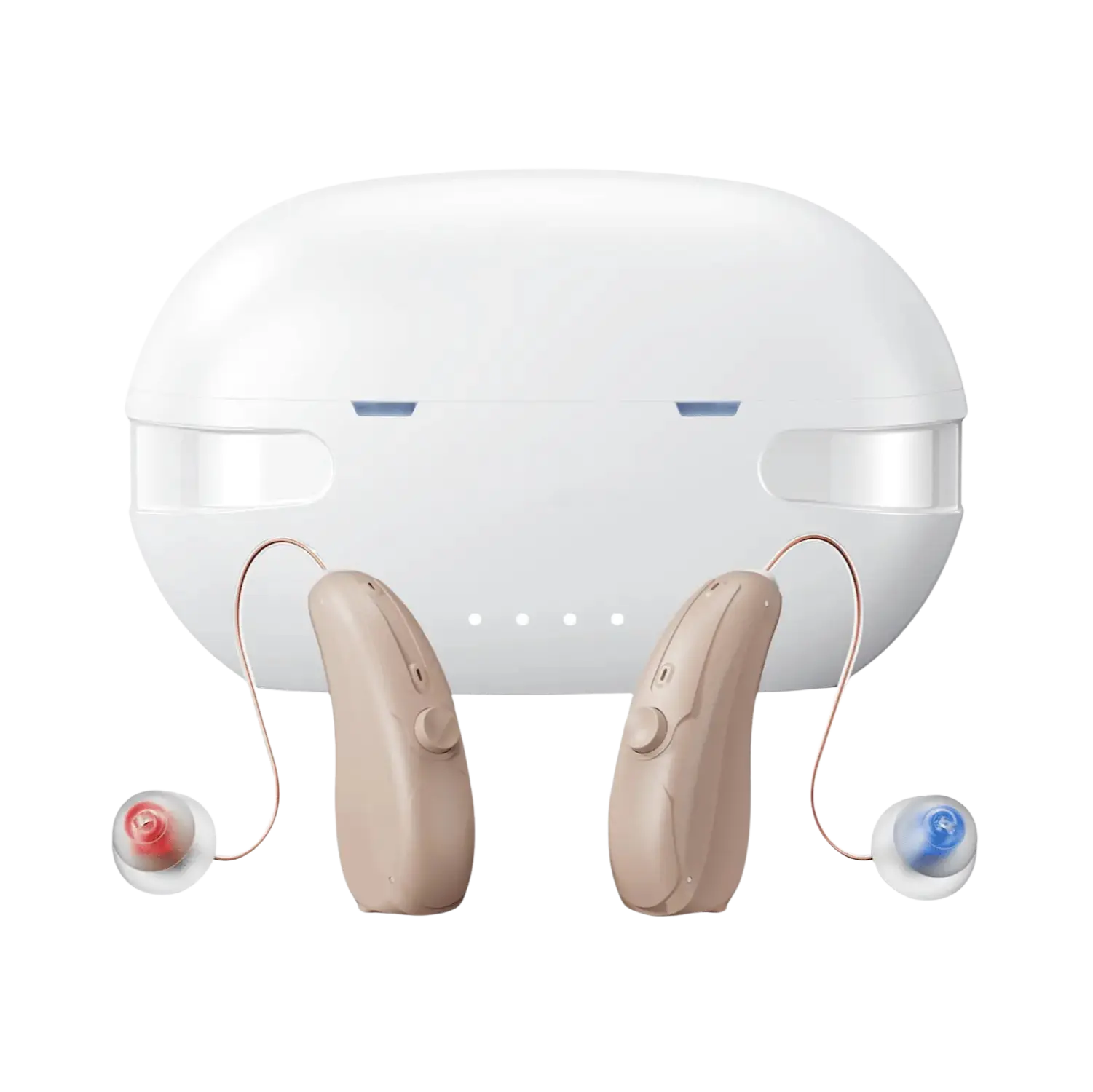
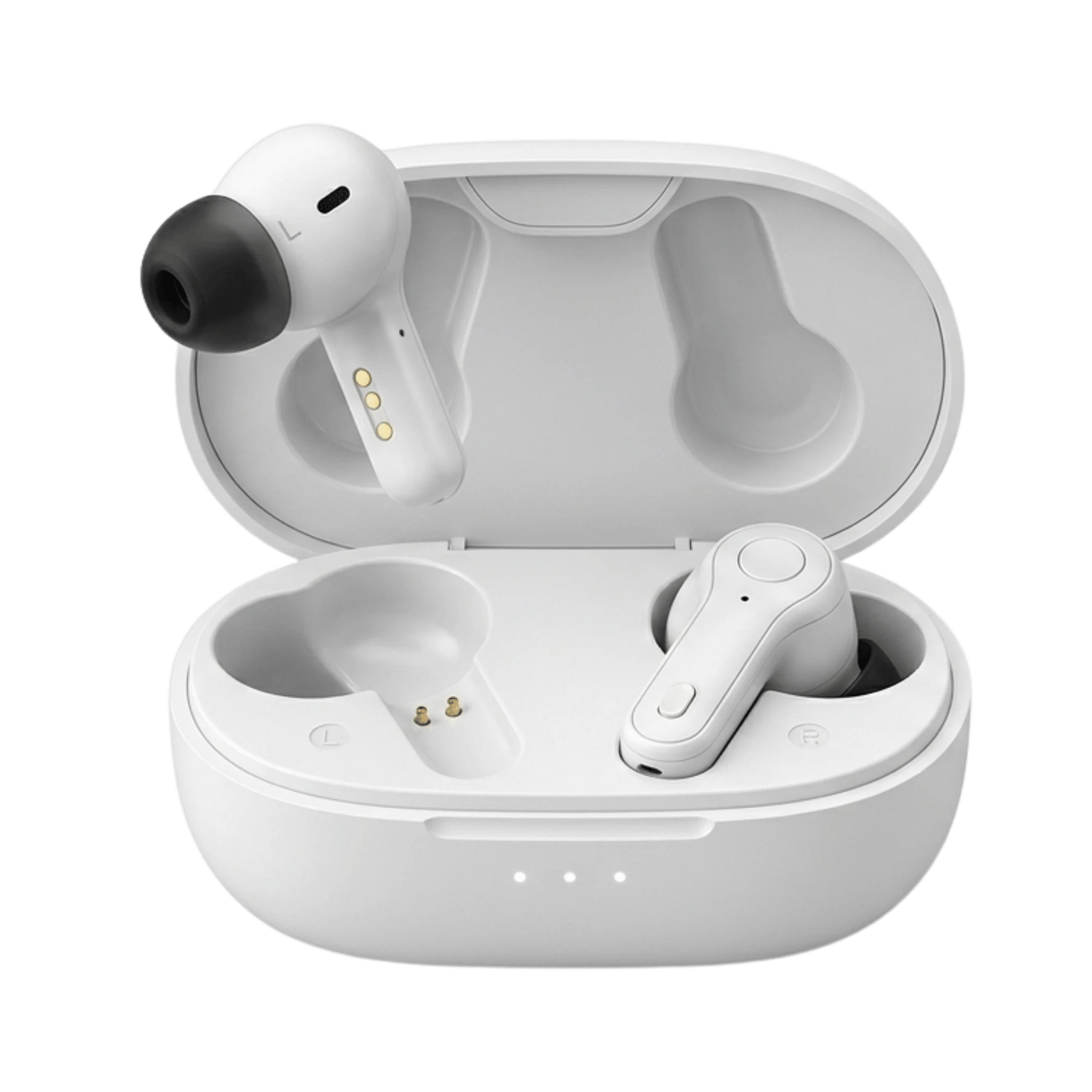
Because this study frames hearing accessibility as something older adults frequently cannot arrange for themselves, the barriers to simply obtaining a device matter a great deal. Panda Air is an earbud-style in-the-canal device in the self-fitting OTC hearing aids category, which means it does not require a clinic visit to set up. It pairs with the Panda app after delivery, and the app runs a frequency-specific test through the aid itself and then programs gain and frequency response to match the result, so the fitting step that would otherwise require an appointment happens at home.
For the reverberant dining rooms and lounges this study measured, Air uses 16-channel processing with multi-band adaptive noise reduction. As one of the rechargeable hearing aids with charging case, it provides 60 hours from a fast-charging case, which removes the recurring task of managing tiny disposable batteries, a real consideration for someone with limited dexterity or for family managing care remotely. It carries a 5-year warranty and a 45-day return window. Over-the-counter devices are approved for mild-to-moderate hearing loss, and anyone with severe or profound loss still benefits most from a clinical fitting.
Limitations of This Research
All 74 facilities were in Germany, and long-term care differs substantially between countries in funding, building stock, staffing ratios, and regulation. The finding that 81 percent lacked an acoustic accessibility concept should not be read as a global figure. The quantitative data were also analyzed descriptively rather than with inferential statistics, and the design had no untrained control group, so improvements observed at follow-up cannot be attributed to the training with the confidence a randomized comparison would provide.
Staff knowledge and practice were partly self-reported, which tends to be a generous measure, particularly after participants have just completed a training program they know is being evaluated. The study is indexed as receiving non-United States government research support. No competing interests are described in the published abstract, so that cannot be assessed here.
What to Do With This
If you are choosing or already using a long-term care facility for someone with hearing loss, this research suggests two questions worth asking directly, about whether an acoustic accessibility concept exists and what hearing communication training staff have had, and one thing worth doing yourself, which is making sure the person's own hearing is addressed rather than assuming the environment will accommodate it. The evidence here is that staff practice can be improved and often is, while buildings mostly stay as they are.
Gravel C, Pützer E, Schäfer K. Acoustic accessibility and staff knowledge on hearing and communication in long-term care facilities: evaluation of a preventive training program. Scientific Reports. 2026. Retrieved from PubMed. https://doi.org/10.1038/s41598-026-60991-z