Inner-Ear BDNF Injection Shows an Early Signal for Speech-in-Noise Hearing
A first-in-class drug delivered by a single injection into the ear proved safe and hinted at better hearing in noisy settings, according to an early-stage clinical trial.
Millions of people can pass a standard hearing test yet still struggle to follow a conversation in a busy restaurant. This gap, often described as speech-in-noise difficulty, is one of the most common and frustrating complaints in audiology, and until now there has been no approved medicine that targets it directly.
A new clinical trial takes a different route from devices or surgery. It tests whether a naturally occurring nerve-growth protein, delivered once into the inner ear, can help repair the fine connections that carry sound to the brain.
About This Study
Title: Single Intratympanic Injection of Proprietary Brain-Derived Neurotrophic Factor (OTO-413) in Subjects with Speech-in-Noise Hearing Impairment: a Randomized, Dose Escalating, Double-Blind, Placebo-Controlled Phase 1/2 Study
Authors: Alan C. Foster, Jeffery J. Anderson, David R. Moore, Morgan Oktela Fuentes, Yiwei Wang, Peter G. Volsky, K. Paul Boyev, Victoria A. Sanchez
Affiliations: Otonomy, Inc. (San Diego); University of South Florida; Cincinnati Children's Hospital and University of Manchester; Eastern Virginia Medical School at Old Dominion University; and colleagues
Journal and date: Journal of the Association for Research in Otolaryngology (JARO), published July 21, 2026
Study type: Randomized, double-blind, placebo-controlled, dose-escalating Phase 1/2 clinical trial (ClinicalTrials.gov NCT04129775)
Source: PubMed, DOI 10.1007/s10162-026-01061-z
Background: Why the Researchers Looked at This
Hearing depends on tiny sensory hair cells in the cochlea, the snail-shaped organ of the inner ear, and on the nerve connections, called synapses, that link those cells to the hearing nerve. Research over the past decade has shown that these synapses can be damaged by noise and aging even when the hair cells themselves survive. The result is sometimes called hidden hearing loss, because a routine audiogram can look normal while real-world listening suffers.
Brain-derived neurotrophic factor, or BDNF, is a protein the body uses to build and maintain nerve connections. Scientists have long wondered whether supplying extra BDNF to the inner ear could help rebuild lost synapses and, in turn, improve the ability to separate speech from background noise. The drug tested here, labeled OTO-413, packages BDNF in a gel that slowly releases the protein after a single injection through the eardrum.
How the Study Was Done
The trial enrolled 110 adults, just over half of them women, across seven clinical sites in the United States. Every participant reported trouble understanding speech in noise, and each had that difficulty confirmed by a formal speech-in-noise test before joining.
Participants were randomly assigned to receive either OTO-413 or a placebo, and neither they nor the researchers knew which one they got. Because this was an early safety study, the dose was raised gradually across seven groups, from a very small 0.01 milligram amount up to 1.5 milligrams. The team then tracked safety and measured hearing with three separate speech-in-noise tests, including the Digits-in-Noise, Words-in-Noise, and American English Matrix tests, along with a questionnaire asking people whether they felt their hearing had changed.
What the Researchers Found
On safety, the results were reassuring. There were no serious side effects linked to the drug, and no dose produced audiometric safety concerns. Blood tests showed that BDNF levels stayed within the body's normal range, and the researchers found no antibodies against the protein, an important check because injected proteins can sometimes trigger an immune reaction.
On effectiveness, the picture was more cautious but still encouraging. In an exploratory analysis, more people who received OTO-413 showed improvement than those who received placebo over the three months of follow-up. That advantage was clearest on the Words-in-Noise test at the 0.3 milligram dose, which stood out from both the lower and the higher amounts.
Not every measure moved, though. The self-reported questionnaire in which participants rated their own sense of change did not show a benefit. The authors describe the efficacy findings as exploratory and numerical, meaning the trial was designed mainly to test safety rather than to prove that the drug works.
Taken together, the researchers concluded that a single injection of OTO-413 was safe and well tolerated and offered a first hint of a speech-in-noise benefit at the 0.3 milligram dose, a signal worth testing in larger trials.
What It Means for People with Hearing Loss
For anyone who hears well in a quiet room but loses the thread in a crowded one, this research is a sign that the problem is being taken seriously as a distinct target for treatment. A drug that repairs nerve connections would be very different from a device that amplifies sound, and it could one day complement rather than replace the tools people use today.
It is important to keep the stage of this work in view. This is an early trial focused on safety, the efficacy hints are preliminary, and any approved therapy would be years away. In the meantime, the most reliable way to improve speech understanding in noise remains well-fitted amplification designed to lift speech out of background sound.
Clearer Speech in Noise Is Something Today's Devices Already Target
While injectable therapies for speech-in-noise difficulty are still being tested, the same challenge is exactly what modern hearing aids are built to address right now. The core problem this study measured, separating a voice from surrounding noise, is where multi-channel processing and adaptive noise reduction do their work.

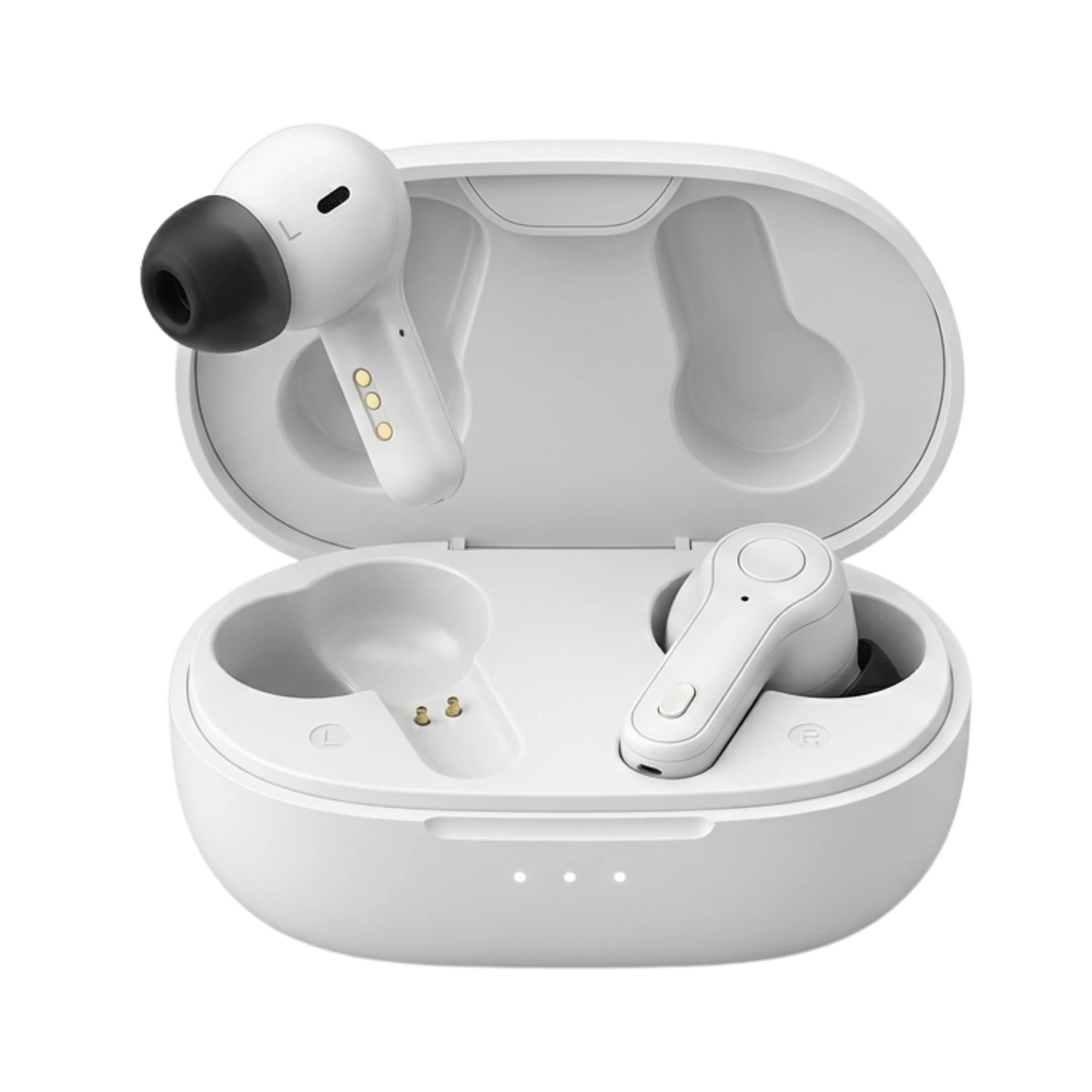
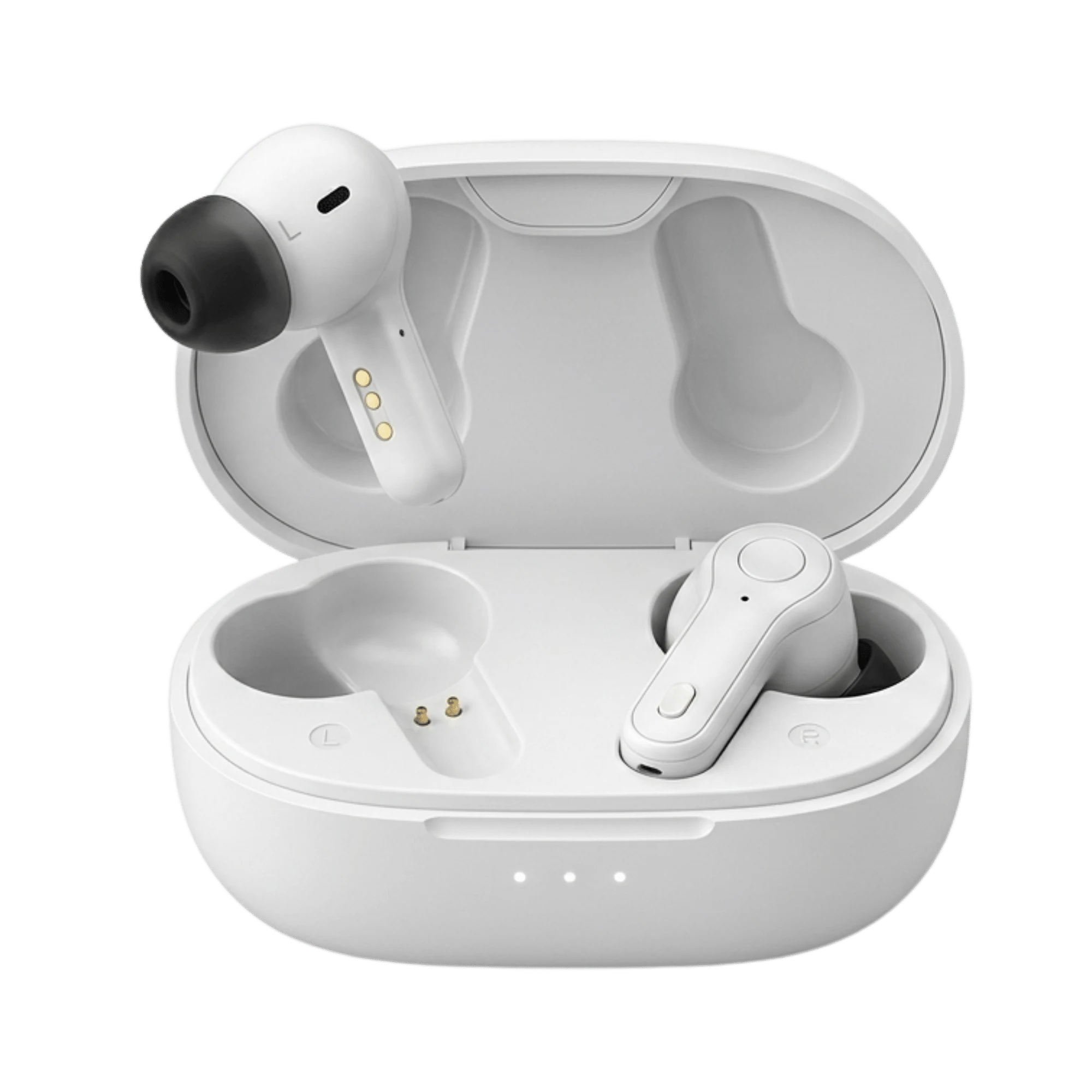
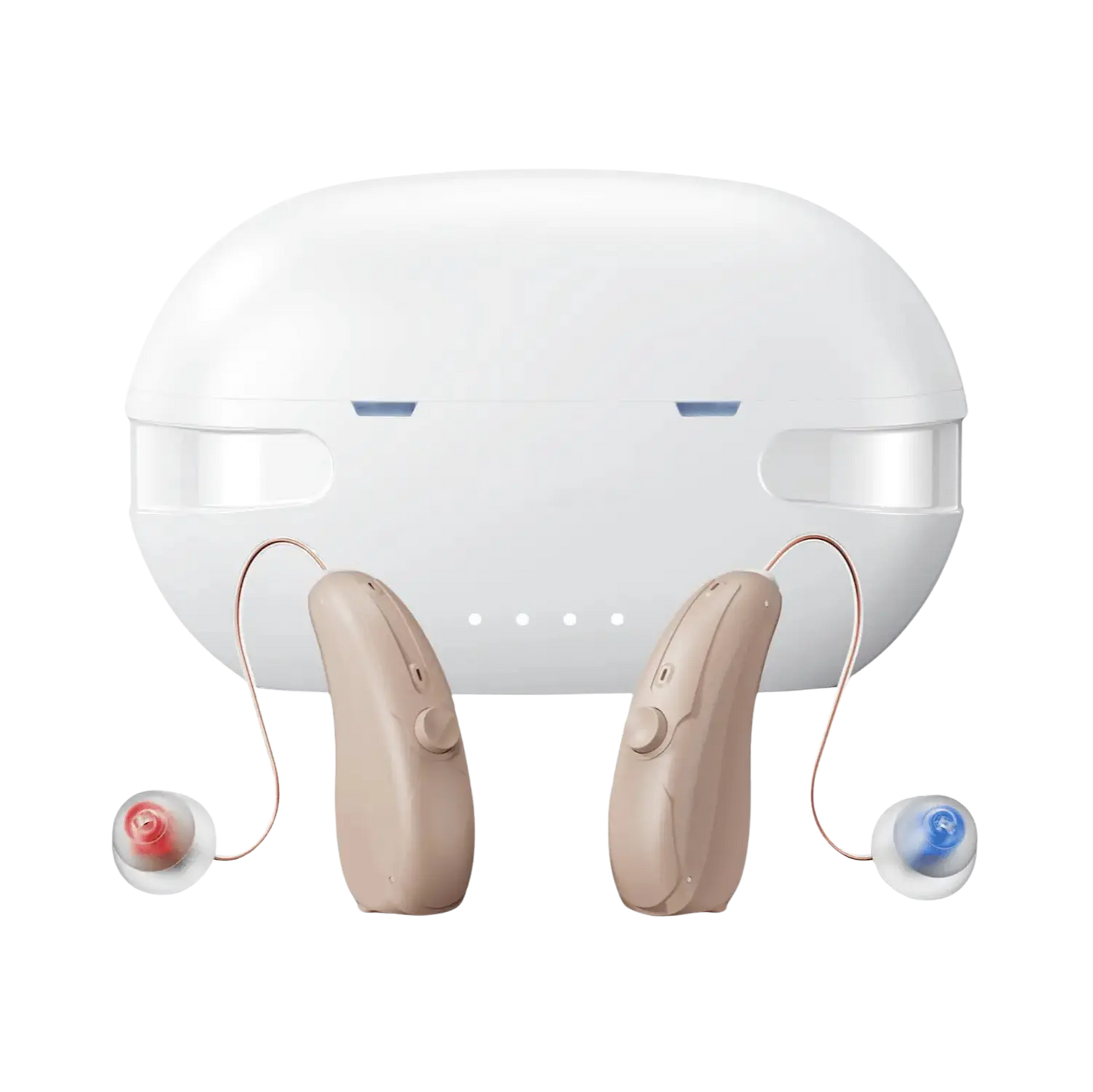
Panda Quantum is one such device. It is a receiver-in-canal hearing aid that uses 16-channel processing and adaptive noise reduction to lift speech out of noisy environments, the very setting where the people in this trial reported the most trouble. It also pairs with the Panda app to run an in-ear hearing test that tunes the device to your own hearing, so the personalization happens to your ears rather than a generic setting.
Because it also streams calls, television, and music over Bluetooth and runs up to about 80 hours with its charging case, Quantum is aimed at people who want speech-focused processing for daily conversation. Over-the-counter devices are cleared for mild to moderate hearing loss, so anyone with severe or profound loss will still be served best by a clinical fitting.
Limitations of This Research
This was a Phase 1/2 study built to test safety and to explore dosing, not to confirm that the drug improves hearing. The efficacy findings rest on an exploratory responder analysis rather than a primary outcome the trial was powered to detect, and the benefit appeared at one dose while a self-rated measure of change showed nothing. Larger, longer studies would be needed before any conclusions about real-world benefit could be drawn.
Readers should also note the potential for conflicts of interest. Several authors are affiliated with Otonomy, Inc., the company that developed OTO-413, and one author reports an affiliation with a large pharmaceutical firm. That does not invalidate the results, but it is a reason to weigh future independent replication carefully.
Where This Leaves Us
The search for a medicine that restores clarity in noise is moving forward, and this trial adds a careful, safety-first step. For now, the practical path to hearing better in the places that matter most, from family dinners to crowded meetings, still runs through amplification tuned to your own ears, while science keeps working on the biology underneath.
Foster AC, Anderson JJ, Moore DR, Fuentes MO, Wang Y, Volsky PG, Boyev KP, Sanchez VA. Single Intratympanic Injection of Proprietary Brain-Derived Neurotrophic Factor (OTO-413) in Subjects with Speech-in-Noise Hearing Impairment: a Randomized, Dose Escalating, Double-Blind, Placebo-Controlled Phase 1/2 Study. Journal of the Association for Research in Otolaryngology. 2026. Retrieved from PubMed. DOI 10.1007/s10162-026-01061-z