More Than Half of Adults Screened at Border Health Events Failed a Hearing Test
At six mobile health events in El Paso, Texas, 57 percent of participants failed a hearing screening, and the odds of failing were significantly higher for those without private insurance.
Hearing loss is usually described as underdiagnosed, which is accurate but vague. It leaves open the question of who exactly is being missed, and why. Answering that requires going to the people who are not showing up in clinics, rather than studying the ones who are.
A team based at the University of Texas at El Paso did that, embedding hearing screenings inside a mobile health outreach program serving a largely Hispanic community on the United States and Mexico border. What they found was a failure rate high enough to suggest that a great deal of hearing loss in this population had simply never been identified, and a pattern in who failed that pointed at coverage rather than geography or language.
About This Study
Title: Borderland Hearing Health: Insights From Community-Based Screenings
Authors: Amelia M. Rau, Carlos Benitez-Barrera, Erik Jorgensen, Paola Gallegos, Vannesa Mueller
Affiliations: Department of Speech, Language, and Hearing Sciences, The University of Texas at El Paso; Department of Communication Sciences and Disorders, University of South Florida, Tampa; Department of Communication Sciences and Disorders, University of Wisconsin-Madison
Journal and publication date: American Journal of Audiology, July 14, 2026
Study type: Cross-sectional study of 305 participants screened at six mobile health events
PubMed DOI: https://doi.org/10.1044/2026_AJA-25-00287
Background: Why the Researchers Looked at This
Early detection of hearing loss depends on someone being tested. In practice, that usually means a person noticing a problem, deciding it is worth acting on, finding an audiologist, and being able to pay for the visit. Every one of those steps is a place where people fall out of the process, and they do not fall out evenly.
The authors argue that Hispanic communities along the border are systematically excluded from early detection efforts, and that without approaches designed around them, existing disparities will widen rather than close. Rather than test that claim from clinic records, which by definition only contain people who reached a clinic, they brought the screening to community health events.
The design also let them ask a second question. Among people who came through, which characteristics predicted failing the screening? That is where the finding about insurance emerged.
How the Study Was Done
The researchers analysed data from 305 participants, 274 of whom were Hispanic, screened across six mobile health events in El Paso. Each screening combined otoscopy, which is a visual inspection of the ear canal and eardrum, pure-tone audiometry, which measures the quietest sounds a person can hear across a range of pitches, and a brief case history.
The primary outcome was straightforward: pass or fail. To find out what predicted failure, the team used logistic regression, a method that estimates how much each characteristic shifts the odds of an outcome while holding the others steady. That matters here, because age and insurance status tend to travel together, and the technique helps separate them.
The characteristics tested were age, gender, ethnicity, primary language, insurance status, and an income category based on zip code. The last two are worth flagging in advance, because the study's most interesting result is partly about which of them mattered and which did not.
What the Researchers Found
Of the 305 people screened, 57 percent failed. That is a majority of everyone who sat down, in a setting where nobody had been referred for a hearing problem and most were there for general health outreach.
Alongside that, 64.4 percent reported suspected hearing loss. So the majority already had some sense that something was wrong. The gap this study reveals is not one of awareness. These were people who suspected a problem and had not been tested for it.
Three characteristics predicted failure. Older age was significantly associated with failing, which is expected and consistent with age-related hearing loss. Men were more likely to fail than women. And compared with privately insured participants, those with no insurance or with public insurance had significantly higher odds of failing.
Two characteristics did not predict failure, and their absence is as informative as the rest. Primary language was not significantly associated with screening outcome. Neither was income category based on zip code. A convenient explanation, that this is really about neighbourhood poverty or a language barrier at the point of care, does not fit what the data showed. Insurance status held as a predictor where the broader proxy for economic circumstance did not.
The authors also note that despite embedding screening inside an existing outreach program that people were already attending, uptake remained low. Removing the cost and the trip was not by itself sufficient to get people tested.
What It Means for People with Hearing Loss
The insurance finding is the practical one. What separates someone who gets their hearing checked from someone who does not is, to a measurable degree, what kind of coverage they hold. That is not a fact about ears. It is a fact about how hearing care is paid for.
The 64.4 percent who suspected hearing loss reframes the usual story. The standard account of undiagnosed hearing loss is that people do not notice it, because it comes on slowly and they adapt without realising. Some of that is surely true. But in this group, most people had noticed. They had not converted that suspicion into a test, and the odds of that conversion happening tracked with insurance.
The low uptake finding adds a caution to that. Cost and distance are real barriers, and this study shows removing them helps but does not finish the job. Something else, plausibly including the same self-consciousness other research has documented, is still keeping people from a free test at an event they already came to.
When Coverage, Not Hearing, Decides Who Gets Tested
When insurance status predicts who gets their hearing checked, the obvious question is what happens to people on the wrong side of that line. This is the barrier the FDA's 2022 over-the-counter category was created to lower, by allowing devices to be bought directly without a prescription or a clinical fitting appointment.
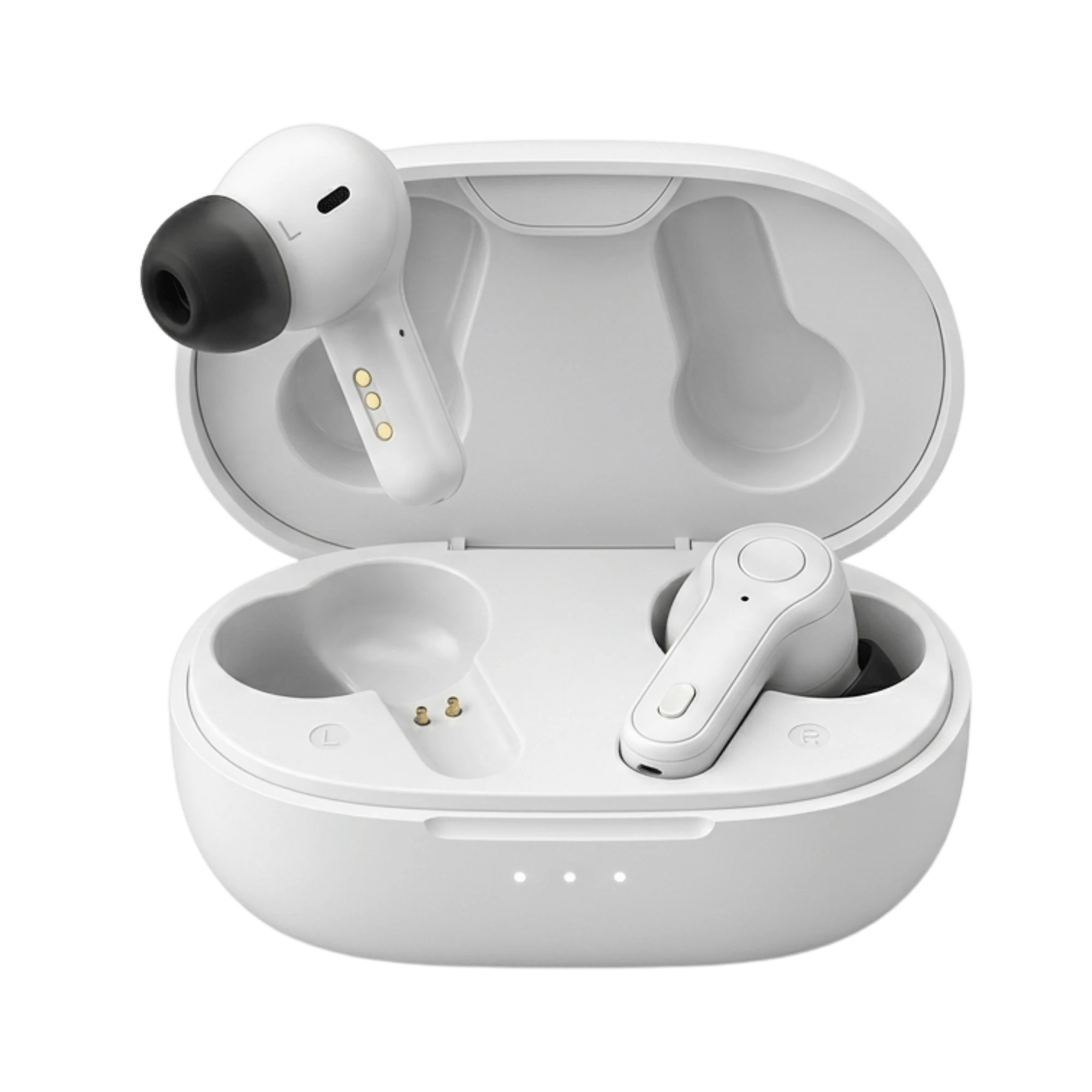
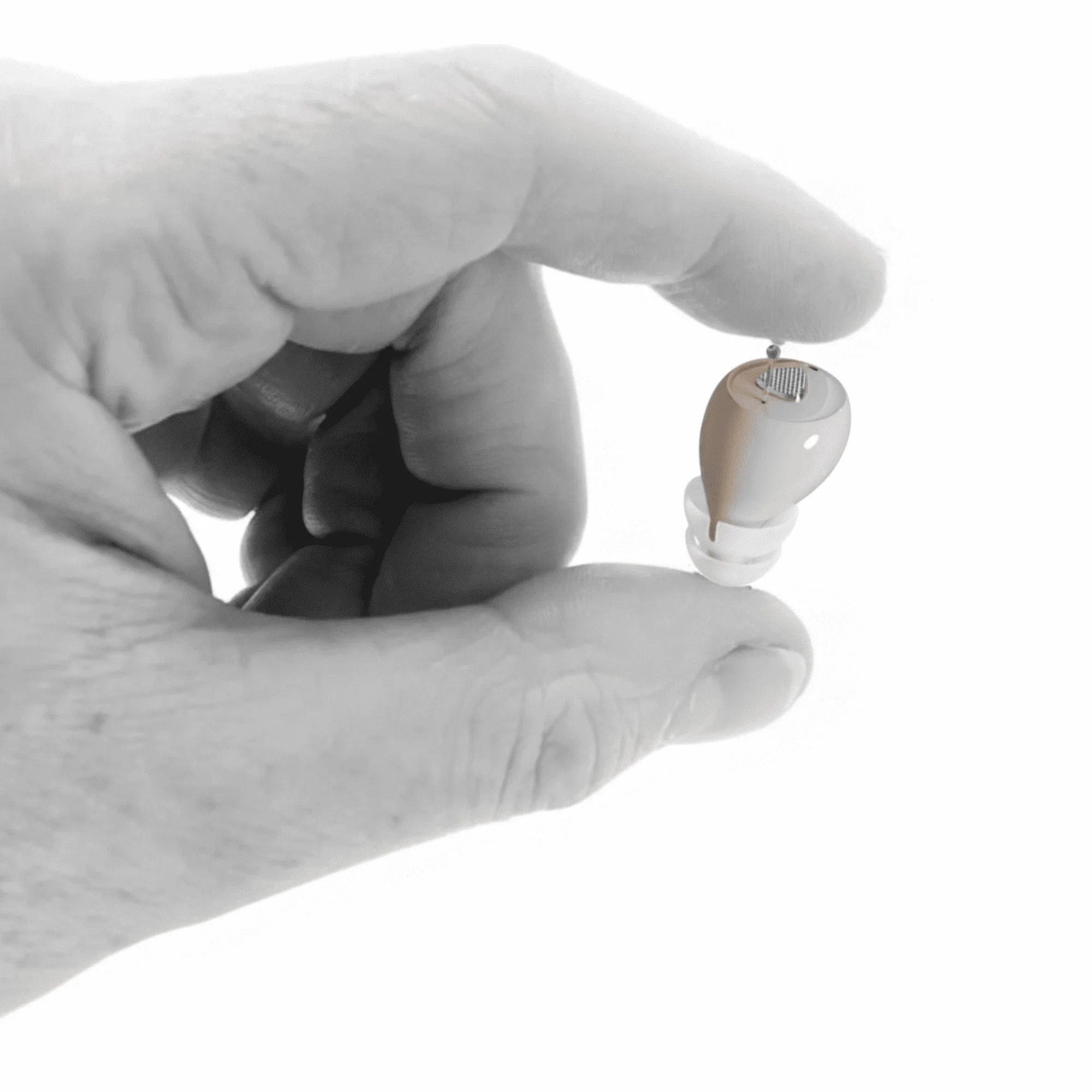
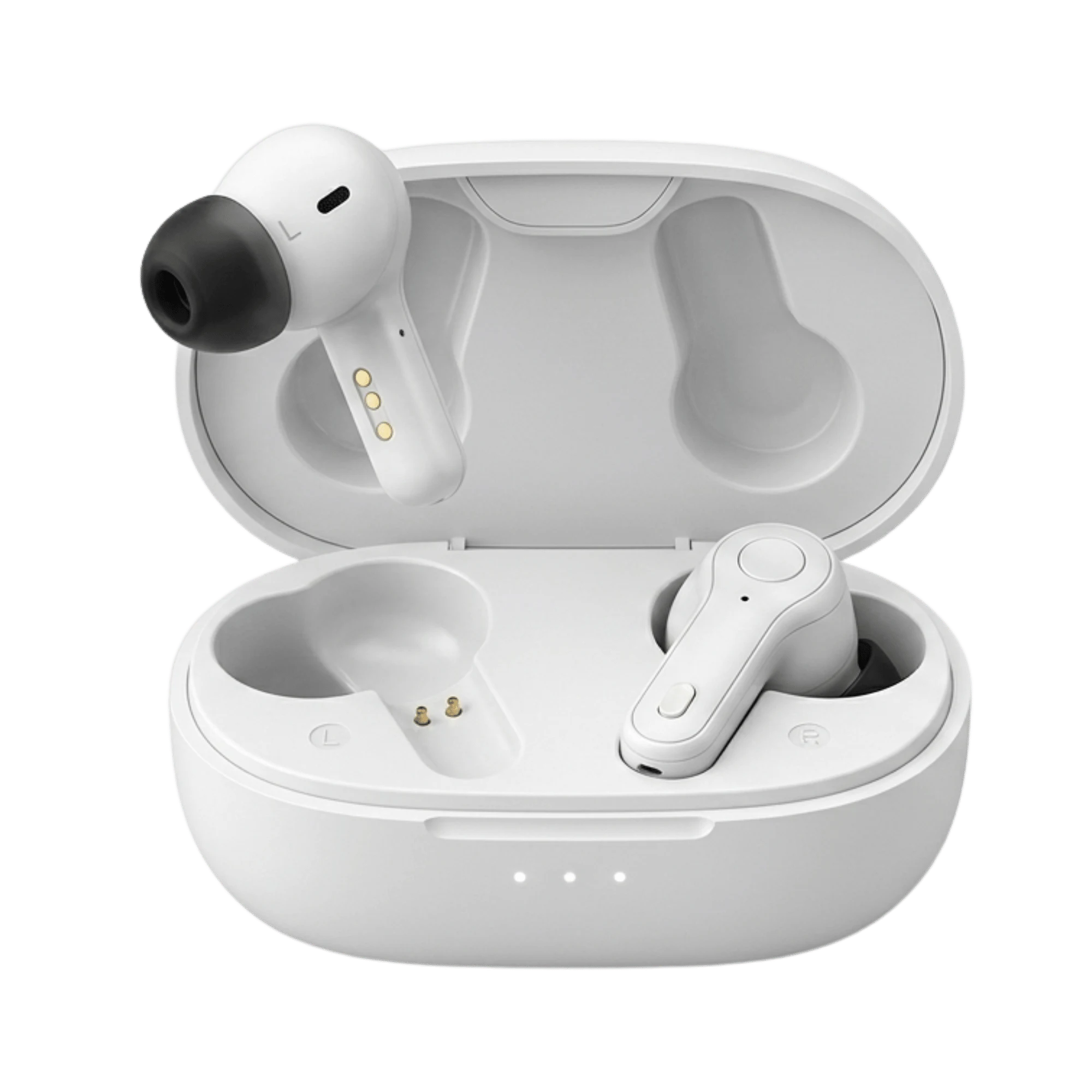
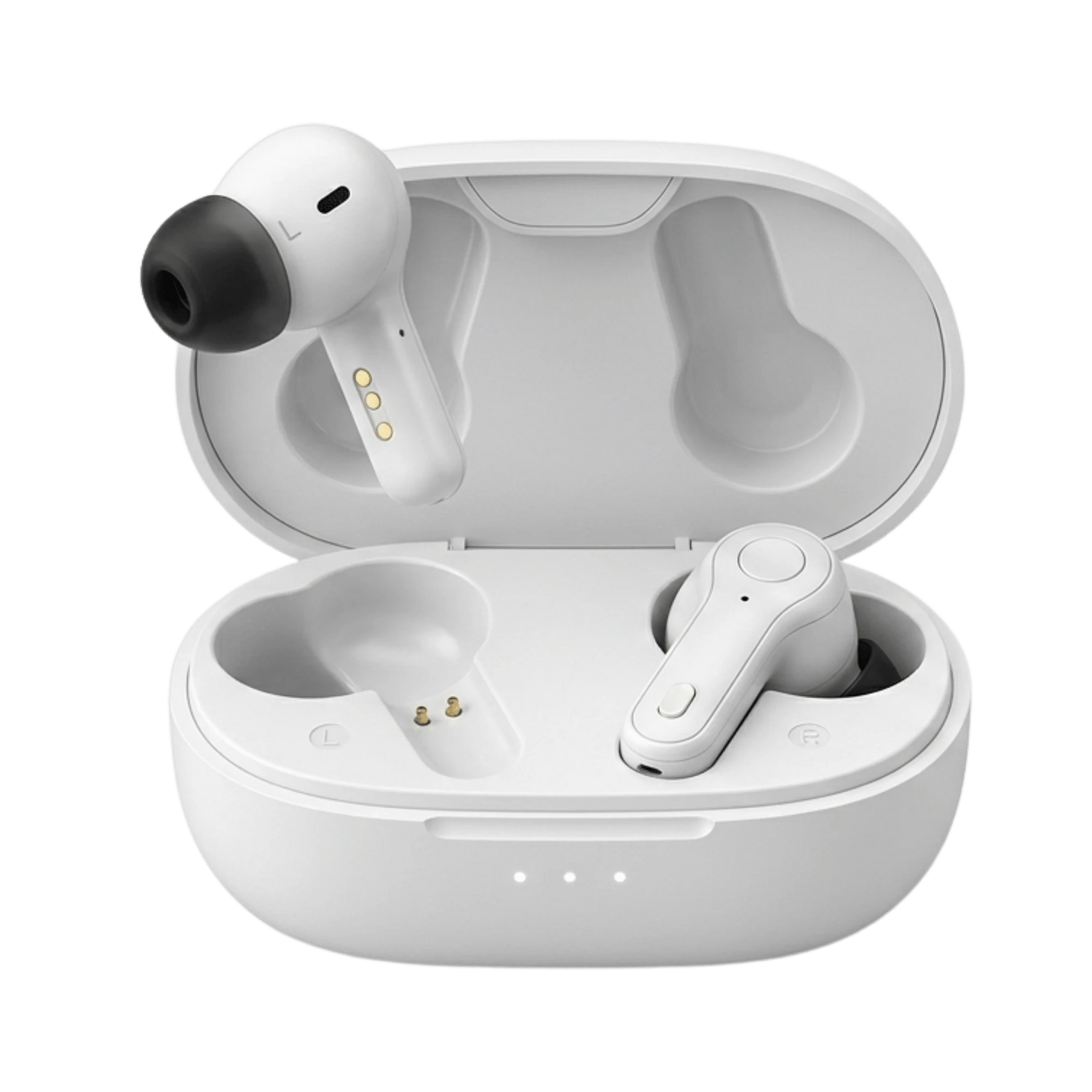
Panda Air is one of these self-fitting OTC hearing aids. Its relevance to this particular finding is the hearing test built into it. After delivery, it pairs with the Panda app, which runs a frequency-specific test through the aid itself and then programs gain and frequency response to match the result, in the way a clinical fitting would. For someone whose barrier to a hearing test is that testing runs through a system their insurance does not open, that sequence matters: the test arrives with the device instead of standing in front of it.
The Air uses 16-channel WDRC processing with multi-band adaptive noise reduction, and its fast-charge case holds 60 hours. It comes with a 5-year warranty and 45-day returns, which is the part that does the work when nobody has checked your ears first. Details are on the Panda Air product page. It is worth being clear that OTC devices are cleared for mild-to-moderate hearing loss, and this study screened rather than diagnosed. Severe or profound loss still needs a clinical fitting, and a failed screening is a reason to see an audiologist if you can.
Limitations of This Research
This was a cross-sectional study at six events in one city, so the results describe El Paso and should not be assumed to transfer to other border communities or other underserved populations. The 57 percent failure rate applies to people who chose to be screened at a health outreach event, and that is not a random sample. Given that most participants already suspected hearing loss, it is likely that people with a reason to worry were more inclined to sit down, which would push the failure rate above what the wider community would show.
A screening is also not a diagnosis. Failing indicates that further testing is warranted, not that a person has a specific degree or type of hearing loss. The income measure was based on zip code rather than household income, which is a coarse proxy and may be why it did not reach significance. No funding source or competing interests were noted in the available record.
Where This Leaves Us
The finding worth carrying forward is that most of the people failing these screenings already suspected they had a problem. That shifts the target. Public awareness campaigns are built on the premise that people do not know, but this group knew and still had not been tested, and whether they crossed that gap depended in part on their insurance. Awareness was not the missing piece. The route from suspecting to knowing was.
Rau AM, Benitez-Barrera C, Jorgensen E, Gallegos P, Mueller V. Borderland Hearing Health: Insights From Community-Based Screenings. American Journal of Audiology. 2026;1-11. Retrieved from PubMed. https://doi.org/10.1044/2026_AJA-25-00287