Hearing Aid Users Report More Stigma and Wear Their Devices Less Consistently
A study of 749 Australian adults found that hearing aid users carried more negative feelings about their hearing loss than cochlear implant users, and used their devices less regularly day to day.
Most research on hearing devices looks at one outcome at a time. One study measures how much people think their hearing loss holds them back. Another measures how well they actually follow speech in a noisy room. A third asks whether they are satisfied with the device itself. These are related questions, but they are rarely asked of the same group of people at the same time.
A team at Macquarie University set out to close that gap. By measuring four different dimensions of the hearing experience across one large cohort, they found something that a single-outcome study would likely have missed: the group with the mildest devices reported the most negative feelings, and used them the least consistently.
About This Study
Title: A Multidimensional Comparison of Psychosocial Adjustment, Functional Hearing, and Device Benefit in Adult Hearing Device Users
Authors: Bamini Gopinath, Alicia Zou, Jessica Turner, George Burlutsky, Diana Tang
Affiliations: Macquarie University Hearing Research Centre, School of Health Sciences and Nursing, Macquarie University, Sydney, NSW, Australia
Journal and publication date: Healthcare (Basel), July 3, 2026
Study type: Cross-sectional observational study of 749 adults aged 40 and over
PubMed DOI: https://doi.org/10.3390/healthcare14131980
Background: Why the Researchers Looked at This
Adults with hearing loss are usually fitted with one of three arrangements. A hearing aid amplifies sound and is the standard option for mild to moderate loss. A cochlear implant is a surgically placed device that bypasses damaged parts of the inner ear, generally reserved for severe or profound loss. A bimodal setup pairs an implant in one ear with a hearing aid in the other.
Because these groups sit at different points on the severity scale, it is tempting to assume their experiences line up neatly with how much hearing they have lost. The people with the most severe loss would be expected to feel the worst about it and to struggle most in daily life. The researchers wanted to test whether that assumption holds when several outcomes are measured together rather than in isolation.
The reason this matters is practical. If hearing care is designed around severity alone, it may miss the people whose difficulty is less about audiology and more about how they feel wearing the device in front of other people.
How the Study Was Done
The team collected cross-sectional data from 749 adults aged 40 and over between 2022 and 2024. Of these, 467 used hearing aids, 150 used cochlear implants, and 132 used bimodal devices. A cross-sectional design captures a snapshot of a population at one point in time, rather than following people forward over months or years.
Each participant completed four established questionnaires. The Hearing Handicap Inventory for the Elderly Screening, or HHIE-S, measures how much a person feels their hearing loss limits them. The Attitudes towards Loss of Hearing Questionnaire, or ALHQ, captures psychological responses to hearing loss, including a subscale for negative associations that reflects the shame or self-consciousness a person attaches to using a device. The Speech, Spatial and Qualities of Hearing Scale, or SSQ, measures real-world listening ability, including the spatial subscale for locating where a sound is coming from. The International Outcome Inventory for Hearing Devices, or IOI-HD, measures how much benefit a person gets from their device and how regularly they use it.
Results were adjusted using multivariate analysis, a statistical method that accounts for background differences between groups such as age, so that the comparison reflects the device rather than the people who happen to use it.
What the Researchers Found
The clearest result concerned negative attitudes. On the ALHQ negative associations subscale, hearing aid users scored 2.22 on average. Bimodal users scored 1.92 and cochlear implant users scored 1.90. Both gaps were statistically significant, at p equal to 0.0067 for the bimodal comparison and p equal to 0.0145 for the cochlear implant comparison. Higher scores on this subscale point toward stigma and negative feeling attached to using a hearing device.
This runs against the intuitive expectation. The group with the least severe hearing loss, and the least invasive device, reported feeling the worst about wearing it.
The second finding followed the same direction. Total IOI-HD scores were significantly lower among hearing aid users than among cochlear implant users, at p below 0.0001, and lower than among bimodal users, at p equal to 0.0007. The authors describe these lower scores as reflecting irregular and inconsistent daily use of the device. In other words, hearing aid users were leaving their devices out more often.
Not every measure disfavoured hearing aids. On the SSQ spatial subscale, which reflects the ability to tell where a sound is coming from, hearing aid users scored 5.13 against 4.45 for bimodal users, a significant difference at p equal to 0.0254. Having two ears receiving sound the same way appears to preserve some spatial awareness that a mixed setup does not.
One measure showed nothing at all. After multivariate adjustment, HHIE-S scores did not differ significantly between the three groups. Self-reported hearing handicap was roughly similar regardless of which device a person used, which is part of why the differences in attitude and daily use are notable. The groups felt similarly limited by their hearing, but responded very differently to the device meant to help.
What It Means for People with Hearing Loss
The pattern here suggests that inconsistent hearing aid use is not simply a matter of the device working poorly. If it were, self-reported handicap would likely track with it, and it did not. What separated the groups was how they felt about being seen with the device.
There is a plausible explanation in the difference between the groups. Someone who has been through cochlear implant surgery has already made a large, visible, deliberate commitment to treating their hearing loss. Someone handed a pair of hearing aids has made a much smaller one, and can undo it every morning by simply not putting them in. The decision to wear the device is remade daily, and every day it can go the other way.
For anyone who has bought hearing aids and found them sitting in a drawer, this study offers a useful reframe. That is a common outcome, it shows up clearly in a cohort of hundreds, and it appears to have as much to do with self-consciousness as with sound quality. Naming the real obstacle is usually the first step to working around it.
When Self-Consciousness Keeps Devices in the Drawer
If the barrier to consistent use is partly about being seen, then how a device looks stops being a cosmetic detail and becomes a clinical one. A hearing aid that is worn every day helps more than a better one that is worn twice a week.

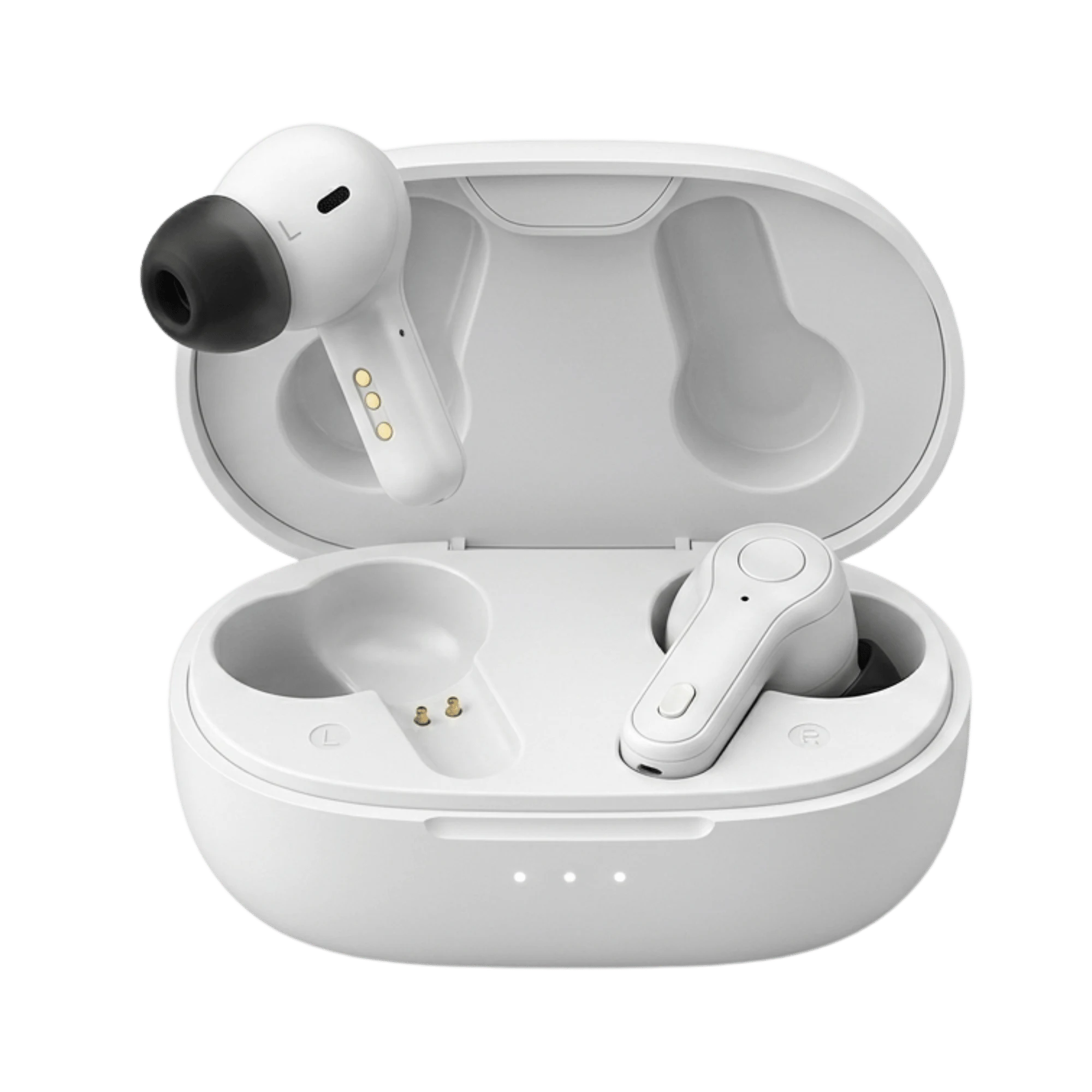
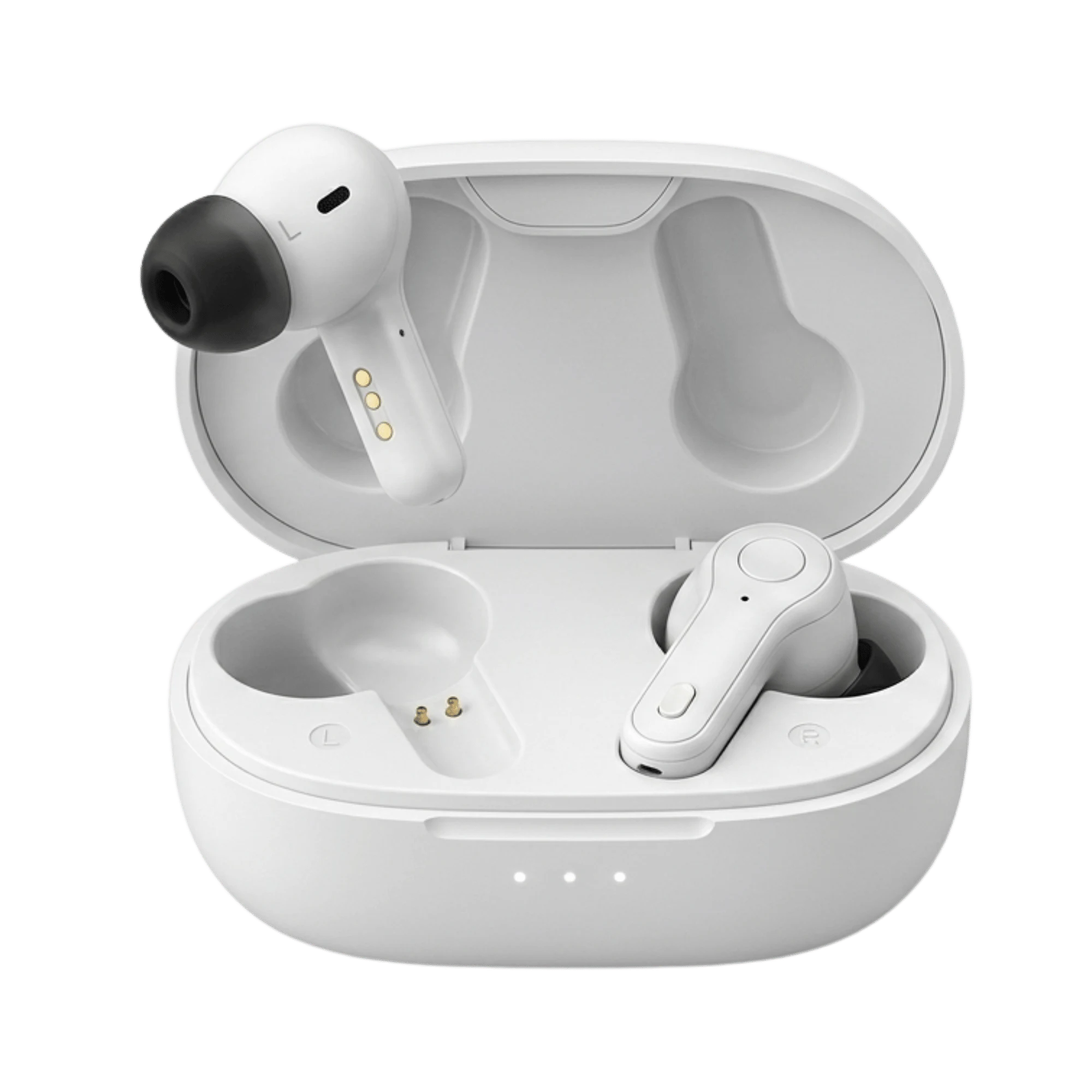
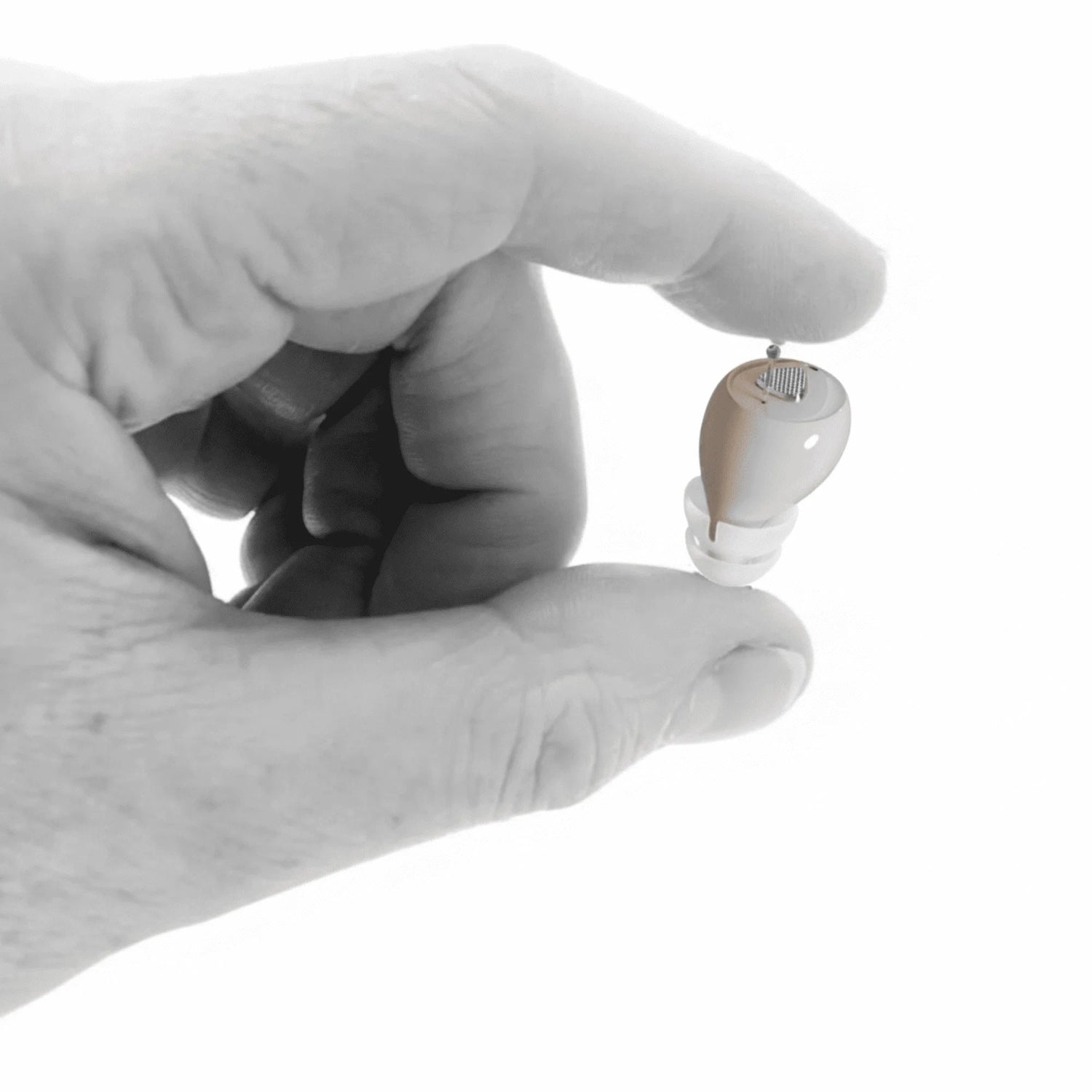
This is the reasoning behind the Panda Stealth, which is built around being difficult to notice. It weighs 2.3 grams and sits inside the ear canal, which places it among the more discreet hearing aids available without a prescription. It uses 12-band smart noise reduction, and its charging case doubles as a wireless remote, so adjustments do not require visibly fiddling with your ear in company.
It is also deliberately plug-and-play. There is no app and no hearing test to complete before it works, which suits people who want the device to disappear into their routine rather than become a project. It comes with a 5-year warranty and 45-day returns. Details are on the Panda Stealth product page. Worth noting that over-the-counter devices are cleared for mild-to-moderate hearing loss, and severe or profound loss still benefits most from a clinical fitting.
Limitations of This Research
This was a cross-sectional study, so it captures a single moment rather than tracking people over time. That means it can show that hearing aid users report more negative associations and less consistent use, but it cannot establish that the first causes the second. The relationship could run the other way, or both could stem from something the study did not measure.
The groups also differ in ways that matter beyond the device. Cochlear implant recipients have generally passed through a selection process and a period of rehabilitation that hearing aid users have not, and that experience may shape their attitudes independently of the hardware. All four measures are self-reported questionnaires rather than objective tests. The cohort was drawn from a single research centre in Australia, and the authors frame the work as informing more person-centred models of hearing care rather than as a definitive account.
What to Do With This
If you own hearing aids and rarely wear them, it is worth asking honestly which part is the problem. If they genuinely do not help enough, that is a conversation with an audiologist about fit and programming. But if they work reasonably well and you still leave them out, this study suggests you are in large and well-documented company, and the fix probably has more to do with how visible the device feels than with how it sounds. That is a solvable problem, and it is a different one from the one most people think they have.
Gopinath B, Zou A, Turner J, Burlutsky G, Tang D. A Multidimensional Comparison of Psychosocial Adjustment, Functional Hearing, and Device Benefit in Adult Hearing Device Users. Healthcare (Basel). 2026;14(13). Retrieved from PubMed. https://doi.org/10.3390/healthcare14131980