Losing More Than One Sense Tracks With Higher Dementia Risk
A Korean national cohort of more than 410,000 adults found that people with impairment in several senses at once had roughly five times the risk of later neurodegenerative disease compared with people who had none.
The link between hearing loss and dementia has been studied for years, and it is now widely accepted as one of the modifiable risk factors on the standard list. What has been studied far less is what happens when hearing is not the only sense in decline.
Most older adults do not lose exactly one sense in isolation. Hearing, vision, and smell tend to fade on overlapping timelines. A research team working with South Korea's national health insurance records set out to compare those sensory domains directly, and to see what happens to risk when they stack.
About This Study
Title: Sensory Impairment and Risk of Neurodegenerative Diseases: A Nationwide Cohort Study in Korea
Authors: Jin Youp Kim, Hae Chan Park, Seok-Won Park, Chae-Seo Rhee
Affiliations: Department of Otorhinolaryngology-Head and Neck Surgery, Ilsan Hospital, Dongguk University, Goyang, South Korea; Sensory Organ Research Institute, College of Medicine, Dongguk University, Gyeongju, South Korea; Department of Otorhinolaryngology-Head and Neck Surgery, Seoul National University College of Medicine, Seoul, Korea; Bundang Jesaeng General Hospital, Seongnam, Korea
Journal: Clinical and Experimental Otorhinolaryngology, published 16 July 2026
Study type: Retrospective nationwide cohort study using insurance claims data
PubMed DOI: 10.21053/ceo.2026-00075
Background: Why the Researchers Looked at This
Sensory impairments are ordinary in later life. Hearing dulls, vision blurs, and the sense of smell quietly narrows, often without the person noticing that last one at all. Each has been studied on its own against cognitive outcomes, with hearing loss attracting the most attention.
A neurodegenerative disease is one where nerve cells progressively break down: Alzheimer's disease and related dementias, Parkinson's disease, Huntington's disease, and a set of rarer disorders. These conditions develop over decades, which is precisely why early markers are valuable. If something observable at age 60 predicts something diagnosable at 75, that is a window.
The gap the authors identified was breadth. Studies tend to examine one sense at a time, which leaves an obvious question unanswered: what does it mean when someone has impairment across more than one sensory domain at once? That is the group this study was designed to isolate.
How the Study Was Done
The researchers drew on the Korean National Health Insurance Service Health Screening Cohort, covering 2002 to 2015. South Korea's single national insurer means the records capture a very large and broadly representative slice of the population rather than the patients of one hospital system.
Study design matters here, and the team built in a safeguard. They used the years 2002 to 2004 as a washout period and excluded anyone who already had a sensory impairment or a neurodegenerative disease during it. That step is meant to ensure the sensory problem came first and the neurological diagnosis came after, rather than catching people who already had both at the outset. Sensory impairment was then classified between 2005 and 2015 as visual, hearing, olfactory, or multisensory.
Outcomes were neurodegenerative disease overall plus three subtypes: Alzheimer's disease and related dementias, Parkinson's disease, and Huntington's and other neurodegenerative disorders. The team used Kaplan-Meier curves to compare how incidence accumulated over time and adjusted Cox proportional hazards models to estimate risk while accounting for other differences between groups. A hazard ratio of 2, in this framing, means roughly twice the rate of new diagnoses over the follow-up period.
What the Researchers Found
The analysis covered 410,749 participants. Of those, 389,659 served as controls and 21,007 had a sensory impairment. Within that impaired group, hearing was by far the largest category at 16,651 people, followed by visual impairment at 3,426, olfactory at 642, and multisensory impairment at just 288.
Incidence of neurodegenerative disease differed by sensory status, with the log-rank test returning p less than 0.001, and it was highest in the multisensory group. That group carried the largest adjusted risk for neurodegenerative disease overall, with a hazard ratio of 5.23 and a 95 percent confidence interval of 4.20 to 6.52 compared with controls.
The elevation held across every subtype the team examined. For Alzheimer's disease the multisensory hazard ratio was 4.43. For Parkinson's disease it was 5.07. For Huntington's and other neurodegenerative disorders it reached 9.90, the largest figure in the paper, though that subtype is rare enough that the estimate rests on relatively few cases.
The authors also ran a post hoc analysis using the multisensory group as the reference point instead of the controls. Every single-sensory group came out with significantly lower hazards. This is the finding that gives the paper its shape: the pattern is graded. One impaired sense raises risk relative to none. Several impaired senses raise it considerably further. The authors describe this as a graded pattern tracking with greater sensory burden.
Their conclusion is deliberately modest in its wording. Sensory status, they suggest, may serve as an accessible early risk marker for neurodegenerative disease in older adults. Marker is the operative word, and it is not the same word as cause.
What It Means for People with Hearing Loss
The most important thing to be clear about is what this study does not show. It does not show that hearing loss causes dementia. It does not show that treating hearing loss prevents dementia, because it did not test any treatment at all. This is an observational study, and observational studies find patterns, not mechanisms. Anyone citing this paper as evidence that a hearing aid protects your brain has gone well past what the data support.
What it does offer is a sense of proportion. If you have noticed your hearing slipping, this is one signal among many, and the single-sensory hazards were meaningfully lower than the multisensory ones. The finding is not a reason for alarm about one fading sense. It is an argument for paying attention when several are drifting at once, and for mentioning that to a doctor rather than treating each as an unrelated nuisance of getting older.
The practical value sits in the word accessible. Of the three senses studied, hearing is the one with the most straightforward path to measurement. Nobody routinely checks their own sense of smell. Hearing, by contrast, can be tested, and the study is essentially an argument that knowing where you stand has information value.
An Accessible Early Marker Is Only Useful If Someone Actually Checks It
The study's own conclusion rests on accessibility: sensory status is worth tracking because, unlike a brain scan, it can be observed. But hearing was the largest impaired group in this cohort by a wide margin, 16,651 of 21,007, and most people never test their hearing at all until something has gone clearly wrong. An accessible marker that nobody measures is not doing any work.
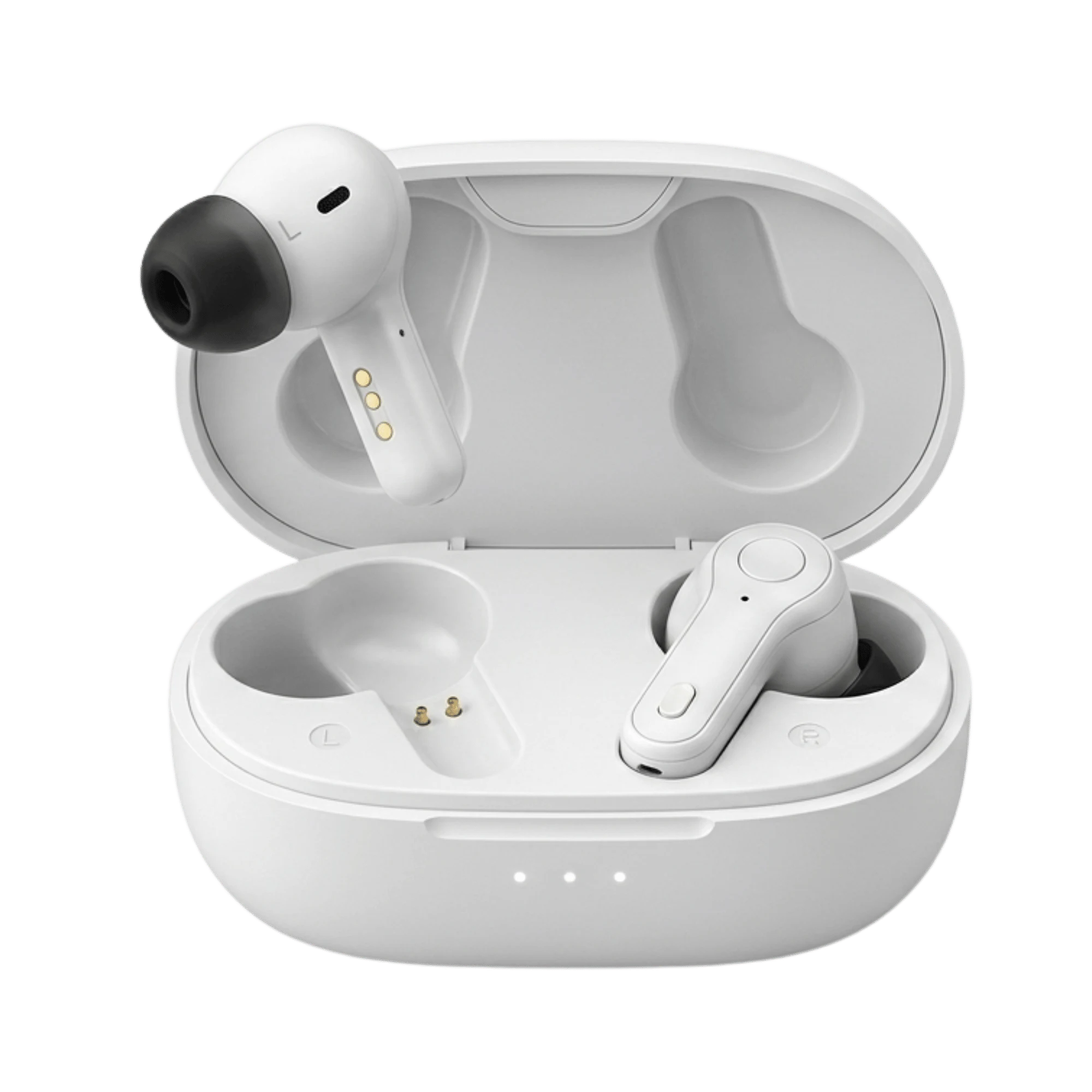
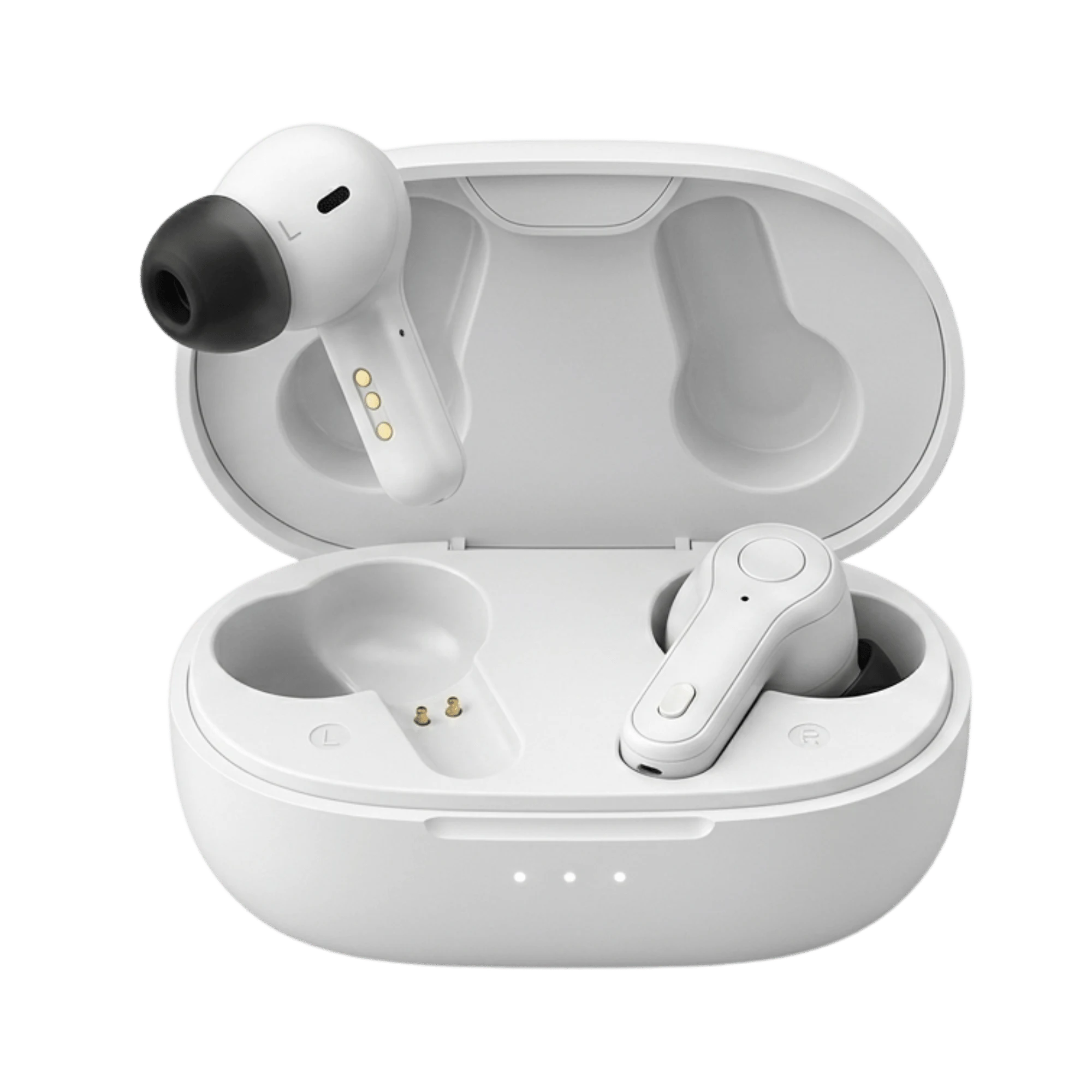
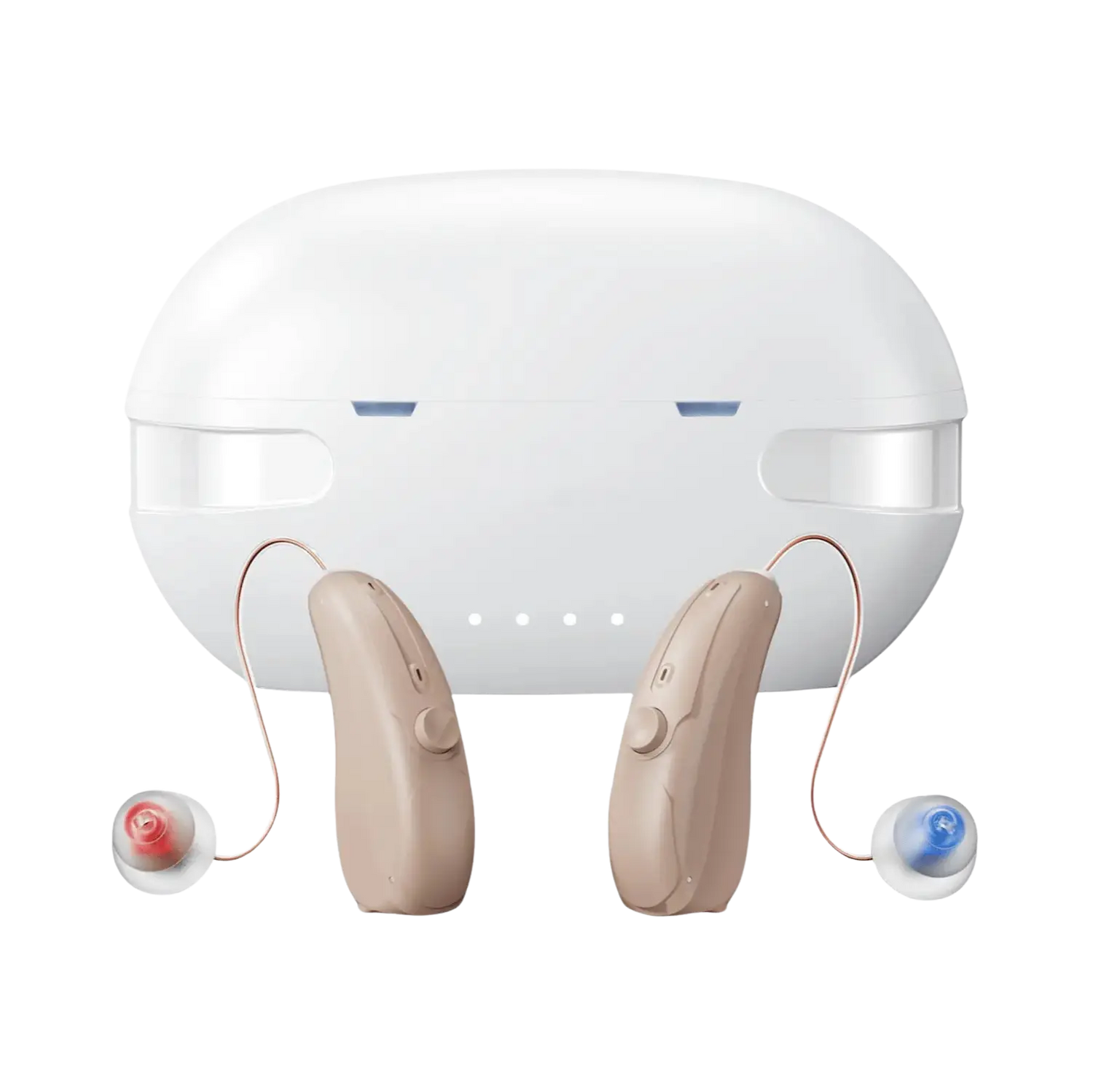
Panda Quantum is designed so that the measuring step is not a separate errand. It is among the self-hearing test hearing aids: you pair it with the Panda app, which runs a frequency-specific test through the aid sitting in your own ear and then programs gain and frequency response to your audiogram, the way a clinical fitting would. That gives you an actual audiogram rather than an impression, and app-based hearing personalization means the result is applied rather than filed away.
Quantum is a 16-channel receiver-in-canal device with adaptive noise reduction, Bluetooth for calls, TV, and music, up to 80 hours of total battery with its case, a 5-year warranty, and 45-day returns. To repeat the caveat the study itself implies: OTC devices are approved for mild-to-moderate loss, and severe or profound loss still benefits most from a clinical fitting. Testing your hearing is worth doing on its own terms, and nothing in this paper says a device changes your neurological odds.

More on the device is at pandahearing.com/products/panda-hearing-aids-quantum.
Limitations of This Research
The multisensory group, which carries the paper's headline number, contained only 288 people. That is a small foundation for the most quoted finding, and it shows in the confidence interval: the true hazard ratio could plausibly sit anywhere from 4.20 to 6.52. The Huntington's and other disorders figure of 9.90 rests on fewer cases still and should be read as a rough signal rather than a precise estimate. The olfactory group, at 642, is likewise thin.
Reverse causation is the deeper problem. Neurodegenerative disease begins years or decades before diagnosis, and early Parkinson's in particular is well known to blunt the sense of smell long before any movement symptoms appear. So some of what looks like sensory impairment predicting disease may be sensory impairment caused by disease that had already started. The washout period helps, but it cannot fully separate the two. Because the data come from insurance claims, sensory impairment was captured only when it prompted a coded encounter, which likely misses milder cases and skews toward people who seek care. Residual confounding remains possible: the multisensory group differs from controls in ways adjustment cannot fully capture. Finally, this is a single national cohort, and how well it generalises beyond Korea is untested. The record as indexed does not include a funding statement or conflict of interest disclosure.
What to Do With This
Read this as a study about patterns worth noticing, not about causes worth acting on. Its sturdiest contribution is the graded relationship: across 410,749 people, risk climbed as sensory burden accumulated, and multiple impairments told a different story than any single one. Whether that reflects shared underlying damage, disease that started early and quietly, or something else entirely is a question this design cannot settle. What it reasonably supports is treating a cluster of fading senses as worth raising with a doctor rather than filing under normal ageing, and knowing where your hearing actually stands rather than guessing.
Kim JY, Park HC, Park SW, Rhee CS. Sensory Impairment and Risk of Neurodegenerative Diseases: A Nationwide Cohort Study in Korea. Clinical and Experimental Otorhinolaryngology. 2026. Retrieved from PubMed. https://doi.org/10.21053/ceo.2026-00075