Can an App Give Reliable Hearing Advice? A Feasibility Study
Australian researchers built a smartphone assistant that generates personalised hearing advice, then graded 83 of its answers for relevance, accuracy, and plain-English clarity.
Most people who notice their hearing slipping do not walk straight into a clinic. They wait. The average delay between first noticing a problem and doing something about it is measured in years, not weeks, and in that gap the main source of guidance tends to be whatever a search engine returns.
A team based at La Trobe University in Melbourne asked whether that gap could be filled by something better: a smartphone assistant that listens to what a person describes about their own hearing and returns advice tailored to them. Their feasibility assessment, newly indexed on PubMed, is an early look at whether such a tool can be trusted to say the right thing.
About This Study
Title: Feasibility Assessment of an Intelligent Agent to Assist Preserving Healthy Hearing
Authors: Nilmini Wickramasinghe, Nalika Ulapane, Sudanthi Wijewickrema, Duane Wisk
Affiliations: School of Computing, Engineering and Mathematical Sciences, La Trobe University, Melbourne, Australia; Australian Centre for Artificial Intelligence in Medical Innovation; The Warren Alpert Medical School, Brown University, Providence, Rhode Island, United States
Journal: Studies in Health Technology and Informatics, volume 339, pages 82 to 87, published 15 July 2026
Study type: Feasibility assessment of a digital health tool
PubMed DOI: 10.3233/SHTI260969
Background: Why the Researchers Looked at This
The scale of the problem is the starting point. The authors cite World Health Organization figures putting more than 1.5 billion people worldwide in the category of living with some degree of hearing loss right now, with that number projected to reach 2.5 billion by 2050. Hearing loss is not a niche condition. It is one of the most common health conditions on the planet.
It also rarely travels alone. The researchers note that hearing loss is frequently linked with other health conditions, dementia among them, which compounds its impact on a person's life. And it is usually progressive: chronic hearing loss tends to worsen over time rather than stabilise. That combination is what makes the early window matter. Advice delivered when someone has mild loss, before habits and avoidance patterns set in, has more to work with than advice delivered a decade later.
The bottleneck is people. There are not enough audiologists to have an early, personalised conversation with every one of those 1.5 billion people. So the researchers asked whether software could take a first pass at that conversation, and whether the advice it produced would hold up to scrutiny.
How the Study Was Done
The team built what they describe as one of the first intelligent agents designed to give personalised advice to people experiencing mild hearing loss. It works as a smartphone app. The user describes their situation in ordinary language, and natural language processing pulls the relevant details out of what they wrote. Generative artificial intelligence then produces advice built around those specifics rather than a generic leaflet.
Building it is the easy half. Judging it is harder, because there is no standard scoreboard for machine-written health advice. The researchers assembled their own grading criterion, drawing on two established instruments: DISCERN, which is used to judge the quality of written consumer health information, and PEMAT, the Patient Education Materials Assessment Tool, which measures whether patient-facing material is understandable and actionable.
From those they defined three dimensions. Relevance asked how well the advice was actually personalised to the individual user rather than generic. Accuracy asked whether the information given was correct. Understandability asked whether an ordinary reader without specialist training could follow the text. They then scored 83 responses generated by the agent against all three.
What the Researchers Found
Across the 83 responses, the agent scored 85.5 percent on Relevance, 80.7 percent on Accuracy, and 89.2 percent on Understandability.
The shape of those three numbers is more interesting than any one of them. Understandability came out highest, at close to nine in ten. That is the result you might predict: producing clear, readable prose is what current language models are best at. Plain English is their home turf.
Relevance landed just behind it at 85.5 percent, which is the more meaningful figure for the study's actual premise. The whole point of the agent is personalisation. A tool that returns the same paragraph to everyone has no advantage over a well-written web page. Scoring 85.5 percent on whether the advice was genuinely tailored to the individual suggests the natural language processing step was doing real work, extracting the specifics of each person's situation and carrying them through into the answer.
Accuracy was the weakest of the three at 80.7 percent. That ordering deserves attention. The agent was better at sounding clear than at being right. Roughly one in five responses fell short on the accuracy measure, and in a health context that is the dimension where a shortfall costs the most. Advice that is fluent, well-targeted, and wrong is arguably more hazardous than advice that is obviously unhelpful, because the reader has no signal telling them to double-check it.
The authors present this as a feasibility result, and read that way it is a reasonable one. All three dimensions cleared 80 percent, which suggests the general approach is not a dead end. But the paper is a first assessment, not a clinical validation, and the accuracy gap is the thing a larger study would need to close.
What It Means for People with Hearing Loss
The practical takeaway is about triage, not diagnosis. A tool like this is plausibly useful in the long stretch before someone books an appointment: helping a person understand what they are noticing, what might be worth protecting, and when the situation warrants a professional. It is not a substitute for an audiologist, and this study does not claim it is.
The accuracy figure is worth carrying with you. If you use an AI assistant to ask about your hearing, treat what it says as a starting point for questions rather than a verdict. The study's own numbers say roughly one answer in five had an accuracy problem, and the reader is not in a position to tell which one.
There is a broader signal here too. Personalisation, in this study, meant software adapting its output to an individual's specific circumstances instead of handing out a generic answer. That principle is not confined to advice text. It is the same idea that separates a device tuned to one person's hearing from a device that simply makes everything louder.
Personalisation Is What Separates Advice from Amplification
This study's central finding is that tailoring output to the individual is both achievable and measurable, and that generic guidance is the thing worth improving on. The same distinction applies to hearing devices. A basic amplifier raises every frequency together. A device fitted to your audiogram raises the frequencies you have actually lost, and leaves the rest alone.
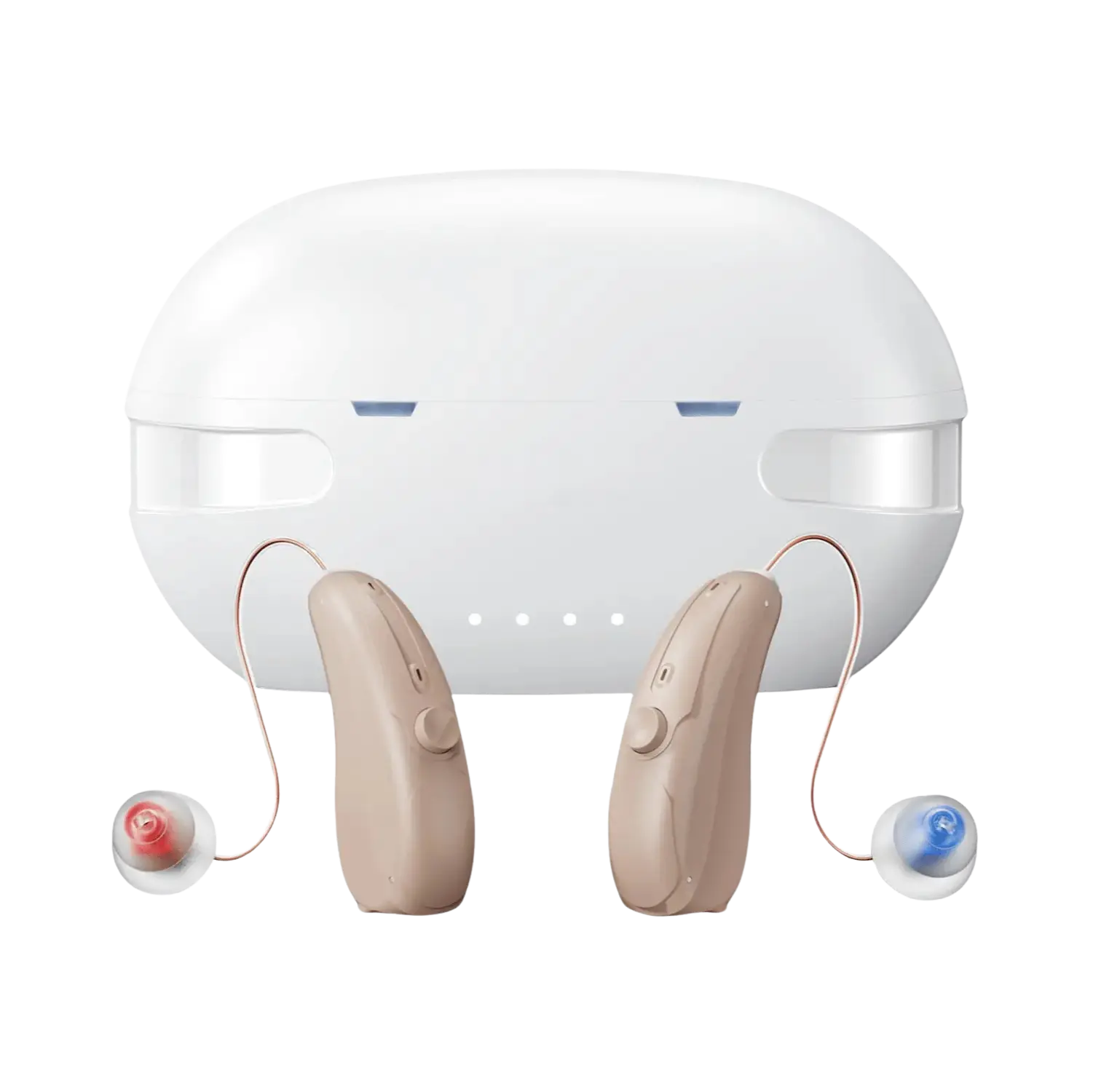
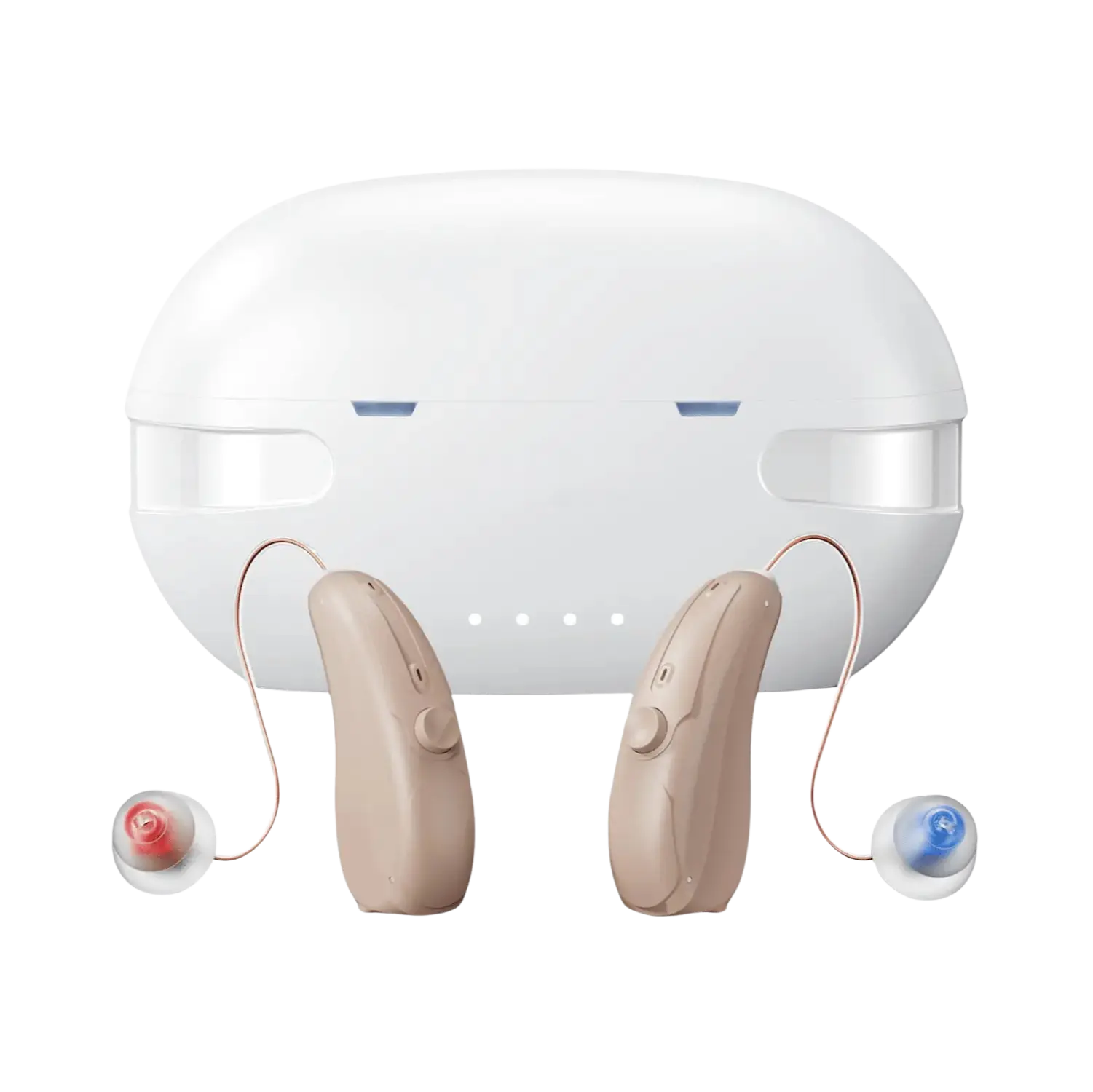
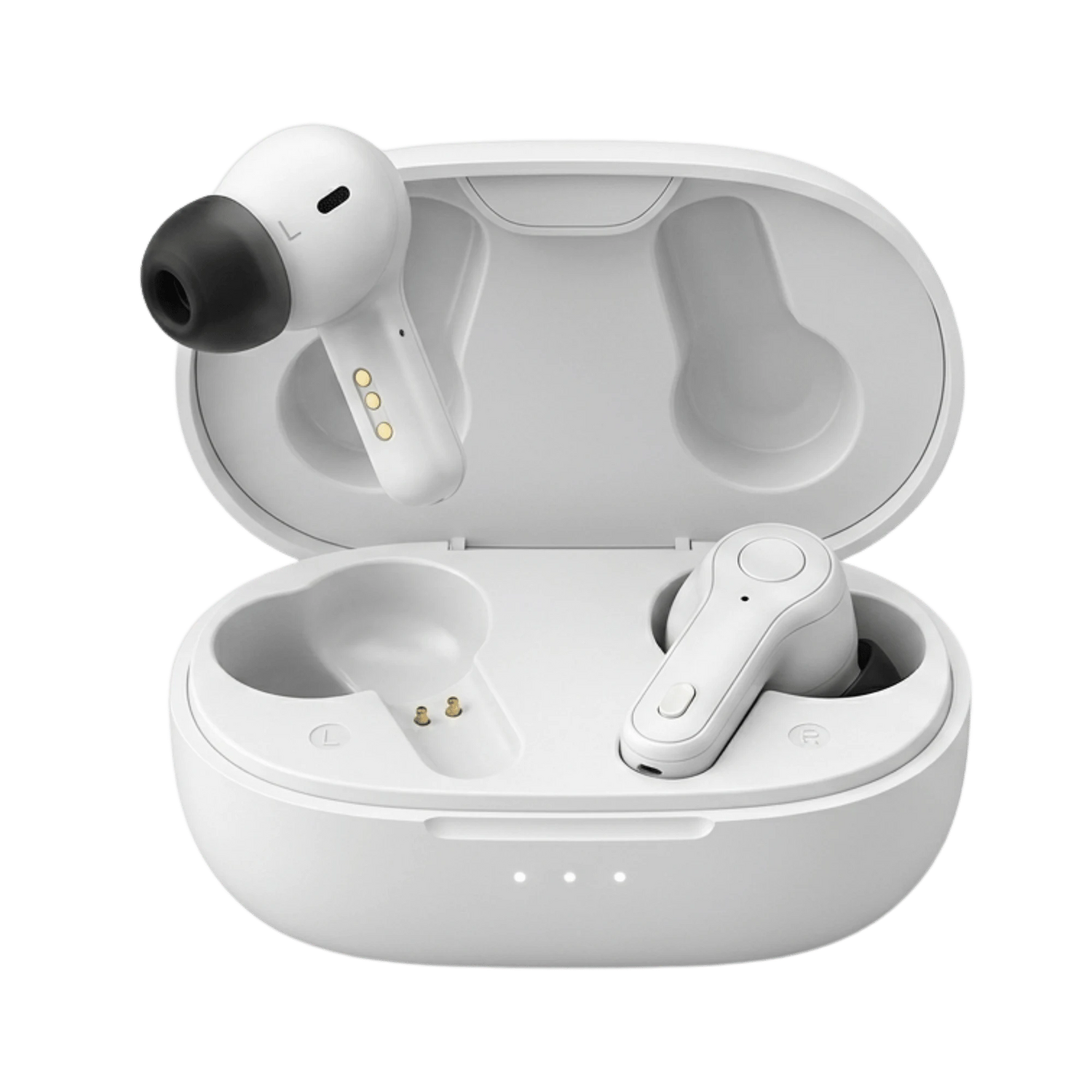
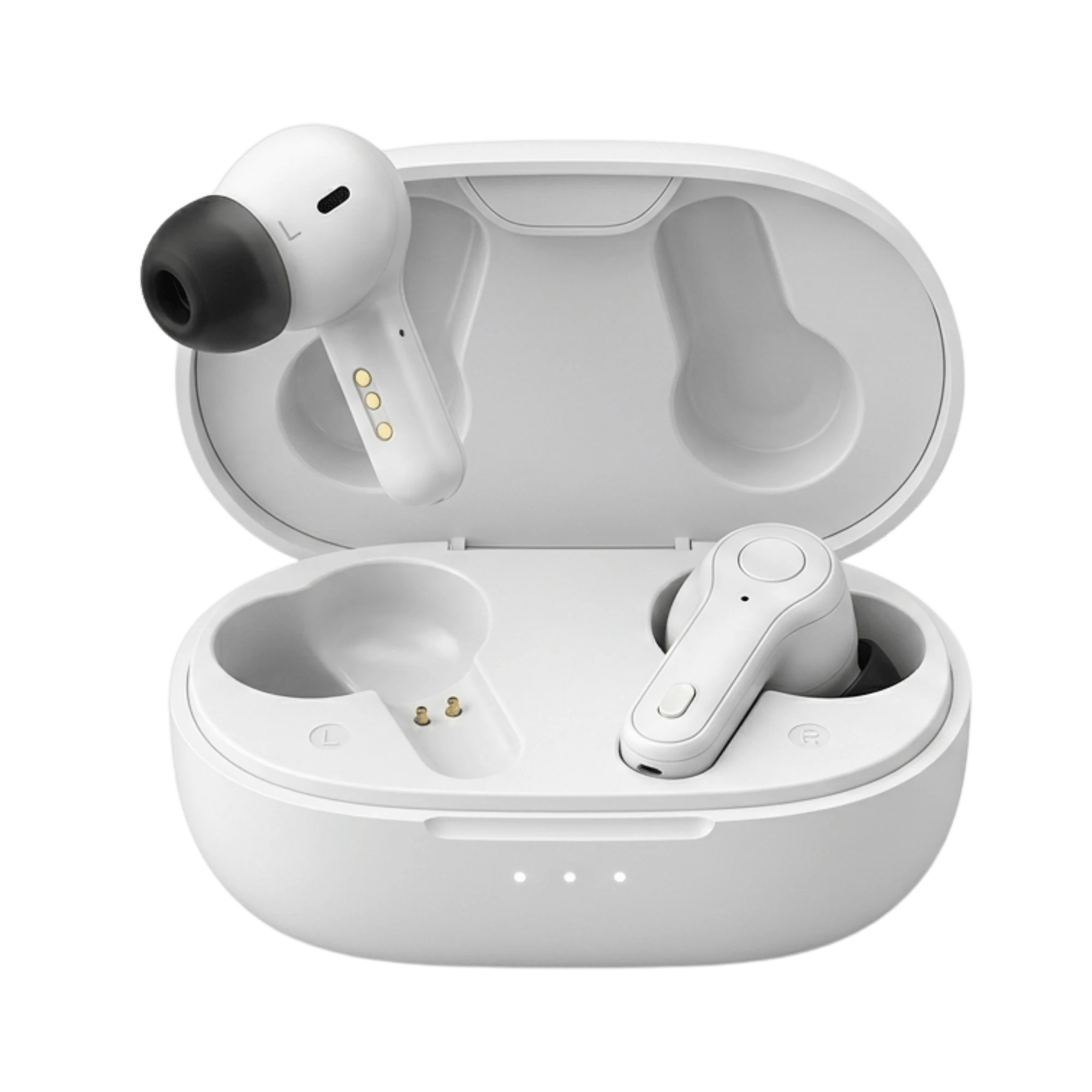
Panda Air is built around that idea. It is an earbud-style in-the-canal device, and it is one of the app-tuned hearing aids that handles the fitting step itself: after delivery, you pair it with the Panda app, which runs a frequency-specific hearing test through the aid in your ear and then auto-programs gain and frequency response to match your audiogram, in the way a clinical fitting would. Underneath, 16-channel wide dynamic range compression and multi-band adaptive noise reduction do the moment-to-moment work.
Because the paper is specifically about the mild-hearing-loss window, before most people have reached a clinic, self-fitting OTC hearing aids are the category built for exactly that stage. Air ships with a 60-hour fast-charge case, a 5-year warranty, and 45-day returns. One caveat worth stating plainly: OTC devices are approved for mild-to-moderate loss, and severe or profound loss still benefits most from a clinical fitting.
More on the device is at pandahearing.com/products/panda-air.
Limitations of This Research
This is a feasibility assessment, and its limits are considerable. Eighty-three responses is a small sample on which to judge a system that could in principle generate an unlimited number. The grading criterion was assembled by the authors themselves, inspired by DISCERN and PEMAT rather than being either instrument applied as validated, which makes the scores hard to compare against other work. The paper as indexed does not establish who performed the scoring or whether they were independent of the team that built the agent, and self-assessment is a recognised risk in early digital health evaluations.
Most importantly, the study measures the quality of advice, not what happens to anyone who follows it. Nobody's hearing was tested, tracked, or preserved here. Whether this agent changes real outcomes, gets people to care sooner, or improves on what a person would have found on their own is entirely untested. The work appears in a conference proceedings volume, a venue for early-stage results rather than definitive ones. The record as indexed does not carry a funding statement or a declared conflict of interest, and one author holds an industry-named chair in digital health, which is worth knowing when reading a favourable assessment of a digital health tool.
Where This Leaves Us
A smartphone agent that writes clear, well-targeted hearing advice is now demonstrably buildable, and this paper is a credible first measurement of one. The honest reading of its own numbers, though, is that the tool is currently better at being understood than at being correct, and until that ordering flips, an assistant like this belongs in the category of useful prompt rather than reliable answer. The interesting part is not the technology. It is the premise the researchers were testing: that advice built around one specific person beats advice built for everyone. That premise is sound, and it holds well beyond the app.
Wickramasinghe N, Ulapane N, Wijewickrema S, Wisk D. Feasibility Assessment of an Intelligent Agent to Assist Preserving Healthy Hearing. Studies in Health Technology and Informatics. 2026;339:82-87. Retrieved from PubMed. https://doi.org/10.3233/SHTI260969