Nationwide Study Links Hearing and Sensory Loss to Higher Risk of Dementia and Parkinson's Disease
A study of more than 400,000 adults in Korea found that people with hearing, vision, or smell impairment were more likely to develop dementia and other neurodegenerative diseases later in life, and that the risk climbed sharply when more than one sense was affected.
Sensory changes are among the most common companions of aging. By later life, a large share of adults notice that conversations are harder to follow in a busy room, small print is harder to read, or familiar smells are harder to detect. For a long time these shifts were treated as ordinary background noise of getting older, unrelated to what happens inside the brain.
A growing body of research has begun to question that assumption, tying reduced hearing in particular to faster cognitive decline. A new nationwide analysis from South Korea adds to this picture by following hundreds of thousands of adults for more than a decade and asking a direct question: are people with sensory impairment more likely to be diagnosed with a neurodegenerative disease in the years that follow?
About This Study
Title: Sensory Impairment and Risk of Neurodegenerative Diseases: A Nationwide Cohort Study in Korea
Authors: Jin Youp Kim, Hae Chan Park, Seok-Won Park, Chae-Seo Rhee
Affiliations: Dongguk University Ilsan Hospital and Sensory Organ Research Institute, Dongguk University; Seoul National University College of Medicine, Republic of Korea
Journal and date: Clinical and Experimental Otorhinolaryngology, published July 16, 2026
Study type: Retrospective nationwide cohort study using national health insurance screening data
PubMed reference: DOI 10.21053/ceo.2026-00075
Background: Why the Researchers Looked at This
Neurodegenerative diseases are conditions in which nerve cells in the brain gradually stop working and die. Alzheimer's disease and related dementias are the most familiar examples, but the family also includes Parkinson's disease and rarer disorders such as Huntington's disease. These conditions usually develop slowly and quietly, which is part of what makes early warning signs so valuable.
Age-related hearing loss, sometimes called presbycusis, is one of the most widespread health conditions of later life. Vision and smell also tend to decline with age. Earlier work had connected each of these senses, one at a time, to a raised chance of cognitive problems. What was less clear was how the picture changes when several senses fade together, and whether the pattern is strong enough that a routine sensory check could flag people who deserve closer attention.
To answer that, the researchers turned to one of the largest resources available: a national health insurance database covering a broad slice of the Korean population, with records stretching across many years.
How the Study Was Done
The team drew on the Korean National Health Insurance Service Health Screening Cohort, using data collected between 2002 and 2015. To make sure they were measuring new cases rather than problems that already existed, they set aside an early washout period from 2002 to 2004 and excluded anyone who already had a sensory impairment or a neurodegenerative diagnosis during that window.
Between 2005 and 2015, participants were then sorted according to whether they had developed a hearing, visual, or olfactory (smell) impairment, or more than one of these at once, described as multisensory impairment. The researchers tracked who went on to be diagnosed with a neurodegenerative disease, including Alzheimer's disease and related dementias, Parkinson's disease, and Huntington's and other disorders.
Using statistical methods that follow groups over time and adjust for differences between them, the team compared the rate of new neurodegenerative diagnoses in people with sensory impairment against those without any. This kind of adjustment helps account for the fact that people who lose a sense may differ in other ways, such as age, that also affect brain health.
What the Researchers Found
The analysis included 410,749 participants. Of these, 389,659 had no recorded sensory impairment, while 21,007 did. Hearing impairment was by far the most common, affecting 16,651 people, followed by visual impairment in 3,426 and olfactory impairment in 642. A smaller group of 288 people had impairment in more than one sense.
Across the follow-up years, the chance of a neurodegenerative diagnosis rose with the number of senses affected. People with any single sensory impairment carried a higher risk than those with none, and the group with multisensory impairment stood out the most. After adjustment, multisensory impairment was linked to more than a fivefold higher risk of neurodegenerative disease overall, with a hazard ratio of 5.23 and a confidence range of about 4.20 to 6.52.
The same steep pattern held across the major subtypes. For Alzheimer's disease and related dementias the hazard ratio for multisensory impairment was about 4.43, for Parkinson's disease about 5.07, and for Huntington's and other disorders about 9.90. In other words, the more sensory systems that were affected, the greater the associated risk, a step-by-step relationship the authors describe as a graded pattern.
The researchers concluded that sensory status could serve as an accessible early risk marker for neurodegenerative disease in older adults. Because hearing, vision, and smell are relatively easy to check, they may offer a low-effort way to identify people who could benefit from closer monitoring.
What It Means for People with Hearing Loss
It is important to be careful about what a finding like this does and does not say. A link between sensory impairment and later disease does not prove that one causes the other. Losing a sense could contribute to brain decline, could be an early sign of it, or the two could share common roots such as blood vessel health or shared aging processes. This study cannot separate those explanations.
What it does reinforce is a practical message that keeps recurring in hearing research: reduced hearing is worth taking seriously rather than shrugging off. Hearing is one of the few age-related changes that can often be measured quickly and addressed. Getting a hearing check when conversations start to feel effortful is a small step, and it opens the door to support that may help someone stay engaged with the people and activities around them.
Why Lowering the Barrier to Hearing Help Matters
If hearing loss can act as an early flag worth acting on, then how easy it is to actually do something about it becomes part of the story. For decades the path to hearing help ran only through clinics and premium-priced devices, and many people simply delayed. The arrival of FDA-cleared over-the-counter hearing aids has changed that math by letting adults with mild to moderate hearing loss start sooner and at lower cost.
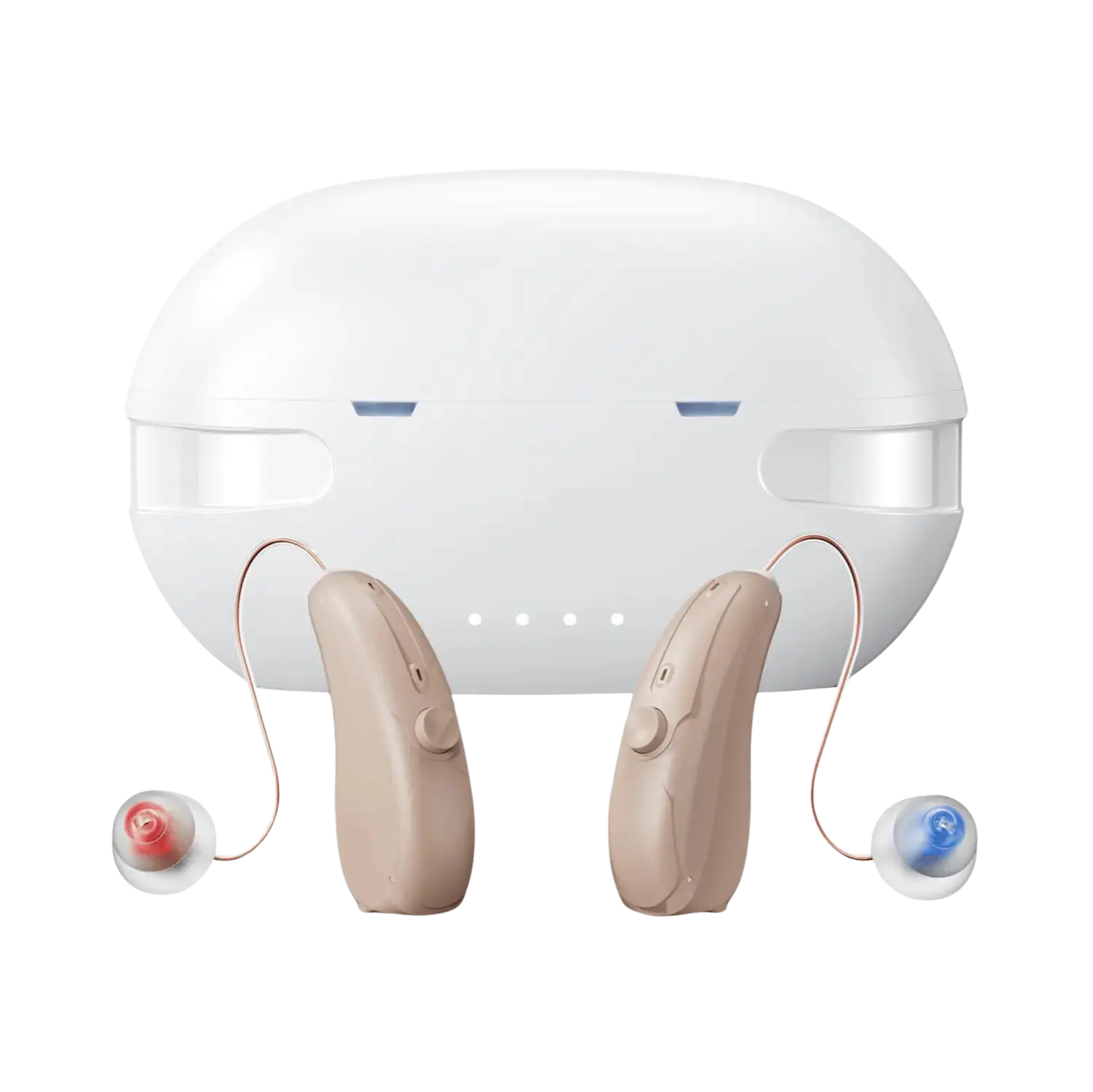
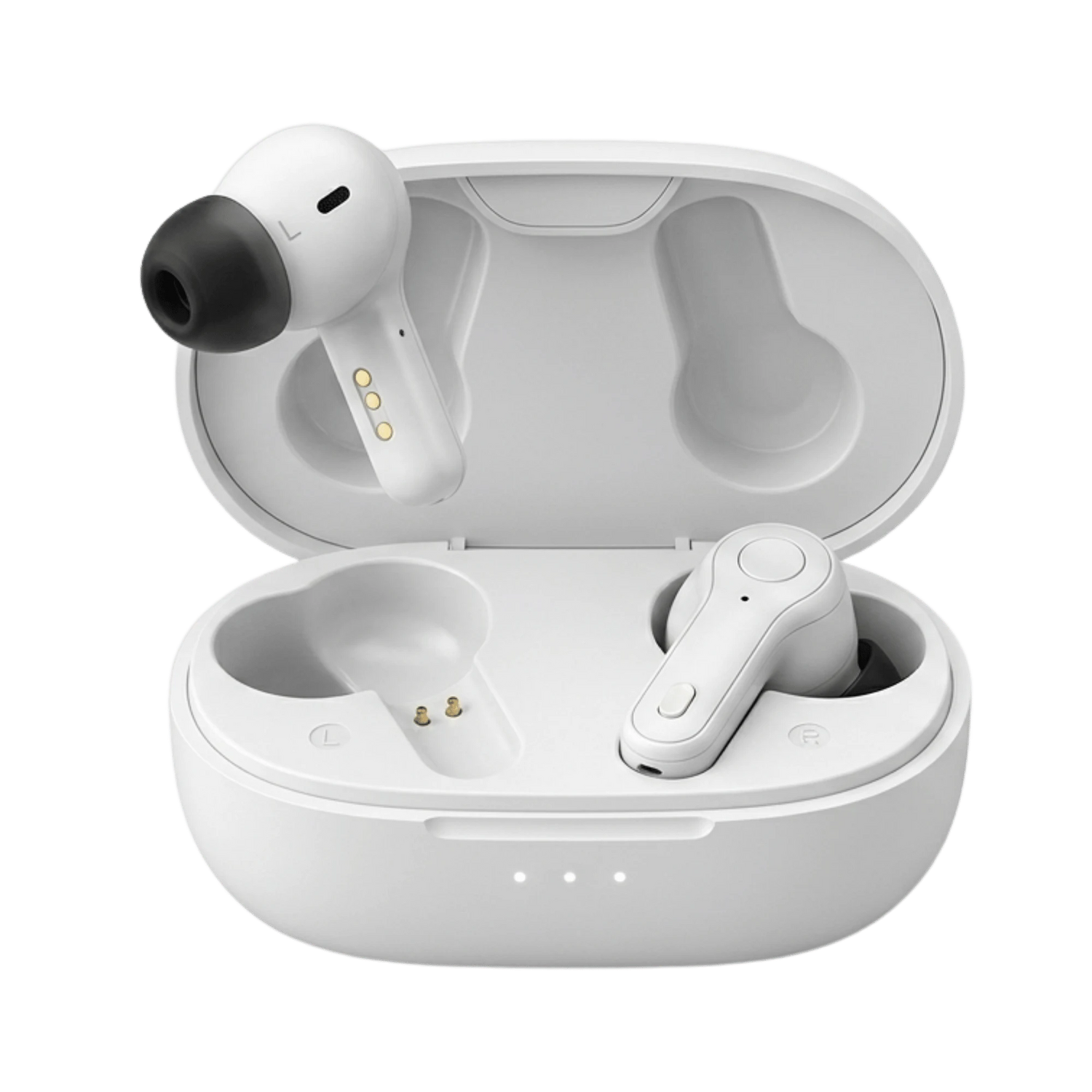
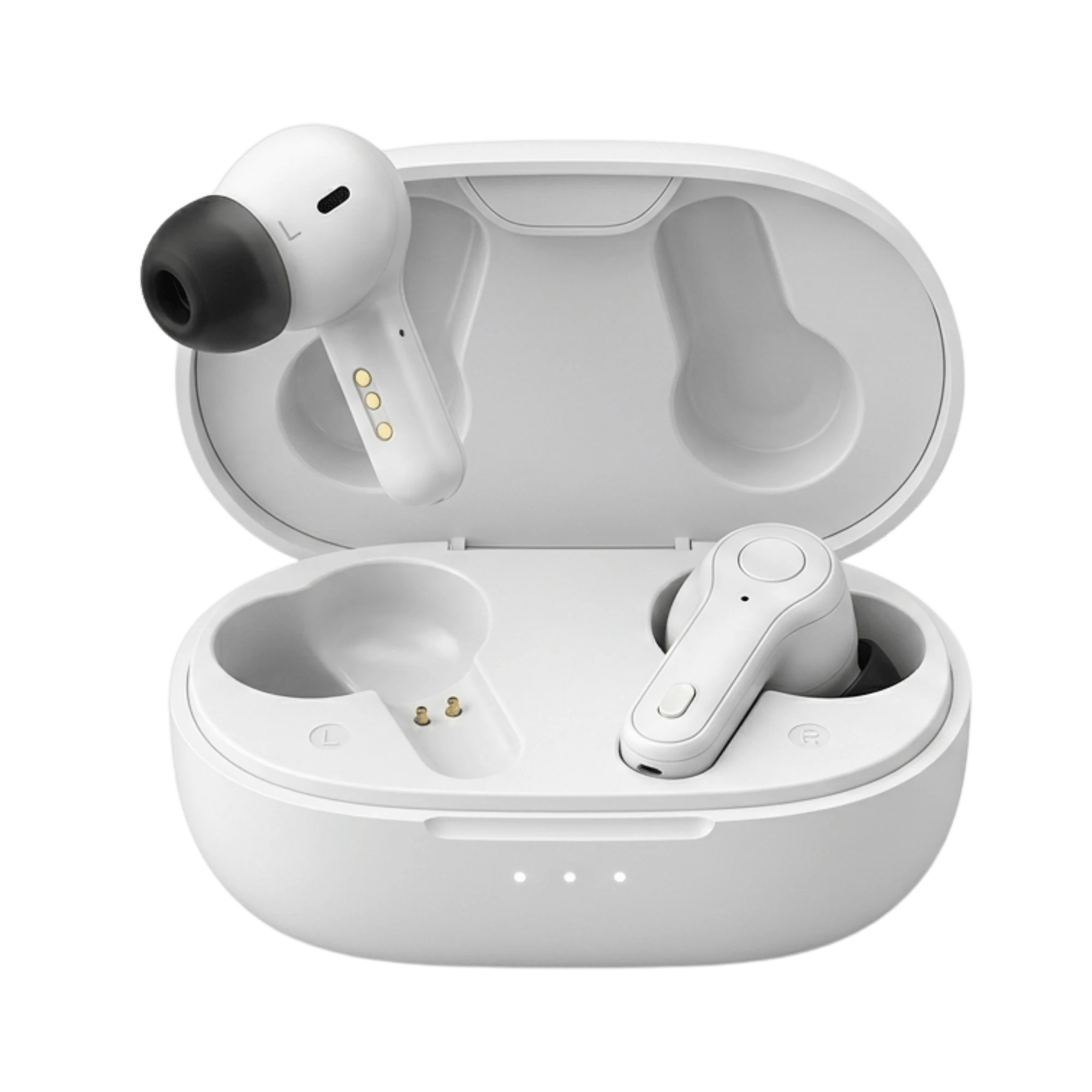
Panda Air is one device built around that idea. It is a small earbud-style aid that pairs with the Panda app after delivery and runs an in-ear hearing test through the device itself, then tunes its gain and frequency response to the listener's own hearing, much like a clinical fitting. As one of the more approachable self-fitting OTC hearing aids, it uses 16-channel processing with multi-band adaptive noise reduction, and it recharges in a 60-hour fast-charge case, so getting started does not require weeks of appointments. These rechargeable hearing aids with a charging case come with a 5-year warranty and a 45-day return window.
One honest caveat belongs here. Over-the-counter devices are cleared for mild to moderate hearing loss, and anyone with severe or profound loss, or with sudden or one-sided changes, is still best served by a professional evaluation and a clinical fitting.
Limitations of This Research
This was an observational study built from insurance and health screening records, so it can show associations but cannot establish cause and effect. Because sensory impairments were identified through administrative data rather than uniform testing of every participant, some cases may have been missed or misclassified, and milder impairments in particular can go unrecorded. The very small number of people in the multisensory group also means the striking risk estimates for that category carry wider uncertainty.
The data come from a single national population, so the patterns may not translate exactly to other countries or health systems, and residual factors the researchers could not fully measure may still influence the results. The authors report no indication that the findings were shaped by a commercial funder.
Where This Leaves Us
The headline of this study is not that hearing loss dooms anyone to dementia, but that the senses may carry useful early information about brain health, and that the signal grows louder as more senses are affected. For older adults and the people who care about them, that is a gentle argument for treating hearing, vision, and smell as worth checking rather than ignoring, and for acting on what those checks reveal.
Kim JY, Park HC, Park SW, Rhee CS. Sensory Impairment and Risk of Neurodegenerative Diseases: A Nationwide Cohort Study in Korea. Clinical and Experimental Otorhinolaryngology. 2026. Retrieved from PubMed. DOI 10.21053/ceo.2026-00075